#power-grid-constraints
#power-grid-constraints
[ follow ]



#windfall-tax
Europe news
fromFortune
1 day agoEuropean ministers urge EU to impose windfall taxes on energy companies as prices spike 'to ensure that this burden is distributed fairly' | Fortune
European finance ministers are urging a bloc-wide windfall tax on energy companies to address rising oil and gas prices and inflation concerns.
fromFortune
3 days agoCountries are turning to 'structurally more resilient' energy sources as oil and gas crisis deepens, UN renewables chief says | Fortune
"A more decentralized energy system, with a growing share of renewables and more market players, is structurally more resilient. Countries that invested in the energy transition are weathering this crisis with less economic damage, as they boost energy security, resilience and competitiveness."
Environment
World news
fromIrish Independent
2 days agoEU warns it's 'preparing for worst scenarios' and assessing 'all possibilities' including fuel rationing as energy crisis deepens
Tehran plans to charge for passage through the Strait of Hormuz, aiming to ensure safe navigation amid rising tensions with the US.
SF politics
fromFortune
6 days agoHyperscalers often lack the "aptitude" on power as the political push picks up to expedite grid connections and pipelines | Fortune
Federal efforts to expedite power grid interconnections face challenges due to hyperscalers' communication issues and lack of understanding of processes.
European startups
fromFortune
5 days agoEmerald AI and Nvidia aim to offer the fast pass for data center grid connects, partnering with power producers and raising new funds | Fortune
Emerald AI aims to enhance grid flexibility for data centers, reducing peak power consumption while maintaining high reliability.
#renewable-energy

Environment
fromEarth911
6 days agoSustainability In Your Ear: Schneider Electric's Steve Wilhite Maps the Renewable Energy Transition
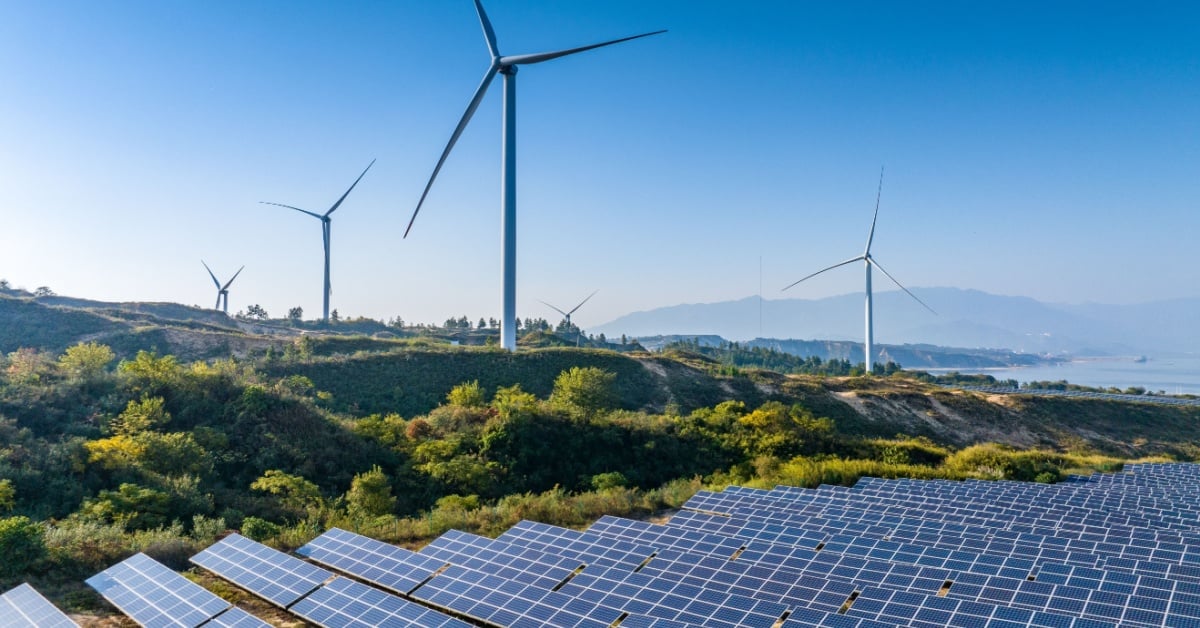
The global energy system is shifting to distributed renewables and digital optimization, with a significant gap between corporate sustainability ambitions and delivery capabilities.
fromwww.aljazeera.com
6 days agoG7 ready to take necessary measures' to ensure energy market stability
We stand ready to take all necessary measures in close coordination with our partners, including to preserve the stability and security of the energy market, said the G7 in a statement after a teleconference.
World news




UK politics
fromwww.independent.co.uk
2 weeks agoUK rules on installing wind turbines eased amid global energy crisis
UK government proposes allowing businesses, schools, and farms to install small wind turbines up to 30 metres tall without planning permission to reduce energy costs and increase clean energy capacity.
US news
fromwww.npr.org
3 weeks agoEasy-to-use solar panels are coming, but utilities are trying to delay them
Plug-in solar panels that connect to standard outlets are gaining traction in the U.S. as a cost-effective alternative to traditional rooftop solar, though utility opposition based on safety concerns is slowing legislative adoption.
fromTechCrunch
3 weeks agoGoogle and Tesla think we're managing the electrical grid all wrong | TechCrunch
The group points out, correctly, that the grid is designed for brief bursts of high demand; most of the time there's lots of capacity that goes unused. Utilize thinks that should change. The group argues that smarter ways to use that capacity already exist. Utilize name checks a number of those solutions, including battery storage, demand response, and virtual power plants, all of which have emerged en masse over the last decade, but remain under utilized.
Toronto startup
Tech industry
fromFortune
2 weeks ago"A bend in the trajectory": U.S. data center development has hit snags because the power grid is approaching its limits to support them | Fortune
Data center development slowed significantly in Q4 2025, with capacity additions dropping 50% quarter-over-quarter, signaling that unlimited AI-driven growth projections may not materialize due to power infrastructure constraints.
Environment
fromFortune
4 days agoData centers are so hot, their 'heat island' effect is raising temperatures up to 6 miles away and impacting 343 million people worldwide, study finds | Fortune
AI infrastructure is creating a 'data heat island effect' that raises local temperatures and impacts millions of people.
US news
fromArs Technica
1 month agoThis is why our electricity bills are so high right now
U.S. residential electricity rates increased 5 percent in 2025, with some Northeast and Midwest states experiencing double-digit growth, driven by utility infrastructure spending, natural gas prices, and renewable energy mandates.
fromIndependent
1 month agoPower grid faces the extra pressure of data centres and 300,000 new homes - until 2029
EirGrid, the semi-state company that manages and operates Ireland's electricity grid, has also predicted that data centres will be using 32pc of all the electricity consumed in the country by 2030. That compares to about 22pc now.
Miscellaneous


Tech industry
fromFortune
1 month agoYour utility bills keep going up. Here's everyone you can blame-AI data centers included | Fortune
Electric and natural gas bills surged as major inflation drivers in 2025, with utilities requesting record $31 billion in rate hikes amid aging infrastructure, climate impacts, and AI data center demand.
Environment
fromArs Technica
2 weeks agoCoal plant forced to stay open due to emergency order isn't even running
The Trump administration uses emergency orders to keep uneconomical coal plants operational despite cheaper renewable and natural gas alternatives, citing grid reliability while data shows minimal actual energy contribution.
Environment
fromFortune
2 weeks agoYour electricity bill keeps rising. Here's what's actually causing it-and how to fix it | Fortune
Rising retail electricity prices stem from structural issues including surging demand, increased infrastructure spending, and regulatory models that reward utility overspending, while proposed fixes like rate freezes and permit blocks would worsen the problem.
Berlin
fromwww.dw.com
2 months agoBerlin blackouts cast light on infrastructure in Germany DW 01/10/2026
A January arson-caused blackout in southwestern Berlin revealed failures in emergency response, communication, and preparedness, leaving thousands, including vulnerable residents, without adequate support.
fromZDNET
2 months agoI discovered a little-known way to power your home during an outage - here's how
While the abrupt end to your home chef experience is inconvenient, the bigger issue is that your gas furnace still needs electricity to run, and it's supposed to drop into the 20s overnight. Now imagine that while everyone else is rifling through their junk drawer for flashlights and batteries,
Gadgets
Gadgets
fromYanko Design - Modern Industrial Design News
2 months agoThe MustHave Portable Power Station Setup Every Household Should Own For Storms And Blackouts - Yanko Design
Mid-size indoor-safe power stations can keep phones, medical devices, and essential lights running through multi-day winter outages when small units lack capacity.
fromTechRepublic
2 months agoPowerGen's Shock Pivot: How AI Data Centers Hijacked an Energy Conference
October 2025 alone recorded more than $350 billion of tangible data center projects under development. This, Mullins said, is no longer driven by the compute demands of training large language models (LLMs). We have moved into the inferencing stage. It is inference by applications that now consumes massive amounts of compute resources. In addition to generative AI applications like Gemini and ChatGPT, AI is being used in autonomous vehicles, robotics, liquefied natural gas, and more.
Artificial intelligence
fromFast Company
1 month agoHow to meet the surging energy demand without needing as much new electricity
When Specian dug into the data, he discovered that implementing energy-efficiency measures and shifting electricity usage to lower-demand times are two of the fastest and cheapest ways of meeting growing thirst for electricity. These moves could help meet much, if not all, of the nation's projected load growth. Moreover, they would cost only half-or less-what building out new infrastructure would, while avoiding the emissions those operations would bring.
Environment
fromwww.aljazeera.com
2 months agoRenewables muscle fossil fuels out of EU electricity market, says research
Solar and wind power provided more electricity than coal and gas last year, leading a global trend, said think tank Ember. Solar and wind power outperformed fossil fuels in the European Union for the first time last year, a new high watermark on Europe's transition to green and autonomous energy. The two sources of energy generated 30 percent of EU electricity, compared with 29 percent for coal and gas, Ember, a global energy think tank, said on Thursday in its European Electricity Review.
Environment
fromFast Company
2 months agoThis tech could keep EVs from stressing the grid-and save everyone money
If you're a typical American, you get home from work and start flipping switches and turning knobs-doing laundry, cooking dinner, watching TV. With so many other folks doing the same, the strain on the electrical grid in residential areas is highest at this time. That demand will only grow as the world moves away from fossil fuels, with more people buying induction stoves, heat pumps, and electric vehicles.
Environment
fromThe Verge
2 months agoIt's a new heyday for gas thanks to data centers
The US is now leading a global surge in new gas power plants being built in large part to satisfy growing energy demand for data centers. And more gas means more planet-heating pollution. Gas-fired power generation in development globally rose by 31 percent in 2025. Almost a quarter of that added capacity is slated for the US, which has surpassed China with the biggest increase of any country.
Environment
[ Load more ]