#primrose-hill
#primrose-hill
[ follow ]
Arts
fromThe Art Newspaper - International art news and events
21 hours agoShould English museums charge tourists? Plus, Raphael at the Met and Senga Nengudi at the Whitechapel Gallery-podcast
The UK government is considering charging tourists for entry to national museums, challenging the current policy of free admission.
fromNy1
4 days agoElectric blue blooms signal spring's arrival at Bronx garden
These are Scilla sardensis, the common name is Glory-of-the-Snow. They are native to the mountains of Western Turkey but are really comfortable growing in almost any condition, as you can see. They are, for us, the real harbingers of spring. We know that once we start to see this electric blue color, the season is starting for us.
Washington DC
Agriculture
fromdesignboom | architecture & design magazine
1 week agourban rewilding in practice: restoring london's heathland for humans, sheep, and ecology
Sheep grazing is proposed to regenerate urban heathland ecology, creating a continuous ecological corridor that supports both human and non-human systems.
fromwww.theguardian.com
1 month agoAnalysis finds urban areas in England where no one lives within 15-minute walk of nature
While the data shows 80% of people live within walking distance of green or blue spaces such as a river, park or woodland, it also reveals a disparity between rural and poorer urban areas. In some areas of local authorities, fewer than 20% of residents live close to these spaces, according to data released by the Department for Environment, Food and Rural Affairs on Wednesday.
Environment
Renovation
fromwww.bbc.com
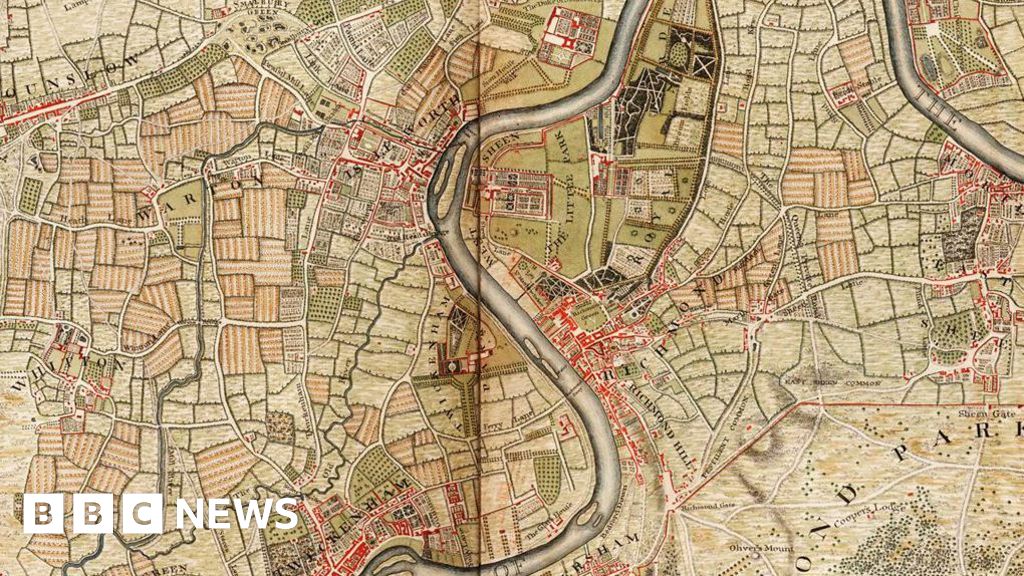
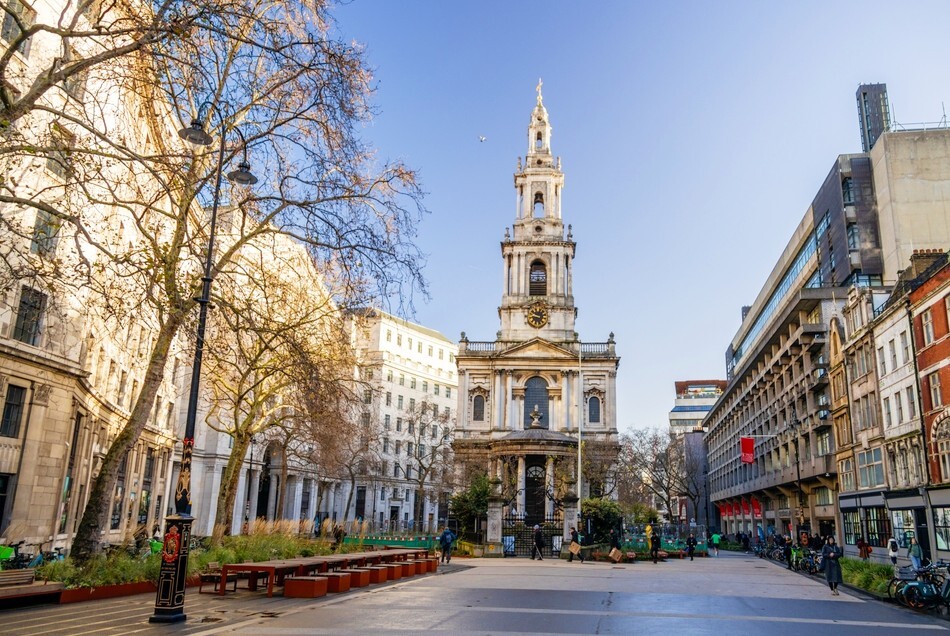
3 weeks agoThe house hidden in the garden of a Catford terrace
Architects Will and Sogand Howard built a modern home in a neighbor's garden in London, demonstrating how small urban plots can address housing shortages through creative land use and direct outreach to homeowners.

London politics
fromLondon On The Inside
1 month agoNorth vs South London | Ten Reasons Why Each Side Is Better
North London claims superiority through Roman history, the Barbican, anti-fascist heritage, major protest movements, and superior underground transport infrastructure compared to South London.
London food
fromTime Out London
2 weeks agoThis iconic London attraction is getting a flowery makeover this Easter
The London Eye launches a floral spring installation in April featuring flower-framed pod windows, limited-edition afternoon tea, and a Lego Botanicals building experience, all available at standard ticket prices.
London
fromTime Out London
3 weeks agoOne of London's most spectacular houses is opening to the public next month
The Cosmic House, a rare Grade I-listed postmodernist building in Kensington designed by Charles Jencks and Sir Terry Farrell, opens to the public on April 22 with an Isaac Julien film installation.


fromLondon On The Inside
1 month agoExploring London's Hidden Gems: A Local's Guide to Secret Spots
London is a city that rewards curiosity. Beyond the iconic landmarks, Big Ben, Buckingham Palace, and the London Eye, lies a quieter, more intimate version of the capital. This is the London locals know: tucked-away streets, overlooked parks, independent cafés, and historic corners that rarely make it into guidebooks. For travellers willing to stray from the obvious routes, the city offers countless hidden gems that reveal its true character.
Travel
Public health
fromTime Out London
2 months agoThis iconic London open-water swimming spot could soon be open all year round
Hampstead Heath's mixed pond will be reviewed for year-round opening, potentially allowing winter swimming, with related facility and landscape improvements planned around 2026/27.
fromwww.london-unattached.com
1 month agoDon't Tell Dad, Queens Park
Step inside Don't Tell Dad and you're immediately greeted by a warm, low-lit vintage atmosphere. When we arrived, a funky soundtrack was drifting over dark wood floors, while super-comfy olive-green velvet banquettes, booths, and bar stools offered a front-row view of the kitchen in action. Wood panels with coloured glass windows, marble-topped tables set with linen napkins, and vintage cutlery and candle holders hint at 1930s Art Deco elegance, while oval mirrors and playful statement lighting reinforce the space's French bistro vibes.
Food & drink
fromwww.bbc.com
1 month agoHornsey Town Hall taken off at-risk register
Bringing such a culturally and historically significant building back into public use has been a huge privilege for everyone involved. This restoration has taken years of considered collaboration and care, guided by a shared commitment to do justice to the Town Hall's heritage while giving it a new lease of life and protecting it for future generations to enjoy.
Remodel
London
fromTime Out London
3 weeks agoLondon is officially one of the best cities in the world in 2026, according to Time Out
London ranked fourth globally in Time Out's Best Cities 2026 survey, based on votes from 24,000 residents and expert analysis, with major cultural attractions and events planned for the coming year.
fromwww.bbc.com
3 weeks ago'Green lung' west London nature reserve confirmed
This declaration establishes a much-needed green lung for this part of the borough. Our charity launched this campaign back in January 2021. At that time, we were emerging from Covid lockdown, and people were discovering the wonders of nature and wildlife on their doorstep in the Brent River Park.
London food
fromTime Out London
3 weeks agoLondon's iconic BT Tower will be turned into a hotel by the all-star architecture firm behind Outernet
American hotel chain MCR bought the spindly Fitzrovia superstar from BT Group for a cool £275 million. This was incredibly exciting news, as the former centre of the 'white heat of technology' (as then-Prime Minister Harold Wilson dubbed the communications centre upon its opening in 1964) had reduced public access after anarchist collective the Angry Brigade set off a bomb there in 1971.
London
fromianVisits
2 months agoLondon Alleys: Buckingham Mews, Victoria, SW1
Despite its proximity to one of London's busiest tourist attractions, its back street location is remarkably quiet and peaceful. Leading off Stafford Place, it was originally, and unsurprisingly, called Stafford Mews, as it was built as stabling for houses on Buckingham Gate, facing the palace. Constructed around 1860, the stables were simple two-storey houses, built initially with stables at the ground and accommodation above.
Real estate
London
fromTravel + Leisure
3 weeks agoSouthern England Is a Paradise for Gardening Aficionados-Here Are the Most Beautiful Gardens to Visit
Bluebells create breathtaking visual carpets in English woodlands during spring, inspiring poets and garden enthusiasts with their ephemeral beauty and delicate scent.


fromTime Out London
2 months agoThis brand new neighbourhood in north London will finally soon be complete
In September Hackney Council gave the green light to the final phases of the Woodberry Down regeneration masterplan. This has been a long time in the making, as the Woodberry Down regeneration officially began 20 years ago. Developers Berkeley Homes have now been given the go-ahead to complete the final stages, officially known as phases 5-8. Berkeley sought permission to build up to a 3,083 new homes in the area across the four phases, of which the developer said 43 percent would be affordable.
Real estate
fromTime Out London
2 months agoWild London: 5 things we learned from David Attenborough's new doc
There are snakes living in London trees Just a short slither away from London Zoo and Camden, an estimated 40 snakes are living in the trees on Regent's Canal. Aesculapian snakes are native to continental Europe and it remains unclear how they came to be living in the heart of London. Shy and harmless to humans, the snakes play a role in the food chain, helping to keep down the numbers of rats and mice in the capital city.
Environment
London food
fromianVisits
1 month agoShell shocked: Strawberry Hill plans to rebuild Horace Walpole's lost garden seat
Strawberry Hill House is fundraising to restore Horace Walpole's iconic Shell Seat, an eighteenth-century garden feature designed by Richard Bentley and carved by William Robinson that was lost after 1842.
Real estate
fromwww.theguardian.com
2 months agoGreen spaces should be the norm for all new housing developments in England, guidelines say
New government guidelines recommend mixed-use, heritage-preserving, nature-inclusive neighbourhood developments with shops, schools, green spaces and flood protection as standard for new housing developments.
fromianVisits
1 month agoThe curious case of the red corbel on Risinghill Street
So, this late 1970s block of flats was built on the site of the former estate office. So did the red corbel come from there? Looking at a photo of the corner of Risinghill Street and Penton Street, taken in 1956, doesn't seem to offer much help, as it shows a row of shops and behind a row of terraced houses.
London
fromianVisits
1 month agoLondon's Alleys: Martin Lane, City of London, EC4
For most of its life, the alley's main feature was the church of St Martin Orgar, possibly named after Ordgarus, a Dane who donated the church to the canons of St Paul's. Sadly, most of the church was destroyed during the Great Fire of London. The badly damaged remains were restored and used by French Protestants right up to 1820.
London
[ Load more ]