#recycled-construction-materials
#recycled-construction-materials
[ follow ]
#sustainability #architecture #sustainable-construction #sustainable-architecture #design #recycling






NYC real estate
fromwww.businessinsider.com
20 hours agoWe bought a house that's too small so we could afford our dream neighborhood. A $300,000 third-party loan will help us renovate.
The Feinbergs purchased a small home in Wayne, Pennsylvania, and planned to expand it using RenoFi financing based on future value.
fromwww.theguardian.com
4 days agoEvery child wants to find joy': the scheme designing playground equipment for disaster zones
Meininger, who grew up in Germany but now lives in London, likes making things. So when he saw how much his young sons enjoyed the jungle gym and play forts at the local park, he made an indoor treehouse for them.
Parenting
fromSan Jose Inside
1 day agoCounty and Partners Celebrate Completion of Unique Affordable Housing Project
"To address housing affordability in our community, we need all types of affordable housing options, including affordable ownership opportunities that allow individuals and families an opportunity to build equity alongside housing stability," said Santa Clara County Supervisor Betty Duong.
East Bay real estate



fromEarth911
2 weeks agoIs Shredded Paper Recyclable?
Shredded paper is especially difficult to recycle, so many programs will not accept it. Shredding accelerates fiber shortening and lowers the paper grade from high-grade to mixed-grade. Mixed-grade paper is still recyclable, but it ends up baled and processed into products like paper towels and packing paper.
Portland
OMG science
fromYanko Design - Modern Industrial Design News
1 week agoResearchers turned Sawdust Waste and Watermelon Seeds into Recyclable Fire-resistant Panels - Yanko Design
Sawdust can be transformed into a strong, fire-retardant composite material using struvite and an enzyme from watermelon seeds.
fromArchDaily
1 day agoColdefy Leads Winning Masterplan to Transform Budapest Brownfield into Rewilded Urban District
The regeneration plan includes over 10,000 apartments, new transportation links, and commercial and civic spaces, forming a comprehensive urban redevelopment strategy aligned with 15-minute city principles.
Renovation
Design
fromYanko Design - Modern Industrial Design News
3 days agoBiomimetic Architecture Reaches New Heights With This Bird-of-Paradise Yoga Space - Yanko Design
Thilina Liyanage's architecture translates animal gestures into functional designs, exemplified by the Rifle Bird Yogashala inspired by the Victoria's riflebird's courtship display.
Miscellaneous
fromwww.theguardian.com
4 weeks agoA delightful day at the dump: The trick is not to leave with more stuff than I arrived with!'
A recycling centre's ReUse shop in London salvages discarded items including unusual specimens like embalmed animals, vintage furniture, and antiques to resell rather than send to landfill.
Agriculture
fromEarth911
2 weeks agoConvenience Comes at the Environment's Expense
Fast delivery convenience carries significant environmental costs through packaging waste, carbon emissions, and resource consumption, but individual yard management choices can meaningfully reduce environmental impact at a local scale.
#sustainable-architecture

Design
fromYanko Design - Modern Industrial Design News
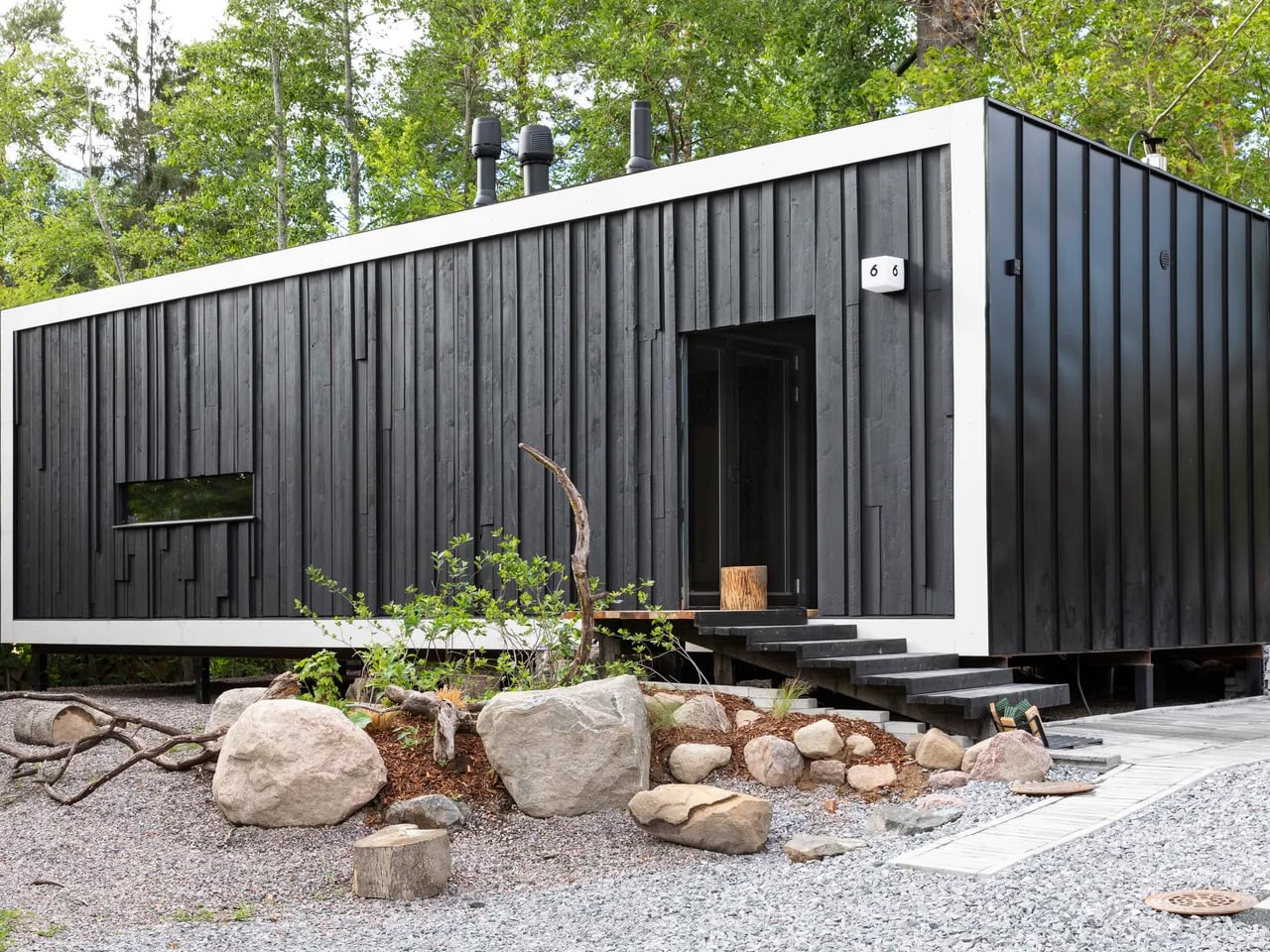
1 week agoThis Finnish Professor Built His Family Home From Old Tires and Fishing Nets - Yanko Design
Matti Kuittinen's Tiny House Shadow exemplifies sustainable living, utilizing recycled materials and significantly reducing resource consumption and carbon footprint.
fromArchDaily
3 weeks agoHow Architecture Is Learning to Generate Its Own Energy
Photovoltaic (PV) solar energy represents a modular technology that can be manufactured in large-scale facilities, generating economies of scale, while also being adaptable to small-scale applications. From residential rooftop systems to large-scale power generation installations, photovoltaic solar energy has established itself as a cost-effective option for electricity production in many countries around the world.
Environment
fromFast Company
1 month agoThese designers made a sustainable new building material from corn
This corn-based construction material was made by Manufactura, a Mexican sustainable materials company, and it imagines a second life for waste from the most widely produced grain in the world. The project started as an invitation by chef Jorge Armando, the founder of catering brand Taco Kween Berlin, to find ways he could reintegrate waste generated by his taqueria into architecture. A team led by designer Dinorah Schulte created corncretl during a residency last year in Massa Lombarda, Italy.
Science
fromdesignboom | architecture & design magazine
1 week agoproposal for net-zero landmark office in warsaw highlights adaptive use and ecological design
The project reimagines the structure through circular thinking, ecological strategies, and new construction technologies, embracing reuse as a model for sustainable urban development.
Renovation
fromArchDaily
1 week agoDesigning for Obsolescence in an Age of Perpetual Upgrades
In the nineteenth century, entire railway networks became obsolete almost overnight, not due to physical deterioration, but because of changes in the technical standards that supported them. The expansion of railroads across Europe and North America adopted different track gauges, and as a dominant standard gradually emerged, these infrastructures became incompatible with one another.
Renovation
fromdesignboom | architecture & design magazine
1 month agocan desert sand with plant-based materials be used to build houses and roads?
Researchers at the Norwegian University of Science and Technology and the University of Tokyo have made a prototype of botanical cement made of desert sand and plant-based additives in hopes that it can be used to build houses and roads. Once mixed, the team adds tiny pieces of wood together and presses them all with heat to produce the cement.
Science
fromInsideHook
1 month agoCould Recycled Plastic Lead to More Housing?
When you think about building a house, what materials come to mind? Brick, wood and metal all come to mind; there are also some very distinctive glass houses out there. (Even if their occupants should refrain from throwing stones - though honestly, that's a good tip for indoor living in general.) A group of MIT researchers have come up with a very different way of making buildings, and it's one that also addresses an ongoing waste issue."We've estimated that the world needs about 1 billion new homes by 2050. If we try to make that many homes using wood, we would need to clear-cut the equivalent of the Amazon rainforest three times over," explained AJ Perez, who conducts his research in the MIT Office of Innovation. The title of a paper written by Perez and his colleagues - "Design, Manufacture and Testing of Structural Trusses Using Additively Manufactured Polymer Composites" - gives a sense of the solution that they have in mind.
Environment
Environment
fromwww.theguardian.com
1 month agoWe can learn from the old': how architects are returning to the earth to build homes for the future
Unstabilised rammed earth provides a low-carbon, locally sourced building method with thermal mass, moisture control and potential for circular construction.
fromArchDaily
2 months agoCircular Composites: Designing for a Sustainable Future
One of the earliest large-scale examples of composite materials can be found in the Great Wall of China, where stone, clay bricks, and organic fibers such as reeds and willow branches were blended to create a resilient and lasting structure. These early techniques reveal a timeless intuition: distinct materials, when combined thoughtfully, produce properties unattainable by any single element.
Environment
Design
fromwww.archdaily.com
2 months agoFrom Material Intelligence to Circularity: Lessons from Architecture in 2025
Architects prioritize material innovation in 2025—agricultural waste, recycled plastics, and living materials—balancing tradition, circularity, and material intelligence for resilient, low-carbon construction.
Environment
fromYanko Design - Modern Industrial Design News
2 months ago5 Climate-Proof Home Upgrades That Turned Homes Into Survival Shelters - Yanko Design
Luxury combines resilience, autonomy, and intelligent materials to create regenerative, biophilic homes that protect, adapt, and restore value amid climate instability.
fromArchDaily
2 months agoA Responsible Addition: HIMACS Shapes Achieve SCS Certification for Recycled Content
In a balance of aesthetics, performance, and versatility, HIMACS shows a solid surface material of choice for many architects and designers. Taking a further step forward, the entire range of standard HIMACS sinks and basins is now officially SCS certified, containing a minimum of 8% pre-consumer recycled content. This certification enhances the material's technical and visual appeal by providing a more sustainable option without compromising quality or functionality.
Design
[ Load more ]