Design
fromPsychology Today
8 hours agoThe Future of Brain Health Is Architecture
The built environment significantly influences mental health, mood, and performance, with neuroscience guiding design for improved well-being.
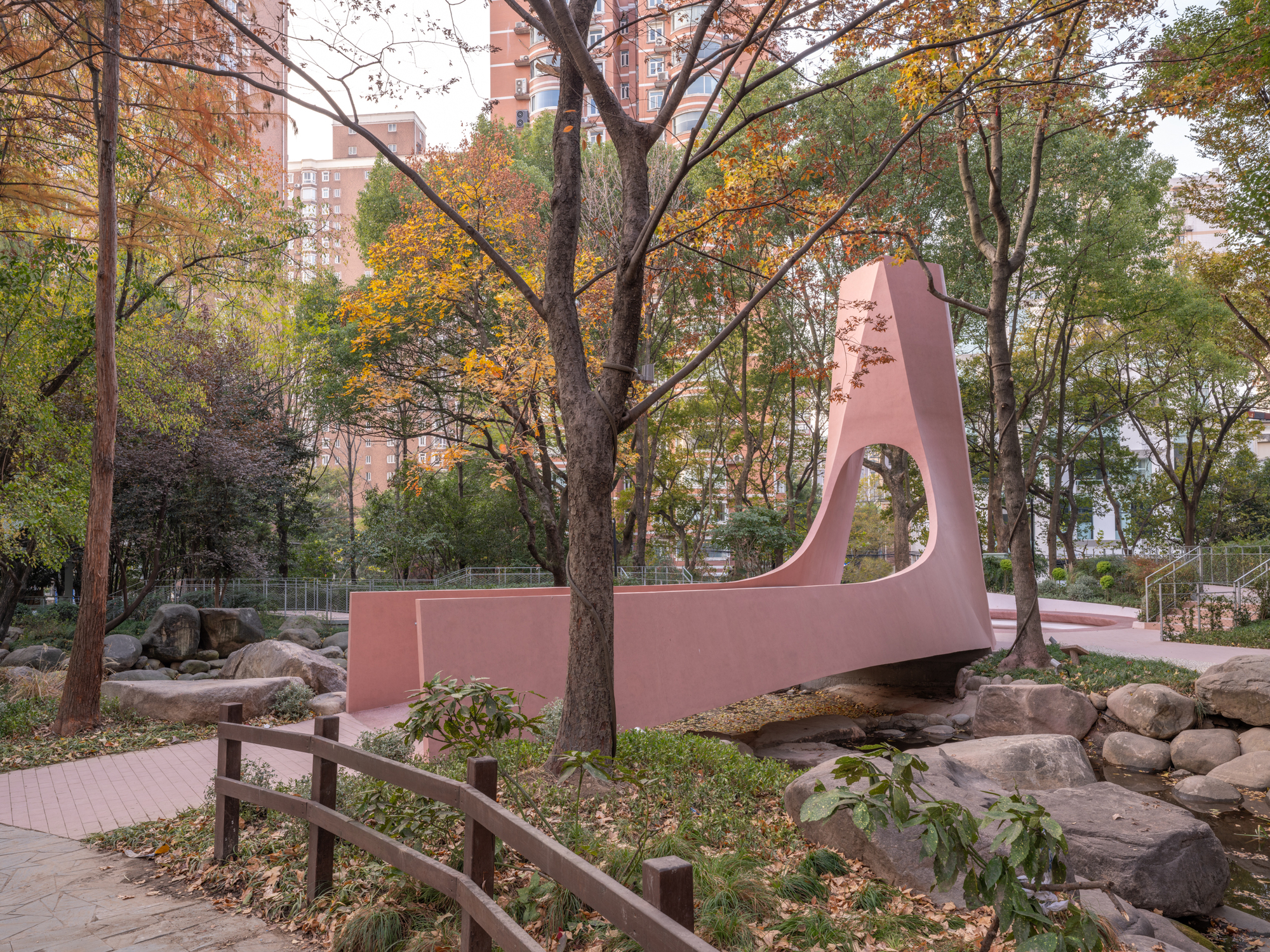
The original intent of pilotis was to create a sense of lightness that would allow circulation and light to flow beneath a structure, but contemporary requirements render thin columns insufficient for large-scale civic projects.
"This project is symbolic of what we've done over the last 12 years, reshaping the streets and the city," Christophe Najovski, the city's deputy mayor in charge of green spaces, stated during the opening ceremony.
Meininger, who grew up in Germany but now lives in London, likes making things. So when he saw how much his young sons enjoyed the jungle gym and play forts at the local park, he made an indoor treehouse for them.
Campaigner Aysha Hawcutt stated that residents were 'not anti-homes', but believed the Adlington plan was 'the wrong proposal in the wrong place'. She expressed pride in the community's resilience against the development threats.
For most of human history, night arrived as a planetary certainty. Darkness spread across landscapes, and the sky revealed thousands of stars. Today, that sky is disappearing. Artificial light spills upward from cities, scattering through the atmosphere and turning night into a permanent haze. Research mapping global sky brightness shows that more than 80 percent of humanity now lives under light-polluted skies, and the Milky Way has vanished from view for over a third of the world's population.
Both technologies involve cameras mounted on poles designed to read license plates, and at a moment when Americans are rightly more alert to the dangers of unchecked surveillance, it makes sense that people would approach any new camera with skepticism. But similarity at the surface is not sameness in design. These systems are built for different purposes, governed by different statutes, and constrained by different guardrails.
My family had Slide Show Night when I was growing up. Not every Saturday, but a whole bunch of Saturdays. Either my sister or I would be in charge of setting up the projector, the screen, and loading the carousel. During the show, there'd be a few landscapes or skylines taken during vacations, but almost all the shots were up close. Like most dads, mine wasn't a professional photographer, but he did a good job of capturing memory triggers: faces, gestures, and decorations.
When routes are well organized, there are clear directional signs, and speed limits become reasonable. The early installation of warning signs allows transport companies to plan deliveries more accurately and avoid delays. For businesses, time is money. When a truck carrying goods does not spend hours detouring due to an unclear traffic scheme or stuck in traffic where it could have been avoided thanks to competent traffic management, fuel costs, driver wages, and vehicle maintenance costs are reduced.
It's tempting to frame autonomous driving as a single leap. In public transport, adoption tends to be incremental - because the system is built for reliability, and new capabilities have to fit into daily operations without disrupting service. That is why a practical strategy is evolution, not revolution: introduce autonomy in a defined domain, learn safely in real operations, and expand capability step-by-step.
Hundreds of preventable fatalities and more than 13 million metric tons of climate pollution would be avoided by 2045 if Congress passed legislation that answered advocates' long- time demand to require state DOTs to set declining annual fatality targets - and reallocate highway money to safety projects if they don't meet those goals, according to a new analysis from Evergreen Action.
The design, which has a cycle lane between the stop and the kerb, is intended to allow bus passengers to get on and off safely while cyclists continue moving. Sarah Gayton, street access campaign co-ordinator at the National Federation of the Blind of the UK, said: "It does not address the concerns that blind and visually impaired people have and it's totally insulting to think that we'll accept this."
The sweeping changes include extensive greening and seating, two major water features, and a large paved events space in front of Trinity College. Early sketches for the space were revealed in June last year, but Dublin City Council (DCC) have refined them on foot of two rounds of public consultation and more than 2,800 written submissions. Extensive seating and a play space are also part of the project, with the council promising "an environment that encourages people to stop, relax and connect with the city around them."
The Department of Transportation confirmed that alternate-side parking rules are back in effect, following a nearly month-long pause that began after the January 26 storm dumped more than a foot of snow across the city. Subfreezing temperatures kept the mess locked in place, trapping some vehicles under icy layers of slush, litter and whatever else winter left behind. For weeks, many blocks felt less like orderly streets and more like a free-for-all, with cars pushed off the curb or angled around towering snow piles.
In the 1950s, the Air Force designed cockpits for the average pilot by measuring thousands of pilots and calculating the average for ten key physical dimensions-height, arm length, torso size, etc. They assumed most pilots would be close to average in most dimensions. When researchers actually checked, they found that out of 4,063 pilots, exactly zero were average on all ten dimensions.
Cities around the world share a common goal: to become healthier and greener, supported by civic infrastructure that restores ecosystems and strengthens public life. The question is how to reach this. Global climate targets, local building codes, and municipal standards increasingly guide designers and planners toward better choices. Still, many cities struggle to translate these frameworks into everyday, street-level comfort and long-term ecological protection.
"Cyclists shouldn't be left on red," Stevenson wrote in an article for news website MyLondon. The traffic light system that prioritises buses contains sensors, so they know when buses are approaching. They can stay green for longer when a bus is approaching, or switch from red to green more quickly if a bus is waiting. "These lights should also allow cyclists to pass through without waiting," Stevenson said.
Tower Hamlets Council said in September 2023 it wanted to take down the LTNs and was challenged by Save our Safer Streets (Soss). The court said a failure to reconsult was among the reasons for its decision. Soss said that "thousands of local residents will be extremely pleased and relieved". Tower Hamlets Council, led by mayor Lutfur Rahman, said it was "disappointed" while London's mayor called it "good news for Londoners".
A lot of what we can do at DOT is ... is focusing on designing our streets, designing our infrastructure, to make it easier for delivery workers to make safe choices, to operate safely, to reduce conflicts between them and other users, whether that's basically wider bike lanes that can accommodate a wider range of users,