#roman-sculpture
#roman-sculpture
[ follow ]
#archaeology #pompeii #ancient-rome #art-history #renaissance-art #cultural-heritage #roman-archaeology


fromMail Online
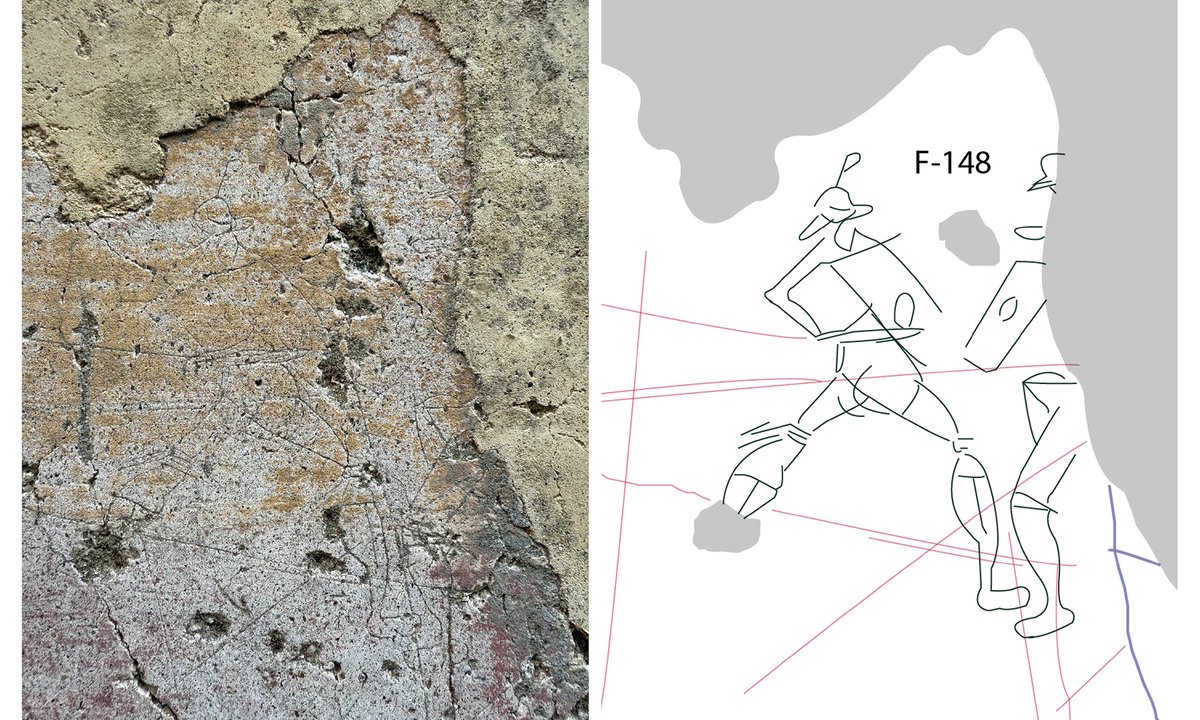
1 week agoRoman mosaic proves topless FEMALE gladiators fought animals
'Women fighting beasts in arena games are attested by the written sources, but no visual source is known to show their image,' author Alfonso Mañas wrote in the International Journal of the History of Sport.
History

fromArchDaily
2 weeks agoStefano Boeri Interiors Restores Southern Ambulatory Areas of the Colosseum in Rome
The intervention 'restored the perception of the monument's original scale and pavement level,' while enabling visitors to approach the structure more directly and understand the sequence of the ambulatory and its arches. This recalibration of levels, based on archaeological findings and geometric studies, also enabled the reorganization of the stormwater drainage system, integrating surface slopes and transitions into the paving design while maintaining coherence with the monument's historical configuration.
Renovation
Arts
fromThe Art Newspaper - International art news and events
1 week agoOne of Donatello's most important bronze statues is being restored: should it ever be shown outdoors again?
Donatello's Gattamelata statue is undergoing restoration and its future location remains uncertain after being moved indoors due to corrosion.
fromColossal
3 weeks agoHistoric Architecture Emerges from Stone in Matthew Simmonds Ethereal Sculptures
From unassuming hunks of Carrara marble and limestone, Matthew Simmonds carves realistic, miniature gothic cathedral arches, stairwells, and colonnades. Often based on architectural details of real places, such as cities around Tuscany and Germany's Bamberg Cathedral, the sculptures portray intimate details of corners, vaulted ceilings, arcades, and stairwells that can sometimes be peeked through additional apertures.
Berlin music

Madrid food
fromConde Nast Traveler
1 month ago11 Family-Friendly Hotels in Rome Offering Gladiator Schools, Free Gelato, Teen Spas, and More
Rome is highly family-friendly with children treated as main events rather than afterthoughts, featuring child-oriented accommodations, tours, and dining options throughout the city.
Arts
fromArtnet News
2 weeks agoLost Parthenon Piece Unearthed From Lord Elgin's Shipwreck | Artnet News
Greek underwater archaeologists recovered a small Parthenon marble fragment off Kythira island, likely from the temple's ornamental crown, during an excavation of Lord Elgin's sunken ship from 1802.
fromPsychology Today
1 month agoWhat Plato Would Have Seen at the Olympics
Alysa Liu became the youngest national champion in American figure skating at 13. She made the 2022 Olympic team at 16. And she hated it. After Beijing, she retired, threw her skates in a closet, enrolled at UCLA, and spent 18 months figuring out who she was when nobody was giving her a score. Then she walked into a rink, landed a triple like she had never left, and called her coaches.
Psychology

fromwww.thehistoryblog.com
3 weeks agoSamnite burials of children with bronze warrior belts found
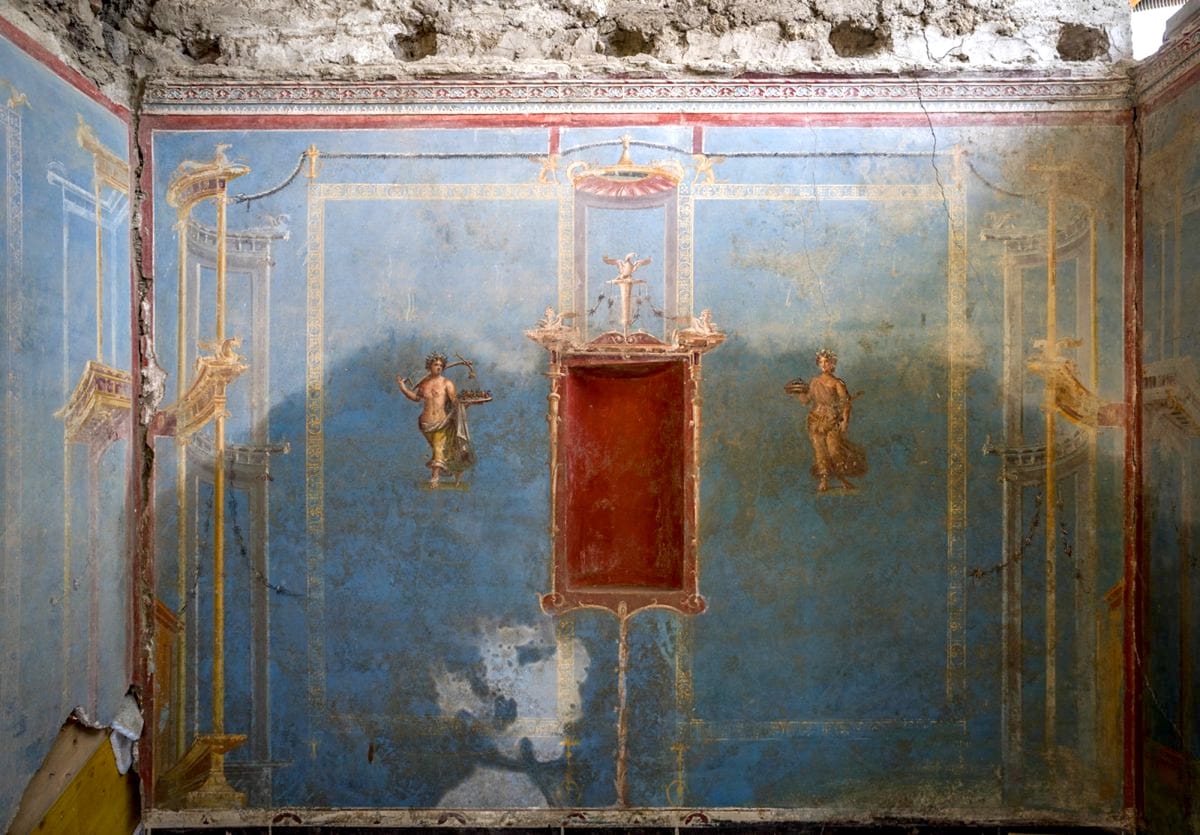
The excavation ultimately unearthed 34 burials, 15 of them belonging to children between two and ten years old when they died. The graves are clustered in groups, probably reflecting family nuclei. Most the grave types are earthen pits covered with roof tiles angled against each other.
History

fromJezebel
1 month agoThe Time I Learned Greek Scholars Are Canonically Hotter Than Roman Scholars
It started with a book launch in 2021. I'd been living in London as a social media journalist when I asked my then-publication's culture editor to send me to one of these exclusive-sounding events, as 1) I'd never been and 2) I just really wanted to be a person who "has a book launch to go to." Thankfully, there was one that exact day-and he put my name on the list for the release of Mary Beard's Emperor of Rome. Huzzah.
Books
History
fromMedievalists.net
3 weeks agoMedieval Bronze Doors by Donatello Return to Florence After Restoration - Medievalists.net
Donatello's fifteenth-century bronze doors have been restored and returned to the Old Sacristy of San Lorenzo in Florence, showcasing innovative sculptural techniques and Medici family patronage.
fromApartment Therapy
1 month agoThis Soothing Italian Philosophy Transforms the Way I Do Everything
"Piano piano" is an old Italian saying that sounds nonsensical, but is actually full of wisdom, especially if you, like me, are finding yourself wishing away these frigid winter days and hoping spring and summer gets here fast. These days, I've found myself rushing from one thing to the next, frustrated at the smallest things, from post office lines to just missing my train. And I'm ready to make a change.
Mindfulness
fromOpen Culture
4 weeks agoWho Would Be Emperor If the Roman Empire Still Existed Today?
Very rare to see this level of tailoring nowadays, even on the wealthy. Even when not attending major sporting events, the king's collars always hug his neck, his lapels are always well-proportioned, the lines of his coat always flow into his trousers, and his four-in-hand always has just the right asymmetry.
History
Arts
fromThe Art Newspaper - International art news and events
3 weeks ago'It has nothing to do with Michelangelo': expert wades in on painting newly attributed to Renaissance master
Belgian art historian Michel Draguet claims to have discovered a Michelangelo painting from the 1540s, but leading Renaissance experts dispute the attribution based on artistic style analysis.
fromOpen Culture
1 month agoRoman Statues Weren't White; They Were Once Painted in Vivid, Bright Colors
One tenet of classical idealism is the idea that Roman and Greek statuary embodied an ideal of pure whiteness-a misconception modern sculptors perpetuated for hundreds of years by making busts and statues in polished white marble. But the truth is that both Greek statues and their Roman counterparts were originally brightly painted in riotous color.
History

fromYanko Design - Modern Industrial Design News
2 months agoThis 3D-Printed Roof Is Saving 2,000-Year-Old Roman Tombs - Yanko Design
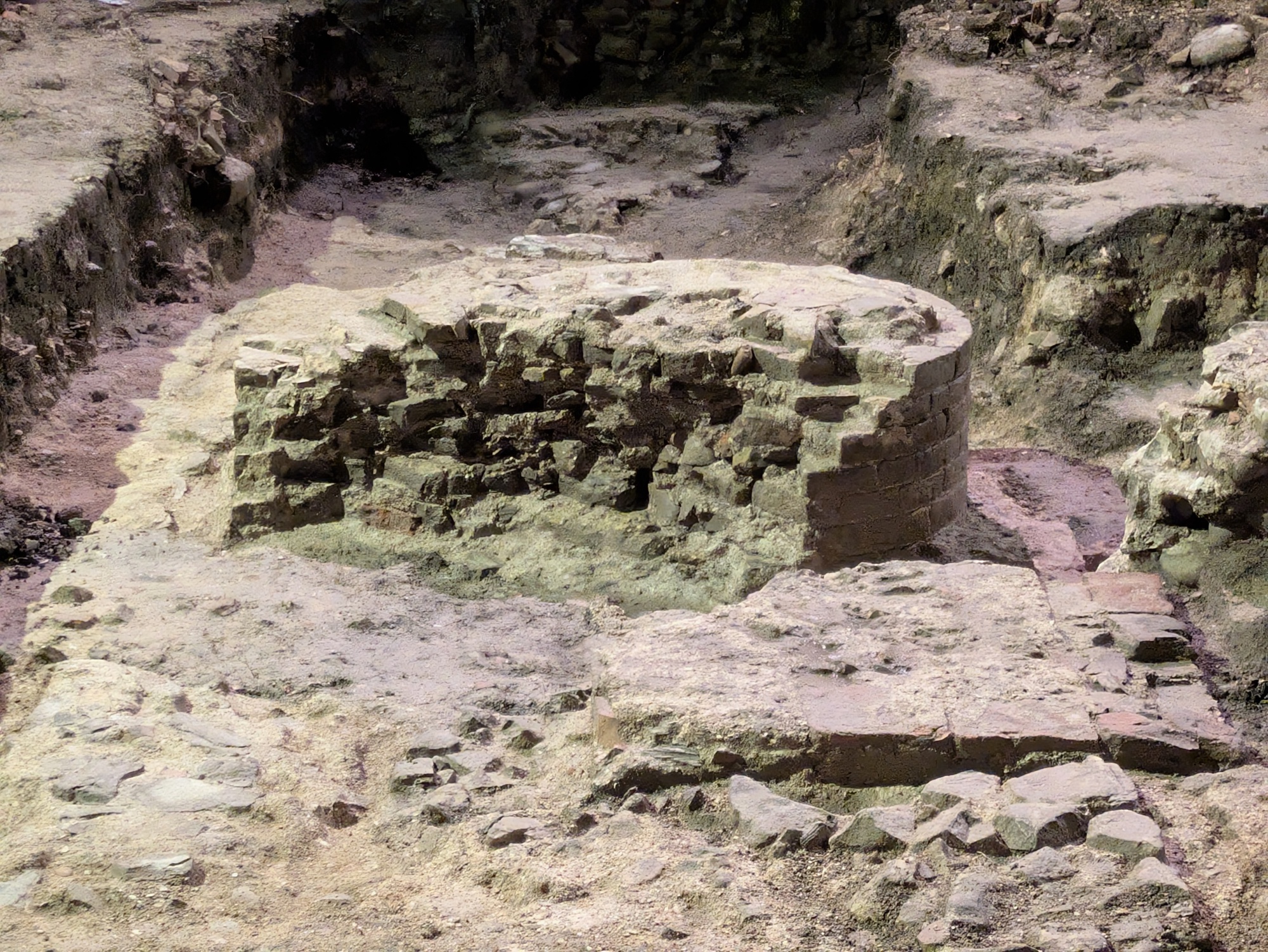
What makes this canopy special isn't just that it uses 3D printing technology, though that's certainly impressive. It's the way the designers thought about the entire system. Rather than simply throwing a roof over the tombs and calling it a day, they created what's essentially a climate-control system disguised as architecture. The canopy features a double-layer envelope that does way more than keep rain off ancient stone. Built into this roof are ventilation and air extraction components that actively regulate temperature and humidity.
Design
fromOpen Culture
1 month agoSeven Wonders of the Ancient World: From the Walls of Babylon to the Sewers of Rome
Seven were the strings of the lyre (unless there happened to be eight or nine), seven were the gates of Thebes, and seven were the "wandering stars" in the night sky (if you count the sun and moon). The identity of the wonders was less important than the length of their list, and indeed, additions and changes were proposed since the beginning.
History

fromdesignboom | architecture & design magazine
2 months agoterracotta tiles clad wild souls clean-eating venue's exterior by studiomateriality in athens
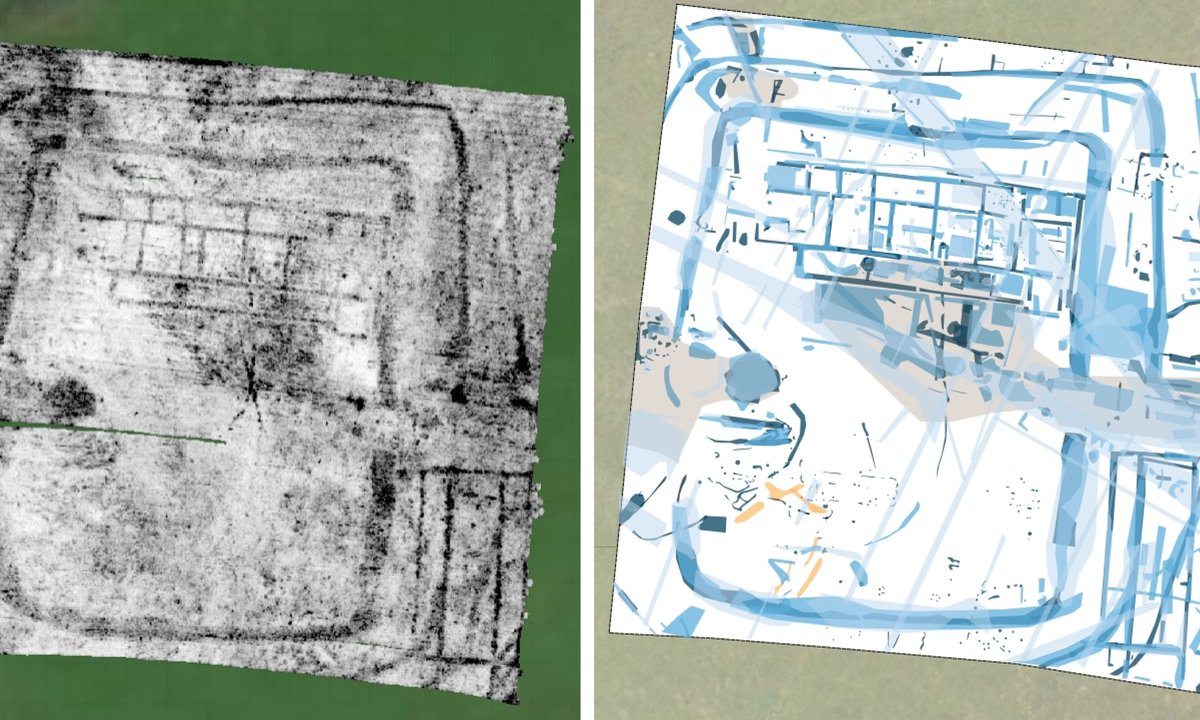
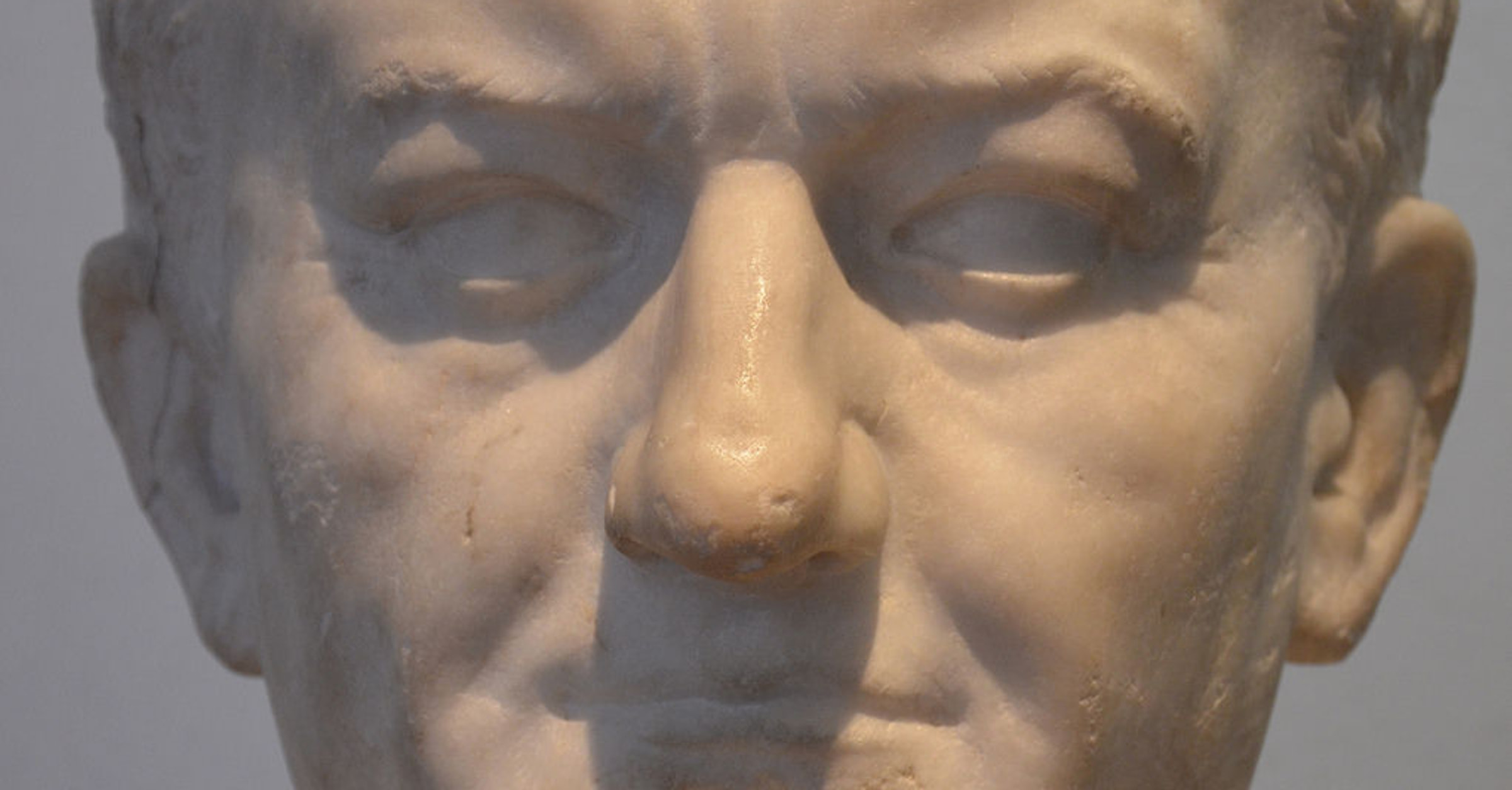
Wild Souls is a clean-eating venue designed by studiomateriality and located at the corner of two busy streets in the Kolonaki district of . Positioned within a dense urban context, the project integrates into the city's daily movement while establishing a clear architectural identity at the street corner. The exterior is fully clad in terracotta tiles, giving the building a consistent material presence on all visible .
Design


History
fromOpen Culture
1 month agoRome in 1890 Captured in Color Photographs: The Colosseum, Forum, Trevi Fountain & More
English gentlemen completed their education through the Grand Tour of Europe, primarily Italy, which profoundly influenced Romantic poets like Byron and shaped their artistic vision of classical civilization in ruins.
History
fromwww.thehistoryblog.com
1 month agoEtruscan urn's polychromy restored after 1966 Florence flood
The Bottarone Urn, a 425-380 B.C. Etruscan alabaster cinerary urn depicting a married couple, was restored to its original vivid polychromy after 60 years of mud damage from Florence's 1966 Arno River flood, revealing Egyptian blue pigment for the first time.
fromwww.thehistoryblog.com
1 month agoCenturion's tombstone reused in someone else's grave
Both of the cyst graves feature funerary markers reused as building material. One of them contains the partially preserved tombstone of Legio I Italica centurion Gaius Valerius Verecundus was engraved with a wreath of which only traces remain and an inscription that describes him as having been heavily pressed by fate.
History
History
fromMedievalists.net
1 month agoEast Roman Archaeology: Goals and Challenges, with Marica Cassis - Medievalists.net
Archaeology reveals material evidence of daily life, settlement patterns, and economic systems in the East Roman world that textual sources cannot provide, while facing challenges in establishing itself as a distinct field separate from classical and Islamic archaeology.
fromwww.thehistoryblog.com
1 month agoBronze Neptune from Lyon arrives in Rome
The Neptune of Lyon, one of the largest and most important bronze statues from Roman Gaul, has arrived in Rome for a one-time guest starring appearance at the Giovanni Barracco Museum of Ancient Sculpture. The statue is in the permanent collection of the Lugdunum Musee et Theatres Romains in Lyon, and is being loaned to the sculpture museum as part of an extraordinary exchange of ancient works between the two cities.
History
Arts
fromdesignboom | architecture & design magazine
2 months agohotel roma: nicole cherubini exhibits surrealist ceramic sculptures at friedman benda
Nicole Cherubini's Hotel Roma features hand-built ceramic sculptures combining collage-like motifs, layered glazes, and Surrealist/feminist themes referencing Leonora Carrington and wartime resilience.
fromHyperallergic
2 months agoBecoming Caravaggio
Marciari brought me to a very different place: the luxurious, languid heat of late-summer Rome, in one of the final years of the 16th century. There, an ordinary boy has been made to hold a heavy basket of fruit for far longer than he'd like in a hot, airless studio, and a young, unknown painter is on the precipice of greatness.
Arts
fromwww.thehistoryblog.com
2 months agoMonumental Republican tombs found in Rome suburb
An monumental early Republican-era funerary complex has been discovered in a suburb of Rome. The excavation of the Via di Pietralata east of Rome also uncovered a stretch of an ancient road, a small cult building and two monumental basins dating back to the 3rd and 2nd centuries B.C. Remains from this early in the Republican era are scarce in the Eternal City, which make these finds very archaeologically significant.
History
fromMail Online
1 month agoThe bone that proves Hannibal really DID cross the Alps with elephants
While the bone was worn and poorly preserved, archaeologists managed to identify its origin by comparing it with modern elephant and mammoth bones. Despite there not being enough DNA to confirm the exact species, the researchers were able to carbon date a tiny sample of the bone. This places the elephant's death between the late fourth and early third centuries BC - right in the middle of the Second Punic War.
History
fromwww.thehistoryblog.com
2 months agoLate Antique necropolis with deliberately broken pottery found in France
Adjacent to the masonry house is a burial ground in use from the 4th century through the first half of the 6th century. Approximately 60 individual inhumation burials have been unearthed, arranged in rows that are increasingly dense with graves as they approach the dwelling. The deceased were buried in cysts formed by reused tegulae (large clay roof tiles) or by rubble walls that supported wooden planks. They were placed in the graves in supine position facing west, north or south.
History
fromMedievalists.net
1 month agoWhy were pseudo-Arabic inscriptions placed on churches in Greece?, with Alicia Walker - Medievalists.net
A conversation with Alicia Walker on the pseudo-Arabic inscriptions (or pseudo-kufic) that appear on a number of tenth- and eleventh-century churches in Greece, most notably at the monastery of Hosios Loukas. What did the Arabic script signify in Orthodox culture at the time if not tension with Islam? Alicia Walker is Professor of History of Art at Bryn Mawr College.
History
[ Load more ]