#roper-technologies
#roper-technologies
[ follow ]
#ai #automation #robotics #artificial-intelligence #humanoid-robots #productivity #industrial-automation
fromFast Company
2 days agoAI has come for Domino's pizza tracker, and we're not mad about it
The new tracker features a simplified progress bar that shows just four stages of pizza creation. The new design was rolled out to all platforms, and there's also new Lock Screen widgets for iOS that bring the pizza chain's most famous tech feature to the Liquid Glass age.
Marketing tech
#ai


Artificial intelligence
fromwww.businessinsider.com
2 days agoMeta's AI push is reshaping how work gets done inside the company
Meta is prioritizing AI tools to enhance productivity and efficiency among its employees, impacting job roles and company structure.
#generative-ai


Women in technology
fromFast Company
3 days agoAI isn't just reshaping productivity and threatening to kill jobs. It's changing how we lead, communicate, and treat each other. It's also creating a new gender gap
Generative AI is reshaping communication, trust, and cultural interactions beyond productivity and efficiency concerns.


#artificial-intelligence
Business intelligence
fromTNW | Artificial-Intelligence
3 days agoHuman-governed AI. How Fortis Solutions is building trust in intelligent infrastructure
AI is reshaping work while emphasizing the necessity of human governance and intention in technology.
Business intelligence
fromEntrepreneur
4 days agoForget the Hype. Here's How AI Is Actually Changing Business Operations
AI is transforming business operations from task automation to strategic decision intelligence.

Business intelligence
fromApp Developer Magazine
1 week agoHow Industrial AI Is Transforming Operations in 2026
Artificial intelligence is transitioning from experimentation to deployment, with a focus on measurable business outcomes and infrastructure improvements.


fromThe Verge
1 week agoJohn Deere, Garmin, and Philips may have undermined military right to repair
Companies such as John Deere, Garmin, and Philips have collectively spent millions on lobbying efforts related to the National Defense Authorization Act, particularly concerning repair issues.
SF politics
Business intelligence
fromComputerWeekly.com
3 days agoWilson Connectivity, Autonomous Systems team for in-building wireless service | Computer Weekly
Wilson Connectivity and Autonomous Systems partner to automate in-building wireless infrastructure management, enhancing deployment and ongoing optimization.
fromTNW | Deep-Tech
2 weeks agoUniversal Robots and Scale AI launch the UR AI Trainer
Our customers, ranging from large enterprises to AI research labs, are no longer just asking for AI features. They need a way to collect high-fidelity, synchronized robot and vision data to train AI models on the same robots they intend to deploy. Our AI Trainer is the industry's first direct lab-to-factory solution for AI model training.
Data science
fromEntrepreneur
2 weeks agoData Centers Are Deploying $175,000 Robot Dogs for Security. Companies Say They're Worth It.
Boston Dynamics' Spot ranges from $175,000 to $300,000, depending on configuration. Ghost Robotics' Vision 60 starts at $165,000. Both companies pitch them as cheaper alternatives to human guards, who cost around $150,000 annually. "Typically, our customers have a payoff within two years," Merry Frayne, senior director of product management at Boston Dynamics, told Business Insider.
Boston
UK news
fromComputerWeekly.com
3 weeks agoUnreliable fleet connectivity driving employee exodus | Computer Weekly
UK fleet operators face significant connectivity challenges that threaten competitiveness, with unreliable networks causing customer complaints and operational disruptions despite limited failover protections.
Roam Research
fromTheregister
2 weeks agoWater company spins out homegrown AI after LLMs failed it
Large language models provided confidently incorrect information about materials science, causing a water desalination startup to waste four months and $200,000 validating a material choice that ultimately proved inferior.
Venture
fromTechCrunch
3 weeks agoRivian spin-out Mind Robotics raises $500M for industrial AI-powered robots | TechCrunch
Mind Robotics, spun from Rivian, raised $500 million Series A to develop AI-powered industrial robots with human-like dexterity for factory automation tasks beyond repetitive work.
Venture
from24/7 Wall St.
3 weeks agoRobotics Stocks Soar Tuesday: Ouster Up 9% and Teradyne Jumps 3%
Ouster surged 8-9% after reporting Q4 2025 revenue of $62.18 million, 51% above estimates, with 106.6% year-over-year growth and first profitable quarter, while Teradyne climbed 3% as robotics and automation sectors advance.
fromLondon Business News | Londonlovesbusiness.com
3 weeks agoWhy long range communication is useful for industrial monitoring - London Business News | Londonlovesbusiness.com
Long-range radio waves can pass through obstacles more easily, which makes them perfect for monitoring expansive factories or outdoor infrastructure. A recent report by Fabrity highlighted that these systems use very little power. This allows sensors to operate for 5 to 10 years on a single battery. Using such tech means you do not have to install expensive wiring across your entire site.
Roam Research
Startup companies
fromBusiness Insider
1 month agoHow robotics could upend the US manufacturing industry
Machina Labs promotes distributed, flexible, portable robotics-enabled manufacturing to leapfrog centralized factories and accelerate U.S. reindustrialization in defense, aerospace, and automotive sectors.

fromdzone.com
2 months agoManaging Changing Hardware/Peripherals in a Robust POS
Retail point-of-sale systems today offer a wide range of options for peripherals and hardware. Their technical specifications play a major role in selection, and big retailers often choose multiple vendors to reduce a single point of failure. This gives them an advantage to negotiate price or support as well. Technically, these peripherals also require updating with new models and may have new feature sets. This necessitates the redevelopment of point-of-sale applications, increasing development costs.
Information security
#humanoid-robots
Artificial intelligence
fromTechRepublic
2 weeks agoHumanoid Robots Are Getting Cheaper - But Enterprise Costs Are Just Getting Started
Falling hardware costs and AI advancements are enabling real-world deployments of humanoid robots, shifting focus to operational infrastructure and software differentiation.
Artificial intelligence
fromFuturism
2 weeks agoFactory Paying Human Worker to Watch Robot Worker All Day
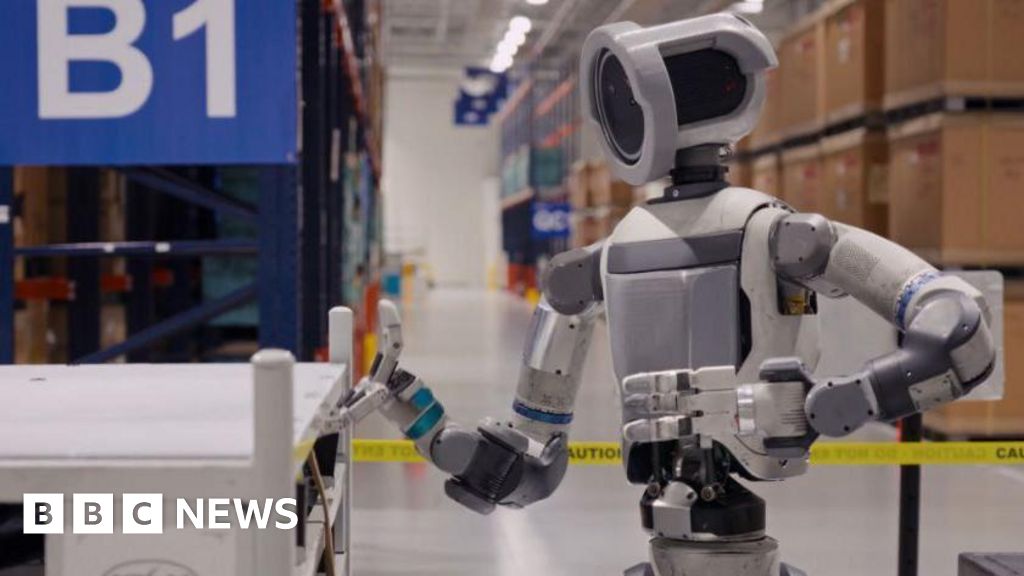
Humanoid robots like Digit are being deployed in factories with human supervisors, with costs expected to drop from $10-$25 per hour to $2-$3 per hour, potentially displacing workers earning $20 per hour.

Artificial intelligence
fromTechRepublic
2 weeks agoHumanoid Robots Are Getting Cheaper - But Enterprise Costs Are Just Getting Started
Falling hardware costs and AI advancements are enabling real-world deployments of humanoid robots, shifting focus to operational infrastructure and software differentiation.
Artificial intelligence
fromFuturism
2 weeks agoFactory Paying Human Worker to Watch Robot Worker All Day
Humanoid robots like Digit are being deployed in factories with human supervisors, with costs expected to drop from $10-$25 per hour to $2-$3 per hour, potentially displacing workers earning $20 per hour.
fromBusiness Matters
1 month agoWhy Tolerance Management Is a Business-Critical Skill in Modern Manufacturing
We are now in a time of manufacturing where precision is more than a technical necessity; it's a business requirement. The more complex, globally dispersed and demanding things get, the less slack remains in the system. Under these circumstances tolerance management has become a decisive competence and affects competitiveness not only in terms of controlling costs, ensuring quality and improving production efficiency but also for long term market success.
Business
Artificial intelligence
from24/7 Wall St.
2 weeks agoAI Might Be Coming for BlueCollar Work-And These Robotics Stocks Still Look Wildly Underestimated
White-collar jobs face near-term AI automation risk, while blue-collar roles may follow as physical AI and robotics advance, creating uncertainty across employment sectors.
Artificial intelligence
fromComputerWeekly.com
2 weeks agoLab for autonomous agents to drive boost in manufacturing in India | Computer Weekly
IBM Research launches Emergence India Labs to develop autonomous systems for manufacturing, logistics, and infrastructure, positioning India as a frontier AI research hub beyond traditional IT services.
Artificial intelligence
fromMedium
2 weeks agoFrom Dumb Devices to Digital Teammates: How Agentic AI is Revolutionizing the Internet of Things
Agentic AI transforms IoT from obedient automation into intelligent systems that anticipate needs, reason through problems, and take initiative rather than simply following programmed commands.
fromBusiness Insider
2 months agoBoston Dynamics CEO told us how the humanoid robot revolution begins
Its name is Atlas, an all-electric humanoid robot from Boston Dynamics, the Massachusetts-based company and maker of the four-legged inspection robot, Spot, and the mobile warehouse robot, Stretch. Hyundai, which owns Boston Dynamics, unveiled the latest version of Atlas at the Consumer Electronics Show in Las Vegas on January 5. During live demonstrations, Atlas was seen waving hello to its audience before moving car parts from one rack to another.
Gadgets
[ Load more ]