Design
fromPsychology Today
7 hours agoThe Future of Brain Health Is Architecture
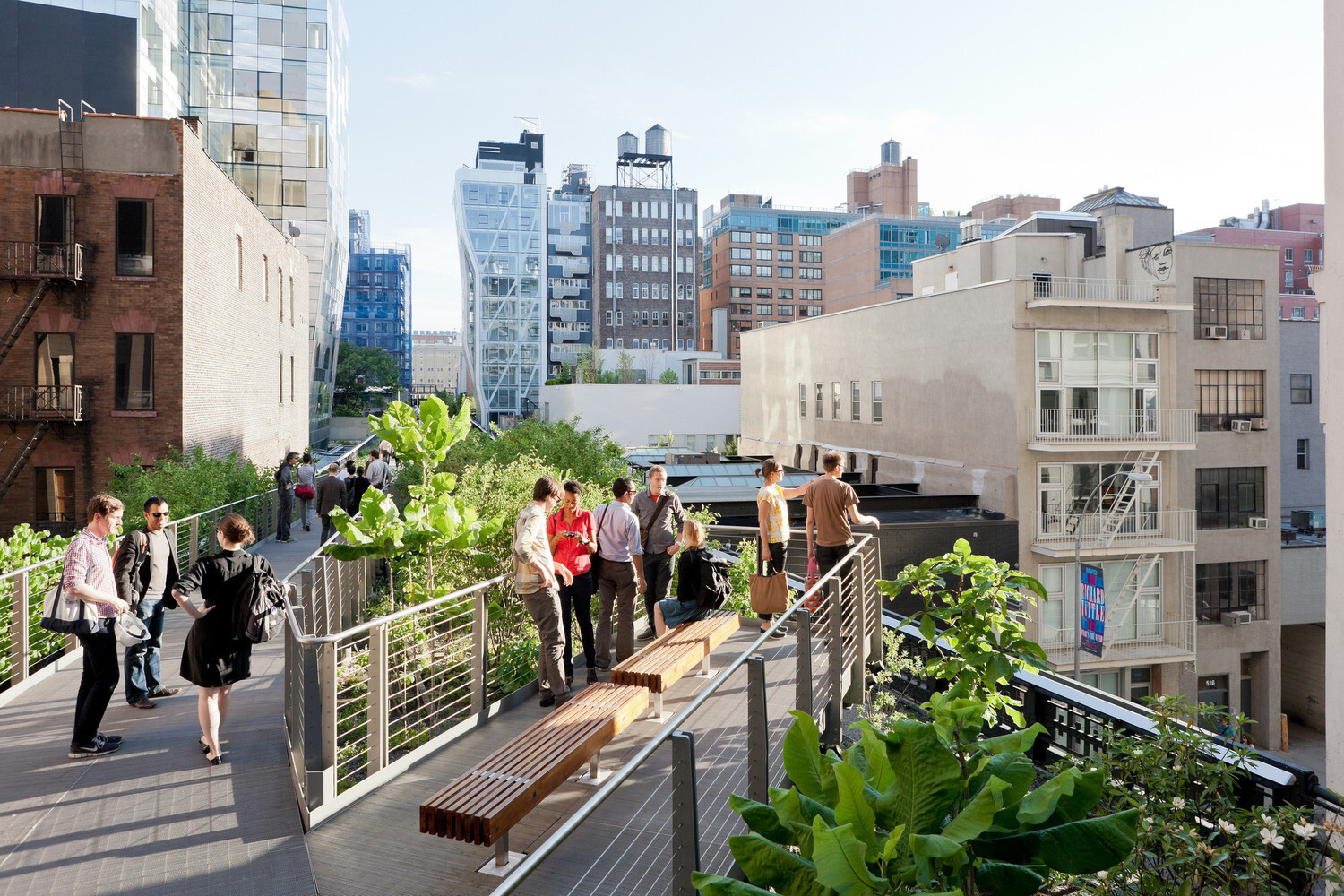
The built environment significantly influences mental health, mood, and performance, with neuroscience guiding design for improved well-being.
'Our results show that the next 20 years are critical,' lead author Dr Rob Cooke told the Daily Mail. 'By around 2050, we reach a point where the choices we make on emissions and land use will largely determine whether Britain moves towards a much more degraded or a much more nature‑positive future.'
Wildfires have become an ever bigger problem in Canada. The 2018 wildfires were the biggest in British Columbia's history, but this record was broken in 2021, and then again in 2023, when fires consumed an area three times the size of the Canadian province of Nova Scotia and the smoke travelled as far as New York City.
Around a third of UK gardeners use pesticides, and our studies found that house sparrow numbers, for example, were nearly 40% lower in gardens where the pesticide metaldehyde was used. By reducing pesticide use, you can actively encourage birds back into your outdoor spaces, as they rely on invertebrates such as slugs and snails as natural prey.
Ontario will consolidate its 36 conservation authorities into nine across the province. Environment Minister Todd McCarthy says there will be no job losses as a result. He says the province listened to feedback after several town halls and 14,000 comments on its plan, which initially proposed having seven conservation authorities.
An unnamed tourist saw it and told Aidan Moore, who works for Alcatraz City Cruises. Moore told SFGATE that he was initially skeptical, but the guest's iPhone footage left little room for doubt. The video shows, not a sea lion or an otter, but an actual Canis latrans, doggedly dogpaddling, then clambering out of the water, noticeably shaky and struggling to settle tired paws on the craggy rocks.
According to color psychology, this soothing shade helps decrease stress and improve focus-and travelers can reap these much-deserved benefits in lush landscapes around the world. Here are 10 of the greenest places on earth, which combine serenity with unforgettable adventures.
Animals' risk of becoming roadkill depends on several factors, including how many vehicles are on the road, how many animals are on the road, and how animals and human drivers behave, explains Tom Langen, a professor of biology at Clarkson University, who studies animal-vehicle collisions. DST can minimize these collisions, however.
Here dwells the indigenous Tzotzil community which has kept a pastoral way of life against the march of time. Apart from the odd forest ranger and passerby, Ruvalcaba's film focuses almost entirely on the Tzotzil women. Together, they tend herds of sheep which they still shear by hand, and use traditional tools for spinning yarns and natural dye for fabrics.
Climate breakdown is occurring more rapidly with the heating rate almost doubling, according to research that excludes the effect of natural factors behind the latest scorching temperatures. It found global heating accelerated from a steady rate of less than 0.2C per decade between 1970 and 2015 to about 0.35C per decade over the past 10 years.
While the data shows 80% of people live within walking distance of green or blue spaces such as a river, park or woodland, it also reveals a disparity between rural and poorer urban areas. In some areas of local authorities, fewer than 20% of residents live close to these spaces, according to data released by the Department for Environment, Food and Rural Affairs on Wednesday.
Across history, the relocation of capital cities has often been associated with moments of political rupture, regime change, or symbolic nation-building. From Brasília to Islamabad, new capitals were frequently conceived as instruments of centralized power, territorial control, or ideological projection. In recent decades, however, a different set of drivers has begun to shape these decisions. Rather than security or representation alone, contemporary capital relocations are increasingly tied to structural pressures such as demographic concentration, infrastructural saturation, environmental risk, and long-term resource management.
London is the only place in the UK where you can find scorpions, snakes, turtles, seals, peacocks, falcons all in one city and not London zoo. Step outside and you will encounter a patchwork of writhing, buzzing, bubbling urban microclimates. Sam Davenport, the director of nature recovery at the London Wildlife Trust, emphasises the sheer variation in habitats that you find in UK cities, which creates an amazing mosaic of wildlife.
The body is a shifting landscape transformed by surfaces and sensations. Each look captures a different tactile world: the heat of blood, the cool weight of metal, the yielding drift of water. The result is a sculptural study of how the elements carve, shield, and release the self. The materials we embody become the emotions we carry, and the body becomes a materialised exhibition of our emotions, from the pulse of Blood to the discipline of Metal to the surrender of Water.
In Indra's Net of pearls and jewels, every gem reflects every other, a shimmering image of interdependence. This ancient Vedic metaphor for connection across the cosmos also illuminates what the environmental philosopher Glenn Albrecht first proposed in 2014as 'theSymbiocene': the era after the Anthropocene, in which human technologies take their cues from living systems and work in partnership rather than through dominance.
Though they're individually tiny, parking spots quietly play a dominant role in shaping urban landscapes. Most US cities dedicate at least 25% of their developable land to them. Some, even more. That land usage doesn't only determine the way a city looks. It also means covering large swathes of urban areas in heat-absorbing asphalt, which contributes to making summers hotter and heightens the risk of flooding since it prevents drainage during storms and heavy rainfall.
When British author Karen Armstrong won the TED prize in 2008, she used the money to convene a group of religious thinkers from a wide range of faiths to craft an updated version of the Golden Rule for the 21st century. What emerged was the Charter for Compassion, which calls on people around the world "to work tirelessly to alleviate the suffering of our fellow creatures, to dethrone ourselves from the center of our world and put another there, and to honor the inviolable sanctity of every single human being, treating everybody, without exception, with absolute justice, equity and respect."
Wildlife populations are in decline. Recreation sites are crowded and often underfunded. Wildfires are larger, more destructive and harder to control. Climate change is reshaping natural systems, from ocean fisheries to mountain snowpacks, faster than institutions can respond. At the same time, communities are being asked to host new energy projects, transmission lines and mineral development - often without clear processes, adequate resources or trust that decisions are being made in the public interest.
Beneath the visible surface of cities lies an invisible architecture. Subways, tunnels, water systems, data cables, and bunkers form a dense network that sustains urban life while remaining largely unseen. The ground beneath our feet is not a void but a complex territory that holds the infrastructures, memories, and anxieties of our age. In recent years, as land becomes scarce and climate pressures intensify, architects and urbanists have turned their gaze downward, rediscovering the subterranean as both a physical and conceptual frontier.
The House of Elements, set to become the crown jewel of Orientarium Zoo in Łódź, Poland, takes the classical elements (earth, ice, water, fire, and air) and transforms them into a 6,000-square-meter narrative experience. Rather than designing a building where you walk from exhibit to exhibit, VMA created a continuous downward-then-upward journey that mirrors the evolution of life itself. Designer: VMA Design Studio for Orientarium Zoo
The world spends 30 times more money destroying nature than protecting it. That's according to a new report from the United Nations Environment Programme (UNEP) that exposes a massive gulf between so-called "harmful investments" and financing that promotes nature preservation. The global environment agency's latest "State of Finance for Nature" (SNF) report is calling to phase out the US$7.3 trillion (6.2 trillion) in global investments that damage nature including into high-emissions energy infrastructure and manufacturing, for example.
Many people look up to admire the silhouette of raptors, some of the planet's largest birds, soaring through seemingly empty skies. But increasingly, research shows us that this fascination runs both ways. From high above, these birds are watching us too. Thanks to the development of tiny GPS tracking devices attached to their bodies, researchers are getting millions of data points on the day-to-day lives of these apex predators of the skies, giving us greater insight into where they hunt and rest.