#spheres-of-influence
#spheres-of-influence
[ follow ]
#nato #us-foreign-policy #venezuela #international-relations #china #greenland #soft-power #donald-trump



Europe politics
fromenglish.elpais.com
2 weeks agoThe EU is preparing to slam the door on Trump and cling to multilateralism
EU leaders prioritize multilateralism and rules-based order while addressing energy price surges and geopolitical instability driven by US-Iran conflict and Trump's foreign policy.
World news
fromwww.aljazeera.com
3 weeks agoThe war of signals: How Russia and China help Iran see the battlefield
Russia is providing Iran with precise US military location intelligence, fundamentally shifting the electromagnetic warfare balance in the Gulf and eroding decades of American-Israeli dominance.
Europe news
fromLondon Business News | Londonlovesbusiness.com
1 month agoCould Iran strategy ultimately shape European politics? - London Business News | Londonlovesbusiness.com
Asian markets surge with Korean KOSPI gaining 10%, while European stocks show broad-based dip buying; UK construction PMI signals weakness in residential sector with highest input costs since July 2025, and oil prices remain stable despite Strait of Hormuz disruptions.
#european-foreign-policy
Europe politics
fromwww.theguardian.com
3 weeks agoVon der Leyen calls for EU foreign policy to be more realistic and interest-driven'
Europe must adopt a more realistic, interest-driven foreign policy and cannot rely solely on the rules-based international system to protect its interests and security.
EU data protection
fromInfoWorld
1 month agoSovereignty isn't a toggle feature
European cloud alternatives like Hetzner and Scaleway can deliver comparable performance and capabilities to AWS while significantly reducing costs, though they require greater operational responsibility and architectural commitment to sovereignty.
Business
fromHarvard Business Review
1 month agoRethinking Strategy in a Hyperpolitical World
Corporate decisions face intense public scrutiny for political implications, resulting in boycotts, revenue loss, reputational damage, and executive terminations, yet political engagement remains unavoidable for businesses.

Miscellaneous
fromFortune
1 month ago'A deal is a deal': EU demands Trump stand by his word amid 'pure tariff chaos' after Supreme Court ruling | Fortune
EU demands U.S. clarify and honor trade commitments after U.S. tariff changes and court ruling, warning of pausing ratification and calling for no tariff increases.
fromwww.theguardian.com
1 month agoThe world order we're leaving behind may be replaced by no order at all
The Canadian prime minister, Mark Carney, inspired a wave of enthusiastic nodding among the cosmopolitan crowd gathered in Davos last month when he took to the podium and proclaimed that the world order underwritten by the United States, which prevailed in the west throughout the postwar era, was over. The organizing principle that emerged from the ashes of the second world war, that interdependence would promote world peace by knitting nations' interests together in a drive for common security and prosperity, no longer works.
World news
fromThe Atlantic
1 month agoThe Undiplomatic Diplomats
American diplomats are supposed to represent the nation, advocate for the interests and policies of the U.S. government, and stay on generally good terms with the country to which they're assigned. Even when they are sent to places that have an adversarial relationship with the United States, they are expected to maintain decorum while conveying messages these regimes may not want to hear.
US politics
fromThe Nation
3 weeks agoThe "Rules-Based Order" Is Gone. Let's Not Bring It Back.
The very same European leaders and anointed members of the Blob expressing outrage about Greenland were largely silent or supportive as Trump bombed Iran and Nigeria, abducted Maduro, and continued to aid and abet Israel's genocide in Gaza.
World politics
fromwww.aljazeera.com
1 month agoHas BRICS given up on challenging Western economic dominance?
Jim O'Neill, the economist who coined the term BRIC' 25 years ago, argues that the group is losing its relevance. At its peak, the BRICS coalition of economies Brazil, Russia, India, China and South Africa was seen as a serious attempt to move away from the United States dollar and the domination of Western economic institutions like the World Bank, Group of Seven (G7), and International Monetary Fund (IMF).
World news

Miscellaneous
fromFortune
1 month agoU.S. literally can't afford to lose superpower status as debt looms-so we're stuck in an 'increasingly loveless' marriage with Europe, analyst says | Fortune
The U.S. and Europe remain militarily and economically intertwined, making a trans-Atlantic split unlikely despite political tensions and efforts toward limited European autonomy.
World politics
fromFortune
1 month agoU.S. has shown China and Russia 'who really is a military power', says Trump's former commerce secretary-don't expect them to get involved in Iran | Fortune
China and Russia have condemned U.S.-Israel military action against Iran but offered no substantive support, indicating limited strategic interest in intervening in Middle Eastern conflicts.
Miscellaneous
fromFortune
2 months ago'Europe looks lost': Zelensky says Trump's actions in Venezuela and Iran should embarrass the 'Groundhog Day' movie in Davos | Fortune
Europe's slow, fragmented, and inadequate response has left Ukraine vulnerable to Russia's ongoing aggression and undermined European defense unity.
fromwww.aljazeera.com
2 months agoWhy is the US quitting international organisations?
There are more signs that the United States is disengaging from the global order established after World War II. President Donald Trump has ordered his administration to pull out of more than 60 agencies, half of them part of the United Nations. Trump argues that being a member of these organisations is contrary to his country's interests. The secretary of state went as far as saying they're useless or wasteful.
World news
fromwww.eastbaytimes.com
2 months agoUS will exit dozens of international organizations as it further retreats from global cooperation
Most of the targets are U.N.-related agencies, commissions and advisory panels that focus on climate, labor and other issues that the Trump administration has categorized as catering to diversity and woke initiatives. The Trump Administration has found these institutions to be redundant in their scope, mismanaged, unnecessary, wasteful, poorly run, captured by the interests of actors advancing their own agendas contrary to our own, or a threat to our nation's sovereignty, freedoms, and general prosperity, the State Department said in a statement.
US politics
fromemptywheel
2 months agoTime to Unplug the American Century and Restart the Machine - emptywheel
Three of the four things that gave Trump a foothold, in my opinion, were failures in this century (the fourth is the legacy of slavery and the organized political violence that replaced it). The other three, though, are the War on Terror, the financial crisis, and social media. (COVID was the final catalyst, I think; having moved during the height of COVID, I can't express how much worse the US dealt with it than much of the EU.)
World news

fromwww.aljazeera.com
1 month agoFacing a mercurial Trump, countries scramble to forge new alliances
Countries are increasingly settling aside old grudges to lessen their reliance on Washington. As Donald Trump continues to unleash havoc on allies and trading partners, countries are scrambling to forge new alliances and mend broken ones as they try to shield themselves from a mercurial American president. The past few months have seen a flurry of diplomatic moves by governments seeking to lessen their reliance on the United States, including among countries that had long nursed grudges against one another.
World news
World news
fromFortune
2 months agoBRICS could become a new pillar of global governance-if its rapid growth doesn't erode its newfound clout | Fortune
BRICS' rapid expansion risks internal incohesion and failure to reform global governance despite its vast population, resources, and strategic potential.
fromThe Globe and Mail
2 months agoBusiness Brief: Heralding the age of Western decline
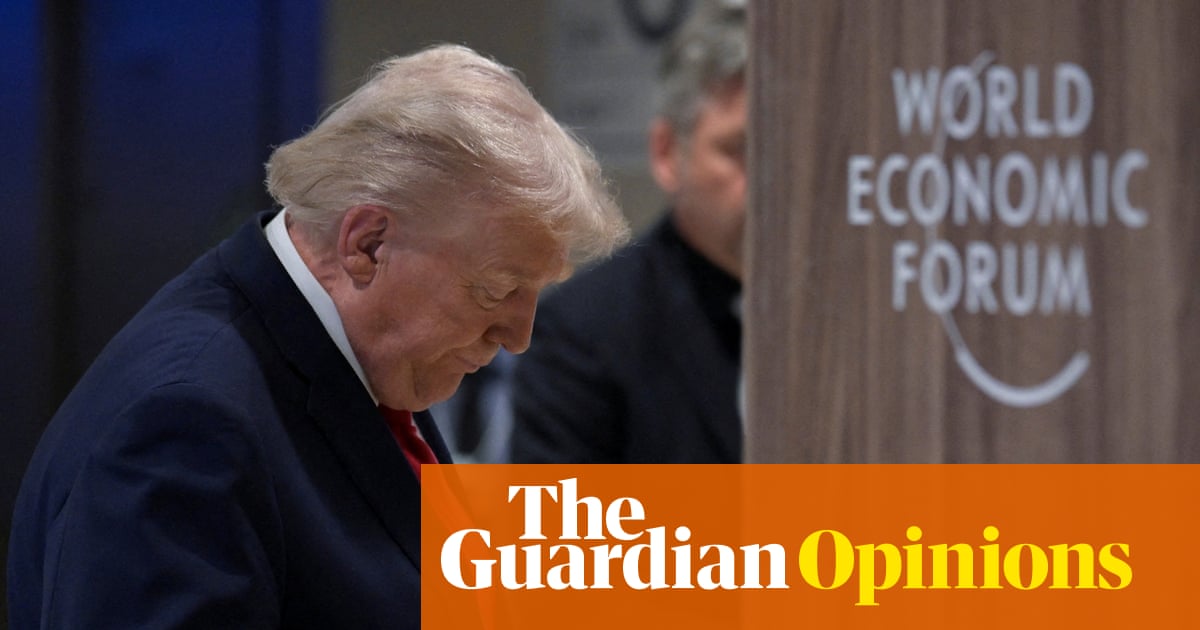
U.S. President Donald Trump, with his lust for Greenland and hectoring of Europe, thinks the world is at his mercy,and thatthe U.S. is invincible. He's right on the first point. But he discovered this week that he's wrong about the second one. In Davos at the World Economic Forum, Trump climbed down on his Greenland threats after his actions caused chaos in the markets.
World news
fromwww.aljazeera.com
2 months agoWhat role is China playing in global geopolitical transformations?
China's official discourse centres on the idea of peaceful rise, the commitment to non-interference in internal affairs, respect for sovereignty and territorial integrity, and economic partnerships based on mutual benefit. Beijing insists that relations with Washington should not slide into conflict, calling for a system of global governance built on cooperation rather than confrontation. Yet the geopolitical landscape reveals a wide gap between this discourse and reality. Donald Trump's return to the White House has brought back rhetorical escalation and increased geopolitical pressure.
World politics
fromwww.aljazeera.com
1 month agoCan the UN Security Council be reformed?
The UN secretary-general says the absence of African seats is indefensible'. African nations must have permanent seats on the United Nations Security Council, the head of the world body has told the African Union. Latin American countries and most of those in Asia do not have a permanent presence either, despite their huge populations. Can the UN be reformed? Presenter: Rishaad Salamat Guests: Olukayode Bakare visiting scholar in international relations and African politics at the University of Colorado Denver Mukesh Kapila former UN humanitarian coordinator
World news
fromAxios
2 months agoIan Bremmer: U.S. ending "own global order"
"The United States is itself unwinding its own global order," says Bremmer, also president and founder of GZERO Media. "The world's most powerful country is in the throes of a political revolution. In our lifetimes, we have never witnessed an American president so committed to and so capable of changing the political system and, accordingly, the United States' role in the world." Other risks: The report says Europe's center is faltering ... water is being weaponized as a resource for countries and businesses ... and U.S. attacks on clean energy endanger the nation's AI lead, giving China a potential advantage in post-carbon energy production.
World news
fromWIRED
2 months ago23 Ways You're Already Living in the Chinese Century
A decade ago, China's political leaders laid out an ambitious industrial plan: By 2025, they pledged, their country would be a world capital, with the goal of moving from "Chinese speed to Chinese quality, the transformation of Chinese products to Chinese brands." This is the difference, they wrote, between "Made in China" and "Created in China." At WIRED, we never take what the government (ours or anybody else's) says at face value.
World news
World news
fromFortune
2 months agoThe week Europe grew a backbone: how they went from calling Trump 'daddy' to saying 'no' to the big American bully | Fortune
European leaders moved from appeasement to resistance, publicly rejecting U.S. demands over Greenland and warning against threats among allies.
fromThe Atlantic
1 month agoPutin Will Miss Pax Americana
Now Donald Trump is dismantling the order that Putin had so long abhorred, and a new multipolar world is emerging in its place. Putin had thought he could rise to the top of such a system, in which raw economic and military might outweigh diplomacy and alliances. But he was mistaken: The norms and institutions of the postwar order actually masked Russia's vulnerabilities.
World news
[ Load more ]