#spoken-wordaudiobooks
#spoken-wordaudiobooks
[ follow ]
#poetry #literature #communication #open-mic #art #community-event #san-francisco #fiction #audiobooks #memoir #zendaya
Relationships
fromSilicon Canals
6 hours agoPsychology says people who would always rather call than text aren't demanding more of your time - they're asking for the one thing that separates a real conversation from the performance of one, which is the sound of another person being alive on the other end, and that need is not inconvenient, it is human - Silicon Canals
Phone calls foster deeper connections than text messages, capturing nuances of emotion that typed words cannot convey.

fromwww.theguardian.com
1 week agoDaunting, inspiring, comforting, terrifying: the writers who can make silence as eloquent as words
A vision lay before him: Fleet Street blanketed with snow, silent, empty, pure white, and, at the end of it, the huge and majestic form of Saint Paul's Cathedral. It was a spellbinding moment: the great thoroughfare temporarily devoid of carts and carriages, the cathedral looming blurrily out of the still-falling snowflakes a real-life snow globe.
London
fromSlate Magazine
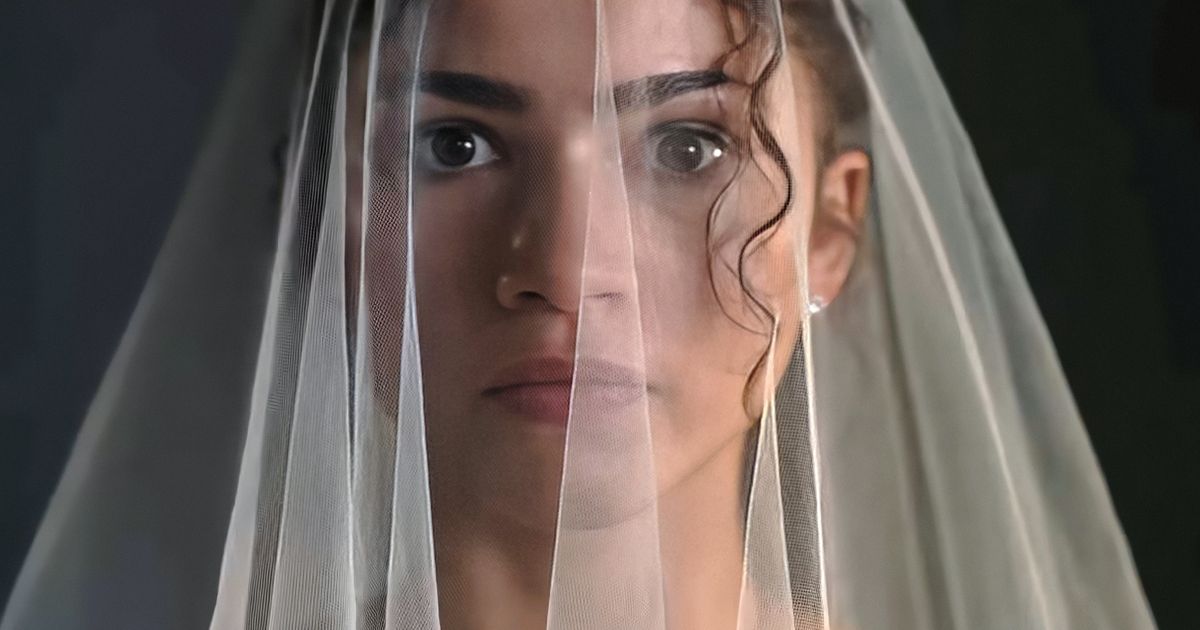
2 weeks agoHot Celebrities Are Reading Smut Aloud for Romance Fans. I Tried Listening-and Kind of Liked It.
Quinn's founder, Caroline Spiegel, described Ember & Ice as a mashup of Brokeback Mountain and A Court of Thorns and Roses, featuring two young men who have a secret romantic relationship.
Television
Artificial intelligence
fromThe Atlantic
2 weeks agoThe Human Skill That Eludes AI
Generative AI has paradoxically declined in creative writing quality since GPT-2, despite advancing in technical capabilities, with current models producing formulaic, flawed prose despite access to centuries of literature.
fromwww.archdaily.com
2 weeks agoPoetry Anthology of Light / P.M.A.Studio
This project involved the reconstruction of a dilapidated building located in Guangzhou's old town along Tongfu Xi Road, a historic street established in 1926. Once vibrant, this area has suffered from significant neglect over the years, with many buildings falling into disrepair, creating safety hazards that forced both residents and businesses to leave.
Renovation
Writing
fromwww.theguardian.com
1 week agoI was in the pit of despair': Non-speaking autistic novelist Woody Brown on his journey from write-off to writer
Woody Brown, an autistic non-speaking author, shares poignant stories of misunderstood individuals in his novel 'Upward Bound' set in a care center.
Miscellaneous
fromwww.theguardian.com
3 weeks agoAt 56, I woke to silence: the strange, sudden loss that changed everything
The term 'hard of hearing' is a neutral descriptor of auditory function, while 'hearing impaired' implies personal deficiency; society's lack of accessibility creates communication barriers, not individual disability.
Psychology
fromwww.theguardian.com
2 weeks agoReaders reply: which are more like life, novels or films?
Films and novels employ fundamentally different narrative techniques to convey character psychology, with neither medium inherently more realistic than the other due to their diverse stylistic approaches.
fromFuncheap
3 weeks agoSound Stories Concert: Music + Storytelling (Berkeley
Volti and Left Coast meet in a bold and dramatic new work by Chris Castro for storyteller and musicians, which delves into the ancient and universal human explanations for our beginnings. The human relationship to our environment forms a through-line from romantic to experimental musical sensibilities.
Berlin music
Podcast
fromDiscover the Best Podcasts | Discover Pods
2 weeks agoFind Your Podcasts to Fall Asleep to in 2026
Podcasts offer an effective alternative to commercial sleep products, with indie creators providing genuinely engaging content that helps people fall asleep without relying on expensive industry solutions.
fromThe Verge
3 weeks agoWhat we're listening to, watching, and reading right now.
Whether it's a slept-on post-punk album from the '80s, a new sci-fi novel, or a cult classic horror movie, we're always finding new obsessions here at The Verge - and we want to share those obsessions with you. Sometimes that might be a new release, but often it's going to be something a little older, something not necessarily plastered all over TikTok or sitting at the top of the charts on Spotify.
Music production
fromHarvard Gazette
1 month agoAudiobooks don't really count as reading? Think again. - Harvard Gazette
The neural networks that process written and oral language are deeply intertwined and largely overlap when reading print books or listening to audiobooks. There isn't much of a difference between the brain network for reading and the brain network for language comprehension. The brain area we call the 'letter box,' which processes print, is not as engaged when you listen, but it has been shown that when some people listen to words, they visualize them, so the letter box gets activated as well.
Education
Podcast
fromwww.theguardian.com
3 weeks agoA loving homage to pop culture's also-rans: best podcasts of the week
Several new podcasts celebrate overlooked pop culture figures, explore nuanced cultural debates, critique AI-generated content, examine Viking history, and investigate a wrongful murder conviction case.
fromColossal
1 month agoRadioposter Launches Paper-fi: Analog Books with Synchronized Soundtracks
Radioposter has built what it calls Paper-fi: physical books with synchronized audio soundtracks that follow readers in real time as they turn each page. No chips embedded in the paper, no QR codes to scan. The system uses patented computer vision and other modes through a smartphone or smart glasses to track your place in the book and play the corresponding audio.
Arts
fromOregon ArtsWatch * Arts & Culture News
4 weeks agoApril Aasheim: telling stories on pages and stages * Oregon ArtsWatch
I didn't know who I was as a writer. I didn't know my voice or style. I was trying to be whatever writer I loved at the moment. You have to find authenticity, find your own voice. Marie's class gave me the ability to be a storyteller.
Writing
Music
fromwww.npr.org
1 month agoWhy music has become such a big part of the romance novel reading experience
Romance novel readers increasingly use pop music playlists to enhance their reading experiences, creating a community that bridges book fandom and music fandom, exemplified by Charli XCX's Wuthering Heights album.
fromMedium
1 month agoThings that don't matter when you write
To deny one's own experiences is to put a lie into the lips of one's own life. It is no less than a denial of the soul. The concept I stick to - my core principle - is simple: I write in plain English, and only when I actually have something to say.
Writing
Books
fromHarvard Gazette
3 weeks ago'New trick' at 50: Fiction. And now, raves. - Harvard Gazette
Epidemiologist Janet Rich-Edwards was inspired to write her debut novel 'Canticle' after attending a Radcliffe lecture on medieval nuns' liturgical books, discovering a connection between academic scholarship and creative fiction writing.
fromPoynter
3 weeks agoWhat are your favorite nonfiction books by journalists? - Poynter
"Race Against Time: A Reporter Reopens the Unsolved Murder Cases of the Civil Rights Era" quickly became one of my favorite nonfiction books written by a journalist. I appreciated how he showed the grueling, day-to-day work local journalism requires, and how many layers of people fought him in revealing the despicable work of the Ku Klux Klan.
Books
fromThe New Yorker
1 month agoYiyun Li Reads "Calm Sea and Hard Faring"
Yiyun Li reads her story 'Calm Sea and Hard Faring,' from the March 9, 2026, issue of the magazine. Li is the author of eight books of fiction, including the novels 'Must I Go' and 'The Book of Goose,' and the story collection 'Wednesday's Child,' which was a finalist for the Pulitzer Prize in 2024.
Books
Music
fromThe Wire Magazine - Adventures In Modern Music
1 month agoRead an extract from Everybody's Head Is Open To Sound: Writings On Tom Wilson - The Wire
Tom Wilson became a pivotal record producer and influential presence at major 1960s recording sessions, beginning from early life in Waco to Harvard and WHRB.
Books
fromThe Atlantic
1 month agoWhen Did Literature Get Less Dirty?
Philip Roth's Zuckerman Unbound functioned as a response to the controversial reception of Portnoy's Complaint, with Roth's protagonist expressing regret over writing sexually explicit material that drew accusations of anti-Semitism and misogyny.
Arts
fromdesignyoutrust.com
2 months agoArtist Paints Smoky Lounges And Quiet Strangers, Letting Halffinished Details Turn Viewers Into Coauthors Of The Scene
A wide-ranging visual roundup showcases creative reinterpretations, vintage design, activist art, photography, illustration, and humorous cultural works spanning contemporary and historical styles.
fromSilicon Canals
1 month ago7 things people do when telling stories that make others tune out immediately without realizing it - Silicon Canals
We've all been there. Someone starts telling a story, and within seconds, your mind starts wandering. Maybe you pull out your phone, suddenly remember an urgent email, or find yourself mentally reorganizing your weekend plans. The storyteller doesn't notice. They keep going, completely unaware that they've lost their audience. After interviewing over 200 people for various articles, I've noticed patterns in how people communicate their experiences. Some captivate you from the first word, while others lose you before they've even gotten to the point.
Writing


fromAnOther
2 months agoA Reading List by Ocean Vuong: Part One
Because, let's face it, creative work does require some form of faith. It is a tumultuous thing to launch an idea into a vast nothingness and hope that it makes a light bright enough to be found by others. Luckily, these luminaries were my light, and I hope they may become yours as well, and - more so - that these snippets lead you to more of their work.
Books
[ Load more ]