#sprint-shoes
#sprint-shoes
[ follow ]
#running-shoes #nike #injury-prevention #running #midsole-technology #cushioning #fashion #earnings-report

fromWIRED
1 day agoGarmin's Latest Training Features Fend Off the Advances of the Apple Watch
Food logging can be done in a few ways, including searching a database, scanning barcodes, or using AI-based camera analysis. Simpler items like eggs and fruit are identified well, but complex meals can be frustrating due to lighting and AI limitations.
Wearables
fromAlternative Medicine Magazine
2 days agoWhat You Do After Training Matters More Than You Think
After a tough workout, your body enters a state of stress: muscle fibers are damaged, energy stores are depleted, and hydration levels drop. This is a critical moment. If your body gets the right nutrients, it starts rebuilding immediately. If not, recovery slows down, and so does progress.
Alternative medicine
UX design
fromYanko Design - Modern Industrial Design News
2 weeks agoThis Concept Shoe Looks Like a Sports Car Melted Onto Your Foot - Yanko Design
An Alfa Romeo-inspired concept shoe treats automotive design as structural principle rather than surface decoration, featuring a seamless white upper and sculptural red midsole with panel-gap detailing.



fromArs Technica
1 month agoThe physics of squeaking sneakers
Tuning frictional behavior on the fly has been a long-standing engineering dream. This new insight into how surface geometry governs slip pulses paves the way for tunable frictional metamaterials that can transition from low-friction to high-grip states on demand.
Science
fromTheregister
1 month agoHarvard boffins crack the mystery of squeaky sneakers
The results showed that the squeaking sound is produced by wave-like patterns across the rubber surface, contacting and then releasing from the glass, allowing the sliding between the surfaces. The waves move across the interface between the two materials at a speed of nearly 300 kilometers per hour.
Science
fromNature
1 month agoThe surprising science of squeaky sneakers
Squeaking occurs across various contexts including shoes, bike brakes, rubber tires, and biomedical implants when soft and hard surfaces contact each other. Researchers used high-speed photography to study a rubber block sliding across hard acrylic to identify the source of these sounds. The investigation revealed that pulses similar to earthquake dynamics drive the squeaking phenomenon.
Science
fromWIRED
1 month agoNeed One Pair for Hiking, Traveling, and Working Out? Try Gravel Running Shoes
The gravel edition sticks with the same PEBA and EVA hybrid midsole with a transition-smoothing curved rocker, but adds extra grip in the form of a 2.5-mm lugged outsole. There's also some extra reinforcement around the toe box.
Bicycling
fromwww.scientificamerican.com
1 month agoThe surprising new physics of squeaky basketball shoes
We were not expecting to find so much richness and depth from a physics point of view underneath the sole of a shoe, says Adel Djellouli, a scientist at Harvard University and co-lead of the study. In a new study, scientists explore the physics that give rise to the familiar squeak of basketball shoes sliding on a hard surface.
Science
fromwww.npr.org
1 month ago'E-bike for your feet': How bionic sneakers could change human mobility
The system, tested in prototype form by NPR at the company's headquarters, consists of fairly standard-looking sneakers with a carbon fiber plate running through the soles. These sneakers are attached at the back to close-fitting, 3D-printed titanium leg shells that cinch to the calves. The battery-powered contraptions, containing complex motors, sensors and circuitry, weigh a couple of pounds and look like something out of Terminator or RoboCop.
US news
Running
fromiRunFar
3 weeks agoMany Small Leaps for Runnerkind: Wondering About Non-Linear Improvement in Running
Runners experience breakthrough moments where performance suddenly improves, often after returning to regular training or during consistent improvement phases, driven by accumulated physiological adaptations.
fromEntrepreneur
1 month agoNew Balance Turned 'Dad Shoes' Into $9.2 Billion in Sales, Outpacing Nike. Here's What's Behind Their Epic Run.
New Balance has turned its "dad shoe" image into a driver of growth. According to a recent CNBC report, New Balance sales were up 19% to $9.2 billion in 2025. The sneaker giant grabbed market share from rivals like Nike, per the report. New Balance told CNBC that it could reach its target of $10 billion in annual revenue by the end of 2026.
Business
fromiRunFar
3 weeks agoAI-Powered Optimization: New Frontiers in Peak Running Performance
Super shoes and ultralight gear make a difference, but with new advancements in artificial intelligence (AI) that can look at our running form and compare it to the ideal, analyze our nutrition intake from a simple photo and help us plan our diets, and offer guidance on training and recovery, the interwovenness of technology and running is only set to increase.
Running
fromRunningshoesguru
3 weeks agoASICS Nimbus 28 vs ASICS Nimbus 27
The midsole of the Nimbus 28 is slightly softer than the 27 but it's not very noticeable. The 28 midsole is also more sculpted and more streamlined which is how they managed to reduce the weight. The 28 is 7% lighter than the 27.
Running
fromStrength Running
1 month agoCross Training and Running: How to Add Other Sports to Your Training - Strength Running
Cross training and running go together like peanut butter and jelly. If you build it into your schedule intentionally, strategically, and with a clear understanding of what you're trying to accomplish, you'll thrive. Megan makes the case that cross-training serves runners for several distinct reasons, and the right reason for you will shape how you approach it.
Running


fromLondon Business News | Londonlovesbusiness.com
1 month agoWearable tech sparks a stir at the Australian Open - London Business News | Londonlovesbusiness.com
A tennis match usually starts with rituals you can set your watch by. A towel tug, a ball bounce, a glance at the strings. This year, a different ritual stole the first spotlight, because officials asked top players to take off a wrist wearable before they played, and the moment landed like a plot twist you did not order. This piece walks you through what happened, why it happened, and what it says about where tennis sits with athlete data right now.
Wearables
fromEngadget
2 months agoThese robotic sneakers gave me a surprising boost at CES
I was able to take the Sidekick for a spin around the CES showfloor and it was a truly surprising sensation. The best way I can describe walking with the Sidekick powered on is that with every step forward there's a noticeable upward push from under your heel. It wasn't enough to throw me off balance, but it did feel a bit strange.
Wearables
fromWIRED
1 month agoOn Running Is Finally Ramping Up Production of Its 'Hyper-Foam' Spray-On Shoes
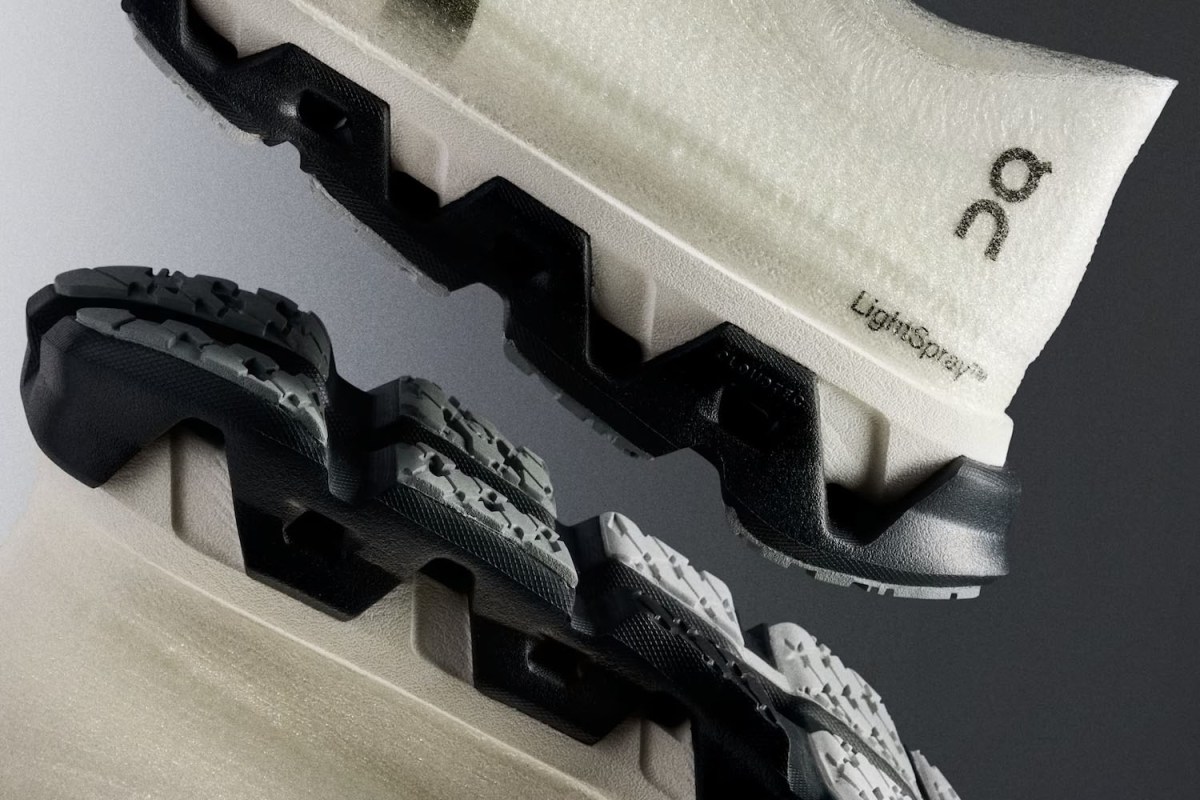
Specifically, the company is focusing on the production of its newest, weirdest shoe-a giant soled laceless running shoe with a single-piece toe box made of "hyper-foam" plastics sprayed on by robot arms. The plastics are 40 percent biofoam, and the shoe is made of just eight pieces; On says its minimalist approach saves on the shoe's carbon footprint.
Running
fromRunningshoesguru
1 month agoPUMA MagMax Nitro 2 Review
Puma PUMA MagMax Nitro 2 Verdict The PUMA MagMax 2 is a good max-stack daily trainer with deep cushioning and a moderately bouncy ride. Version 2 gets rid of the annoying poking arch and has a tweaked midsole that's more energetic. I was impressed with the updates made to the MagMax 2; however, there are similarly priced competitors with even more energetic rides. Daily training
Running
fromRunningshoesguru
2 months agoBrooks Adrenaline GTS 25 Review
The Brooks Adrenaline GTS reaches a major milestone in 2025 with the release of its 25th edition. Outside of the ASICS Kayano, it's hard to think of another stability trainer that has remained in production for this long. That longevity speaks to a shoe built on a strong foundation, one that has continued to evolve over the years while maintaining its place as one of the best-selling stability shoes on the market.
Running
fromRunningshoesguru
2 months agoOn Cloudflow 5 Review
The On Cloudlfow 5 is a versatile daily trainer that is heavily focused on fast training runs, intervals, and speed workouts. They are part of On's lineup of performance-oriented footwear;they are not just an "everyday" sneaker. It is packed with numerous great technologies from On. Some of the new features include a top layer of Helion HF supercritical foam, a nylon-blended Speedboard, a rockered midsole geometry, and an upper made from engineered mesh.
Running
fromRunningshoesguru
2 months agoBrooks Hyperion Elite 5 vs Brooks Hyperion Max 3
The Hyperion Elite 5 has a midsole made entirely of DNA Gold, a PEBA foam. It's the foam with the highest level of energy return of all the Brooks midsole foams. The Hyperion Max 3 has a dual-density midsole with a top layer of DNA Gold and a bottom layer of DNA Flash, an EVA foam. The firmer DNA Flash provides a stable, durable base. Both shoes have plates in their midsoles but the Hyperion Elite 5 has a stiff carbon plate while the Hyperion Max 3 has a flexible nylon plate.
Running
Running
fromTravel + Leisure
2 months agoI've Been Wearing Podiatrist-loved Brooks Shoes for 5 Years-and I Found 8 Comfy Styles on Sale, From $75
Brooks Adrenaline GTS 24 delivers stabilizing GuideRails support, nitrogen-infused cushioning, and APMA-approved foot-health features for comfortable, supportive running.
[ Load more ]