#stephanie-dheygere
#stephanie-dheygere
[ follow ]
#contemporary-art #exhibition #art #sculpture #installation-art #design #antwerp-six #illustration #photography
fromItsnicethat
2 days agoBravas Graphix are the rave connoisseurs behind some of Brussels' most explosive posters
"We're constantly striving to strike a balance between work that respects academic rules of composition, established visual codes and good readability, with something more spontaneous, adventurous, playful, even naive."
Typography
fromItsnicethat
3 days agoElisava's Master's in Graphic Design is about what design can do for others, and what you can do for design
Elisava's Master's in Graphic Design is ingrained with societal, cultural and critical contributions to the creative industry, going beyond its aesthetic output while fostering self-awareness in creatives.
Barcelona

#art

fromIrish Independent
3 days agoArts
'You have to step in and experience it' - artists on the rise of AI-generated art and the 'essential' gallery visit
Miriam Fitzgerald Juskova's exhibit combines paper quilling with mathematics, showcasing intricate art that engages viewers and emphasizes the value of handmade creations.
Arts
fromIrish Independent
3 days ago'You have to step in and experience it' - artists on the rise of AI-generated art and the 'essential' gallery visit
Miriam Fitzgerald Juskova's exhibit combines paper quilling with mathematics, showcasing intricate art that engages viewers and emphasizes the value of handmade creations.

fromKALTBLUT Magazine
5 days agoEmbrace the Transformation: Faravazs "Butterfly" EP Soars with Empowering New Video - KALTBLUT Magazine
Butterfly unfolds across four unique versions of the same song, each exploring different genres and emotional depths while maintaining a cohesive melody and lyrics.
Berlin music
#illustration
Graphic design
fromBOOOOOOOM!
1 month agoIllustrator Spotlight: Starrenco
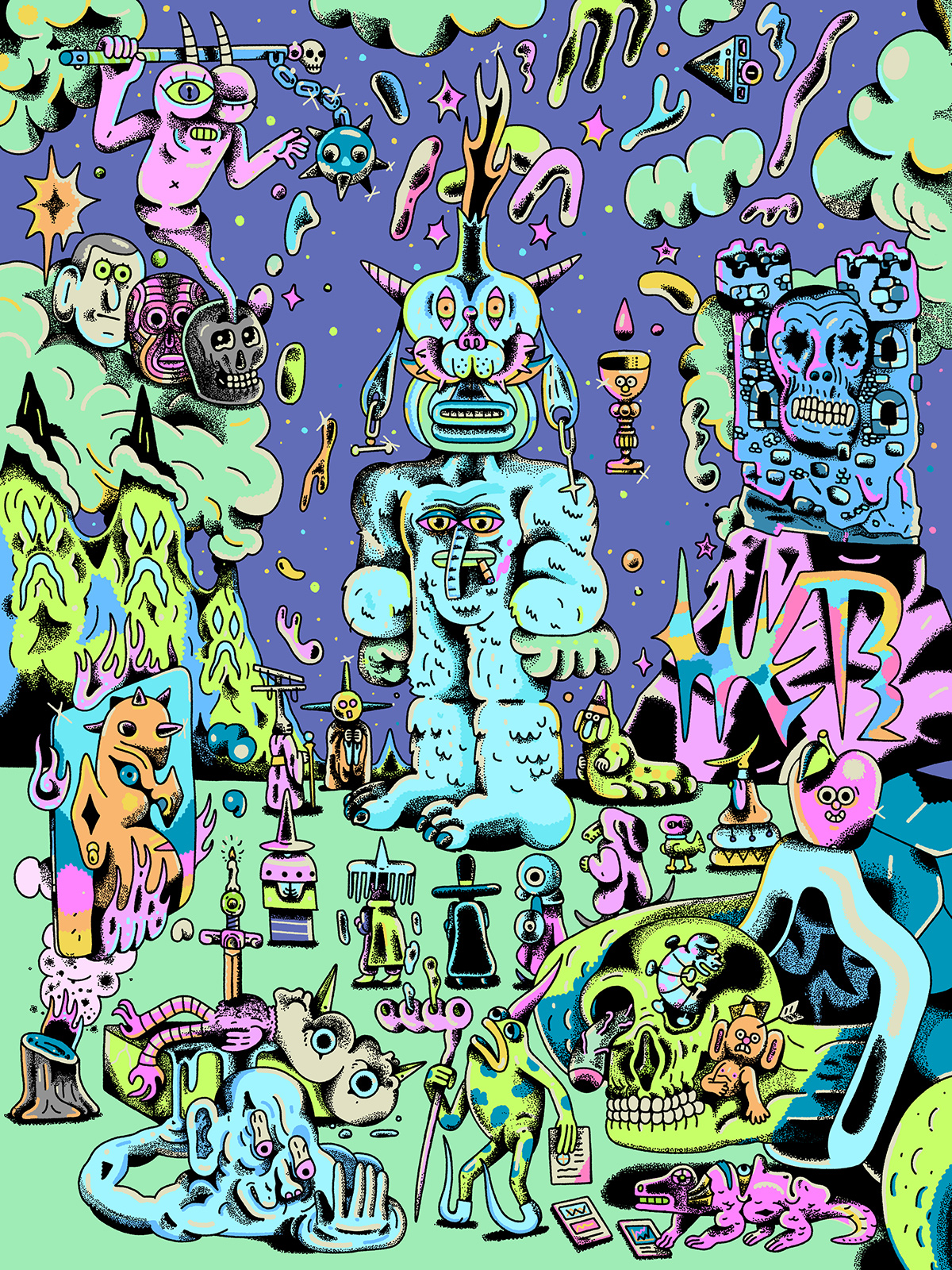
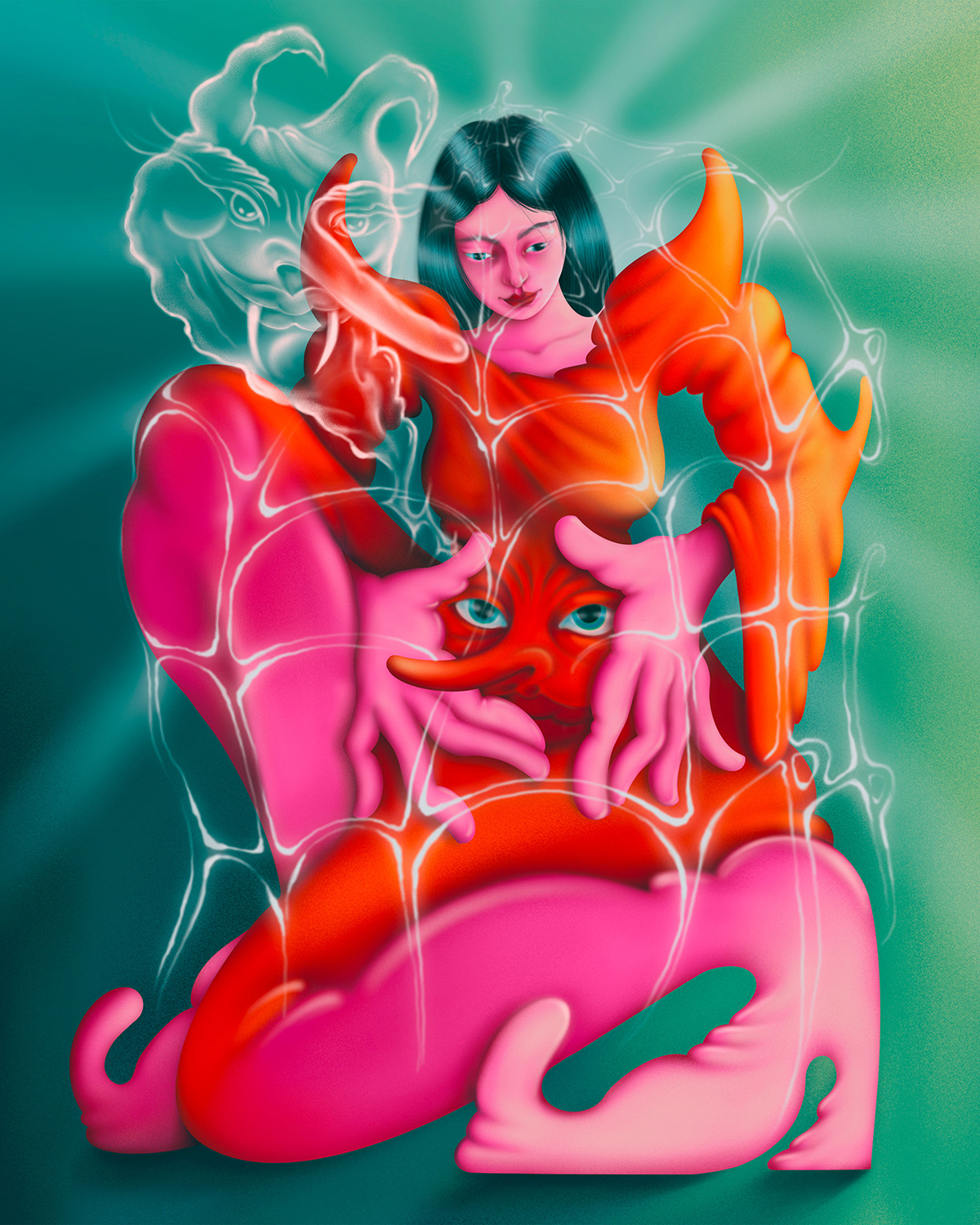
Italian illustrator Starrenco creates distorted, imaginative worlds grounded in reality, using drawing as a method of personal investigation to explore inner landscapes and reveal hidden meanings through intuitive creative processes.
Education
fromwww.theguardian.com
2 weeks agoHomework till midnight and one breakdown a week': the mysterious art school keeping a forgotten style alive
The Ecole Van der Kelen-Logelain in Brussels teaches specialized painting techniques including trompe l'oeil, an illusionistic art form creating three-dimensional illusions on flat surfaces through textures, shading, and perspective tricks.
fromBOOOOOOOM!
3 days ago"Idling" by Artist Greta Kresse
"These paintings merge the landscape and the intimacy of windows through the framing of the car, bridging the two realms I've typically explored separately. The car becomes a meditation on transition, on existing simultaneously here and elsewhere."
Arts
Paris food
fromThe Art Newspaper - International art news and events
2 weeks ago'Why doesn't Tefaf Maastricht move to Brussels?'
Tefaf in Maastricht attracts over 50,000 collectors, dealers, and curators annually despite logistical challenges, drawing praise as the world's most beautiful art fair with exceptional works spanning antiquities to contemporary art.
Berlin music
fromwww.theguardian.com
2 weeks agoEmpreintes review Jess and Morgs go off-piste at Paris Opera and Marcos Morau sets the chandelier swinging
Arena explores competition and conformity in digital culture through innovative choreography and live camerawork at the Palais Garnier, examining how social media surveillance affects individual identity.
Design
fromdesignboom | architecture & design magazine
4 weeks agomarie adam-leenaerdt invites guests to build the runway with modular stools in paris
Marie Adam-Leenaerdt's FW26 show transforms the fashion presentation into a collaborative act where guests physically construct the runway using branded folding stools, embedding care and imperfection into the spatial experience.
Paris food
fromWWD
3 weeks agoParisian Designer Pauline Leprince to Make NYC Debut
French designer Pauline Leprince combines futuristic aesthetics with historical codes, creating radical minimalist pieces that explore tension between individual and society through sharp geometry and materials like burnt metal and glass.
fromHarper's BAZAAR
1 month agoVan Cleef & Arpels' "Dance Reflections" Bridges the Past and the Future of Dance
With 'Dance Reflections,' the idea was to give back concretely to another discipline that still gives us a lot. It's the reason why 'Dance Reflections' is a sponsorship program, but also a curatorial program; that's quite rare for a brand to have.
Miscellaneous

Berlin music
fromKALTBLUT Magazine
1 month agoUnveil the Pulse of Memory: Filipp Jenikae's Visual Symphony at Galerie Sara Lily Perez - %
Filipp Jenikäe's exhibition explores how urban spectacle, collective memory, and personal experience merge through dynamic paintings of cities, crowds, and athletic figures.
Arts
fromwww.theguardian.com
2 weeks agoOld masters too': Ghent exhibition celebrates female artists of the baroque
Judith Leyster, a celebrated Dutch Golden Age painter, was forgotten after her death and her works were misattributed to male artists until a 1970s revival restored her recognition alongside other overlooked female baroque artists.


fromHyperallergic
3 weeks agoEmbracing Friction in the Art World
On Franklin Street in Brooklyn's Greenpoint neighborhood, one non-commercial gallery fosters 'a small, stubbornly human space for friction.' Friction—the ubiquitous buzzword that captures the simultaneous delight and discomfort of doing things the slow way—is at the heart of artists Pap Souleye Fall and Char Jeré's current show at Subtitled NYC. It also reflects the overall spirit of this little exhibition space and of a burgeoning movement to reject our culture of optimization in favor of a bumpier, more intimate, less alienating experience.
Arts
fromArtnet News
3 weeks agoArtist Dylan Doe Paints the Bodily 'Glitches' of a Tech-Addled Age
Muscle memory refers to procedural memory, actions taken that do not require conscious thought (like riding a bike) as the motor movement has been embedded in the brain through repetition. Contextual mistakes in muscle memory—such as someone attempting to zoom in while drawing on paper versus a tablet computer or double-tapping a photograph instead of a social media feed—prove a potent starting point for Doe's latest body of work.
Arts
fromRoger Ebert
2 months agoTo Love Each Other: Jean-Pierre and Luc Dardenne on "Young Mothers" | Interviews | Roger Ebert
It would be hard to overstate the influence of Jean-Pierre and Luc Dardenne on traditions of realism in European cinema. The Belgian brothers, now in their seventies, have been making compassionate, uncompromising dramas about the social and economic conditions of modern life for nearly 40 years, approaching each with a direct, unvarnished style that's been imitated far and wide across the international arthouse circuit, if seldom rivaled in its emotional impact.
Film
Arts
fromenglish.elpais.com
3 weeks agoBelgium believes it has discovered an unknown painting by Michelangelo
A painting titled 'Spirituali Pieta' previously attributed to an anonymous sixteenth-seventeenth century artist has been identified as a work by Michelangelo, potentially bringing the total number of his known canvas paintings to five.
Miscellaneous
fromdesignboom | architecture & design magazine
2 months agokanal cultural complex in brussels to reopen with exhibition from centre pompidou's archives
Kanal- Centre Pompidou reopens in a converted Citroën factory in Brussels on 28 November 2026 as Europe’s largest museum dedicated to modern and contemporary art.
fromDesign Milk
1 month agoInside Lee Broom's Latin American Exhibition at Diez Company
Now, he celebrates his first major presentation in Latin America, in congruence with Mexico City Art Week 2026 and ZSONAMACO, showcasing on an ideal stage inside one of the city's most architecturally layered interiors. Titled The Resident, the site-responsive installation, created during a residency at the Diez Company house, transforms the historic showroom into an immersive tableau where more than 50 works negotiate the boundaries between collectible design, contemporary art, and spatial theater.
Design
Design
fromArchDaily
2 months agoLouisiana Museum of Modern Art Opens Memoryscapes Exhibition Exploring the Design Methodologies of ATTA and DnA
Memoryscapes examines how archaeological, anthropological, and geological approaches and fieldwork enable architects to use cultural memory and site-specific histories to design locally grounded futures.
Photography
fromKALTBLUT Magazine
2 months agoCamille Schaeffer: A Reflective Visual Archive - KALTBLUT Magazine
Camille Schaeffer creates sensory, reflection-based installations and collaborative film and photography that explore perception, embodiment, and the transformation of space through movement and materials.
fromBerlin Art Link
2 months agoStudio Visit with Myriam Jacob-Allard | Berlin Art Link
Myriam Jacob-Allard appears through a heavy door and greets us with an easy warmth, scooping us up and welcoming us into her world. We are immediately absorbed by an unexpected color-drenched stairwell. Every surface is saturated in a dense, glowing yellow that reads unmistakably as egg yolk, insulating us from the outside in as we make our ascent. We turn into a long hallway whose fragrant freshly waxed floor catches the light, reflecting it back upward so that the corridor seems to glow beneath our feet.
Photography
fromHyperallergic
1 month agoRaw Material: The Art and Life of Susan Kleckner
Raw Material: The Art and Life of Susan Kleckner, on view at Haverford College's Cantor Fitzgerald Gallery through April 5, 2026, is the first comprehensive retrospective of the pioneering feminist artist, filmmaker, photographer, and performance artist. Bringing together nearly 100 works, many never before publicly exhibited, the exhibition seeks to reposition Kleckner as a foundational figure in feminist, queer, and activist art histories.
Arts
Arts
fromArtnet News
1 month ago17th-Century Painter Michaelina Wautier Was Almost Lost to History. Will Blockbuster Shows Juice Her Market? | Artnet News
Michaelina Wautier, a 17th-century Flemish Baroque painter, is experiencing a major revival after centuries of obscurity, with her innovative work spanning portraiture, still lifes, and allegorical scenes now gaining recognition.
fromBerlin Art Link
1 month agoAn Interview with Monia Ben Hamouda | Berlin Art Link
Monia Ben Hamouda's work weaves calligraphy, material transformation and ancestral memory into sculptures and installations that oscillate between language and form. In conversation, we traced the conceptual and sensory threads of her practice, unfolding through key works that reflect on heritage, embodiment and translation. Using materials such as iron, stone and pigment, her installations become sites where history is not only referenced but physically felt.
Arts
fromDocumentjournal
1 month agoAn evening with Mickalene Thomas: Document marks her historic Grand Palais solo show
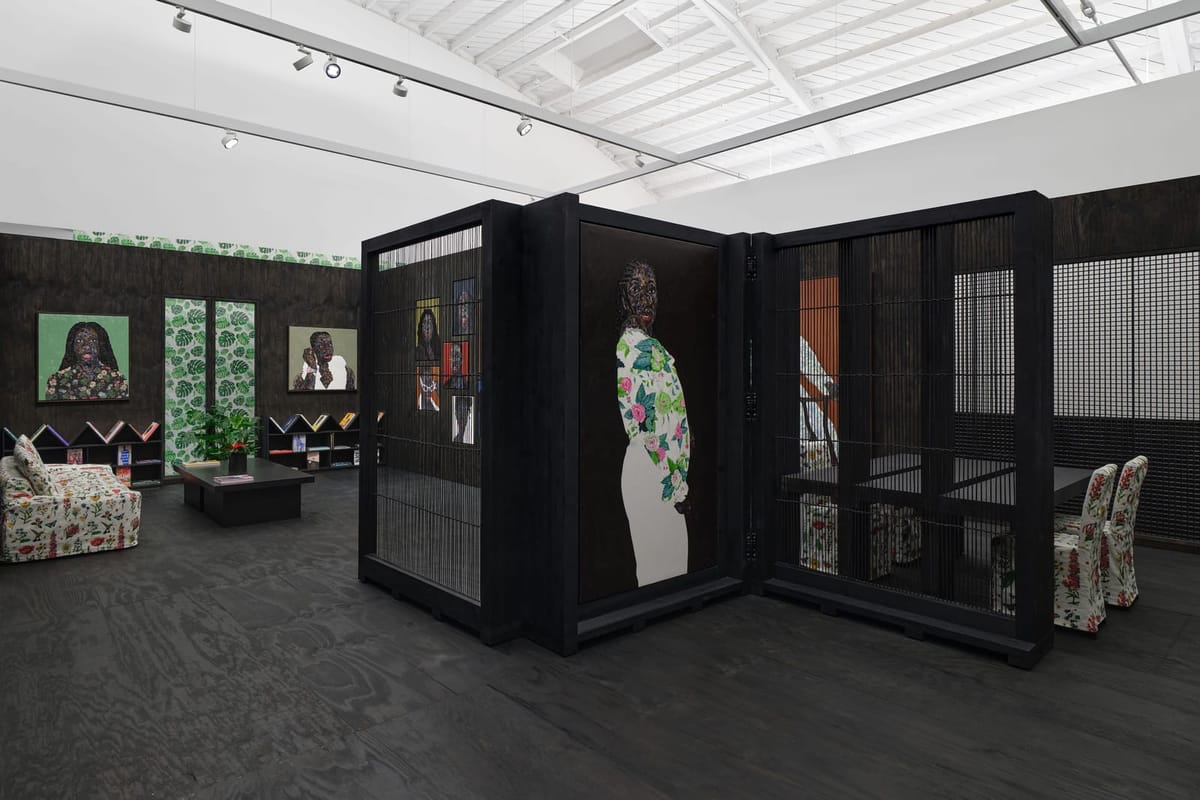
The exhibition centers the visibility, agency, and radical joy of Black women, celebrating love as a generative force-of liberation, self-definition, and community. Through richly textured compositions and her iconic rhinestone-studded surfaces, Thomas depicts her subjects-friends, family, lovers, and cultural figures-with a confidence and sensuality that reclaims spaces where Black women have been historically overlooked or misrepresented. With this exhibition, she becomes the first African-American artist to receive a major solo presentation at the Grand Palais.
Arts

fromColossal
2 months agoStephanie Temma Hier Juxtaposes Uncanny Ceramic Sculptures with Embedded Paintings
The Brooklyn-based artist is formally trained as a painter and self-taught as a ceramicist, and she fuses the two modes of working into a complementary practice. Hier begins by sculpting a wide range of forms, and after several rounds of firing with both handmade and commercially available glazes, she adds a painting. The pairings arise intuitively, sometimes through free association, trial and error, or by homing in on a color.
Arts
fromColossal
2 months agoRegina Silveira Pieces Together an Evolving Narrative of Latin America
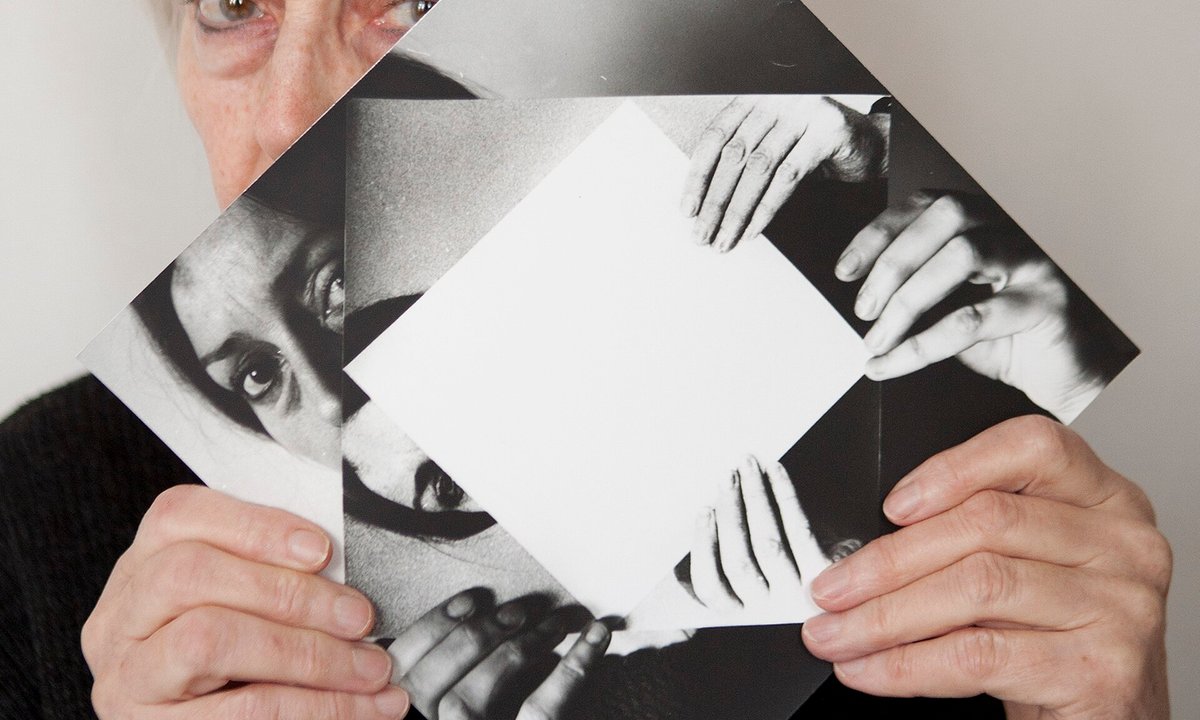
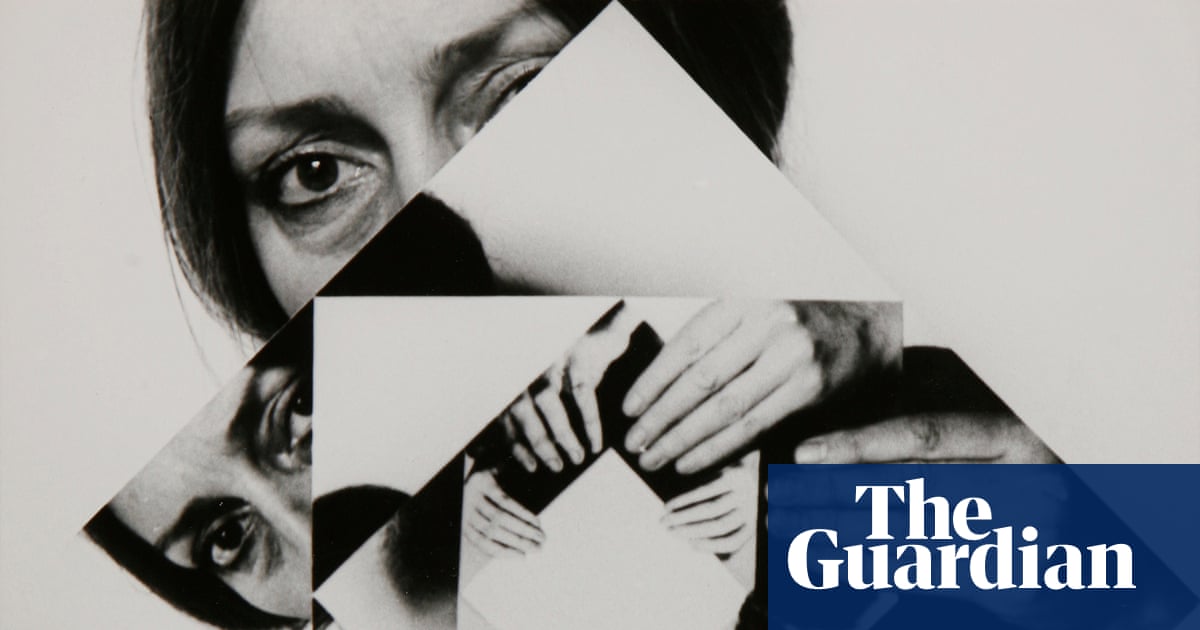
Regina Silveira has spent the better part of three decades considering the relationship between media and meaning, particularly as it relates to Latin America. First presented in 1997, "To Be Continued..." features 100 black-and-white reproductions of photos, newspaper clippings, propaganda, advertisements, and more. Silveira nests each image into an oversized puzzle piece, which cuts off faces and scenes to leave fragments of pop culture icons, flora and fauna, and even the occasional mugshot spliced next to one another.
Arts
Arts
fromwww.theguardian.com
1 month agoIt's about hurling yourself into the unknown': Charmaine Watkiss on turning a UK museum upside down
Charmaine Watkiss connects Caribbean, African and UK botanical knowledge and diaspora histories through portraits and sculpture emphasizing medicinal plants and ancestral herbal traditions.
fromArtnet News
1 month agoThe Dutch Gallery Bringing Eyes to Armenia's Contemporary Art Scene
While Armenia has long been recognized for its rich and storied historical art and culture, the country's contemporary art scene is emerging as one to watch on a global scale. Armenian artists stand out for their ability to synthesize their own cultural heritage with avant-garde approaches to contemporary artmaking, bridging tradition with self-expression. Paralleling broader rising critical and market interest and investment in regions outside of the West, ARAR Gallery of Utrecht, the Netherlands, is at the forefront of Armenian art's mounting international presence.
Arts
fromBerlin Art Link
2 months agoInterview with Rae-Yen Song | Berlin Art Link
For their most ambitious exhibition to date, Rae-Yen Song 宋瑞渊 transforms Tramway's vast exhibition hall into a submerged cosmology shaped by ancestral mythologies, Daoism, collective ritual and multispecies kinship. In this phantasmagoric aqueous environment-the most recent project in Song's ongoing world-building practice-life is understood as cyclical, relational and continuously in flux. Titled '*~TUA~* 大眼 *~MAK~*', the exhibition comprises newly commissioned works in sculpture, textiles, printmaking, sound, light and moving image,
Arts
[ Load more ]