#surrealism--cubism
#surrealism--cubism
[ follow ]
#surrealism #art #art-history #art-exhibition #contemporary-art #exhibition #impressionism #fashion #salvador-dali

fromBBC
2 days agoMore than the Score - David Bellion gets creative in Paris - BBC Sounds
David Bellion spent over a decade in top-flight football, playing for clubs like Manchester United and Sunderland, before becoming Red Star FC's creative director, focusing on brand development and cultural connections.
English Premier League
fromItsnicethat
2 days agoBravas Graphix are the rave connoisseurs behind some of Brussels' most explosive posters
"We're constantly striving to strike a balance between work that respects academic rules of composition, established visual codes and good readability, with something more spontaneous, adventurous, playful, even naive."
Typography

Arts
fromThe Art Newspaper - International art news and events
1 day agoGagosian chooses Paris location to present three important late paintings by Francis Bacon
Three late paintings by Francis Bacon will be exhibited in Paris, showcasing his significant connection to the city and his artistic evolution.
Music
fromwww.theguardian.com
3 weeks agoAdd to playlist: the dadaist cubist racket of Angine de Poitrine and the week's best new tracks
Angine de Poitrine is a Quebec duo creating absurdist mantra-rock dada music that blends metal shredding with microtonal guitar, world music influences, and hypnotic grooves while performing in elaborate papier-mache costumes.
fromHyperallergic
2 days agoThe Art World Is a Joke
Kamrooz Aram is everywhere this year, from Mumbai Art Week to the Whitney Biennial, and critic Aruna D'Souza is grateful. She pens a beautiful meditation on his work, reading his abstract paintings as not simply a denunciation of Western modernism nor a reassertion of Islamic visual motifs, but something else entirely - something gestural, exuberant, riotous, and incomparably his own.
Arts

#art

Arts
fromIrish Independent
3 days ago'You have to step in and experience it' - artists on the rise of AI-generated art and the 'essential' gallery visit
Miriam Fitzgerald Juskova's exhibit combines paper quilling with mathematics, showcasing intricate art that engages viewers and emphasizes the value of handmade creations.
fromThe Art Newspaper - International art news and events
1 month agoThe year of Andre Malraux: France salutes its pioneering intellectual with exhibitions and more
At the official launch last November, the current culture minister Rachida Dati described the imperative behind the programme as not just celebrating an uncommon visionary but the "burning relevance" of his legacy: "a commitment to continuing to nurture this demanding idea of what culture is".
France news
Paris food
fromThe Art Newspaper - International art news and events
3 weeks agoTwo Renoir exhibitions at Musee d'Orsay explore the joy of human connection
Renoir was a resourceful, experimental artist whose early work capturing modern life established him as a founding Impressionist painter, though critics often dismiss his paintings as superficial without truly examining them.
fromMy Modern Met
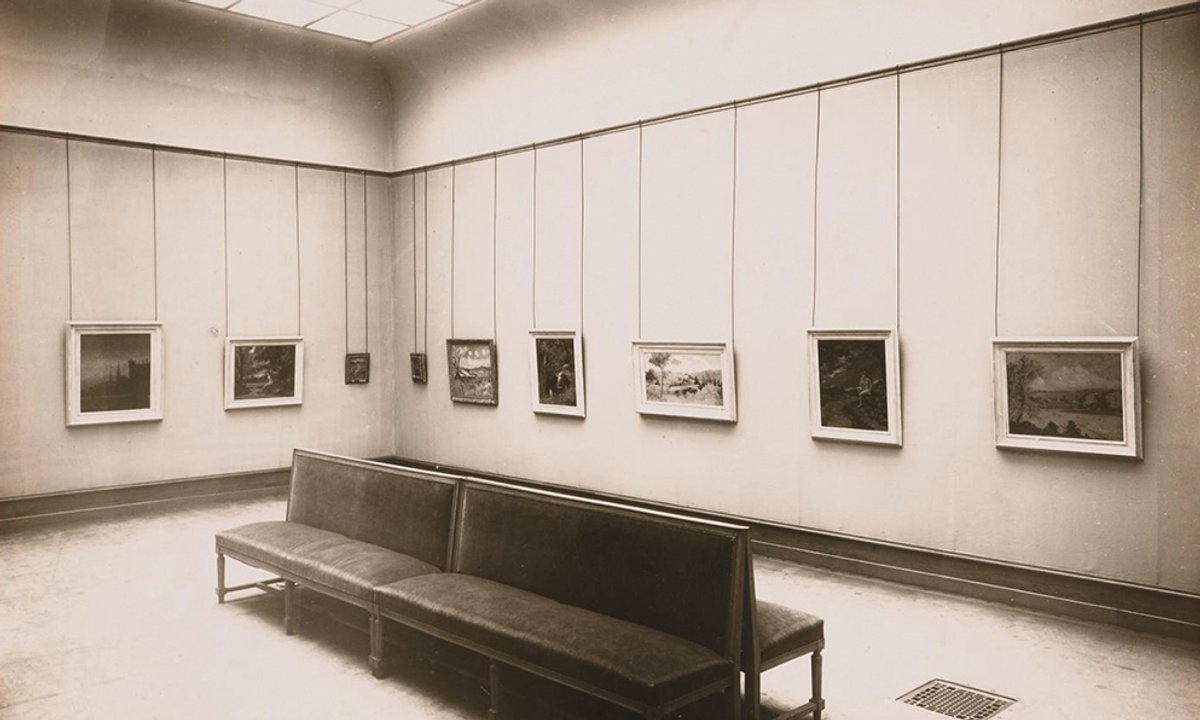
4 days agoBrooklyn Museum To Host Stunning Selection of Modernist Masterpieces This Fall
"This first pleasant experience with a modern painting started me on a road of adventure that has been both exhilarating and satisfying," Pearlman once said of another painting by Soutine, called Village Square. "I haven't spent a boring evening since that first purchase."
Arts
Photography
fromThe Art Newspaper - International art news and events
1 month agoDora Maurer, 'towering figure' of the Hungarian art scene, has died aged 88
Dóra Maurer, Hungarian painter, printmaker and filmmaker, died aged 88; her work explored form, time and movement using systematic processes and influenced Central European conceptual art.
fromThe Art Newspaper - International art news and events
1 month agoParis to host first museum devoted to Alberto Giacometti with more than 10,000 artworks and objects
The foundation's collection is exceptionally large, encompassing more than 10,000 items-including thousands of drawings, over 400 sculptures, 100 paintings, a whole collection of decorative objets d'art, prints, everything that was in the studio, all the archives. Most of the collection has never been exhibited.
Paris food
fromwww.theguardian.com
1 week agoSchiaparelli review it's cocktail o'clock with fashion's surreal goddess who out-lobstered Dali and turned a polar bear pink
Naked mermaids and prancing horses, silk carrots and unshelled peanuts, gilded elephant trunks, drums and masks are just a few of the buttons. The V&A's lavish spring show is a weird and wonderful tumble down the rabbit hole that is Schiaparelli, fashion's house of surrealism.
Arts
Paris food
fromwww.theguardian.com
1 month agoZoning in on Menilmontant, Paris: bohemian, arty and off the tourist trail'
Menilmontant is an authentic, working-class Parisian neighbourhood with integrated North African culture, affordable multi-ethnic dining, and genuine local community despite recent international recognition.
fromThe Art Newspaper - International art news and events
2 months agoNew book offers fresh perspectives on why Cubism came into being
Cubism and Reality is his return to the works by Georges Braque, Pablo Picasso and Juan Gris that define early Cubism. The book has many strands but turns around a highly informed reconstruction of the processes by which their interactions with reality resulted in physical works of art, what Green terms "material things to be looked at". The revolutionary works discussed remain visually difficult; as he acknowledges, they are "most often only slowly penetrated by looking, imagining, reflecting and looking again".
Books
#surrealism


Arts
fromThe Art Newspaper - International art news and events
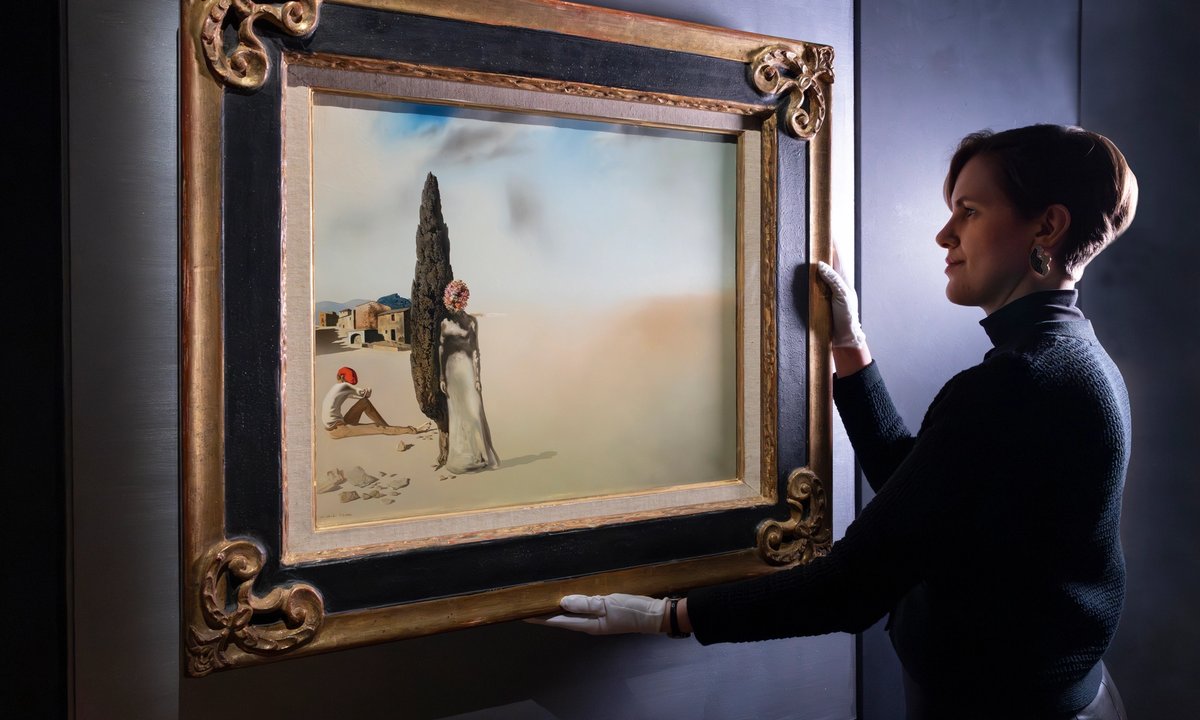
2 weeks agoDali painting that inspired Schiaparelli dress to be shown in UK for first time
Salvador Dalí's Necrophiliac Spring (1936), previously unseen in the UK, debuts at the V&A's Schiaparelli exhibition, having inspired her iconic Tears Dress (1938).
fromMedium
1 month agoCan you run out of creativity?
There's a particular kind of panic that hits when you're facing a creative problem, and the well just feels... empty. Every idea seems stale. Every solution feels recycled. And the question creeps in: Have I finally used up all my good ideas? Maybe it's your third attempt at solving the same design problem, and every solution feels like a pale echo of something you've already tried. Or perhaps you've been churning out work for months, and suddenly the spark you used to rely on? Gone.
Psychology
France news
fromenglish.elpais.com
2 months agoParis returns to the epicenter of artistic luxury: It is once again the art capital it was in the early 20th century'
Paris’s cultural scene is resurging through private investment, shifting toward luxury-focused, market-driven institutions and away from traditional public cultural models.
fromHyperallergic
3 weeks agoEmbracing Friction in the Art World
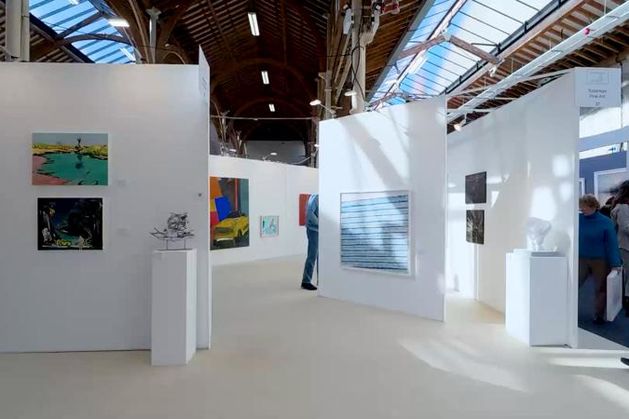
On Franklin Street in Brooklyn's Greenpoint neighborhood, one non-commercial gallery fosters 'a small, stubbornly human space for friction.' Friction—the ubiquitous buzzword that captures the simultaneous delight and discomfort of doing things the slow way—is at the heart of artists Pap Souleye Fall and Char Jeré's current show at Subtitled NYC. It also reflects the overall spirit of this little exhibition space and of a burgeoning movement to reject our culture of optimization in favor of a bumpier, more intimate, less alienating experience.
Arts
fromThe Art Newspaper - International art news and events
3 weeks agoVictor Vasarely's crumbling Aix legacy to be restored
The longer we wait, the more difficult it will become to remedy the damage. Since 2019, state funding had all but dried up, forcing the foundation to auction works to raise funds to continue the restoration of both the iconic building and its many site-specific works.
Arts
Arts
fromdesignboom | architecture & design magazine
1 month agoart paris 2026 returns to grand palais exploring language and reparation in modern art
Art Paris 2026 returns to the Grand Palais from April 9-12, featuring 165 galleries exploring language, reparation, and contemporary art across two curated thematic programs.
Arts
fromThe Art Newspaper - International art news and events
1 month agoA short guide to the hidden meanings in great paintings
Historic paintings contain symbolic meanings and motifs that convey spiritual, moral, and philosophical messages through objects like apples, angels, books, butterflies, and candles.
Arts
fromThe Art Newspaper - International art news and events
1 month agoClash of the Renaissance titans: an intriguing double biography of Titian and Michelangelo
Michelangelo the Elder's lifetime success and character are documented through 17th-century commemorative paintings that reveal how artistic tastes shifted dramatically after his death.
fromArtnet News
1 month agoHow Wifredo Lam Made Surrealism More Surreal Than the Surrealists | Artnet News
An exhibition of Wifredo Lam is about as safe a bet as the Museum of Modern Art can place and still plausibly say that it's a bet on expanding the canon. The Cuban artist is one of the most famous painters of the 20th century, featured in almost every single key show about Surrealism. MoMA acquired his famous painting The Jungle in 1946, a few years after he made it.
Arts
Arts
fromwww.amny.com
1 month agoKing Paris shows the sovereignty of light through his contemporary masks on display in Manhattan | amNewYork
Embellished masks and reflective surfaces in West African traditions use radiance and material brilliance to convey authority, spiritual meaning, and social order through performance.
fromHyperallergic
1 month agoSpain's Cosmic Mother of Modernism
MADRID - The most famous portrait of Maruja Mallo depicts the artist covered from head to toe in seaweed. She is crowned and draped with long, rope-like strands of kelp, her arms raised triumphantly like an all-powerful marine goddess. This unconventional photograph, snapped in 1945 by the poet Pablo Neruda on a Chilean beach, was no doubt carefully orchestrated by the Spanish artist, who viewed herself as an extension of her unique work, where female energy is a conduit for natural and even cosmic forces.
Arts
fromColossal
2 months agoAbsurd Scenarios Stretch Across Paco Pomet's Uncanny Canvases
From figures with multiple legs and noodles for arms to frolicking trees, Paco Pomet summons the absurd. Known for his uncanny oil paintings rendered mostly in monochrome and enlivened by colorful details of overly stretchy limbs or celestial objects, a sense of nostalgia greets surreal scenarios. The artist often derives his imagery from vintage black-and-white photographs, adding an absurd dimension to history.
Arts
Arts
fromSilicon Canals
1 month ago8 signs you appreciate art, music, and culture on a deeper level than most people - Silicon Canals
Some people experience art deeply, reacting emotionally and perceiving subtle artistic cues that reveal heightened sensitivity and meaningful connections to creative expression.
Arts
fromThe Art Newspaper - International art news and events
2 months agoComment | We are living in an age of bad painting-the medium must be challenged to stay interesting
Contemporary painting shows a widespread trend of complacent, market-driven, and poorly executed works that often lack urgency and substantive engagement.
fromParis Perfect
1 month agoFall in Love with Renoir in Paris This Year
Running from March 17 to July 19, 2026, Renoir and Love will be one of the top special exhibitions of the year in Paris. Celebrating how affection, connection and human relationships shaped Renoir's work during a defining period of his career. Bringing many key works together for the first time in decades, the exhibition offers a fresh perspective on how Renoir approached love not as an abstract ideal, but as something lived and experienced within the changing social life of late-19th-century Paris.
Arts
Arts
fromEast Bay Express | Oakland, Berkeley & Alameda
2 months agoArt / Tech: Postmodern Cultural Incubator critiques technology with art
A six-to-eight-month Cultural Incubator fosters anti-disciplinary collaboration, merging art and technology to critique current tech deployment and broaden who benefits from technological innovation.
Arts
fromdesignyoutrust.com
2 months agoArtist Paints Smoky Lounges And Quiet Strangers, Letting Halffinished Details Turn Viewers Into Coauthors Of The Scene
A wide-ranging visual roundup showcases creative reinterpretations, vintage design, activist art, photography, illustration, and humorous cultural works spanning contemporary and historical styles.
[ Load more ]