#syriac-manuscripts

[ follow ]
History
fromNature
1 day ago

How DNA forensics is transforming studies of ancient manuscripts

Tim Stinson's curiosity about DNA in ancient manuscripts led to the emergence of a new field in manuscript studies.
fromwww.thehistoryblog.com
1 day ago

30 previously unknown verses by Empedocles found on papyrus

The discovery of a few pages from an original edition of Hugo's work would then be a momentous event. This is precisely what specialists in Empedocles are experiencing today.
History
Philosophy
fromMail Online
1 week ago

Bible analysis uncovers clues showing scripture was written by God

A network of over 63,000 connections in the Bible suggests intricate links that some believe indicate divine authorship.
UX design
fromYannglt
2 weeks ago

AI and the Rosetta Stone

AI enhances the translation between design and engineering, increasing speed while challenging the preservation of meaning.
History
fromMedievalists.net
1 week ago

The Afterlife of a Medieval Persian Text: The Qalandar-nama of Abdullah Ansari - Medievalists.net

The authenticity of medieval texts is often uncertain due to layers of transmission and the lack of original manuscripts.
History
fromWorld History Encyclopedia
1 week ago

Truths Wrapped in Fiction: Mesopotamian Naru Literature: Originality in Writing Ancient Bestsellers

Originality in ancient literary works was less valued than in modern times, with authors often assuming identities of famous figures.
History
fromMedievalists.net
1 week ago

New Medieval Books: Light on Darkness - Medievalists.net

Liturgy is central to Western cultural history, rich in artistic expression and emotional depth, influencing society for over a thousand years.
#archimedes-palimpsest
fromwww.scientificamerican.com
4 weeks ago
History

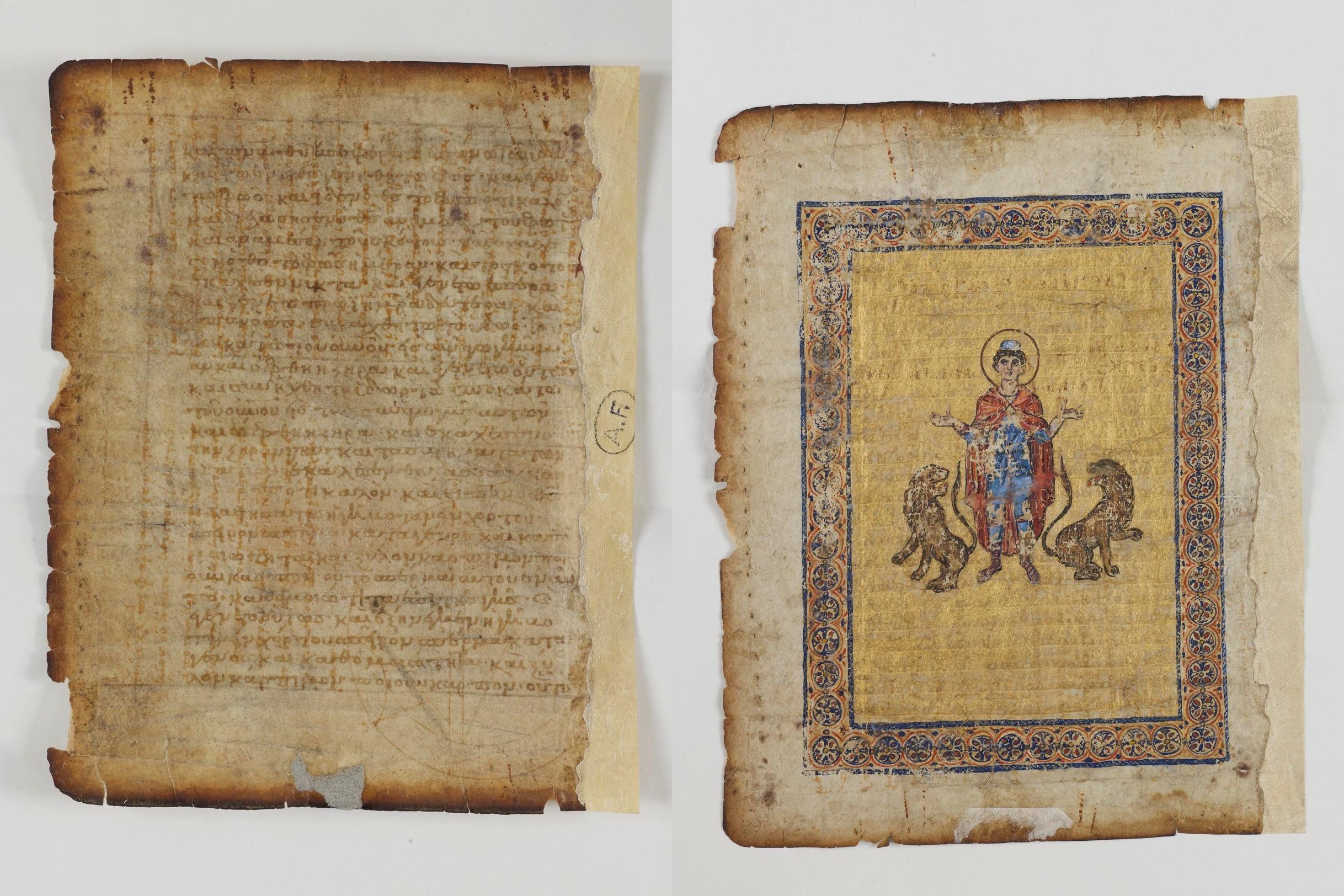
Long-lost page of Archimedes' writings rediscovered in France

Scientists recovered a missing page from the Archimedes Palimpsest, a 10th-century medieval manuscript containing writings from the ancient Greek mathematician Archimedes.
fromwww.thehistoryblog.com
4 weeks ago
History

Page from Archimedes Palimpsest rediscovered in Blois

A lost page from the Archimedes Palimpsest, a 10th-century Byzantine manuscript containing mathematical treatises, was rediscovered at a French museum after being missing for decades.
History
fromWorld History Encyclopedia
1 week ago

Ten Ancient Mesopotamia Facts You Need to Know: Fun Facts on the Cradle of Civilization

Mesopotamia, known as the cradle of civilization, saw significant innovations from 6500 BCE to the 7th century, shaping agriculture, governance, and daily life.
OMG science
fromNature
1 month ago

Daily briefing: Galileo's notes discovered in the margins of an ancient book

Tectonic plates moved 3.3 billion years ago with higher oxygen levels; Galileo's annotations discovered in 400-year-old Ptolemy text; rotator cuff degeneration common in older adults regardless of symptoms.
Books
fromNature
1 month ago

Brain mysteries and Bronze Age diplomacy: Books in brief

Lionel Penrose's mid-twentieth century research connected genetic abnormalities to hand creases, establishing the hand as a significant diagnostic tool across multiple medical disciplines.
fromWorld History Encyclopedia
3 weeks ago

Mesopotamian Literature: The Earliest Works of the Imagination

Writing was created in response to the need to communicate over long distances in trade and, initially, was focused on the purely practical aspects of record-keeping. Scribes in ancient Mesopotamia recorded what commercial goods had been shipped to which destination, their quantity, purpose, and cost.
History
Philosophy
fromThe Conversation
1 month ago

The apocrypha, Christianity's 'hidden' texts, may not be in the Bible - but they have shaped tradition for centuries

Apocryphal texts, though excluded from official biblical canons, significantly shaped early Christian tradition and provide valuable insights into early religious practices and beliefs.
fromMedievalists.net
3 weeks ago

New Medieval Books: Approaching Records of the Household and Wardrobe - Medievalists.net

The Household and Wardrobe Accounts are English records that document the daily needs of the king and his family. This book serves as a guide to these sources, showing how they can be used and what valuable insights they offer into medieval government.
History
#medieval-history
History
fromWorld History Encyclopedia
4 weeks ago

From Clay to Culture: The Power of Written Language

Cuneiform, invented in Sumer around 3500 BCE, was the first script, enabling civilizations to record human thought and preserve all aspects of human experience through written communication.
fromWorld History Encyclopedia
4 weeks ago

Cuneiform: From trade lists to epic tales of gods

Cuneiform is a system of writing first developed by the ancient Sumerians of Mesopotamia circa 3600/3500 BCE. It is considered the most significant among the many cultural contributions of the Sumerians and the greatest among those of the Sumerian city of Uruk, which further developed and advanced cuneiform circa 3200 BCE and allowed for the creation of literature.
History
fromMail Online
2 months ago

Long-lost Egyptian scroll fuels debate over real-life biblical giants

An ancient Egyptian papyrus held by the British Museum has been cited as possible evidence supporting some of the Bible's most controversial claims about giants. The 3,300-year-old document, known as Anastasi I, has been in the museum's collection since 1839 and has recently resurfaced on the Associates for Biblical Research, renewing interest in its possible links to biblical accounts. The papyrus describes encounters with the Shosu people, said to stand 'four cubits or five cubits' tall, up to eight feet in height.
Books
Science
fromFuturism
2 months ago

Scientists Investigating 2,000-Year-Old Artifact That Appears to Be a Battery

A reconstructed Baghdad battery configuration could have produced about 1.4 volts, comparable to a modern AA battery, using a porous clay separator and an electrolyte.
fromNature
2 months ago

Daily briefing: Symbols on ancient pottery could be earliest evidence of mathematics

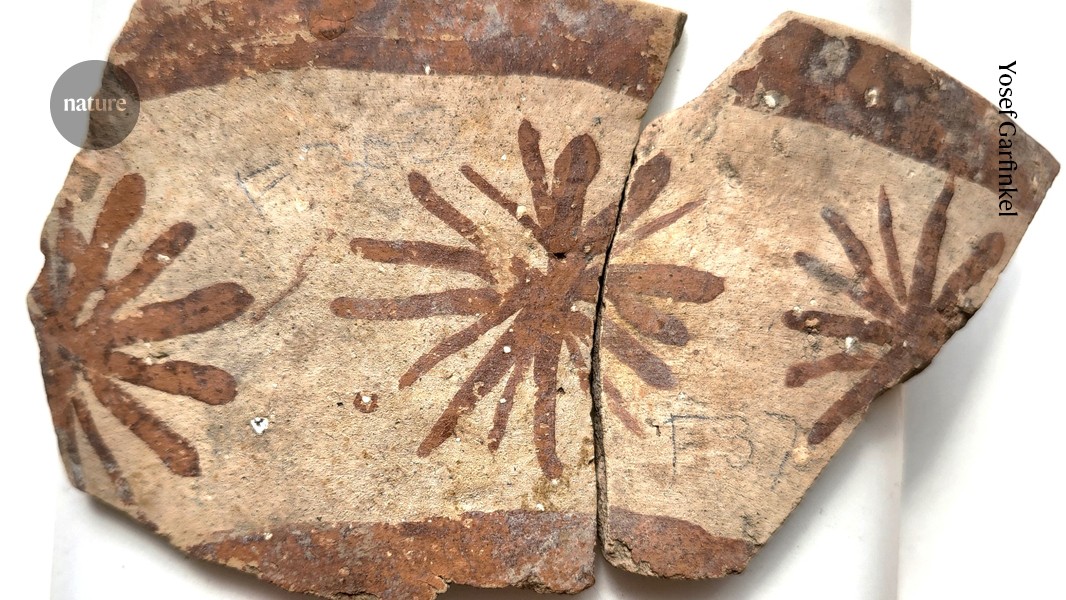
Pottery made by people of the Halafian culture, who inhabited northern Mesopotamia between around 6200 and 5500 BC, is painted with flowers that have 4, 8, 16 or 32 petals, and some show arrangements of 64 flowers. These patterns show a clear understanding of symmetry and spatial division long before written numbers came into use around 3400 BC, argue scientists in a new study. The skill might have helped the Halafian people with tasks such as sharing harvests or dividing communal fields, the authors say.
Science
#medieval-manuscripts
fromOpen Culture
2 months ago

The Rohonc Codex: Hungary's Mysterious Manuscript That No One Can Read

Image by Klaus Schmeh, via Wiki­me­dia Com­mons Mag­yar, which is spo­ken and writ­ten in Hun­gary, ranks among the hard­est Euro­pean lan­guages to learn. (The U.S. For­eign Ser­vice Insti­tute puts it in the sec­ond-to-high­est lev­el, accom­pa­nied by the dread­ed aster­isk label­ing it as "usu­al­ly more dif­fi­cult than oth­er lan­guages in the same cat­e­go­ry.") But once you mas­ter its vow­el har­mo­ny sys­tem, its def­i­nite and indef­i­nite con­ju­ga­tion, and its eigh­teen gram­mat­i­cal cas­es, among oth­er noto­ri­ous fea­tures, you can final­ly enjoy the work of writ­ers like Nobel Lau­re­ates Imre Kertész and Lás­zló Krasz­na­horkai in the orig­i­nal. Alas, no degree of mas­tery will be much help if you want to under­stand a much old­er - and, in its way, much more noto­ri­ous - Hun­gar­i­an text, the Rohonc Codex.
Books
fromMail Online
1 month ago

Ancient time capsule found in Iraq corroborates the Bible

King Nebuchadnezzar II himself 'speaks' in the text, proudly describing how he restored an old, crumbling stepped temple tower in the city of Kish that was dedicated to the Mesopotamian god and goddess of war, Zababa and Ishtar. He explained that earlier kings had built and fixed the ziggurat before, but it had fallen into disrepair again from age and rain.
History
History
fromMedievalists.net
1 month ago

East Roman Archaeology: Goals and Challenges, with Marica Cassis - Medievalists.net

Archaeology reveals material evidence of daily life, settlement patterns, and economic systems in the East Roman world that textual sources cannot provide, while facing challenges in establishing itself as a distinct field separate from classical and Islamic archaeology.
History
fromOpen Culture
1 month ago

The Dead Sea Scrolls: Discover the Secrets of the Bible's Oldest and Strangest Texts

Dead Sea Scrolls include the oldest known biblical manuscripts, diverse texts (biblical, apocryphal, sectarian, unknown) that complicated but did not completely upend understanding of Christianity.
History
fromMedievalists.net
2 months ago

Reading in Byzantium: Literacy, Books, and a World of Texts - Medievalists.net

Byzantine reading was communal and performative, woven into religious, educational, and administrative life while preserving classical learning within a Christian intellectual framework.
fromMedievalists.net
2 months ago

Rules of a Medieval Library - Medievalists.net

When universities began to emerge in Europe during the eleventh and twelfth centuries, they soon became important centres of knowledge. Their libraries could hold hundreds of books, and many of the most valuable volumes were kept under close control - sometimes even chained to desks. We have few details about how medieval university libraries operated, but a revealing set of rubric headings survives from the University of Angers in western France.
History
fromMedievalists.net
1 month ago

Why were pseudo-Arabic inscriptions placed on churches in Greece?, with Alicia Walker - Medievalists.net

A conversation with Alicia Walker on the pseudo-Arabic inscriptions (or pseudo-kufic) that appear on a number of tenth- and eleventh-century churches in Greece, most notably at the monastery of Hosios Loukas. What did the Arabic script signify in Orthodox culture at the time if not tension with Islam? Alicia Walker is Professor of History of Art at Bryn Mawr College.
History
fromMedievalists.net
2 months ago

New Medieval Books: Chasing the Pearl-Manuscript - Medievalists.net

This is a book about a book: the small, cropped, somewhat ragged but brightly illustrated volume now known formally, and rather forbiddingly, as British Library MS Cotton Nero A.x/2. The fame and beauty of its four Middle English poems have given it sobriquets beyond the shelfmark, however, which are more familiar and intimate: it is also the Gawain-Manuscript or, as I will call it, the Pearl-Manuscript.
History
History
fromMedievalists.net
2 months ago

New Medieval Books: Impossible Recovery - Medievalists.net

Julian of Norwich's illness and visions show how sickness and revelation intertwine, shaping personal recovery and the subsequent expression and theorization of experience.
History
fromWorld History Encyclopedia
1 month ago

Mesopotamian Education: Creating the First Written Works in History

The Sumerians established formal scribal schools (edubba) after inventing writing, training students in cuneiform, Sumerian and Akkadian, and a broad range of scholarly subjects.
History
fromwww.thehistoryblog.com
2 months ago

Roman wooden writing tablets from Belgium deciphered

Deciphered writing on Roman wooden wax tablets from Tongeren reveals new personal names and rare high-ranking officials, enriching knowledge of the city’s Roman-period inhabitants.
History
fromMedievalists.net
2 months ago

Medieval Hebrew Prayerbook Could Fetch $7 Million at Auction - Medievalists.net

The 1415 Rothschild Vienna Mahzor, a richly illuminated Ashkenazi High Holiday prayerbook, will be auctioned at Sotheby's with an estimated $5–7 million.
History
fromWorld History Encyclopedia
1 month ago

Scribes in Ancient Mesopotamia: The Beginning of History

Ancient Mesopotamian scribes mastered cuneiform and broad knowledge to record transactions, administer society, and preserve history across civilizations.
#ancient-mathematics
History
fromMedievalists.net
2 months ago

Medieval manuscript lost in World War II returns to Poland - Medievalists.net

A 12th-century Cistercian manuscript looted during World War II has been returned from Yale University to the Republic of Poland.
fromMedievalists.net
2 months ago

New Medieval Books: A Crusade Against the Turks as a Means of Reforming the Church - Medievalists.net

This project will focus on the Camaldolese hermits' proposal for achieving what they considered to be the most crucial task in the repair of the church, eliminating Islam and all Muslims. Our study will begin with an examination of the recipient of the Libellus, Giovanni de' Medici, who would become Pope Leo X. Next will be an exploration into the backgrounds of Paolo Giustiniani and Pietro Querini,
History
fromMedievalists.net
2 months ago

New Medieval Books: The Forsaken 14th Century - Medievalists.net

In this volume, the authors aim to provide a truly global overview of the 14 century, with each region given approximately the same space. It is obviously impossible to cover every event in every country of the world in a single volume, just as you would not be able to visit every city in every country if you traveled around the world for a year.
History
History
fromMedievalists.net
1 month ago

Previously Unknown Medieval Chronicle Discovered - Medievalists.net

A previously unknown 8th-century Maronite chronicle (dated 712–13 CE) offers early Christian perspective on Arab-Islamic expansion and Late Antique religious-political change.
History
fromMedievalists.net
1 month ago

New Medieval Books: A Medieval Case for Islam's Superiority - Medievalists.net

An eighth-century Abbasid letter to the Byzantine emperor defends Islam, critiques Christian misunderstandings, and reflects Abbasid-Byzantine diplomacy and Baghdad's intellectual life.
[ Load more ]