UX design
fromMedium
4 hours agoThe invisible layer of UX most designers ignore
Designers must prioritize screen reader compatibility to ensure accessibility, as users rely on spoken content rather than visual elements.
The original intent of pilotis was to create a sense of lightness that would allow circulation and light to flow beneath a structure, but contemporary requirements render thin columns insufficient for large-scale civic projects.
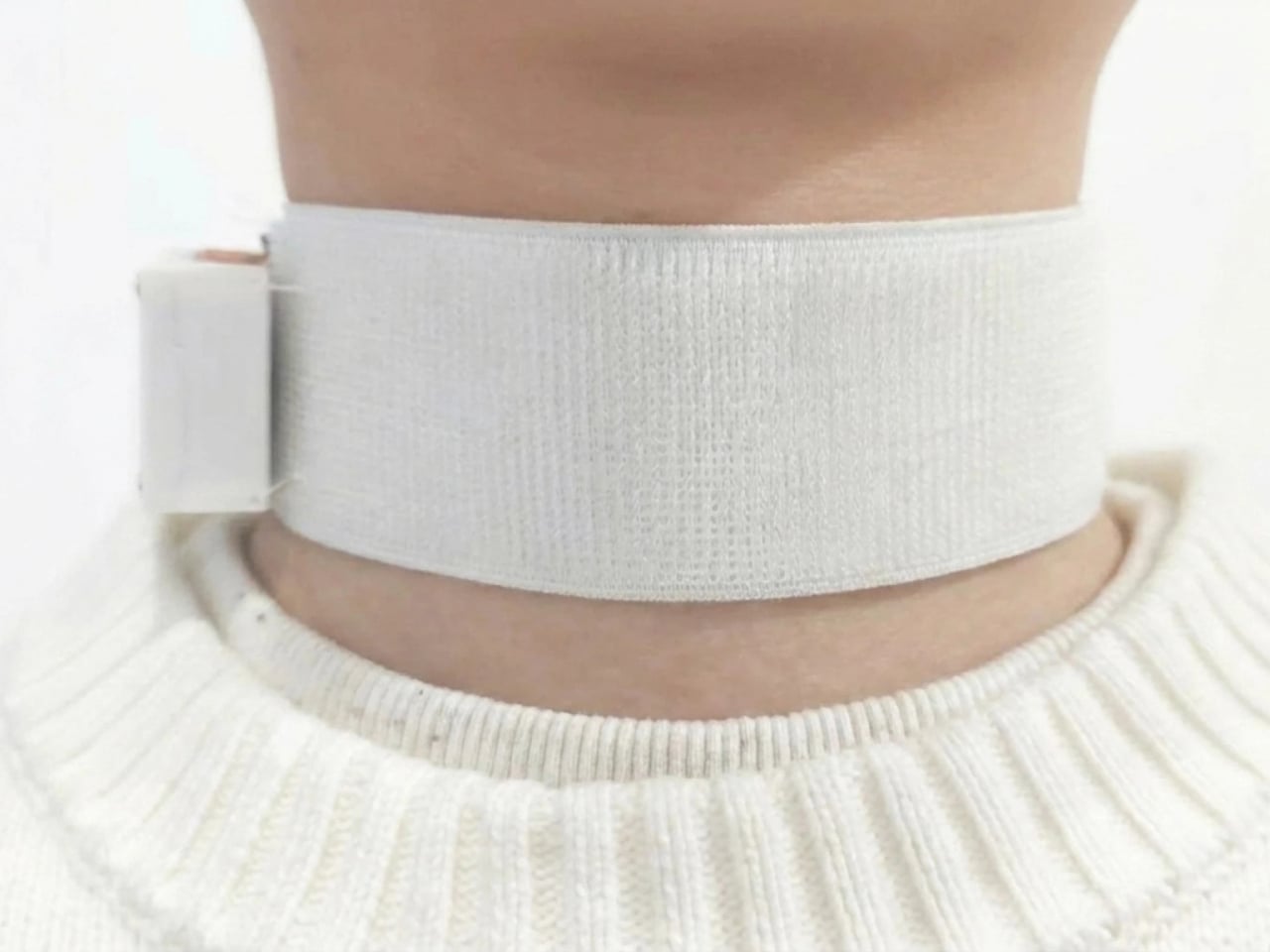
Body agency is a power returned after an incident took it away from the user's physical form, and some wearable devices and technologies have this exact goal in mind.
Meininger, who grew up in Germany but now lives in London, likes making things. So when he saw how much his young sons enjoyed the jungle gym and play forts at the local park, he made an indoor treehouse for them.
The new guidelines released in February suggest that any member of the Advisory Committee for Transit Accessibility "employed by, or affiliated with, an organization that has filed a legal action against the MTA or its subsidiaries and affiliates" can be removed if the MTA determines that affiliation constitutes a conflict of interest.
Decades of research in environmental psychology and building science reveal that indoor conditions can profoundly affect human health and behavior. Lighting influences circadian rhythms and sleep patterns. Air quality impacts cognitive performance and respiratory health. Temperature and acoustics shape comfort and concentration.
When I moved in here it truly was my last resort. Since living here I feel like I have the same independent life that my friends have and I just don't want to lose that. The guide dog run is probably the most important thing for me. It's a safe and confined area where I feel comfortable taking my dog out, especially at night.
Every city contains two transportation systems. One is the visible network of roads, rail lines, sidewalks, and bus routes mapped in planning documents. The other is the invisible geography of privilege and exclusion embedded within it: the neighborhoods that received highways instead of parks, the communities whose bus routes were cut, the sidewalks that abruptly end at the edge of a district.
For most of human history, night arrived as a planetary certainty. Darkness spread across landscapes, and the sky revealed thousands of stars. Today, that sky is disappearing. Artificial light spills upward from cities, scattering through the atmosphere and turning night into a permanent haze. Research mapping global sky brightness shows that more than 80 percent of humanity now lives under light-polluted skies, and the Milky Way has vanished from view for over a third of the world's population.
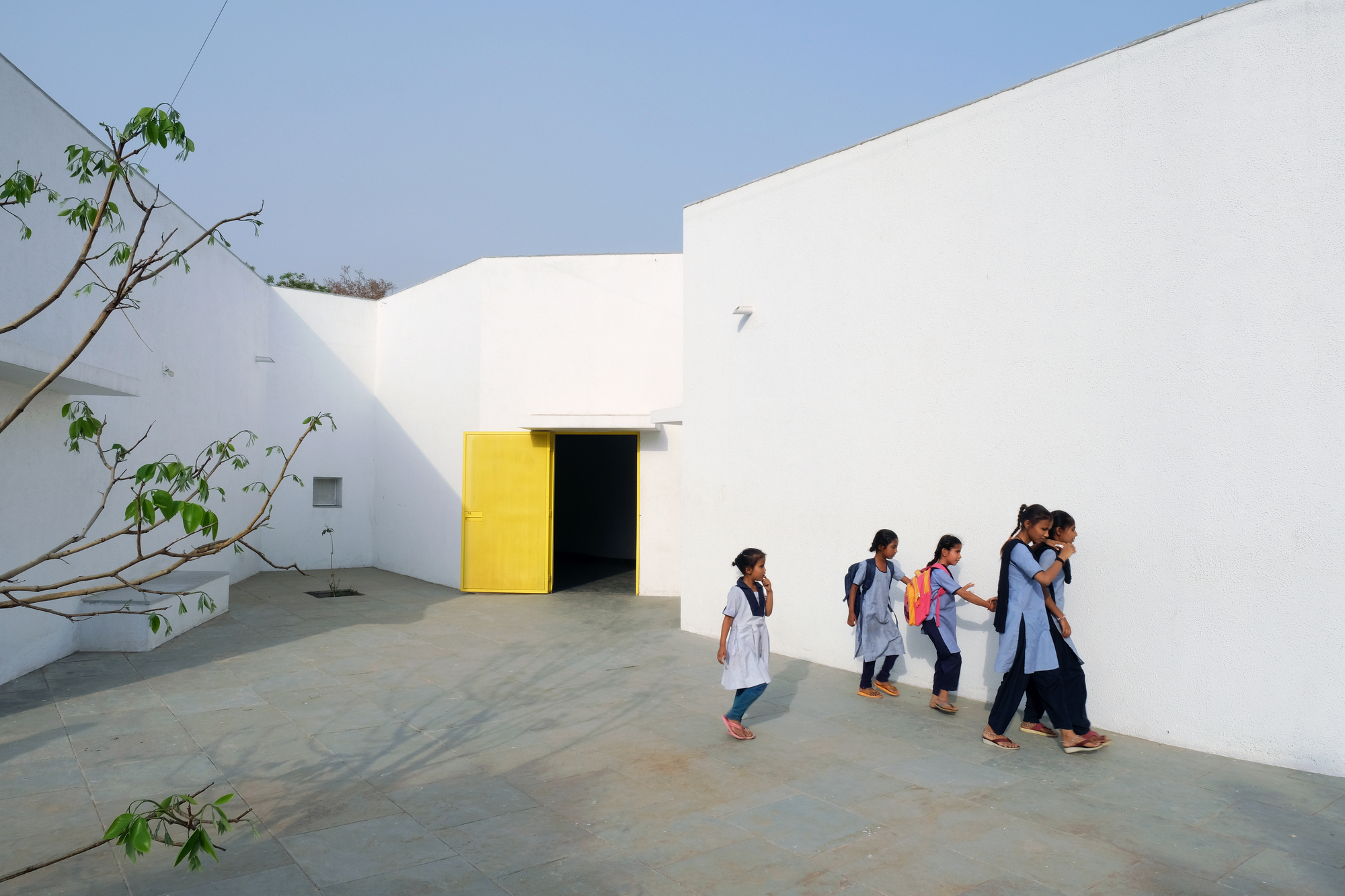
The design of classrooms, childcare facilities, community centers, and public spaces directly shapes how sound is perceived, how communication unfolds, and how inclusion is experienced. Acoustics, spatial configuration, lighting strategies, and material choices can either reinforce barriers to participation or foster environments that support diverse auditory experiences.
My family had Slide Show Night when I was growing up. Not every Saturday, but a whole bunch of Saturdays. Either my sister or I would be in charge of setting up the projector, the screen, and loading the carousel. During the show, there'd be a few landscapes or skylines taken during vacations, but almost all the shots were up close. Like most dads, mine wasn't a professional photographer, but he did a good job of capturing memory triggers: faces, gestures, and decorations.
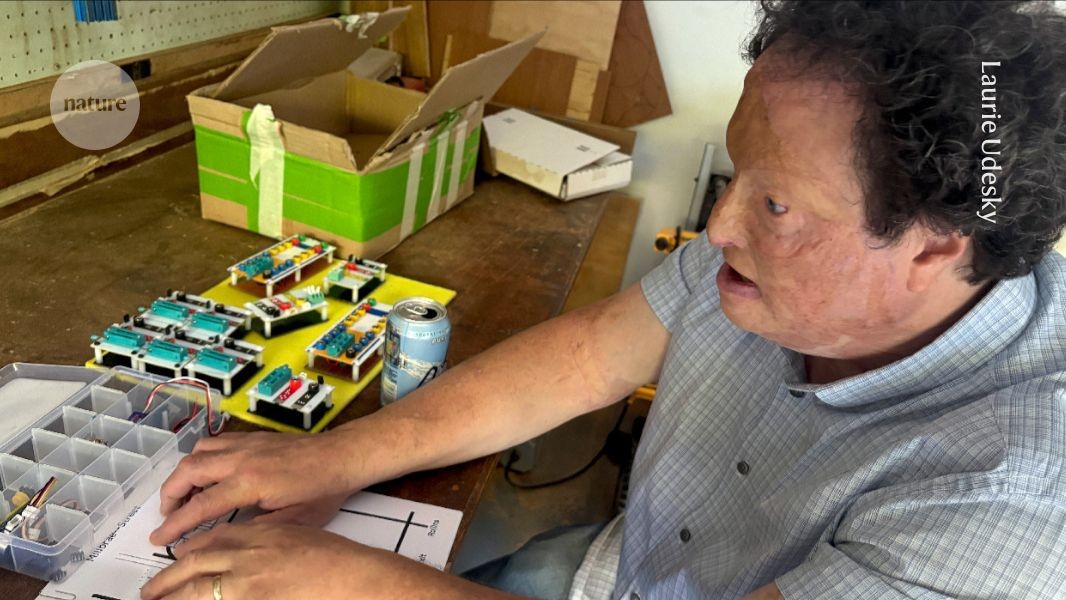
When I take a walk in my neighborhood, my white hair, dark glasses, and white cane shout to the world that I am an older blind man. Some passers-by assume that I am lost and ask if I need help. It is true that blind people sometimes need help when using a mobility aid (a white cane or guide dog) to navigate their physical environment. However, once a person becomes proficient at traveling with a mobility aid, they typically need much less help.
Ana proposed the following: Is this enough in 2026? As an occasional purveyor of the visually-hidden class myself, the question wriggled its way into my brain. I felt compelled to investigate the whole ordeal. Spoiler: I do not have a satisfactory yes-or-no answer, but I do have a wall of text!
In 2003, when plumbing fixtures industry veteran Rob Buete first encountered the "walk-in tub" made by a startup called Safety Tub, he burst out laughing. A bathtub with a door? It seemed like a joke, or at best a clunky contraption for frail seniors who couldn't step over a regular tub. Kinya Seto is the CEO of LIXIL, the global manufacturer of pioneering water and housing products, including brands such as GROHE, American Standard, INAX, and Tostem.
Jane Jacobs was also one of the voices that challenged this predominantly rationalist logic, arguing that truly vibrant streets are those capable of sustaining the diversity of everyday life, its informal exchanges, and the forms of care and natural surveillance that emerge from them. What these authors share is a fundamental insight: streets are not merely infrastructures for circulation, but social ecosystems, shaped by the relationships, uses, and encounters that take place within them.
For decades, people with disabilities have relied on service dogs to help them perform daily tasks like opening doors, turning on lights, or alerting caregivers to emergencies. By some estimates, there are 500,000 service dogs in the U.S., but little attention has been paid to the fact that these dogs have been trained to interact with interfaces that are made for humans.