#tensioner-pulley-patents
#tensioner-pulley-patents
[ follow ]
#electric-vehicles #automotive-industry #vehicle-safety #automotive-technology #sustainability #ford #tesla
fromTheregister
6 days agoHumanoid tests humanoid robot for automotive logistics
This proof of concept in the manufacturing industry allows us to demonstrate how humanoid robots can act as extensions of an organization's operations by providing business context awareness and integration with existing workflows.
London startup

Bicycling
fromBikerumor
3 weeks agoPatent Patrol: Inventor with Tire Pressure Management System Patent Seeks Industry Partner
A new patented TPMS design aims to make tire pressure adjustment systems more affordable and commercially viable by addressing cost and compatibility issues that hindered previous systems.
Artificial intelligence
fromTechCrunch
3 weeks agoFord's new AI assistant will help fleet owners know if seatbelts are being used | TechCrunch
Ford launched a free AI assistant for commercial customers to analyze fleet data and improve profitability, betting that software generates revenue even when offered at no cost.
fromwww.marketingdive.com
1 month agoHow Ford is accelerating its global campaign as it returns to Formula 1
We're using Formula 1 on Apple TV to show exactly how the extreme research and development tested in the world's harshest racing environments translates directly to the consumer. That's not a marketing line. It's absolutely real, drawing a line between Ford racing vehicles and the tech inside vehicles like the F-150 Raptor, Bronco Raptor and the new EV electric truck that's on its way.
Marketing
Business
from24/7 Wall St.
1 month agoEveryone Hates Ford Right Now. Does That Make It a No-Brainer Buy?
Ford's current pessimism presents a buying opportunity for retirement investors as insider buying, improving EV losses, and strong Ford Pro commercial division cash generation support valuation recovery.
fromIPWatchdog.com | Patents & Intellectual Property Law
1 month agoTesla Loses at CAFC in Split Decision Upholding EV Charger Claims
Tesla argued that 'Kato discloses the Charging Control Limitation because the battery charge level increases in accordance with Kato's generated charging schedule when a user follows the schedule by manually plugging in their vehicle at each charging location.' But the PTAB found that the plain and ordinary meaning of the Charging Control Limitation 'excludes 'the user manually starting and stopping the charging.'
Intellectual property law
Cars
from24/7 Wall St.
3 weeks ago2 Vehicle Manufacturer Stocks to Watch: Honda and REV Group
Honda faces severe EV challenges with $1.76 billion in charges and a strategic retreat from 30% to 20% EV sales targets, while its motorcycle business remains highly profitable and increasingly important to overall performance.
fromThe Autopian
3 weeks agoThis $30 Tool Has Kept My Car Batteries Alive No Matter How Long I've Let Them Sit Outside - The Autopian
One of the weird quirks of working from home and owning a lot of cars is that I might go a month or a few between driving a specific vehicle. This is especially true in the winter, when I just won't drive my favorite cars at all to keep them out of the road salt. Many of my vehicles don't have the privilege of sipping from a battery tender. Yet, when I'm ready, the cars fire up when it's time to drive.
Cars
Cars
from24/7 Wall St.
3 weeks agoStellantis, Oshkosh, and Mastercraft: 3 Vehicle Manufacturers Worth Watching
Three vehicle manufacturers show vastly different financial health, with Stellantis in crisis from aggressive EV betting, Oshkosh facing challenges, and a third company performing strongest based on earnings, revenue growth, margins, guidance, and overall financial metrics.
Cars
fromSitePoint Forums | Web Development & Design Community
3 weeks agoWhat's One Car Buying Tip You Wish Someone Had Known Earlier?
Successful car buying requires examining vehicle history, understanding total ownership costs beyond purchase price, and avoiding rushed decisions rather than focusing solely on initial price.
fromTheregister
1 month agoIf Microsoft made a car... what would it be?
Porter complained about difficulties when trying to insert lines in Excel. (Which, to be fair to Microsoft, is relatively straightforward - need to insert a row? Right-click on a selected row. Need to insert a line in text? Alt+Return is probably going to be your friend.) But then Porter turned to that other productivity stalwart, Word. "Never underestimate Microsoft's ability to make things more complicated," he said.
Tech industry
fromBig Think
2 months agoHow "tribology" became a new industrial science
the automation of heavy machinery enabled plants to operate continuously, increasing productivity and revenue. The downside was that any small hiccup was acutely felt, cascading through the production line. At first, it was assumed that inadequate lubrication of factory equipment was causing parts to seize up or break apart. And so, the Lubrication and Wear Group of the Institution of Mechanical Engineers, along with the Iron
Science
Apple
fromYanko Design - Modern Industrial Design News
2 months agoSteel Is Dead: 5 Titanium Products That Just Replaced It in 2026 - Yanko Design
Titanium's strength-to-weight, corrosion resistance, and recyclability enable thinner, durable, premium-feeling products while supporting sustainable, long-lasting design.

fromwww.npr.org
2 months agoChina bans hidden car door handles, which can trap people after crashes
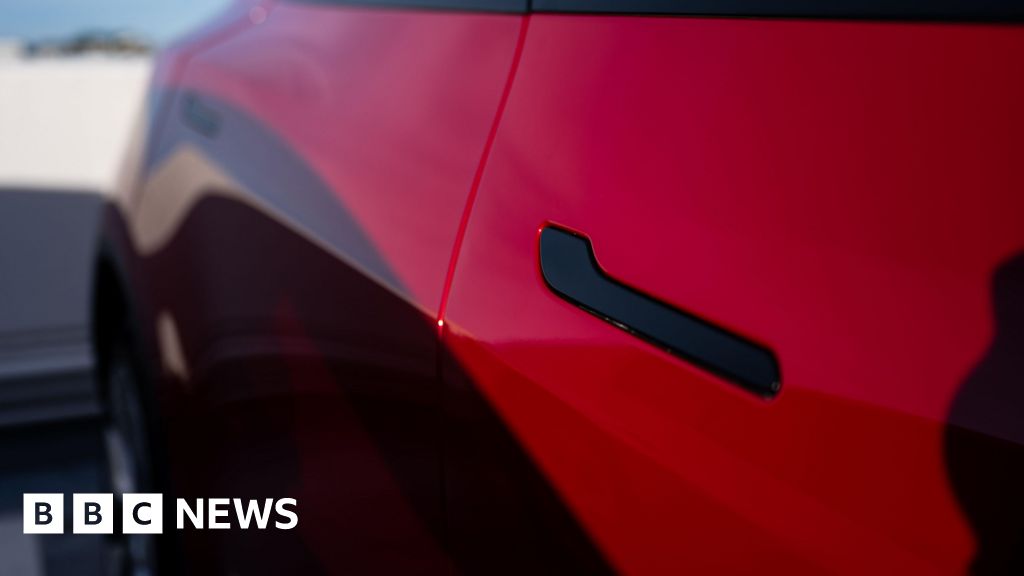
China has become the first nation to require a change to make it easier to rescue people from car crashes: Car doors must be able to open from either side mechanically, like by lifting a handle. The rules, which go into effect in 2027, follow international scrutiny of a futuristic design first popularized by Tesla, but adopted by many other automakers, in which door handles are electrically powered and hidden.
US news
fromBusiness Matters
1 month agoWhy Tolerance Management Is a Business-Critical Skill in Modern Manufacturing
We are now in a time of manufacturing where precision is more than a technical necessity; it's a business requirement. The more complex, globally dispersed and demanding things get, the less slack remains in the system. Under these circumstances tolerance management has become a decisive competence and affects competitiveness not only in terms of controlling costs, ensuring quality and improving production efficiency but also for long term market success.
Business
frominsideevs.com
4 weeks agoThis Ready-Made EV Chassis Could Be The Perfect Fit For A Classic Truck
Vintage cars, especially pickups and SUVs, are usually made from two parts: a standalone chassis and a body that bolts on top of the chassis. So why not swap the original underpinnings with something more modern, while retaining the classic look of the original bodywork? That's exactly what the United Kingdom's Electric Classic Cars thought of doing, and it might just supercharge the EV conversion world.
Cars
fromSilicon Canals
1 month ago8 products that used to last decades but now seem to break after the warranty expires - Silicon Canals
My grandmother's refrigerator ran for forty years. The washing machine she bought in the 1970s? Still spinning when she passed away. Meanwhile, I'm on my third coffee maker in five years, and don't get me started on the laptop that mysteriously died two weeks after the warranty expired. This isn't just bad luck or nostalgia talking. There's something fundamentally different about how products are made today versus decades ago.
Gadgets

Cars
fromTESLARATI
1 month agoTesla Roadster patent hints at radical seat redesign ahead of reveal
Tesla's newly patented monolithic seat system for the next-generation Roadster uses a single continuous composite frame, eliminating hundreds of traditional components and aligning with Tesla's manufacturing philosophy of fewer parts and lighter weight.
Business
fromSitePoint Forums | Web Development & Design Community
1 month agoU.S based custom metal stamping company for precision telecom or shielding components?
Seeking a U.S. precision metal-stamping partner for telecom and EMI/RFI shielding with tight tolerances, in-house tooling, secondary ops, and smooth prototype-to-production transition.
fromDefector
1 month agoAston Martin: Driving Our Car Will Maim You | Defector
The vibration into the chassis is causing a few reliability problems: mirrors falling off, tail lights falling off, all that sort of thing, which we are having to address. Fernando [Alonso] is of the feeling that he can't do more than 25 laps consecutively before he risks permanent nerve damage to his hands.
Cars
fromZDNET
2 months agoAre 'advanced electromagnetic' de-icing devices for your car legit? I took one apart to find out
Sometimes I'm rather impressed by the ingenuity of those in the business of making scammy gadgets. Over the years, I've examined a wide range of products, from scam devices that claim to save you money on your power bill to a high-power USB charger filled with an unusual goo-like substance. Also: Want to cut your electric bill? Skip these scam 'power-saving' devices - and buy this instead
Gadgets
fromBikerumor
2 months agoRimpact Components Slashes Chain Damper's Price While Adding Two Tuning Options
Rimpact's Chain Damper was launched in 2024, and since then, interest in drivetrain feedback mitigation seems to be gaining momentum. The fact that current World Cup DH ruler Jackson Goldstone uses a similar device on his bike has likely caused quite a spike in interest. On their part, Rimpact supported 15 World Cup DH Teams through last season, and they're expecting that number to grow this year.
Bicycling
Cars
fromdesignboom | architecture & design magazine
1 month agowind-sculpted hypercar by xiaomi embeds cutouts to let air pass through the teardrop body
Xiaomi's Vision Gran Turismo hypercar integrates aerodynamic design through wind-sculpted surfaces and air ducts that eliminate the need for traditional wings while achieving both low drag and downforce.
fromWIRED
1 month agoThe Supreme Court's Tariff Ruling Won't Bring Car Prices Back to Earth
It has never been more expensive to buy a new car. The average transaction price last month for buyers in the United States was $48,576, up nearly a third from 2019, according to Edmunds. The "affordable" car-$20,000 or less- is dead. The high prices have been pinned on plenty of economic dynamics: lingering pandemic-era supply chain issues, the introduction of expensive technology into everyday cars, higher labor and raw materials costs, and new tariffs by the Trump administration affecting imported steel, aluminum, and cars themselves.
Cars
from24/7 Wall St.
1 month agoFrom Frustration to Respect: What Car Dealerships Actually Get Right
For years, car dealerships had a terrible reputation. Pushy sales tactics, confusing pricing, and long hours spent negotiating made the entire experience feel more like a battle than a purchase. Like many buyers, I assumed that avoiding dealerships altogether was the smartest way to buy a car, especially as online platforms and direct-to-consumer models gained popularity. Over time, however, my perspective began to shift.
Cars
from24/7 Wall St.
2 months agoFord vs Failure: Will Failure Win Again?
Ford beat earnings estimates in three straight quarters through Q3 2025, with a stunning 367% surprise in Q1. The stock responded by going... nowhere. Up 47% over the past year but still trading at $13.60, barely above where it sat in 2016. That's the Ford pattern in a nutshell: promise without payoff, execution without escape velocity.
Cars
Cars
fromYanko Design - Modern Industrial Design News
2 months agoThis Stealth Fighter-Inspired Buggy Makes Modern Supercars Look Too Polite - Yanko Design
Wedge-inspired dune buggy fuses 1970s–80s angular supercar styling with exposed suspension, bronze wheels, and uncompromising track-focused, non-street-legal design.
fromBusiness Insider
2 months agoThe roaring revival of the V8 engine
The American automotive landscape is changing after a period that saw tighter emissions rules push automakers toward more efficient, quieter powertrains and prompted shifts away from big V8 engines. But many of those regulations, including the federal EV incentives, have fallen away, leading automakers that once promised to discontinue the gas-hungry engines to reinvest in V8 offerings - especially in full-size trucks and performance cars.
Cars
fromArs Technica
2 months agoIs 2026 the year buttons come back to cars? Crash testers say yes.
It's helpful to know that the lack of physical buttons isn't just a trend pushed by designers-the bean counters like it, too. It's quicker-and therefore cheaper-during assembly to just fit a capacitive touch module that controls multiple settings or switches than it is to have individual buttons, each connected to a wiring loom. Which is why we're seeing the controls for heating and cooling the interior, the headlights, seat heaters, and more move from knobs and dials and sliders and buttons to touch panels.
Cars
[ Load more ]