#the-fifty
#the-fifty
[ follow ]



fromJezebel
2 weeks agoThe U.S. Is So Over World Peace It Erased the Olive Branch from the Dime
For a nation whose founding symbols were carefully engineered around the balance of peace and war, that omission is hard to read as accidental. Dropping the olive branch from the dime isn't just a design choice: it's a cultural signal.
Washington DC
fromFast Company
2 weeks agoA record number of Americans want out-now the government is making it easier
Starting next month, the cost of renouncing your U.S. citizenship will go down dramatically - a boon for people already shouldering the burden of paying for a major overseas move. Anyone wishing to formally shed their American citizenship is required to obtain a form called a Certificate of Loss of Nationality, and right now it comes with a whopping $2,350 fee. In April, that fee will drop by 80% to $450.
US Elections
fromFortune
3 weeks agoAn effort similar to the SAVE Act was tried once, but was blocked by courts when over 30,000 eligible citizens were prevented from registering to vote | Fortune
I didn't know that anything had officially changed walking in there. And then being told that I had to provide a passport that I've never had or a birth certificate that's usually tucked away somewhere safe just to cast my vote - which I've done before - it was frustrating.
US politics
fromBig Think
1 month agoHow the U.S. Constitution protects liberty from the powerful's dark impulses
The real Führer is always a judge. Out of Führerdom flows judgeship. One who wants to separate the two from each other or puts them in opposition to each other would have the judge be either the leader of the opposition or the tool of the opposition and is trying to unhinge the state with the help of the judiciary.
History
US Elections
fromBuzzFeed
3 weeks agoFormer US Residents, Tell Us Why You Left And Your Unfiltered Thoughts About America Right Now
Record numbers of Americans are leaving the country, citing exhaustion from financial stress, lack of work-life balance, inadequate healthcare, and political polarization compared to better social systems abroad.
Law
fromAbove the Law
1 month agoStanding Up And Cheering For American-ish Principles - Above the Law
Trump's State of the Union challenge to Democrats about protecting American citizens over illegal aliens was a rhetorical trap that oversimplified complex policy issues requiring nuanced discussion rather than simple yes-or-no responses.
US politics
fromInside Higher Ed | Higher Education News, Events and Jobs
3 weeks agoThis Is What Democracy Looks Like
Recent federal actions have weakened voting rights protections established by the Voting Rights Act of 1965, particularly affecting college students and first-time voters through investigations and restrictions on voting engagement studies.
fromwww.npr.org
1 month agoAs the U.S. celebrates its 250th birthday, many Latinos question whether they belong
I didn't feel included in the Latino community. I always felt left out. Las Comadres has since become a national nonprofit organization. De Hoyos Comstock, petite with a warm smile, describes Las Comadres as a 'Latina culture club.' The current political rhetoric, characterized by the most aggressive immigration enforcement in modern history, is forcing many U.S. citizen Latinos to question whether they belong.
Austin
#political-polarization
Right-wing politics
fromwww.mediaite.com
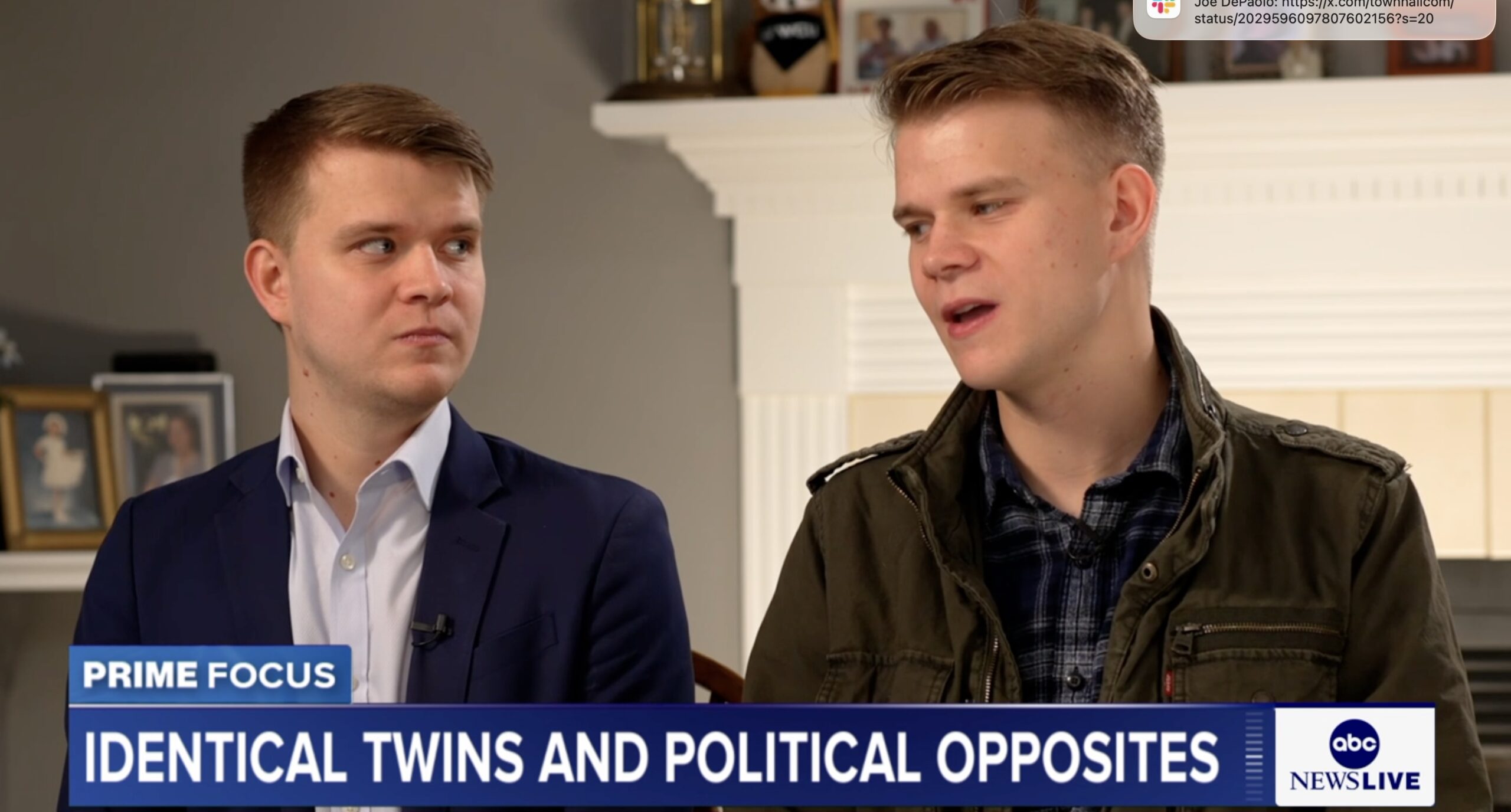
1 month agoIdentical Twins With Opposing Political Views Model Civility for Gen Z
Twin brothers with opposing political views demonstrate civil discourse by maintaining family bonds while actively engaging in partisan politics, modeling constructive engagement for Gen Z.
fromThe Atlantic
4 weeks agoA Word for Our Troubled Times
A record high of adults—80 percent—believes that Americans are divided on the most important values. National pride, trust in government, and confidence in institutions are near record lows. The Princeton University historian Sean Wilentz says the United States hasn't been this divided since the Civil War. Nearly half of Americans think another civil war is likely in their lifetime.
US politics
History
fromSmithsonian Magazine
1 month agoHow to Fit 250 Years of American History and Culture Into One Map
Smithsonian magazine celebrates America's 250th birthday with an interactive map featuring 250 notable places across ten categories, while historians contextualize this anniversary amid current domestic challenges.
US politics
fromBoston Condos For Sale Ford Realty
1 month agoIn Its 250th Year, Is America, Land Of Immigration, Becoming A Country Of Emigration? Boston Condos For Sale Ford Realty
Record numbers of American citizens are emigrating to foreign countries seeking affordability, safety, and better quality of life, reversing decades of net immigration patterns.
fromwww.mercurynews.com
1 month agoKluth: Race is the elephant in the room of US foreign policy
White genocide' Carl is a right-wing firebrand who played a minor role in the first Trump administration and has more recently gained, depending on your vantage, kudos or notoriety for his theory that Anti-White Racism Is Tearing America Apart, as his book's subtitle puts it. He believes, for example, that a White genocide is underway and endorses the Great Replacement Theory (according to which elites in America and Europe are intentionally encouraging immigration to replace indigenous whites).
US politics
fromThe New Yorker
1 month agoDemocracy Dies in Broad Daylight
Last week- after the Wall Street Journal broke more news about the Trump family's dodgy crypto-business dealings and before the President shared a racist video of the Obamas depicted as dancing apes-the Amazon entrepreneur Jeff Bezos decided that one of his smaller properties, the Washington Post, has proved such a drag on his two-hundred-and-thirty-billion-dollar fortune that prudence required that he obliterate much of its newsroom.
Media industry
fromPsychology Today
2 months agoAmerica Is Fraying, What Comes Next?
The air feels heavier. And the struggles are changing shape. Beyond my office walls, the world is shifting, and my clients sense the tremors. The things they once trusted, global order, democratic norms, and even their own personal safety, no longer feel solid. They feel brittle, as if one strong wind could bring it all down. And what they're sensing isn't imagined.
Relationships
fromThe Globe and Mail
2 months agoBusiness Brief: Heralding the age of Western decline
U.S. President Donald Trump, with his lust for Greenland and hectoring of Europe, thinks the world is at his mercy,and thatthe U.S. is invincible. He's right on the first point. But he discovered this week that he's wrong about the second one. In Davos at the World Economic Forum, Trump climbed down on his Greenland threats after his actions caused chaos in the markets.
World news
Artificial intelligence
fromFortune
2 months agoWhile elites debate geopolitics, Americans are rethinking college in the search for economic mobility | Fortune
AI is actively transforming labor markets, prompting American workers to adapt as automation threatens roughly 25% of US and European work hours.
Philosophy
fromApaonline
2 months agoRecently Published Book Spotlight: The Rise of Polarization: Affects, Politics, and Philosophy
Prevailing accounts of affective polarization misdiagnose the phenomenon by focusing on survey patterns instead of the underlying narrative and affective practices that shape political life.
fromemptywheel
2 months agoTime to Unplug the American Century and Restart the Machine - emptywheel
Three of the four things that gave Trump a foothold, in my opinion, were failures in this century (the fourth is the legacy of slavery and the organized political violence that replaced it). The other three, though, are the War on Terror, the financial crisis, and social media. (COVID was the final catalyst, I think; having moved during the height of COVID, I can't express how much worse the US dealt with it than much of the EU.)
World news



fromWorld History Encyclopedia
2 months agoFrom Fort Sumter to Juneteenth: how war remade the United States
The American Civil War (1861-1865) was the pivotal event in United States history and the largest armed conflict in the Western world following the end of the Napoleonic Wars (1815) and prior to the beginning of the First World War (1914). The central cause of the war was the institution of slavery, which had increasingly caused conflict between Southern states, which relied heavily on slave labor for their agrarian economy, and Northern states, which were heavily industrialized and had far less need for slaves.
History
Right-wing politics
fromwww.theguardian.com
2 months agoWhy the white America Trump dreams of is just a fantasy
Stopping immigration cannot restore a predominantly white America; demographic trends ensure a shrinking non-Hispanic white population, and exclusionary policies will weaken the United States.
fromwww.mercurynews.com
2 months agoOpinion: The year's new political fault lines are already forming
The death of Renee Nicole Good, a 37-year-old mother and U.S. citizen who was shot and killed by an Immigration and Customs Enforcement agent in Minneapolis on Wednesday, has the potential to shake the political landscape in ways reminiscent of George Floyd's killing in 2020. The Trump administration initially claimed Good weaponized her vehicle in an act of domestic terrorism, an account that appears to be contradicted by video evidence.
US politics
fromFortune
1 month agoIt turns out that Joe Biden really did crush Americans' dreams for the future. Just look at how the vibe changed 5 years ago | Fortune
"If you look at the optimism metric for future life, that really came down a lot from 2021 to 2023 and that corresponds really closely with the worst of the inflation crisis," Dan Witters, research director of the Gallup national health and well-being index, told Fortune. "The economic pressures of being able to afford things like food and fuel and gas and healthcare-that really can have a deleterious effect."
US politics
fromAxios
1 month agoAmerica's 250th anniversary collides with a renewed fight over Black history
Following presidential custom, Trump issued a National Black History Month proclamation on Feb. 3 that maintained "black history is not distinct from American history - rather, the history of Black Americans is an indispensable chapter in our grand American story." Yes, but: Its rhetoric, critics say, stands in tension with the Trump administration's recent actions, raising questions about whether commemoration without context ultimately obscures more than it honors.
US politics



US politics
fromwww.npr.org
1 month agoTrump officials propose testing a citizenship question amid a push to alter the census
Participants in the 2026 field test for the 2030 census may be asked about U.S. citizenship amid efforts to exclude noncitizens from apportionment counts and ongoing legal challenges.
fromwww.aljazeera.com
2 months agoMinnesota, ICE and the makings of a US civil war
A 2024 simulation found US civil war could be triggered by clashes between state and federal law enforcement. US federal immigration raids continue in Minnesota, and the operation has set the stage for a standoff between state officials and the federal government. Governor Tim Walz has readied Minnesota's national guard, while the Pentagon has ordered troops to be on standby. A 2024 University of Pennsylvania simulation warned that similar state-federal standoffs could escalate into broader armed conflict.
US politics
fromPsychology Today
1 month agoPresidential Words for Presidents Day
From George Washington's first presidential "administration" to Donald Trump's promises to cut taxes "bigly," U.S. presidents have played a big role in shaping the direction of the country, including the words we use to talk about everything from national politics to everyday objects and actions.
US politics
fromABC7 Los Angeles
2 months agoMore Americans identify as political independents, a new poll shows
Just under half, 45%, of U.S. adults now identify as independents, a new Gallup survey found. That's a substantial shift from 20 years ago, when closer to one-third of Americans said they didn't identify with the Democrats or Republicans. This group appears, increasingly, to be driven by their unhappiness with the party in power, according to Gallup's analysis. That's a dynamic that could be good for Democrats in this year's midterm elections, but doesn't promise lasting loyalty.
US politics
fromAxios
2 months agoThe 3 groups lagging most in America's post-COVID rebound
The latest Census data also suggest the next phase of U.S. politics will be shaped less by a single national economy than by who benefited from growth and where they live. By the numbers: The U.S. median household income rose to $80,734, the 2020-2024 American Community Survey released Thursday and examined by Axios showed. That's a 4.4% jump from 2015-2019 after inflation.
US politics
[ Load more ]