#three-row-suv
#three-row-suv
[ follow ]
#electric-vehicles #tesla #electric-suv #kia #suv #toyota-highlander-ev #toyota #tesla-model-y #hyundai #subaru #ev3
#electric-vehicles

Alternative transportation
fromEngadget
2 days agoThe hottest EVs from the 2026 New York Auto Show (plus one brawny concept)
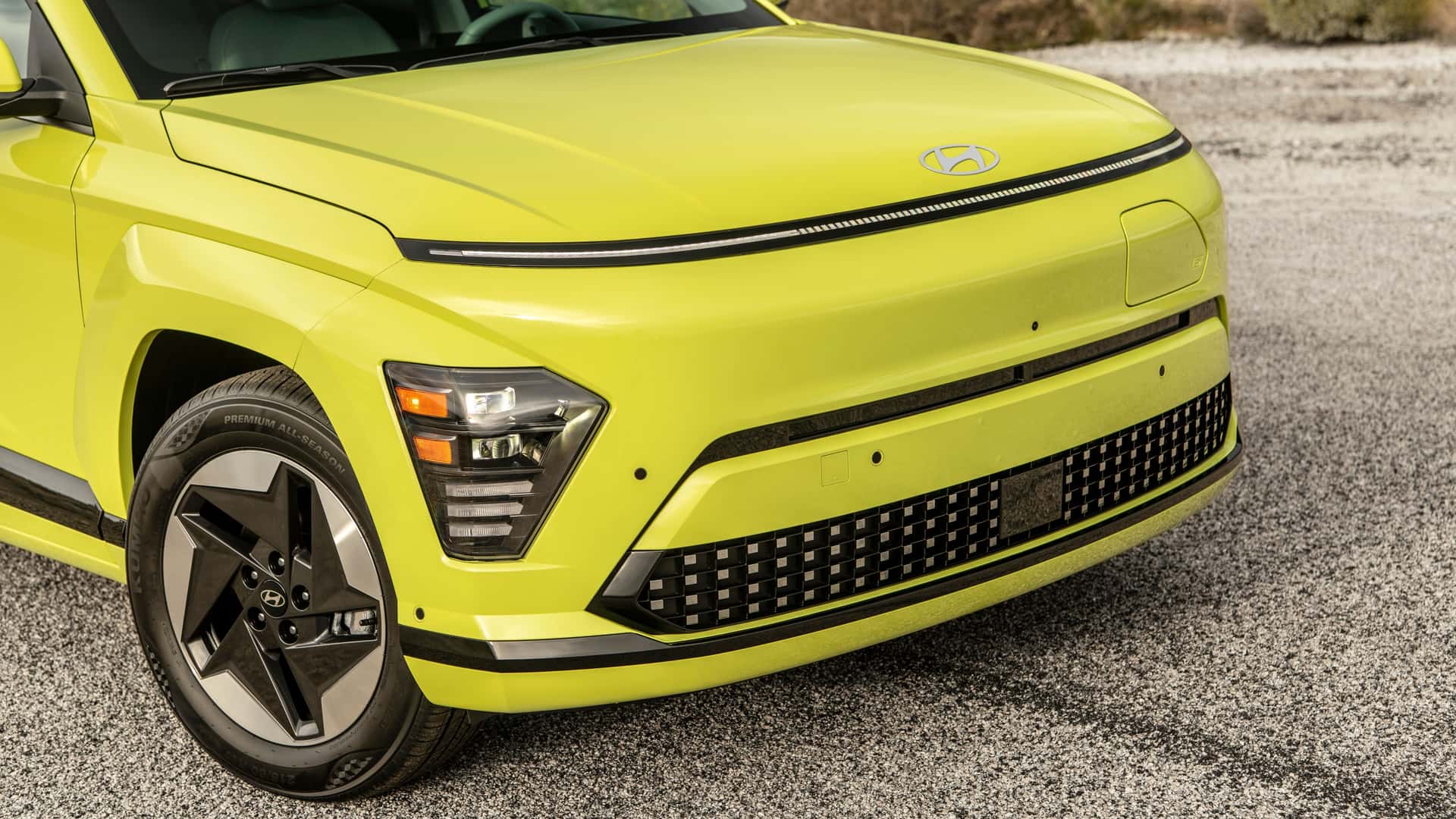
Consumers are increasingly turning to electric vehicles due to rising gas prices, with notable debuts at the 2026 New York International Auto Show.
Alternative transportation
frominsideevs.com
1 month agoToyota Highlander Vs. Hyundai Ioniq 9 Vs. Kia EV9: Which Three-Row EV Is Best?
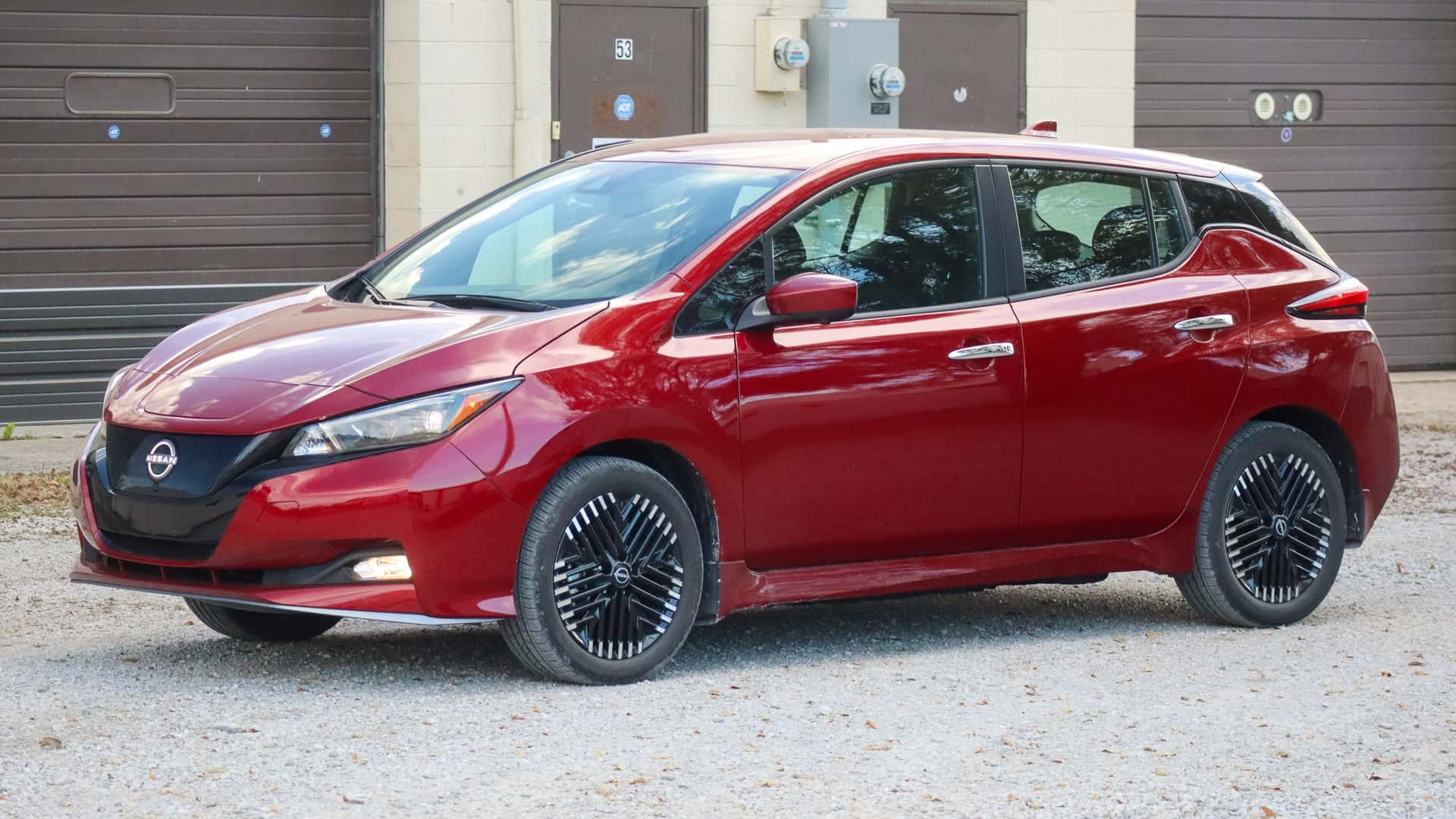
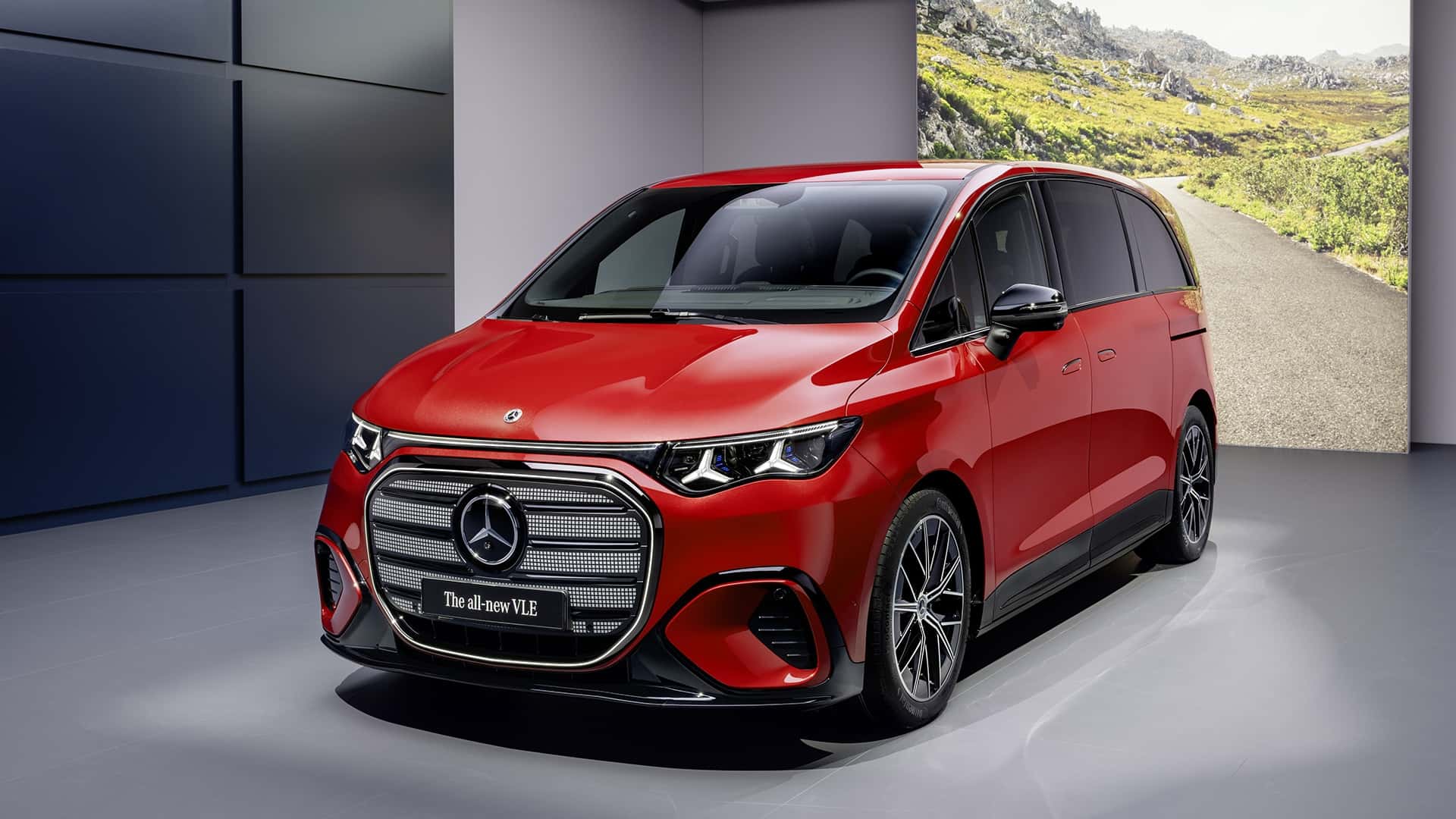
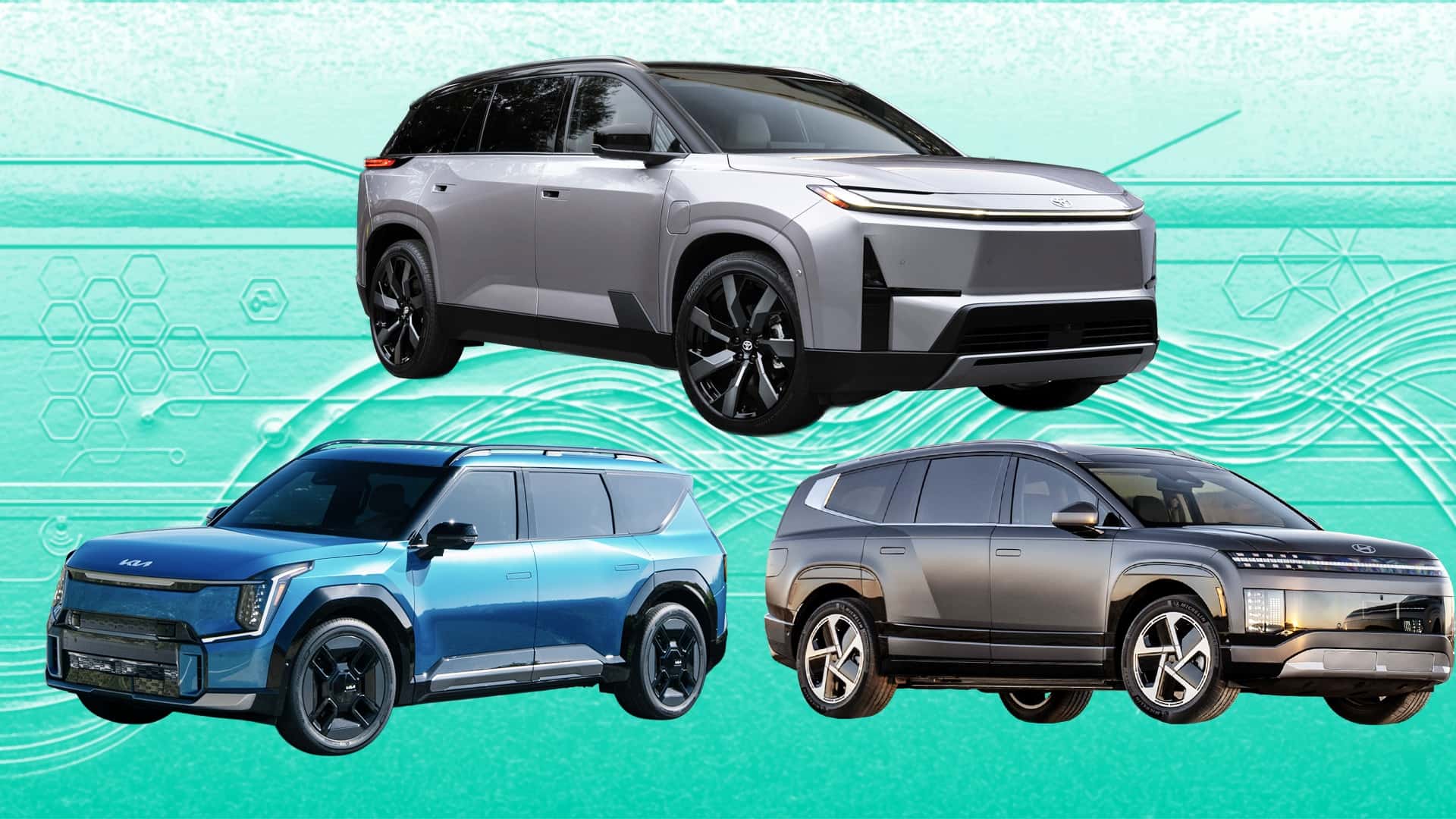
Toyota's Highlander EV enters the three-row electric SUV market as a competitive alternative to Kia EV9 and Hyundai Ioniq 9, though Korean rivals maintain charging advantages through 800-volt platforms.


#freelander
Cars
fromYanko Design - Modern Industrial Design News
2 days agoFreelander reincarnates as an all-electric off-road SUV with six models planned - Yanko Design
Freelander returns as an independent electrified vehicle brand, focusing on a new generation of SUVs through a joint venture between JLR and Chery.

#rivian-r2-launch
Venture
from247wallst.com
1 month agoRivian's R2 Reveal Is the Moment of Truth for the EV Maker's Survival
Rivian's R2 mid-size SUV reveal on March 12, 2026, is critical for achieving mass-market volume and profitability, with Q2 2026 customer deliveries targeted and $6.08 billion in liquidity supporting the launch.
Alternative transportation
frominsideevs.com
2 weeks agoFive Underrated Used EVs To Help You Through The Impending Gas Crisis
Rising gas prices and EV depreciation create opportunities to purchase affordable used electric vehicles under $30,000, with an expanding market as leases end and fleet vehicles turn over.

Cars
frominsideevs.com
2 weeks agoI've Tried All Of The High Performance' SUVs. The Polestar 3 Drives Better Than Any Of Them
The Polestar 3 achieves superior performance and comfort as a super-SUV through advanced suspension technology and balanced engineering, outperforming competitors despite the inherent physics limitations of large vehicles.
Cars
from24/7 Wall St.
3 weeks ago5 Companies Quietly Eating Tesla's Lunch in 2026 - and One Is Already Winning
Tesla's EV market dominance has eroded as deliveries declined 9% in 2025 while global EV sales grew 26%, with Chinese competitors and premium challengers capturing market share through newer products, lower prices, and broader geographic reach.
fromTESLARATI
3 weeks agoTesla Model Y outsells everything in three states, but Ford dominates
The Ford F-Series, encompassing models like the F-150, F-250, F-350, and F-450, claimed the title of best-selling vehicle in 29 states. This dominance underscores the pickup truck's unbreakable appeal across much of the country, particularly in rural, Midwestern, Southern, and Western states where towing capacity, durability, and utility for work or recreation remain top priorities.
Cars
Cars
frominsideevs.com
3 weeks agoThe 2027 Chevy Bolt Is A Great Affordable EV. But It's Already Doomed
The 2027 Chevy Bolt EV is an affordable, well-engineered EV that addresses previous generation shortcomings, yet faces market challenges because consumers prefer larger, more luxurious vehicles despite affordability concerns.
fromYanko Design - Modern Industrial Design News
4 weeks agoKia to soon roll out its first pop-up PV5 production camper van for ultimate future of EV adventure - Yanko Design
When Kia revealed the PV5 WKNDR, it demonstrated the highly flexible and modular interior of an electric van, which could easily and efficiently be customized to maximize space and function. This idea is now translating - thanks for Sussex - into feasibility soon.
Cars
fromBusiness Insider
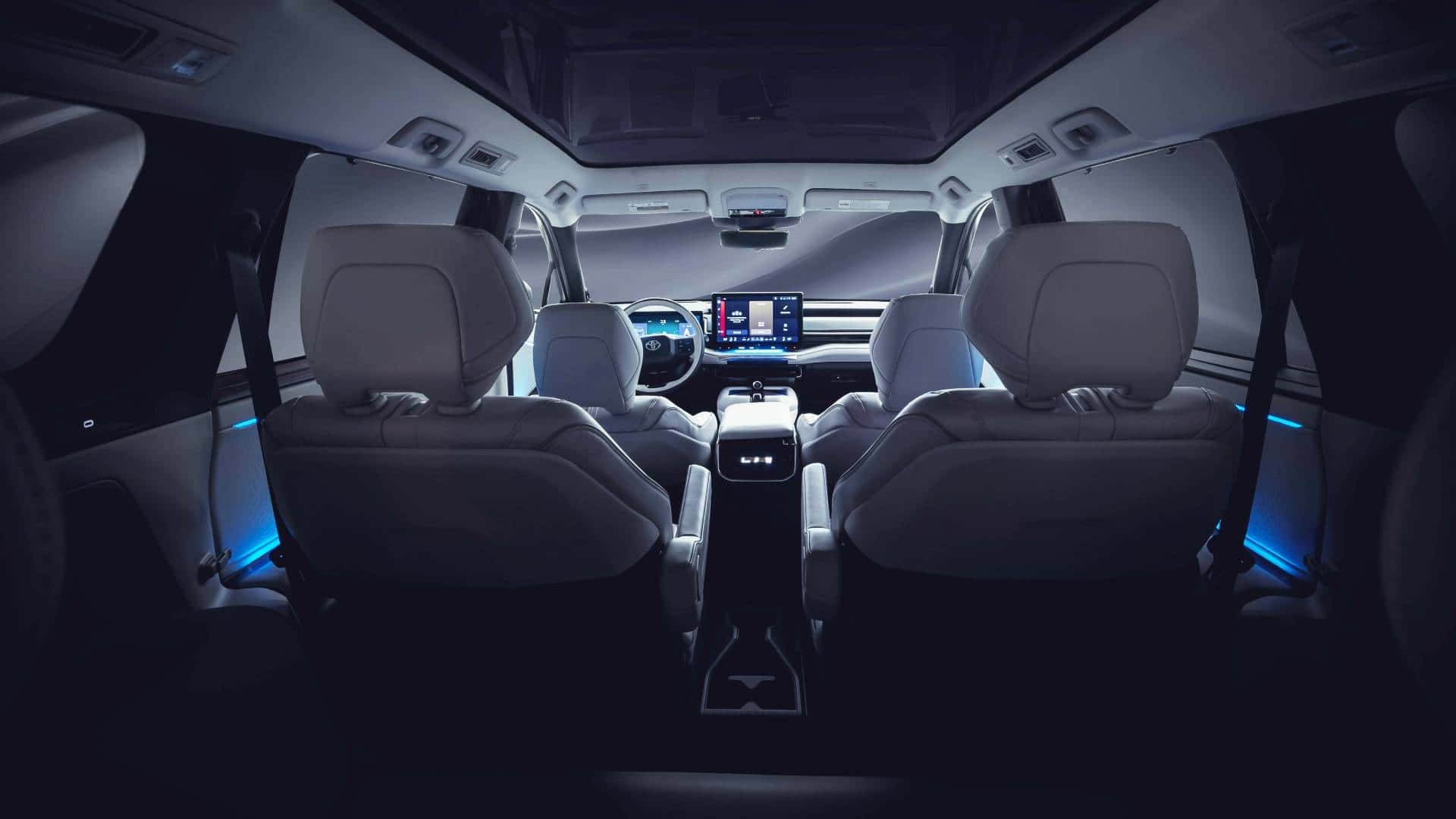
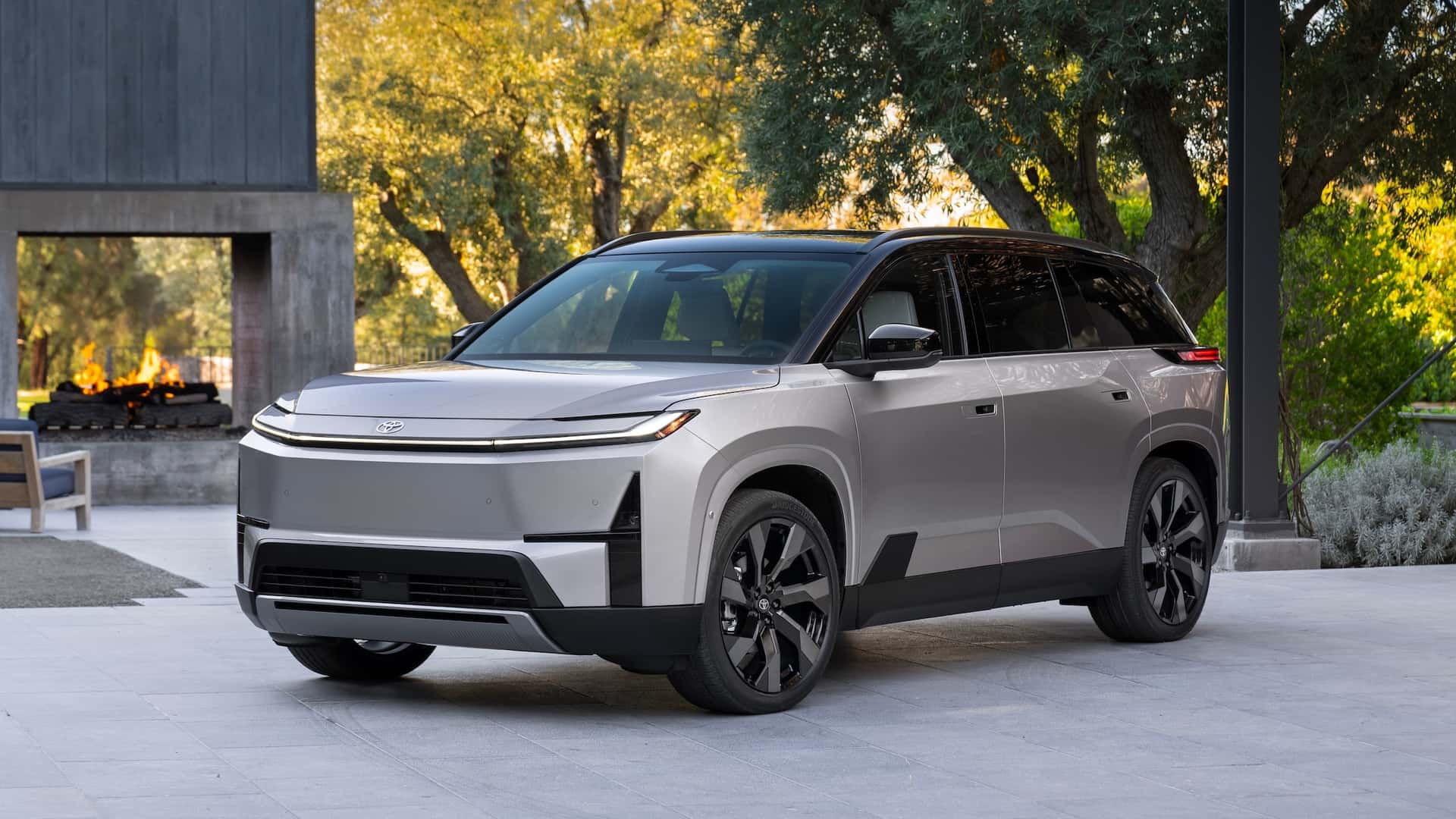
1 month agoSee inside Toyota's new electric Highlander - its first 3-row EV to launch in the US
Toyota is turning the Highlander - one of its most established nameplates - into an EV. The 2027 model is the SUV's first ground-up redesign in more than a decade and will be Toyota's first three-row EV for the US market. It's also the first battery-electric Toyota to be assembled in America, with production set for Kentucky using US-made batteries.
Cars

frominsideevs.com
1 month agoRivian R2 And Toyota Highlander: Could These SUVs Become the EV Hits America Needs?
Besides making cars, what do Rivian and Toyota really have in common? I'd say that they share an unfortunate sense of bad timing. It's not their fault, either. But both companies picked a rough year to launch crucial new electric-vehicle products, now that EV tax credits are gone and the U.S. government has largely soured on electrification from a policy perspective.
Cars
fromComputerWeekly.com
2 months agoCES 2026: Toyota enhances SUV range with added infotainment | Computer Weekly
The newly launched Toyota RAV4 comes equipped with the Snapdragon Digital Chassis from Qualcomm Technologies to deliver a personalised, intuitive and seamlessly connected driving experience. Having had its beginnings in 1994, when sport utility vehicles (SUVs) were positioned as off-road vehicles, Toyota unveiled details of the outline of the new RAV4 to the world in May 2025, setting out plans to launch the model in Japan before the end of the calendar year.
Cars
frominsideevs.com
2 months ago2026 Toyota RAV4 PHEV Review: Does A Plug Make America's Best-Selling SUV Better?
Plug-in hybrids are like communism: great in theory, but often lacking in real-world execution. A car that can run on electricity for nearly all of most Americans' daily drivingabout 30 to 40 milesbut still has a gas engine for longer trips seems like it should be the ultimate do-everything vehicle. In reality, however, it's highly debatable whether owners actually plug them in.
Cars
from24/7 Wall St.
2 months agoThe Most Affordable Car Brands You Can Actually Rely On
When shopping for a vehicle, most buyers are looking for more than just a good deal. A vehicle purchase isn't worth it to them without peace of mind. While style, technology, and performance all play a role, affordability and reliability consistently rise to the top of the priority list. A car that's reasonably priced but frequently in the shop quickly becomes an expensive headache. Drivers know that long-term dependability is just as important as the sticker price.
Cars
frominsideevs.com
2 months agoThe Mazda CX-6e Is A Bold Electric SUV Aimed At The Tesla Model Y
Mazda will begin selling a new electric mid-size SUV in Europe this year. It's not coming to the U.S. The CX-6e will compete with models such as the Tesla Model Y, BMW iX3 and Audi Q4 e-tron. It looks sharp and gets a high-tech interior. Mazda has been late to the electric vehicle party, but it's finally picking up the pace in a market that doesn't reward laggards.
Cars
frominsideevs.com
1 month agoKia EV Sales Are In An Absolute Freefall. There's More To It Than You Think
Kia was one of the first legacy automakers to launch great EVs, with the EV6 and EV9 arriving to critical acclaim. But both posted huge sales declines last month, in part due to an industry-wide EV slowdown. That's not the whole story, though, as the mechanically identical Hyundai Ioniq 5 is selling far better than the EV6. Here's what's going on.
Cars
frominsideevs.com
2 months agoThe Hyundai Staria EV Does What The Volkswagen ID. Buzz Can't
The Hyundai Staria Electric is powered by an 84-kilowatt-hour battery that enables a WLTP combined range of 248 miles. It's not based on the E-GMP platform, but it borrows its best feature. This is the Hyundai Staria Electric, a battery-powered minivan that will compete with models like the Volkswagen ID. Buzz and Kia PV5 when it goes on sale later this year in Europe and Korea.
Cars
[ Load more ]