#tourism-and-business-ties
#tourism-and-business-ties
[ follow ]
#remote-work #economic-impact #tourist-tax #sustainable-tourism #business-travel #tourism #dublin #hospitality
#house-swapping
Relationships
fromwww.theguardian.com
1 week agoIt's like having a friend everywhere you travel': after 12 home exchanges, I'll never book a hotel again
House swapping allows affordable accommodation worldwide, fostering genuine relationships and unique experiences while significantly reducing travel costs.
Photography
fromLondon Business News | Londonlovesbusiness.com
4 days agoCapturing connection: How to document your next London networking event - London Business News | Londonlovesbusiness.com
Collaborating with a professional event photographer is essential for capturing meaningful moments and enhancing brand storytelling through high-quality images.


fromIndependent
1 week agoLorraine Courtney: A nightly tourist bed tax for Dublin? This dirty old town is a far cry from Rome
Dublin doesn't provide enough value for visitors to make the proposed tourist bed tax worthwhile, especially when the city is characterized by overflowing bins and littered streets.
Berlin
:max_bytes(150000):strip_icc()/TAL-business-woman-traveling-BSNSTRAVSPOTLIGHT0326-b7d2f3b153274fa4a12323e7fff73f04.jpg)
:max_bytes(150000):strip_icc()/TAL-lead-image-ROOMSERVICE0326-85fb9dadefe54704be85e80652bd6645.jpg)
:max_bytes(150000):strip_icc()/TAL-buisness-woman-barcelona-BUSINESSTRAVPLSUR0326-61e4d376ced34f9c848f7184cc247868.jpg)

#international-expansion


Bootstrapping
fromLondon Business News | Londonlovesbusiness.com
3 weeks agoFive international expansion tips for businesses to expand sustainably - London Business News | Londonlovesbusiness.com
International expansion requires thorough market research, local partnerships, localized marketing strategies, and technology infrastructure to succeed.
.jpg)
Europe news
fromLondon Business News | Londonlovesbusiness.com
3 weeks agoOn the Beach warns Middle East war is hitting holiday bookings - London Business News | Londonlovesbusiness.com
The Beach Group warns of significant booking declines to Mediterranean destinations due to Middle East conflict concerns, causing over 10% share price drop and suspended profit guidance.
Business
fromTravel + Leisure
4 weeks agoThese 10 Rules Will Save You Time and Energy When Booking Business Travel-Plus Get You Some Serious Perks
Direct flights, strategic layovers, early arrivals, and centrally-located hotels minimize travel disruptions and maximize work productivity on business trips.
fromIslands
1 month agoThe Social Media Secret For More Affordable Flights - Islands
Digital-savvy airlines use their socials to advertise special offers as a way of strengthening relationships with both new and repeat customers. This can be a win-win for both the customers and the airlines. Travelers get access to limited-time fares, and airlines can boost revenue by filling seats during slower travel periods, such as Caribbean routes during hurricane season.
Social media marketing
fromBusiness Matters
1 month agoThe impact of road signs on economic development
When routes are well organized, there are clear directional signs, and speed limits become reasonable. The early installation of warning signs allows transport companies to plan deliveries more accurately and avoid delays. For businesses, time is money. When a truck carrying goods does not spend hours detouring due to an unclear traffic scheme or stuck in traffic where it could have been avoided thanks to competent traffic management, fuel costs, driver wages, and vehicle maintenance costs are reduced.
Alternative transportation
fromForbes
1 month agoThe Best Tourism Campaign Of The Year Isn't A Campaign At All
Rather than chasing diminishing returns through additional advertising, the agency advocated for an entertainment product: a film that could function as a vehicle for repositioning perception while operating as a single investment with long-tail value, capable of shaping how audiences feel about a place over time and across markets.
Marketing
fromBusiness Matters
1 month agoThe Government's entrepreneurship adviser says we don't need more restaurants. She's wrong and here's why
Hospitality employs 2.6 million people in the UK, 7.1% of the entire workforce. It generates £69.5 billion in gross value added. It contributes £54 billion in gross tax receipts annually. It is, by any reasonable measure, not a peripheral cottage industry but a cornerstone of the British economy.
Business
fromLondon Business News | Londonlovesbusiness.com
1 month agoStudying business abroad as a career strategy for London professionals - London Business News | Londonlovesbusiness.com
London remains one of the world's most competitive business environments. From Canary Wharf to the City, ambitious professionals are constantly seeking ways to differentiate themselves in a market defined by global capital flows, technological disruption, and international competition. In this context, studying business abroad is no longer simply an academic decision - it is a strategic career move. As UK-based professionals navigate post-Brexit realities, shifting trade relationships, and increasingly international teams, many are looking beyond Britain to strengthen their global positioning.
Higher education
Marketing
fromIndependent
1 month agoFailte Ireland's 10m marketing move: 'Taking one big holiday is not the anchor it once was'
Fáilte Ireland launched a €10 million marketing campaign to encourage Irish domestic short breaks during off-peak periods, reaching 99% of adults through multiple media channels.
Alternative transportation
fromSustainable Bus
1 month agoUK Coach Tourism Association Annual Workshop 2026 gathers 180 stakeholders with record 1,296 business meetings - Sustainable Bus
Nearly 180 industry stakeholders gathered in Derry~Londonderry for CTA Annual Workshop 2026, generating a record 1,296 buyer-supplier meetings and new business.
Travel
fromTravel + Leisure
1 month agoThis Small City Was Just Named the Most Welcoming Destination in Asia
Magong, Taiwan was named the most welcoming destination in Asia and second most welcoming in the world by Booking.com's 2026 Traveller Review Awards, with friendly locals creating a relaxed, welcoming atmosphere.
fromUSA TODAY
1 month agoWhy cheap off-season travel is harder to find in 2026
The off-season practically vanished in many parts of the world. Remote work, social media frenzy, and ruthless dynamic pricing have turned fall and spring into peak-season clones. Even winter is no refuge anymore. The idea of an off-season is 100% disappearing.
Travel

fromEntrepreneur
2 months agoHow to Win Big With Public-Sector Partners
Understanding the difference in purpose Unlike private businesses, which exist to make a profit, public institutions are designed to create impact - especially social and economic outcomes that benefit everyone, not just paying customers. A public agency doesn't measure its success in revenue or margins, but in how much it improves lives, builds equity and maintains public trust. This doesn't mean budgets and spending don't matter - they absolutely do - but money is not the goal. It's the tool.
World politics
fromLondon Business News | Londonlovesbusiness.com
2 months agoOrnella Mkrtchyan on how opportunity flows beyond geography - London Business News | Londonlovesbusiness.com
The scale of this shift is striking. According to the World Economic Forum , approximately 78 million new job opportunities will emerge by 2030 due to technological change, but urgent upskilling is needed to ensure workforces are ready. Meanwhile, Reuters reports that over three billion people globally are still offline, highlighting the persistent gaps in access to digital tools and knowledge. In the UK alone, 7.9 million adults lack basic digital skills, while 21 million struggle with essential digital tasks required at work.
Online learning
fromwww.bbc.com
1 month agoHow hotels could help solve your summer childcare crunch
As summer school breaks stretch longer and childcare becomes harder to secure, some families are turning to an unexpected solution: hotels offering full-day, structured kids' camps that allow parents to travel, work and keep routines intact.
Parenting


fromFortune
1 month agoTrump is making foreign tourism great again. How much will he hurt the World Cup? | Fortune
Policy stances from the Trump administration on everything from immigration to tariffs, along with currency swings and stricter border controls, have seemingly proved a turnoff to travelers from other countries, especially Canadians - the single largest source of foreign tourists for the United States. Canadian travel to the U.S. fell by close to 30% in 2025. But it is not just visitors from Canada who are choosing to avoid the United States.
US politics
fromSun Sentinel
2 months agoFlorida wants to attract more Canadian visitors as tourism drops over Trump comments, actions
As Visit Florida compiles 2025 tourism figures, the agency's President and CEO Bryan Griffin and Carol Dover, the president and CEO of the Florida Restaurant and Lodging Association, are setting up a meeting with Canadian officials. "We had this opportunity land in our lap, so we're both going to have a meeting ... and see what we can do," Dover said during a Jan. 26 Visit Florida Executive Committee meeting. Dover is also a member of the Visit Florida Board of Directors.
Canada news
fromFast Company
1 month agoU.S. tourism is in a 'Trump slump' that could push World Cup fans away
And yet, the U.S. tourism industry is worried. While the rest of the world saw a travel bump in 2025, with global international arrivals up 4%, the U.S. saw a downturn. The number of foreign tourists who came to the United States fell by 5.4% during the year-a sharper decline than the one experienced in 2017-18, the last time, outside the height of the COVID-19 pandemic, that the industry was gripped by fears of a travel slump.
US politics
Canada news
fromBusiness Insider
1 month agoCanadians are staying away from the US - and the drop in travel is getting hard to ignore
Reduced Canadian travel to the US stems from immigration enforcement and political rhetoric, causing fewer cross-border visits and economic impacts in US border communities.
Business
fromIndependent
1 month ago'Dealing directly with hotels can be more cost-effective than third-party booking sites' - money experts reveal how they pay less for their holidays
Avoid credit cards and spread holiday costs across the year to reduce post-holiday debt and enable annual travel through planned saving.
Travel
fromBusiness Matters
1 month agoTowering over the competition: which companies are driving 2026's tourism hotspots?
Transformative hospitality and construction projects are driving a 2026 global tourism resurgence, reshaping destinations through eco-luxury, infrastructure expansion, and cultural preservation.
Travel
fromWanderlust Storytellers - An Inspirational Family Travel Blog
1 month agoGet Paid to Travel: 29 Amazing Jobs That Fund Your Adventures Around the World
Transform existing skills or choose remote and travel-friendly roles to earn income while exploring the world; few jobs pay to travel directly.
fromLondon Business News | Londonlovesbusiness.com
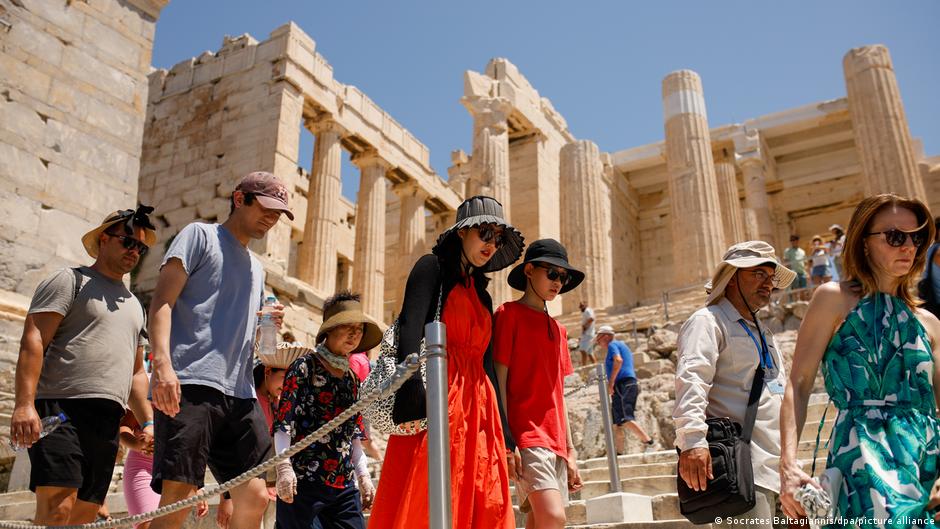
2 months agoAthens, islands and investment pipelines what Greece's leisure economy signals to UK businesses - London Business News | Londonlovesbusiness.com
The UK has long looked to Greece through a familiar lens: sunshine, island airports and a packed summer flight schedule. Yet Greece's tourism story has started to look more like a business story-one built on regeneration, upgraded hospitality, and service sectors designed to perform beyond the peak months. That shift is increasingly visible in the full "destination package" surrounding travel and entertainment. In Greece, the mix now spans conference capacity, waterfront redevelopment
Travel
Travel
fromTravel + Leisure
2 months agoThese Are the Biggest Travel Trends for 2026, According to 14 Industry Leaders-and the Destinations Everyone's Talking About
Travelers in 2026 prioritize intentional, memorable experiences—major events, cultural moments, and personalized comfort—over accumulating trips.
[ Load more ]