#traces
#traces
[ follow ]



fromThe Local France
2 weeks agoMysterious ancient skeletons discovered sitting upright in France
Similar to four others unearthed nearby earlier this month, it is sitting upright at the bottom of a one-metre-wide pit. The skeleton's hands are resting in its lap. Like the others, its back is against the eastern wall, its face directed westward.
France news
fromArtnet News
1 week agoMassive Cache of 42,000 Pottery Shards Reveals Daily Life in Ancient Egypt
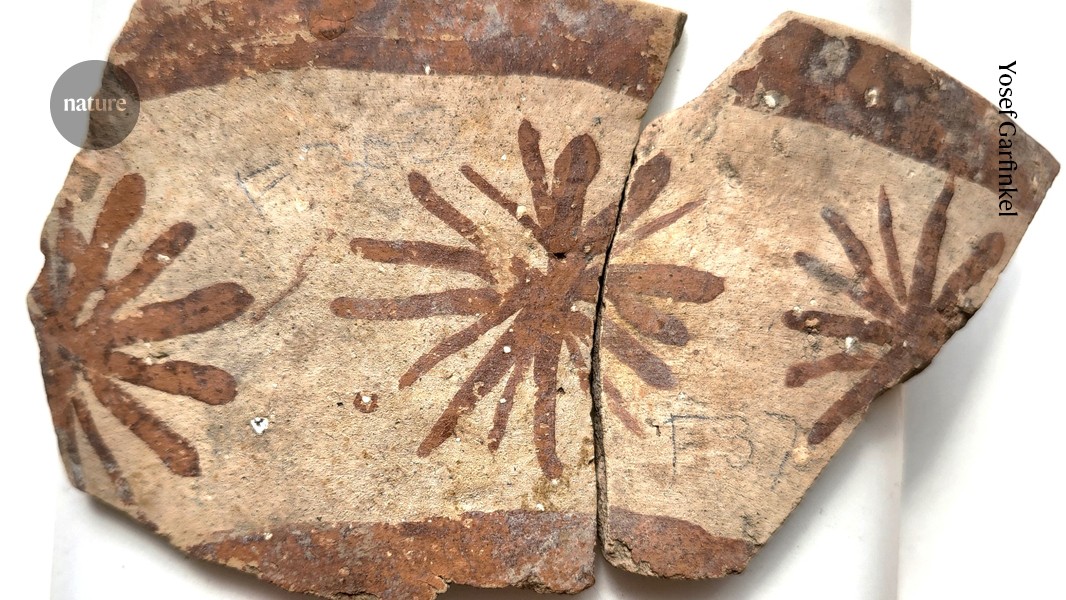
The ostraca show us an astonishing variety of everyday situations. We find tax lists, deliveries, short notes about everyday activities, religious texts, and priestly certificates attesting the quality of sacrificial animals.
Arts
fromwww.theguardian.com
2 weeks agoAncient skeleton discovered sitting upright in France
Five tombs of Gauls buried in a seated position have been discovered in central Dijon. Similar to four others unearthed nearby earlier this month, it is sitting upright at the bottom of a one-metre-wide pit. The skeleton's hands are resting in its lap. Like the others, its back is against the eastern wall, its gaze directed westward.
France news



Arts
fromArtnet News
2 weeks agoArchaeologists Identify Lost Medieval Village in Polish Forest | Artnet News
Researchers in Poland have located Stolzenberg, a lost medieval village in Pomerania, using metal detection and geophysical surveys that revealed 1,500 surface anomalies including coins and building remnants.
OMG science
fromMail Online
3 weeks agoScientists recreate the lost languages of ancient humans
Scientists reconstructed ancient human species languages by analyzing fossilized skeletal imprints of soft tissues like the larynx, tongue, and brain, revealing that Neanderthals likely spoke languages understandable to early Homo sapiens.


fromwww.theguardian.com
1 month agoWays to Traverse a Territory review documenting an ancient and disappearing way of life
Here dwells the indigenous Tzotzil community which has kept a pastoral way of life against the march of time. Apart from the odd forest ranger and passerby, Ruvalcaba's film focuses almost entirely on the Tzotzil women. Together, they tend herds of sheep which they still shear by hand, and use traditional tools for spinning yarns and natural dye for fabrics.
Film
fromenglish.elpais.com
1 month agoAnts trapped in amber reveal what diminutive life was like millions of years ago
Although there are many amber stones containing a single creature, there are fewer that include two or more, as is the case with a pair of mosquitoes trapped in amber 130 million years ago which tell us that, back then, males also sucked blood. Even more extraordinary is when several organisms can be seen interacting, either eating the other, acting as a parasite, or cooperating.
Science
History
fromwww.thehistoryblog.com
2 weeks ago43,000 ostraca found at one site shed light on social history of Egypt
Excavations at Athribis in Lower Egypt uncovered 13,000 ostraca, bringing the total to 43,000 fragments—the largest collection at any single Egyptian archaeological site, spanning from the 3rd century BCE to the 11th century CE.
History
fromMedievalists.net
3 weeks agoNewly Discovered Document Confirms a 'Legendary' African King - Medievalists.net
An Arabic document from Old Dongola confirms King Qashqash's historical existence and reveals how Nubian rulers exercised power through coordinated gift exchanges with subordinates and merchants.
fromMail Online
2 months agoLong-lost Egyptian scroll fuels debate over real-life biblical giants
An ancient Egyptian papyrus held by the British Museum has been cited as possible evidence supporting some of the Bible's most controversial claims about giants. The 3,300-year-old document, known as Anastasi I, has been in the museum's collection since 1839 and has recently resurfaced on the Associates for Biblical Research, renewing interest in its possible links to biblical accounts. The papyrus describes encounters with the Shosu people, said to stand 'four cubits or five cubits' tall, up to eight feet in height.
Books
US politics
fromwww.independent.co.uk
2 months agoInside the hunt for British Museum's missing treasures
The Independent funds on-the-ground, paywall-free investigative reporting while a six-person British Museum team celebrates breakthroughs in tracing missing Greek and Roman treasures with a golden bell.
fromArs Technica
1 month agoScientists hunting mammoth fossils found whales 400 km inland
At first glance, it looked like Wooller and his colleagues might have found evidence that mammoths lived in central Alaska just 2,000 years ago. But ancient DNA revealed that two "mammoth" bones actually belonged to a North Pacific right whale and a minke whale-which raised a whole new set of questions. The team's hunt for Alaska's last mammoth had turned into an epic case of mistaken identity, starring two whale species and a mid-century fossil hunter.
Science
Science
fromwww.scientificamerican.com
1 month agoThese jaw-dropping photographs show a new Triassic Park' of dinosaur prints in the Italian Alps
An exceptionally rich Triassic dinosaur tracksite with about 2,000 well-preserved prints was discovered on vertical rock faces in the Fraele Valley, Italian Alps.
History
fromMedievalists.net
1 month agoEast Roman Archaeology: Goals and Challenges, with Marica Cassis - Medievalists.net
Archaeology reveals material evidence of daily life, settlement patterns, and economic systems in the East Roman world that textual sources cannot provide, while facing challenges in establishing itself as a distinct field separate from classical and Islamic archaeology.
Arts
fromThe Art Newspaper - International art news and events
2 months agoBritish Museum reports record-breaking year for finding treasure in the UK
UK metal detectorists recorded a record 79,616 archaeological finds in 2024, including 1,540 treasures such as a 179-coin hoard and a Roman vehicle fitting.
fromwww.scientificamerican.com
2 months agoHumans Made Poisoned Arrowheads Thousands of Years Earlier Than Previously Thought
Researchers have found traces of what appears to be plant-derived poison on tiny stone arrowheads from South Africa dated to 60,000 years ago. The finding pushes back the origin of this revolutionary hunting technology by tens of thousands of years. Scientists have long been fascinated by the development of poisoned hunting weapons. For one thing, they would have seriously leveled up our ancestors' foraging game.
Science
fromDefector
2 months agoLet The Record Show That Otzi Fucked | Defector
Ötzi, the 5,000-something-year-old man found frozen in the Alps, did not have an easy go of it. He was probably murdered, shot from behind with an arrow that missed his vital organs and led to heavy bleeding and a prolonged and painful death. Days before his death, he fought another person in hand-to-hand combat and gashed his right hand. The more scientists have been able to study his body, the more ailments they have unveiled.
Science
fromwww.scientificamerican.com
2 months agoA foraging teenager was mauled by a bear 27,000 years ago, skeleton shows
We have little physical evidence of these interactions turning violent, however, because burials were rare and carnivores were more likely to finish off their prey. That's why the embellished burial site of a 15-year-old from 27,000 years ago is an important window into the past: the teenager's bones indicate he was mauled by a bear. The finding represents some of the first evidence of its kind.
Science
fromwww.scientificamerican.com
2 months agoMeet the Ancestor That Connects Us to Neandertals and Denisovans
New research published today in Nature dates the boneschipped out from a cave called Grotte a Hominides and nearby it over decadesto about 773,000 years ago, during the era of the last common ancestor of Homo sapiens, Homo neanderthalensis and Denisovans (a group of humans that ranged across Asia and that does not have an agreed-upon species name). We can say that the shared ancestry between these three species is perhaps in Grotte a Hominides in Casablanca, says study co-author Abderrahim Mohib, a prehistorian at the National Institute of Archaeology and Heritage Sciences in Rabat, Morocco.
Science

fromMail Online
1 month agoMysterious symbols spanning the globe hint at a lost civilization
His investigation began after identifying recurring giant T-shapes, three-level indents, and step pyramids carved into ancient stones worldwide. 'These specific symbols that are built in different size proportions, and the symbols are found in ancient stones around the world, are not supposed to exist; no cultures are supposed to have any cross-platform,' LaCroix explained. The symbols appear in locations ranging from Turkey's Van region to South America and Cambodia.
History
Science
fromNature
1 month agoDaily briefing: Hunter-gatherers in Europe's 'water world' resisted the switch to farming for millennia
Rhine-Meuse delta populations retained substantial hunter-gatherer ancestry for millennia before steppe-related mixing spurred Bell Beaker expansion and large genetic turnovers.
Science
fromwww.nature.com
2 months agoAuthor Correction: Hunter-gatherer sea voyages extended to remotest Mediterranean islands
Corrections to regional radiocarbon uncertainties do not meaningfully change conclusions about timing of the Mesolithic–Neolithic transition or maritime voyages in the central Mediterranean.
fromArs Technica
2 months agoThese 60,000-year-old poison arrows are oldest yet found
Poisoned arrows or darts have long been used by cultures all over the world for hunting or warfare. For example, there are recipes for poisoning projective weapons, and deploying them in battle, in Greek and Roman historical documents, as well as references in Greek mythology and Homer's Iliad and Odyssey. Chinese warriors over the ages did the same, as did the Gauls and Scythians, and some Native American populations.
Science
[ Load more ]