#transport-update
#transport-update
[ follow ]
#electric-vehicles #autonomous-vehicles #tesla #transportation #public-transport #robotaxis #baidu #sustainability


fromFast Company
4 days agoHow Paris redesigned itself to be a city of bikes-not cars
"This project is symbolic of what we've done over the last 12 years, reshaping the streets and the city," Christophe Najovski, the city's deputy mayor in charge of green spaces, stated during the opening ceremony.
Paris food
fromLondon Business News | Londonlovesbusiness.com
2 days agoMillions of drivers hit the roads for Easter despite soaring fuel costs - London Business News | Londonlovesbusiness.com
According to a survey of over 13,000 members conducted by the AA, an estimated 21.7 million journeys are expected across the UK on Thursday, making this one of the busiest Easters in recent years.
Europe news


fromTravel + Leisure
1 day agoAmerica's Fastest Trains Are Here-but Rail Experts Say High-speed Travel Is Still Years Away
True high-speed rail in the U.S. is still years away despite recent advancements and public support. Rail experts emphasize that actual high-speed rail requires dedicated infrastructure and faster trains, similar to systems in Europe and Asia.
Alternative transportation


fromStreetsblog New York City
1 day agoFriday's Headlines: Margin For Terror Edition - Streetsblog New York City
The first three months of 2026 were among the three safest first-three-month periods since records started being kept at the dawn of the Automobile Age, with only 42 fatalities from car crashes in New York City.
Alternative transportation
fromEngadget
3 days agoToyota's still trying to make hydrogen fuel cells happen
"We are deeply grateful for the opportunity to soon be joining Daimler Truck and Volvo Group as partners in building a hydrogen society," Toyota President and CEO Koji Sato said. "cellcentric which possess deep expertise in commercial fields together with Toyota's over 30 years of fuel-cell development in the passenger car sector, can combine their strengths to deliver one of the world-leading fuel cell systems for heavy commercial vehicles."
Cars
fromEngadget
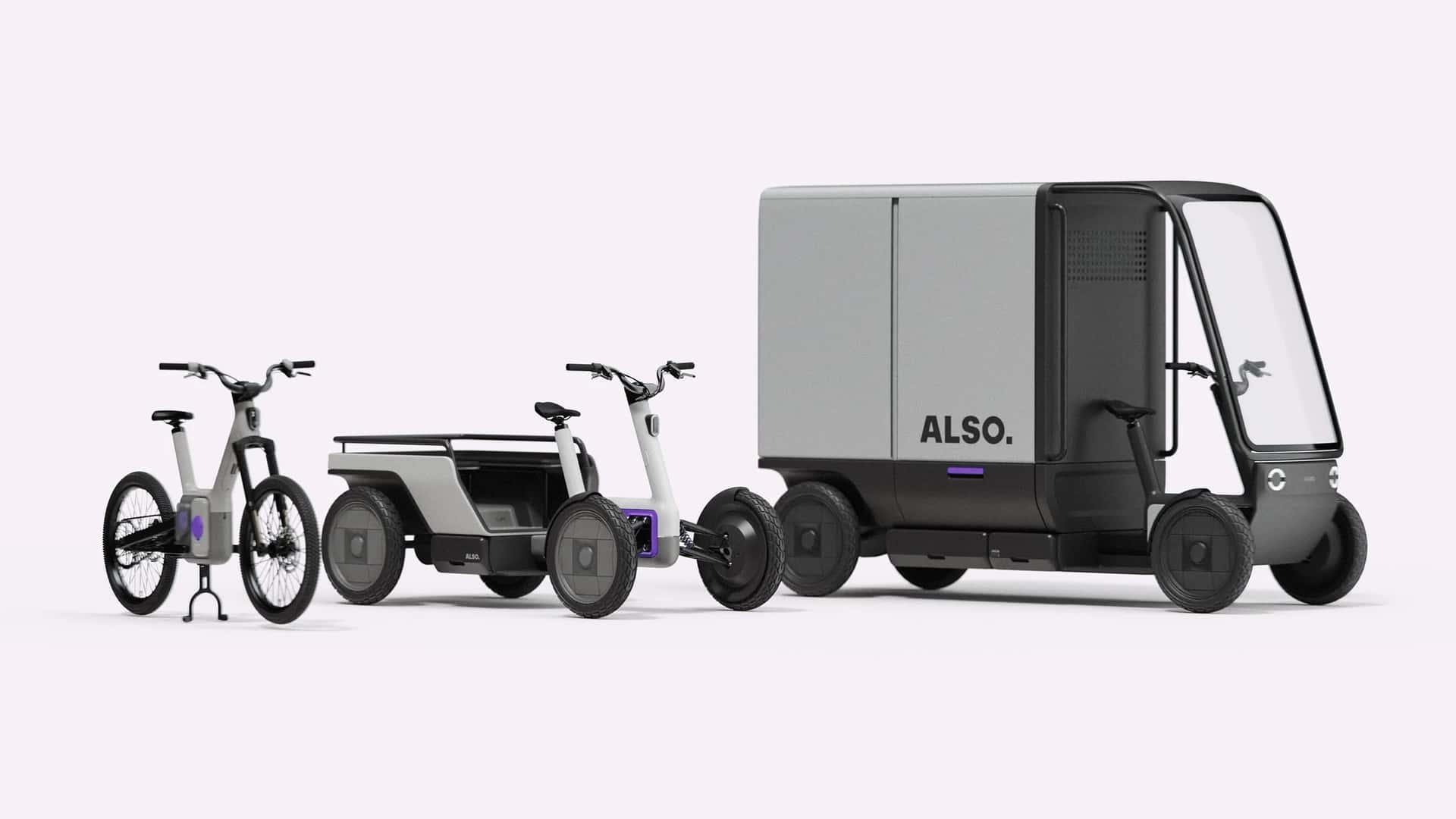
4 days agoDoorDash partners with Rivian spinoff Also for autonomous delivery vehicles
DoorDash's investment in Also aims to develop and accelerate the deployment of autonomous delivery at scale, focusing on areas not yet fully solved for, including intersections of roadways and bike lanes.
Toronto startup
Alternative transportation
fromSustainable Bus
3 days agoNew certified Ultrafabrics collections target durability and compliance in passenger transport interiors - Sustainable Bus
Ultrafabrics launches new certified collections for passenger transport, combining durability, aesthetics, and sustainability in high-performance upholstery fabrics.
fromSustainable Bus
1 month agoEvolution: the practical path to autonomous buses - Sustainable Bus
It's tempting to frame autonomous driving as a single leap. In public transport, adoption tends to be incremental - because the system is built for reliability, and new capabilities have to fit into daily operations without disrupting service. That is why a practical strategy is evolution, not revolution: introduce autonomy in a defined domain, learn safely in real operations, and expand capability step-by-step.
Artificial intelligence
fromSocial Media Explorer
2 months ago10 Last Mile Technology Trends Transforming Urban Logistics in 2025 - Social Media Explorer
Urban logistics is entering a new era where practical technology drives meaningful results. Today, more than 55% of people live in cities, and urbanization is expected to rise to 68% by 2050, placing intense pressure on delivery networks to keep up with growing demand. U.S. e-commerce is projected to reach $1.1 trillion in sales by 2026, heightening expectations for faster and more reliable last-mile service.
E-Commerce
Alternative transportation
fromSustainable Bus
5 days agoZero-emission buses move beyond cities: intercity transition in Sustainable Bus' session at BUS2BUS - Sustainable Bus
Electrification of intercity and coach segments in Europe is advancing, requiring new infrastructure and operational strategies for zero-emission mobility.
fromSustainable Bus
2 months agoAutonomous Systems: depot-first autonomy for smartbuses
For more than a decade, autonomous buses have been "almost ready." Demonstrations with safety drivers began around 2015, and ten years later, this is still largely what we see. The reason is not a lack of ambition - it is physics, safety, and economics. Autonomous buses on city streets are inherently difficult. They carry dozens of passengers, operate as heavy vehicles, and move through a chaotic urban environment.
Business
fromSocketsite
9 years agoSelf-Driving Truck Tech Headed for San Francisco's Waterfront
It has been almost three years since the Port of San Francisco awarded TMG Partners the redevelopment rights for San Francisco's Pier 38, with TMG winning over the Port with a pitch that emphasized the speed with which they planned to act and an "immediate revitalization" of the pier with a mix of public, office and maritime uses. But Pier 38, which has been shuttered since 2011, remains red tagged and inactive.
San Francisco
Environment
fromStreetsblog
2 months agoFive 'Supercool' Transportation Founders to Watch in 2026 - Streetsblog USA
Transportation start-ups accelerate decarbonization by deploying low-emission mobility options, optimizing vehicle systems, and leveraging market momentum to scale solutions ahead of 2026 policy changes.
Artificial intelligence
fromeLearning Industry
2 months agoArtificial Intelligence In Transportation Training And Education
AI enables individualized transportation training by evaluating trainee performance, tailoring instruction, simulating real scenarios, and measuring performance for targeted improvement.
Alternative transportation
fromSustainable Bus
1 week agoBEV buses to dominate, delivery capability to decide market shares. Martin Schmitz outlines VDV's view - Sustainable Bus
Decarbonisation of public transport and integration of autonomous technologies are key challenges for the industry in Germany.
Alternative transportation
fromSustainable Bus
2 weeks agoWhat we have seen at Mobility Move 2026? - Sustainable Bus
Mobility Move Berlin is a professional gathering for the German public transport industry to discuss challenges and innovations, not a product launch venue, featuring conference sessions and exhibitions with growing international participation.
Alternative transportation
fromNature
2 weeks agoAffordable mobility for all: why we need smaller, cheaper electric vehicles
Low-speed electric vehicles offer affordable, practical decarbonization for underserved populations but remain overlooked due to bias toward expensive, high-tech solutions and nationalist trade policies.
fromSustainable Bus
2 weeks agoRiga set to order up to 100 new trolleybuses
The planned order is expected to include 12-meter and 18-meter vehicles, and potentially also 24-meter bi-articulated trolleybuses. All units will be equipped with traction batteries enabling off-wire operation. The new trolleybuses are expected to cover at least 20 kilometers without overhead wires, while remaining fully compatible with Riga's extensive existing trolleybus infrastructure.
Alternative transportation
fromEntrepreneur
2 weeks agoSelf-Driving Semi Trucks Are Coming, and They're About to Transform a $900 Billion Industry
Aurora, Kodiak, and Waabi are racing to eliminate drivers-a cost that represents up to 40% of per-mile trucking expenses, according to The New York Times. Aurora plans to grow from a handful of autonomous trucks to more than 200 by year's end, then thousands by 2027.
Alternative transportation
[ Load more ]