#urea-supply
#urea-supply
[ follow ]
#agriculture #strait-of-hormuz #geopolitical-risk #supply-chain-disruption #eu-mercosur #iran-conflict
#agriculture

fromLondon Business News | Londonlovesbusiness.com
2 weeks agoAgriculture
Farmers hit by diesel and fertiliser shock as Iran war threatens fresh food inflation - London Business News | Londonlovesbusiness.com
Britain's farmers face a cost crisis due to soaring fuel and fertiliser prices, raising concerns about food inflation.

from24/7 Wall St.
1 week agoUBS Lifts CF Industries to $140 Price Target: Urea Prices Are Up 77% and the Market Hasn't Caught On
UBS sees scope for further upside in nitrogen pricing and earnings, with the current industry disruption more severe than what is reflected in gas and nitrogen pricing at present.
Business

fromRealagriculture
2 weeks agoBiofuels, Brazil, and the cost of war: Suderman outlines key forces shaping grain markets
"I think it surprised me how easily people are swayed by headlines," says Suderman, noting that wartime information flows are often strategic and conflicting. "You have to learn in a wartime to take everything with a grain of salt in the context of what you observe."
World politics
Venture
from24/7 Wall St.
3 weeks agoCF Industries Is Up 76% and Fertilizer Supply Is Why
CF Industries, the world's largest ammonia producer, surged 67.6% year-to-date as Middle East conflict disrupted global nitrogen supply, positioning the North American producer to capture market share at a structural cost advantage.
Agriculture
fromFortune
1 week agoSoaring fertilizer prices could pressure a U.S. agricultural industry that supports 50 million jobs and over $10 trillion in output | Fortune
The war in Iran is causing a significant fertilizer supply crisis, impacting the U.S. agricultural economy and millions of jobs.

#fertilizer-prices
Agriculture
fromFortune
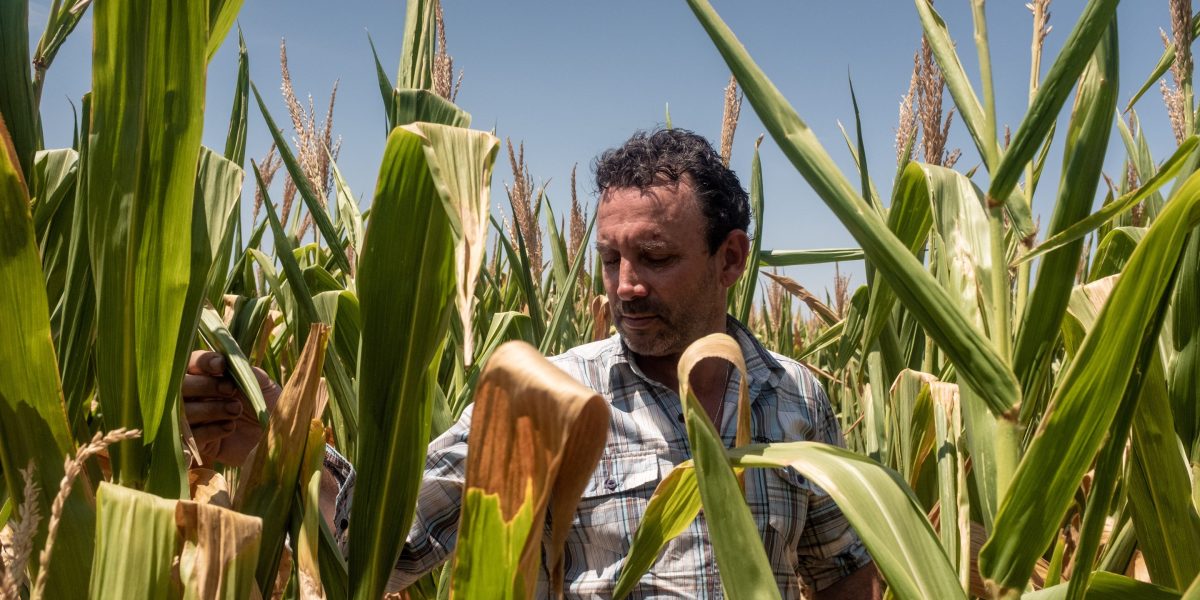
2 weeks agoMeet a third-generation Tennessee farmer paying an extra $100k for fertilizer because of the Iran War | Fortune
Fertilizer prices surged 40% for U.S. farmers due to Middle East conflict disrupting Persian Gulf shipping and reducing nitrogen fertilizer exports, forcing farmers to pay significantly more for essential crop inputs.
Agriculture
fromFortune
2 weeks agoMeet a third-generation Tennessee farmer paying an extra $100k for fertilizer because of the Iran War | Fortune
Fertilizer prices surged 40% for U.S. farmers due to Middle East conflict disrupting Persian Gulf shipping and reducing nitrogen fertilizer exports, forcing farmers to pay significantly more for essential crop inputs.
Canada news
fromRealagriculture
1 month ago67 options and counting: Navigating the complex landscape of farm incentive programs
Canadian farmers face a growing number of sustainability incentive programs that create administrative burdens, confusion, upfront costs, and unclear financial benefits as major programs end.
Agriculture
fromRealagriculture
3 weeks agoClearCost puts fertilizer price comparisons in farmers' pockets
ClearCost is a free mobile platform that aggregates fertilizer pricing from multiple dealers across North America, enabling farmers to compare quotes and secure better deals through a single application.
fromTasting Table
2 months agoHow Much Coffee Does A Single Coffee Tree Produce? It's Much Less Than You'd Think - Tasting Table
So it may come as another surprise that in a year, a single coffee tree only produces enough fruit to make about a pound of roasted beans. Coffee beans are actually seeds that form in fruits that are often about the size and color of cherries. After taking several years to mature, coffee trees produce around 2,000 cherries a year. With two seeds per cherry, that's about 4,000 raw coffee beans per harvest season. Once roasted, that yields around 1 pound of ready-to-grind beans.
Coffee


fromwww.dw.com
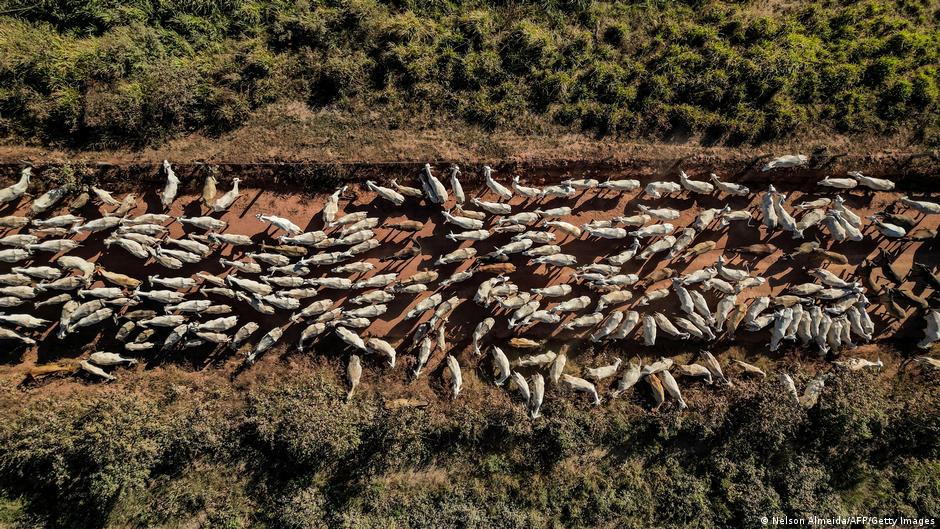
1 month agoBrazil's soy industry gives deforestation a green light
A moratorium that has protected vital rainforest since 2009 is on shaky ground as several players from Brazil's soy industry say they are pulling out. Specifically, the Brazilian industry association ABIOVE, whose members include global companies such as Cofco International, Bunge, Amaggi and JBS, have said they will no longer refrain from growing soy on deforested land. Environmentalists fear this could fuel a new wave of Amazon logging.
Environment
fromIrish Independent
2 months agoEU countries back Mercosur trade deal as Irish farmers to stage protest in Athlone
The European Commission, which concluded negotiations a year ago, and countries such as Germany and Spain argue it is a vital part of an EU push to unlock new markets to offset business lost from U.S. tariffs and to reduce reliance on China by securing access to critical minerals. Opponents led by France, the European Union's largest agricultural producer, say the agreement will jack up imports of cheap food products, including beef, poultry and sugar, undercutting domestic farmers.
Miscellaneous
fromRealagriculture
2 months agoPump the brakes: RIN "haircut" may rain on Canadian canola's 45z parade
From a preliminary or initial assessment, there are things to like in terms of supporting Canadian Canola's access to the U.S. biofuels market moving forward for sure," Davison says. A central update confirms that feedstocks from U.S.-Mexico-Canada Agreement (USMCA) countries are considered domestic for the purposes of the credit. Davison called that clarification "one of the key updates as part of the guidance that is favourable in our case to Canadian Canola.
Canada news


fromRealagriculture
3 weeks agoeKonomics input planning calculator: Helping you optimize crop management decisions
The input planning calculator is a robust tool that can help farmers and agronomists better understand on-farm finances while helping uncover which crops make the most sense to plant from a cost perspective. By inputting key on-farm financial and agronomic data, including seed and agronomy service costs, growers can compare each crop on their farm and explore their true cost of production.
Agriculture
fromwww.theguardian.com
2 months agoDog food accounts for 1% of UK greenhouse gas emissions, study finds
Dog food accounts for 1% of the UK's total greenhouse gas emissions, according to research that finds wet, raw and meat-rich products are associated with substantially higher emissions than dry kibble. The analysis revealed striking differences in the environmental impact of commercial dog foods, with the highest-impact foods being responsible for up to 65 times more emissions than the lowest-rated options. The findings will leave environmentally conscious pet owners torn between giving their dogs the most delicious food and minimising their impact on the climate.
Environment
fromRealagriculture
3 weeks agoRealAg on the Weekend: Women in ag, diesel prices, & future plant breeding options, Mar 14 & 15/26
If we did that today, it would be a hundred percent, because right now, without question, 2026 is riskier than 2025. So farmers really [face significant challenges]. The war in Iran continues and it works back to the world of agriculture. It's had an impact on fertiliser and diesel prices and commodity markets, as well as currency.
Agriculture
Agriculture
fromRealagriculture
3 weeks agoAg Policy Exchange: Finding common ag policy ground among countries in a divided world
Global agriculture faces interconnected geopolitical, economic, and environmental challenges requiring sustainable, resilient, and affordable food systems through coordinated international policy approaches.
fromRealagriculture
3 weeks agoMarch WASDE leaves grain markets searching for direction
USDA estimates for major crops were largely unchanged from the previous month, resulting in muted market reactions. For wheat, the USDA maintained its U.S. production, supply, and ending stocks forecasts with no revisions. Global wheat production was adjusted slightly higher, largely due to increased output estimates in Ukraine and Kazakhstan, partially offset by a smaller Australian crop.
Agriculture
Agriculture
fromRealagriculture
4 weeks agoWheat School: What long-term weather trends say about the future of wheat production
Rising nighttime temperatures in the Northern Plains and Western Canada reduce wheat yield potential despite increased CO2 benefits, though improved genetics currently offset climate impacts.
Agriculture
fromRealagriculture
4 weeks agoRhizoSorb tops one million acres as growers seek improved phosphate efficiency
Phospholutions' RhizoSorb technology reached one million commercial acres in 2025, driven by growers seeking phosphorus efficiency and cost savings through controlled-release fertilizer innovation.
Agriculture
fromRealagriculture
1 month agoFarmers say improving financial decisions boosts profitability more than new tech or government programming
Seventy-three percent of Canadian farmers believe improving financial decision-making impacts profitability more than technology or government programs, with younger farmers showing strongest agreement.
fromRealagriculture
1 month agoRealAg Radio: War's impact on fertilizer markets, new varieties, wheat breeding in Canada, Mar 4, 2026
RealAg radio and realllculture.com is your home for insight and analysis of the issues that are impacting your farm business. Let's get real and get connected with RealAg Radio.
Agriculture
Agriculture
fromwww.theguardian.com
1 month agoTech firms and AI farming tools playing with the food system', warns thinktank
Tech companies use AI and algorithms with industrial agriculture to control global food systems, pushing farmers toward five profitable crops while undermining locally adapted varieties and food security.
Agriculture
fromRealagriculture
1 month agoRealAg Radio: Meteorological spring, sulphur management, and new variety considerations, Mar 2, 2026
Agronomic Monday covers meteorological spring, maple syrup season, DON risk in corn, sulphur management, wheat variety considerations, and risk management strategies for farm operations.
Agriculture
fromRealagriculture
1 month agoRealAg on the Weekend: Grain markets, excitement for ag, and unleashing potential, Feb 28, 2026
Canadian agriculture sector discusses economic policy shifts, market recovery challenges, and strategies for building agricultural value with government and industry leaders.
Agriculture
fromRealagriculture
1 month agoDon't cut the science that pays the bills
Closing AAFC research stations undermines Canada's agricultural competitiveness by eliminating the only coordinated system for validating crop genetics across diverse agro-ecological zones, despite wheat breeding generating a 32:1 benefit-cost ratio.
fromwww.theguardian.com
1 month agoEye-watering numbers': food producers sound alarm on rise in energy charges
Outside, it's an overcast and blustery February day in Kent hardly the ideal conditions for growing tomatoes, cucumbers and peppers. Yet inside the enormous glasshouses run by grower Thanet Earth, the climate has been optimised to a humid 20C, perfect for the regimented rows of small pepper plants poking out of raised trays. Growing fresh produce indoors in the south of England year-round requires plenty of energy to provide light, warmth and carbon dioxide.
Agriculture
fromRealagriculture
1 month agoThe strongest start: How seedcare innovation is shaping crop protection in Canada
"I've been with Syngenta for 28 years," Ramachandran says, noting that early travels across Canada shaped his passion for seed care. "What really stood out to me is seeing firsthand the passion, the resilience and the impact the growers made." Those experiences, combined with Canada's short growing season, continue to guide his work. "Everything that we have done... is around addressing those challenges, and how do we create solutions that are fit for purpose, for Canadian growers?"
Agriculture
Agriculture
fromwww.theguardian.com
1 month agoUS farmers are rejecting multimillion-dollar datacenter bids for their land: I'm not for sale'
Rural landowners are rejecting lucrative offers for datacenter development, turning down multimillion-dollar buyouts as tech firms seek vast powered land for AI infrastructure.
fromwww.theguardian.com
1 month agoWe're not hippies': why these Iowa farmers swapped pigs for mushrooms
My older brother has worked with pigs his entire adult life, managing about 70,000 of them across five counties, Faaborg says. But we got to a point where he went from laughing at me to saying: well, I guess maybe I'll quit my job and help you out. Now he's the most dedicated, says Katherine Jernigan, director of the Transfarmation Project at Mercy for Animals, a non-profit that helped the Faaborgs make the switch and set up their new business, 1100 Farm.
Agriculture
fromDaily Coffee News by Roast Magazine
1 month agoIn Wake of India's "Green Revolution," Scientists Find Organic Soils Healthier
As concepts such as "regenerative" and "biodynamic" continue to enter the mainstream coffee lexicon, scientists continue to literally dig into the soil to give them meaning. A recent peer-reviewed study from India's Western Ghats argues that one of the clearest signals of healthy, sustainable coffee farms lies in the ground itself, with organic coffee soils performing better than soils from conventional farms treated with synthetic inputs.
Agriculture
fromRealagriculture
2 months agoCan biologicals fill the soybean nitrogen gap? The jury's still out
More than 100 research studies show that soybeans typically suffer from a nitrogen gap when yields exceed 60 bu/ac. At that yield level, the combination of soil nitrogen and nodulation often doesn't provide what the plant requires to achieve higher yields. Could biologicals - including nitrogen-fixing endophytes and biostimulants - fill that "yield gap" and provide the nitrogen required at high yield levels? That's a question Syngenta Canada biological field specialist Greg Stewart has been working on for the past two years.
Agriculture
fromwww.dw.com
2 months agoGermany's farms are failing despite high food prices
To coincide with this event, the Heinrich Boll Foundation, which has close ties to the Green Party, has published its "Corporate Atlas 2026." The study states: In Germany, more and more small and medium-sized farms are dying out. One reason is that the domestic supply chains for milk, meat and vegetables are dominated by just four large retail chains that dictate prices and squeeze farmers out of business.
Agriculture
[ Load more ]