#veterans-trauma
#veterans-trauma
[ follow ]

Psychology
fromSilicon Canals
22 hours agoNot everyone who avoids asking for help is proud. Some of them asked once, received it with a lecture attached, and learned that the cost of support was a small erosion of standing they could never quite earn back. - Silicon Canals
Asking for help can lead to unintended consequences that affect relationships and self-perception.
#trauma
Parenting
fromPsychology Today
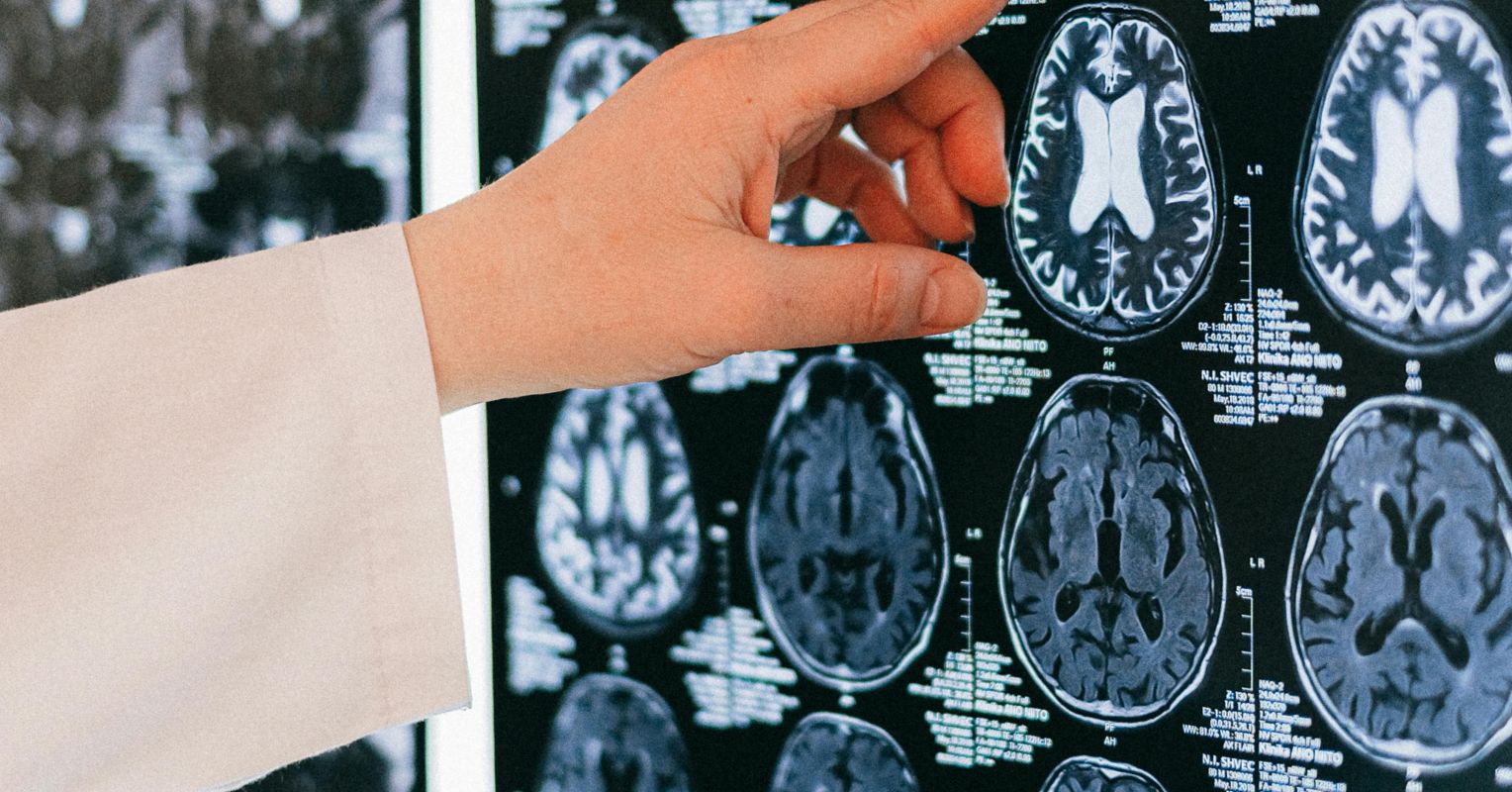
2 days agoHealing From Our Trauma Helps Shape Future Generations
Healing breaks generational trauma patterns and transforms relational dynamics and biology.




Relationships
fromSilicon Canals
3 days agoNot everyone who chooses a partner with visible problems is making bad decisions. Some of them are choosing people whose damage is louder than their own, because as long as they're fixing someone else, nobody turns the spotlight around and asks what broke them. - Silicon Canals
People often choose partners with visible problems to avoid confronting their own internal issues.
Retirement
fromSilicon Canals
3 days agoI'm 66 and I spent forty years trying to stay positive through everything - and what I actually created was a life where nobody knew me well enough to notice when I was drowning - Silicon Canals
Staying positive can lead to hidden struggles and emotional isolation, as individuals often mask their true feelings to appear strong.

fromPsychology Today
1 week agoEmbracing the Warrior-Guardian Paradox in Modern Policing
The warrior and guardian are not competing philosophies between which a department must choose. They are complementary capacities every officer needs - and every agency must develop, sustain, and honor equally.
Social justice
fromThe American Conservative
2 weeks agoVeterans Have Earned The Right To Ask. It's Time We Did.
We Americans who will protect our flag should have a voice in where it is flown. Despite his unimpeachable record of heroism and patriotism, he was disparaged and mocked by his government and the corporate press.
Right-wing politics
#empathy
Psychology
fromSilicon Canals
2 days agoResearch suggests people who feel more empathy for dogs than humans aren't broken - their empathy is fully intact, it's just been directed toward the only available recipient that has never weaponized it, and a person whose empathy has been weaponized enough times eventually stops handing it to anyone who could do it again - Silicon Canals
Empathy can be selective, often directed more towards animals than humans due to psychological and biological factors.
Artificial intelligence
fromenglish.elpais.com
2 weeks agoNeuroscientists and military vets: the inner workings of the team that hacks' Microsoft's AI tools before their public debut
Microsoft emphasizes the importance of guardrails in AI usage, particularly regarding military applications and ethical considerations.
fromPsychology Today
2 weeks agoUkraine's Other Battle: Healing the Invisible Wounds of War
With millions of soldiers estimated to be suffering from trauma-related conditions, not to mention civilians, Ukraine faces an urgent question: How will it treat the lasting mental scars of war? Among the emerging possibilities is psychedelic-assisted therapy (PAT) in treatment of war-related trauma, a controversial yet increasingly researched approach that some experts believe could play a transformative role in veteran mental health care.
Russo-Ukrainian War
Higher education
fromInside Higher Ed | Higher Education News, Events and Jobs
2 weeks agoStudent Veterans Turn Service Into Art
Veterans transitioning to civilian life use storytelling and creative arts at the New York Film Academy to process military experiences and build new identities beyond military service.
Psychology
fromSilicon Canals
2 days agoPsychology says people who apologize constantly without realizing it are more damaged than they appear - because they internalize blame and absorb conflict, a survival response from childhood, which never switches off even when they're safe - Silicon Canals
Excessive apologizing often stems from childhood experiences of mistreatment and can lead to chronic self-blame in adulthood.
from24/7 Wall St.
2 weeks agoMilitary Mom, 40, Works 3 Jobs Making $102K But Stuck in $112K Debt
That's a $9,000 raise, essentially. Sell the car and use that cash to get a functional car. If you can sell it, get that $5,000 in your hand plus this $9,000 and buy you a $15,000 paid-for car, that's a nice car. And now you got no car payments.
Retirement
Healthcare
fromPsychology Today
2 weeks agoBuilding a Therapeutic Revolution: Veterans Lead the Way
Therapeutic alliance—the collaborative bond between clinician and patient—extends beyond individual clinical encounters to systemic mental health care structures, particularly for treating complex conditions like PTSD and substance use disorders in veteran populations.
fromPsychology Today
3 days agoPeople With Bipolar and BPD Struggle in Mental Healthcare
There is a unique kind of pain in losing your mind, not just once, but over and over. Losing your perception of reality, of your emotions, of your closest relationships-both across months and multiple times a day. Knowing deep down that something is wrong but being unable to stop it.
Mental health
Miscellaneous
fromPsychology Today
1 month agoWar as a Psychological State
Authoritarian and narcissistic leaders share a fragile ego unable to tolerate challenge, causing them to experience political opposition as personal threat and deploy military as an extension of their distorted ego rather than as a policy tool.
Psychology
fromSilicon Canals
5 days agoPeople who go quiet when they're hurt instead of raising their voice learned somewhere very early that their anger wasn't received as information. It was received as an inconvenience. So they stopped sending the signal and started absorbing the damage, and they've been doing it so long they sometimes mistake silence for calm - Silicon Canals
Silence during conflict often indicates deeper emotional pain rather than composure or passive aggression.
Healthcare
fromNextgov.com
3 weeks agoVA's early uses of robots have shown mixed success, but excitement remains
The Veterans Affairs system is deploying robots across 65 medical facilities for delivery, pharmaceutical tasks, and cleaning to address staffing shortages and allow clinical staff to focus on higher-level work.

fromSlate Magazine
1 month agoTrump Wants Veterans to Lose Benefits As Soon As Their PTSD Symptoms Are Treated. There's One Problem With That.
During the troop surge in Iraq, I learned to constantly scan for threats, how to distinguish the sharp crack of a gunshot pointed in my direction from one outgoing toward an enemy, and the myriad ways that explosives can be hidden on a roadside. I learned that hypervigilance can be the difference between life and death. What I didn't learn was how to turn it off. Now, I take three psychiatric medications every day, and I go to therapy every week.
Law

fromBusiness Insider
2 months agoWhen I left the Marines, I struggled to adjust to civilian life. Finding work in the real world was the most challenging.
The Marines are a 24-hour responsibility. Once you commit, your personal ambitions take a backseat. Eventually, I reached a point where I wanted to explore those ambitions - specifically, entrepreneurship - while I was still young enough to act on them. I made the decision to leave the service during the height of the COVID-19 pandemic - even though the civilian job market felt uncertain, and many encouraged me to stay. But retired service members who had built businesses offered a different message. They helped me realize that the military equips people with more transferable skills than they often think. The transition resources on base reinforced that point, so I felt ready to move on.
Careers
Psychology
fromPsychology Today
1 month agoHow to Help Communities Rebound from Crisis and Disaster
Disaster psychology provides an empirically-based framework for building community resilience and growth during crises through understanding predictable psychological phases and natural recovery mechanisms.
US politics
fromBusiness Insider
2 months agoThe Department of Veterans Affairs gutted its workforce. Lawmakers say veterans are now paying the price.
The Department of Veterans Affairs lost over 40,000 employees in FY2025, primarily healthcare staff, reducing capacity for mental health care and appointment access.
fromSlate Magazine
2 weeks agoSoldiers Need to Understand Why They're Fighting. I Know What Happens When They Don't.
The research shows that for many who are diagnosed with PTSD, the condition arises not from what was done to us but what we did—or what we failed to prevent. This mechanism, known as moral injury, can be sympathetic ('I couldn't save them') but is often not sympathetic at all ('I killed them'). For people carrying this factor in PTSD, the task of integration, of sitting with and holding what we've done, is far more challenging.
Mental health
Mental health
fromPsychology Today
1 month agoNavigating the Messy Middle of Disaster Recovery
Disaster recovery extends beyond the initial crisis phase; year two brings psychological challenges including chronic stress, financial strain, and bureaucratic delays that impair functioning and compound trauma.
fromPsychology Today
1 month agoOn Helping Warriors Come Home
For many veterans, returning home marks not resolution but the beginning of a quieter struggle. Despite decades of innovation in trauma-focused therapies and medication, a substantial number continue to live with psychological injuries that existing treatments only partly address. Their trauma is not merely a cluster of symptoms; it is a disruption of identity, moral coherence, and belonging. It reflects lived experience often shaped by early adversity, military culture, and the potentially socially isolating aftermath of service.
Mental health
fromPsychology Today
2 months agoWhen Talking About Past Hurts Causes Emotional Re-injury
Has this happened to you? You run into someone, and they ask about something that you shared with them that was painful. They start talking about it, and there you go, hurting again? You weren't thinking about it, and the next thing you know, it hurts like it just happened. There are occasions - holidays and family gatherings - where the effects of a past painful experience will reemerge and trigger emotional pain all over again.
Mental health
fromPsychology Today
2 months agoIn an Age of Vulnerability, Why Is Help So Hard to Ask For?
Walk through an airport bookstore, scroll the podcast charts, or listen to a leadership keynote, and you'll likely find lessons on boundaries and burnout. Celebrities talk about therapy with a casualness that would have been unthinkable a generation ago. Coaches tell C-suite executives to " lead with vulnerability." And bestselling books like The Gifts of Imperfection, You Should Talk to Someone, and The Body Keeps the Score have given the world a common vocabulary for talking about anxiety, shame, and trauma.
Mental health
[ Load more ]