#world-bear-day
#world-bear-day
[ follow ]


Pets
fromThe Boutique Adventurer
1 day agoThese Are the U.S. Zoos Animal Lovers Should Visit at Least Once - The Boutique Adventurer: Luxury Adventure Travel Blog focussed on Emerging Destinations for those over 35
Zoos in the US can be ethical, focusing on conservation, education, and research, with many being AZA-accredited for animal care standards.
fromQueerty
1 week agoSorry grizzlies, but gays are claiming World Bear Day as their own - Queerty
World Bear Day, dedicated to raising awareness about various bear species, has also become a celebration of the bear subculture in the LGBTQ+ community, where hairy, masculine gay men embrace their identities.
SF LGBT
fromMail Online
5 days agoBritain has just 20 years to save its wildlife, experts warn
'Our results show that the next 20 years are critical,' lead author Dr Rob Cooke told the Daily Mail. 'By around 2050, we reach a point where the choices we make on emissions and land use will largely determine whether Britain moves towards a much more degraded or a much more nature‑positive future.'
Environment


fromOpen Culture
2 weeks agoIn Her Final Reflections, Jane Goodall Issues a Warning: "Without Hope, We Fall Into Apathy"
Somebody sent to this world to try to give people hope in dark times, because without hope, we fall into apathy and do nothing, and in the dark times that we are living in now, if people don't have hope, we're doomed. How can we bring little children into this dark world we've created and let them be surrounded by people who've given up?
Writing
London politics
fromwww.independent.co.uk
2 weeks agoMarket town pledges to save butterflies from shocking decline in UK first
Gillingham becomes the first UK local authority to commit to a nationwide challenge reversing butterfly population decline through habitat protection, pesticide elimination, and light pollution reduction.
Non-profit organizations
fromwww.theguardian.com
2 weeks agoWe cannot replace USAID, but we can do big things': conservation plots a future without American money
Liberia's eco-guard program, funded by USAID, faces collapse after the Trump administration dismantled the agency, threatening forest conservation and wildlife protection in one of Africa's most biodiverse regions.
fromNature
3 weeks agoPrevent pandemics through One Health commitments
Risks of outbreaks with pandemic potential rise with increasing land-use change, biodiversity loss and climate change. The Pandemic Agreement adopted by the World Health Assembly in 2025 marks a historic shift that establishes the One Health approach as a legally binding obligation for pandemic prevention.
Public health
fromHigh Country News
1 month agoCoyotes and cougars and rats, oh my! - High Country News
An unnamed tourist saw it and told Aidan Moore, who works for Alcatraz City Cruises. Moore told SFGATE that he was initially skeptical, but the guest's iPhone footage left little room for doubt. The video shows, not a sea lion or an otter, but an actual Canis latrans, doggedly dogpaddling, then clambering out of the water, noticeably shaky and struggling to settle tired paws on the craggy rocks.
California
Chicago Bears
fromHigh Country News
1 month agoCan Alaska save caribou by killing bears? - High Country News
Alaska's Mulchatna caribou herd has collapsed from 200,000 animals in the 1990s to 12,000 in 2022, devastating Indigenous subsistence hunting and prompting controversial wildlife management interventions including hunting bans and aerial predator culling.
fromUSA TODAY
3 weeks agoRed fox lands at Bronx Zoo after days at sea. Here's how he's doing.
Discovered on a ship arriving at the Port of New York & New Jersey from Southampton, England, the red fox was placed in the care of the Bronx Zoo on Feb. 19, one day after it was "safely secured" by U.S. Customs and Border Protection.
Pets
fromwww.theguardian.com
4 weeks agoHumanity heating planet faster than ever before, study finds
Climate breakdown is occurring more rapidly with the heating rate almost doubling, according to research that excludes the effect of natural factors behind the latest scorching temperatures. It found global heating accelerated from a steady rate of less than 0.2C per decade between 1970 and 2015 to about 0.35C per decade over the past 10 years.
Environment
fromwww.scientificamerican.com
4 weeks agoThe surprising science behind why daylight saving time is good for wildlife
Animals' risk of becoming roadkill depends on several factors, including how many vehicles are on the road, how many animals are on the road, and how animals and human drivers behave, explains Tom Langen, a professor of biology at Clarkson University, who studies animal-vehicle collisions. DST can minimize these collisions, however.
Pets
fromwww.theguardian.com
2 months agoBlack and white and sent back over: end of panda diplomacy as Japan returns bears to China
The panda house at Ueno Zoo in Tokyo is not due to open for several hours, but visitors are already milling around its entrance, pausing to pose for photographs in front of murals of the facility's most beloved residents. A short walk away the gift shop is doing a roaring trade in themed souvenirs from cuddly toys and stationery to T-shirts and biscuits. The visitors are here to say goodbye to Xiao Xiao and Lei Lei.
World news
fromYanko Design - Modern Industrial Design News
1 month agoWhen Zoo Design Tells the Story of Life Itself - Yanko Design
The House of Elements, set to become the crown jewel of Orientarium Zoo in Łódź, Poland, takes the classical elements (earth, ice, water, fire, and air) and transforms them into a 6,000-square-meter narrative experience. Rather than designing a building where you walk from exhibit to exhibit, VMA created a continuous downward-then-upward journey that mirrors the evolution of life itself. Designer: VMA Design Studio for Orientarium Zoo
Design
fromwww.scientificamerican.com
2 months agoHow zoos are preparing animals for this weekend's massive winter storm
In Texas, the Houston Zoo has prepared its buildings and barns with heaters designed to withstand extreme conditions, the zoo said in a blog post on Friday. Animals will have access to extra hay and bedding, and food was stocked in advance. Across the Zoo, sensitive plants are being protected with coverings, and generators are positioned to provide backup power if needed, the blog post said.
US news
fromAnimals Around The Globe
2 months agoThe Animal Personality That Captures Your Social Media Style
Ever wondered what your Instagram feed says about your inner animal? Or why you scroll through TikTok like a cautious deer while your friend posts boldly like a roaring lion? The way we use social media mirrors the same personality traits scientists have found in animals for decades. Just as personality traits like neuroticism, agreeableness and extraversion have been studied in animals, these same traits shape how we present ourselves online.
Psychology
fromMindful
1 month agoCan Compassion Save the Planet?
When British author Karen Armstrong won the TED prize in 2008, she used the money to convene a group of religious thinkers from a wide range of faiths to craft an updated version of the Golden Rule for the 21st century. What emerged was the Charter for Compassion, which calls on people around the world "to work tirelessly to alleviate the suffering of our fellow creatures, to dethrone ourselves from the center of our world and put another there, and to honor the inviolable sanctity of every single human being, treating everybody, without exception, with absolute justice, equity and respect."
Philosophy
Environment
fromwww.theguardian.com
1 month agoAustralian wildlife in harm's way' with volunteers left to pick up the pieces' amid climate crisis, fires and floods
Labor is urged to establish national wildlife protection standards for disaster response, with advocates warning biodiversity risks could become irreversible without coordinated government-funded rescue and rehabilitation services.
Environment
fromInsideHook
1 month agoGorillas, Michael Bay and Me: A Journey Through the Rewilded Rwanda
Rwanda's Kwita Izina gorilla-naming ceremony celebrates the recovery of mountain gorillas from near-extinction through successful conservation efforts, attracting global celebrities and thousands of participants to honor the species' survival.
fromHigh Country News
1 month agoIt's time to rethink how we care for our public lands and waters - High Country News
Wildlife populations are in decline. Recreation sites are crowded and often underfunded. Wildfires are larger, more destructive and harder to control. Climate change is reshaping natural systems, from ocean fisheries to mountain snowpacks, faster than institutions can respond. At the same time, communities are being asked to host new energy projects, transmission lines and mineral development - often without clear processes, adequate resources or trust that decisions are being made in the public interest.
Environment
Environment
fromFortune
1 month agoAnimal behavioralists saved a rhino with bleeding eyes by giving it eye drops, in a "ridiculous idea" gone right | Fortune
Voluntary training allowed caretakers to safely administer eyedrops to an endangered white rhino in Zimbabwe, preserving vision and protecting a community reintroduction program.
fromwww.theguardian.com
2 months agoExperience: a bear moved into my house
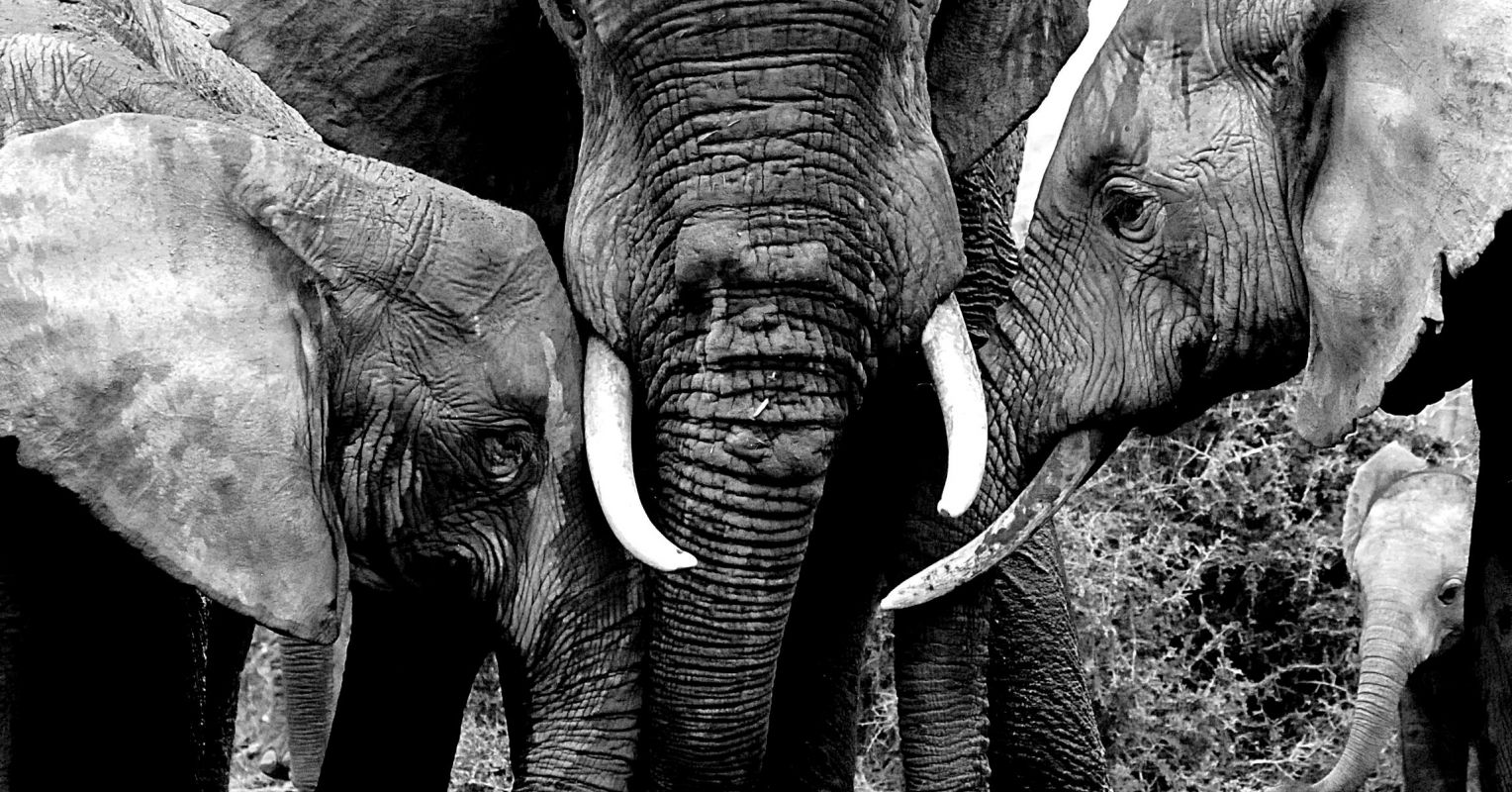
The next morning, I checked the critter-cams and saw the bear again, now captured by a camera I'd placed by a little mesh-covered opening near the small basement under my house. I watched as a massive shape emerged from the hole. My brain refused to believe it. The bear looked too large to fit in that tiny gap. I watched it again, shocked. My hands started to sweat.
Environment
Environment
fromArchDaily
2 months agoWorld Wetlands Day 2026: Integrating Traditional Knowledge for Climate Resilience
Wetlands provide critical biodiversity, ecosystem services, and livelihoods, while traditional ecological knowledge fosters resilient human–wetland relationships amid growing threats.
fromFast Company
1 month agoThese digital tools are stepping up the global fight against wildlife trafficking
In late 2025, Interpol coordinated a global operation across 134 nations, seizing roughly 30,000 live animals, confiscating illegal plant and timber products, and identifying about 1,100 suspected wildlife traffickers for national police to investigate. Wildlife trafficking is one of the most lucrative illicit industries worldwide. It nets between US$7 billion and $23 billion per year, according to the Global Environment Facility, a group of nearly 200 nations as well as businesses and nonprofits that fund environmental improvement and protection projects.
Environment
Environment
fromwww.theguardian.com
2 months agoAfrica's great elephant divide: countries struggle with too many elephants or too few
Elephant numbers contrast sharply: catastrophic declines in South Sudan, with a lone collared bull in Badingilo, versus overabundance and human conflict in parts of Kaza.

fromIndependent
2 months ago'It's not about ticking off the Big Five' - Booking a safari this year? Here's how to make sure it's ethical
Demand for safari holidays is growing, so how can you do it without harming animals, people or the landscape? Last summer, images were shared of a scene in Tanzania's Serengeti National Park - a large group of jeeps and dozens of tourists standing outside taking pictures of 'The Great Migration' and blocking wildebeests' traditional crossing point. Jeep traffic jams have also been widely reported in other parks, including Sri Lanka's Yala, known for its high density of leopards.
Environment
[ Load more ]