#2d-flash-memory
#2d-flash-memory
[ follow ]
#ai-infrastructure #stock-market #micron-technology #ai-data-centers #semiconductors #memory-prices #turboquant





fromTheregister
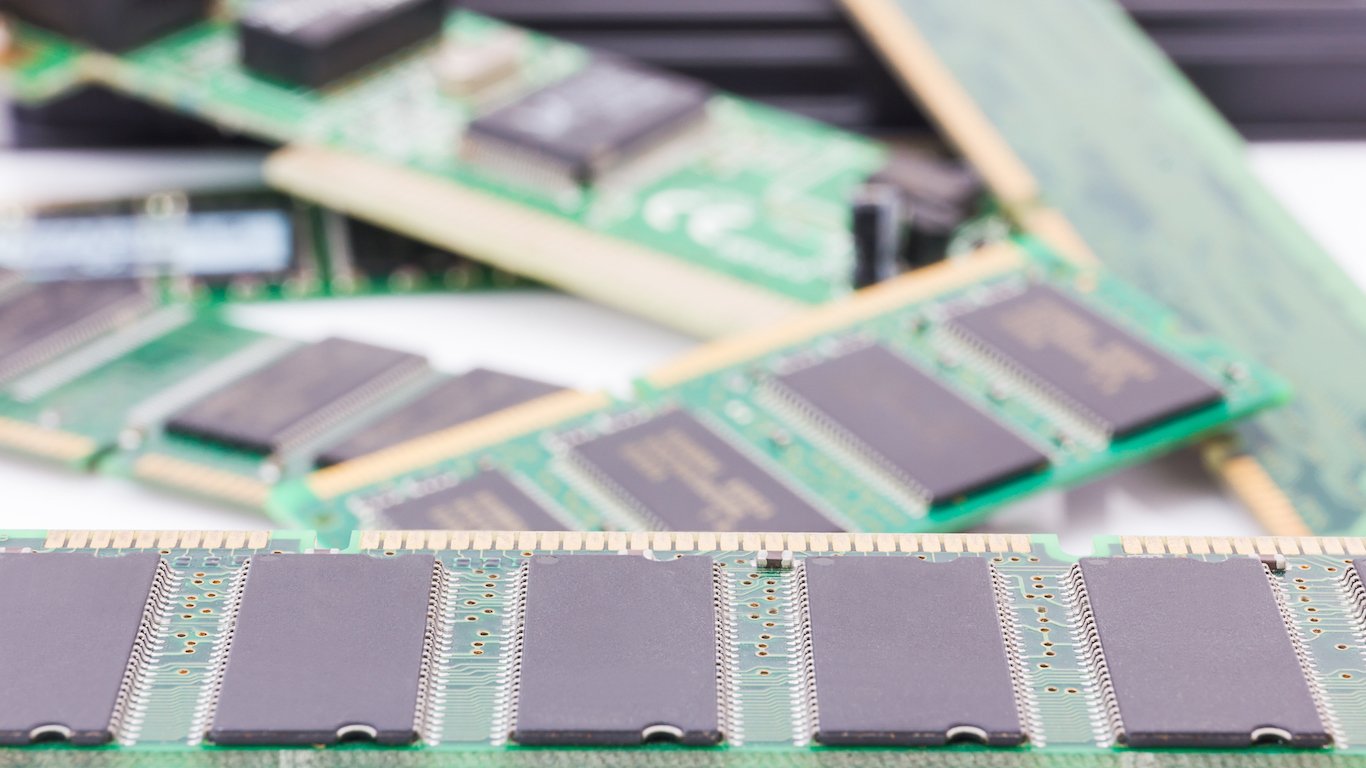
3 weeks agoRAM is getting expensive, so squeeze the most from it
Both work with Linux's existing swapping mechanism. Swapping (called paging in Windows) is a way for the kernel to handle running low on available RAM. It chooses pages of memory that aren't in use right now and copies them to disk, then those blocks can be marked as free and reused for something else.
Software development
from24/7 Wall St.
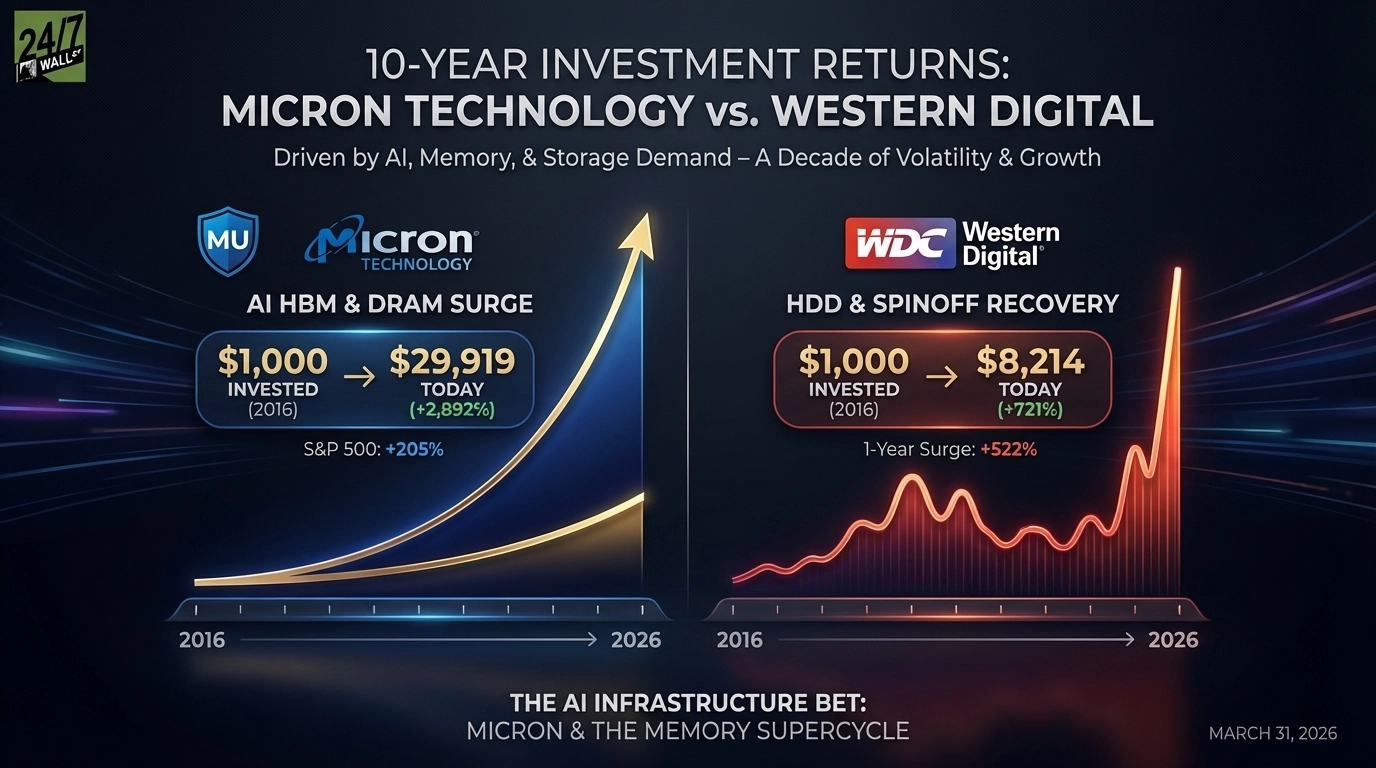
3 weeks agoIs Micron Getting Toppy? Not According to These Pros Who See Even More Upside Ahead
With shares going for more than 38.0 times trailing price-to-earnings (P/E), I'm personally in no rush to chase the stock, especially with quarterly earnings just under a week away. That said, some big-name analysts have been bold enough to stay in the bull camp. And that's despite the hot, seemingly overheated run, the relatively stretched multiple, and uncertainties clouding the future of AI.
Venture
fromTechzine Global
3 weeks agoMeta shifts to AI inference with its future chips
Four generations, MTIA 300, 400, 450, and 500, have been produced within less than two years, with several already in production and others scheduled for mass deployment in 2026 and 2027. The quick pace is deliberate. Rather than betting on a single chip generation and waiting years for results, Meta has adopted a roughly six-month cadence per generation, using modular chiplet architecture to enable incremental upgrades without replacing entire rack systems.
Artificial intelligence
fromTechzine Global
5 days agoSony halts memory card shipments due to NAND shortage
A severe shortage of NAND flash, driven by the enormous demand for it to expand AI data centers, makes procurement impossible. Sony is currently unable to fulfill orders for CFexpress Type A, CFexpress Type B, and SDXC/SDHC memory cards.
Tech industry
fromGSMArena.com
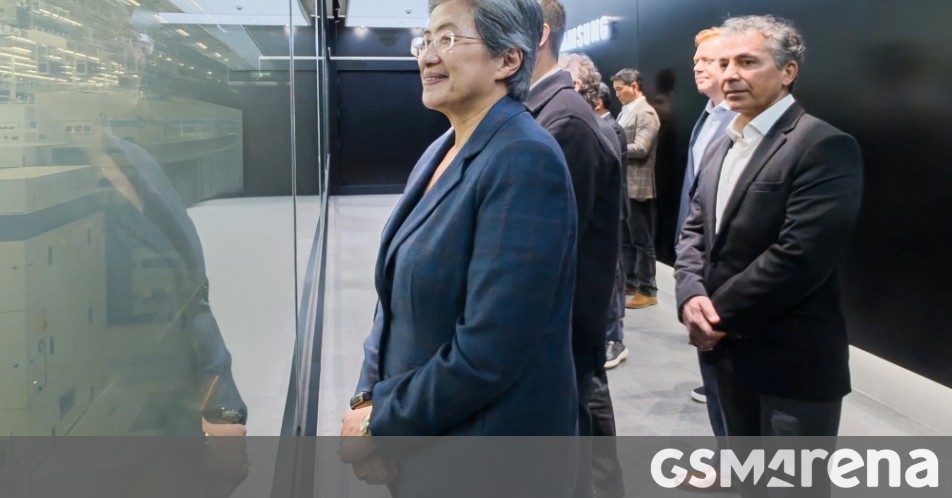
3 weeks agoSK hynix has developed 1c LPDDR6 RAM, which is faster and more efficient than older standards
The company has developed 16 gigabit LPDDR6 chips that will be used in smartphones and tablets with on-device AI. Bandwidth-hungry AI tasks will see a 33% speed-up in data processing compared to LPDDR5X. The new RAM has a base operating speed of 10.7Gbps.
Mobile UX
#ai-memory-demand

Tech industry
fromTheregister
2 weeks agoYour next car night need 300GB of RAM, and so will robots
Micron Technology projects sustained growth driven by AI demand, with autonomous vehicles and humanoid robots requiring 300+ gigabytes of DRAM, while the company tripled revenue year-over-year to $23.86 billion in Q2 2026.

fromKotaku
2 months agoWhile Samsung and Crucial SSDs Hold Steady, Kingston's Portable Drive Hits a New Low - Kotaku
The market is filled with external storage solutions designed to free up space by offloading larger files. The prices mainly depend on the capacity and performance. Some start at just $50, while higher-capacity options often sit well over $200. If you want plenty of storage without compromising on the speeds, the Kingston XS2000 2TB high-performance SSD is one of the top options out there.
E-Commerce







from24/7 Wall St.
2 months agoIs SanDisk the Next in Line to Crush Wall Street's Earnings Estimates?
Seagate Technology ( ) reported its fiscal second-quarter 2026 earnings yesterday, and the results beat Wall Street expectations on both revenue and earnings per share. The company brought in $2.83 billion in revenue, topping the consensus estimate of around $2.75 billion. On the bottom line, non-GAAP earnings came in at $3.11 per share, well above the expected $2.83. This strong showing was largely driven by robust demand for high-capacity storage solutions needed for artificial intelligence (AI) applications, such as data centers handling massive AI workloads.
Artificial intelligence
fromTechzine Global
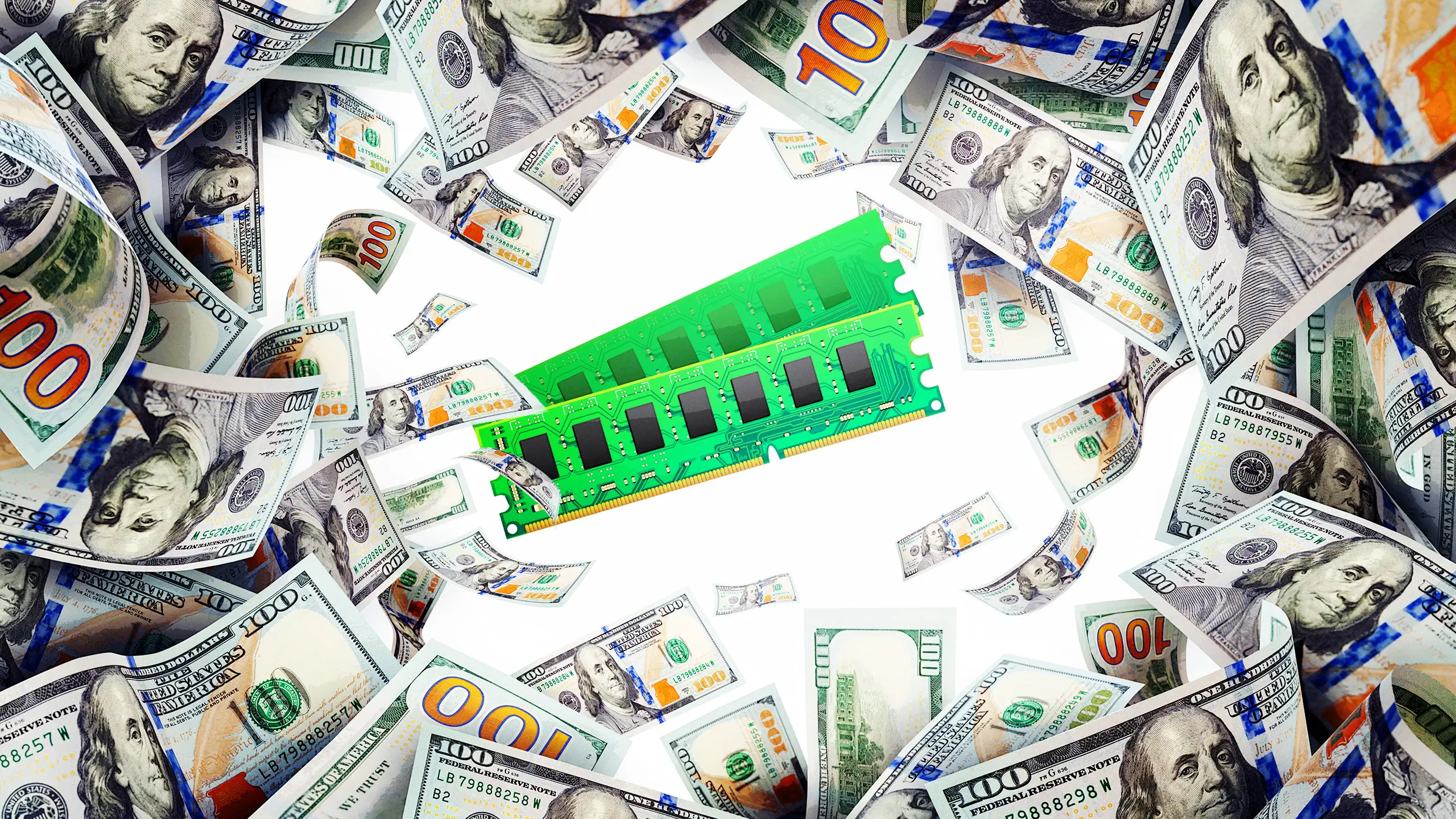
2 months agoMemory pricing expected to double this quarter beyond record high
DRAM contract prices are now expected to rise around 90 to 95 percent quarter-over-quarter. NAND flash similarly sees a huge jump, with expected prices ballooning by 55 to 60 percent compared to Q4 2025. Specifically, PC DRAM prices could more than double even from their elevated positions late last year. This will invariably result in overall price increases across all product categories, though varying in significance depending on component costs.
Artificial intelligence
fromTechzine Global
2 months agoNeuromorphic computers prove suitable for supercomputing
Scientists are showing that neuromorphic computers, designed to mimic the human brain, are not only useful for AI, but also for complex computational problems that normally run on supercomputers. This is reported by The Register. Neuromorphic computing differs fundamentally from the classic von Neumann architecture. Instead of a strict separation between memory and processing, these functions are closely intertwined. This limits data transport, a major source of energy consumption in modern computers. The human brain illustrates how efficient such an approach can be.
Artificial intelligence
Artificial intelligence
fromZDNET
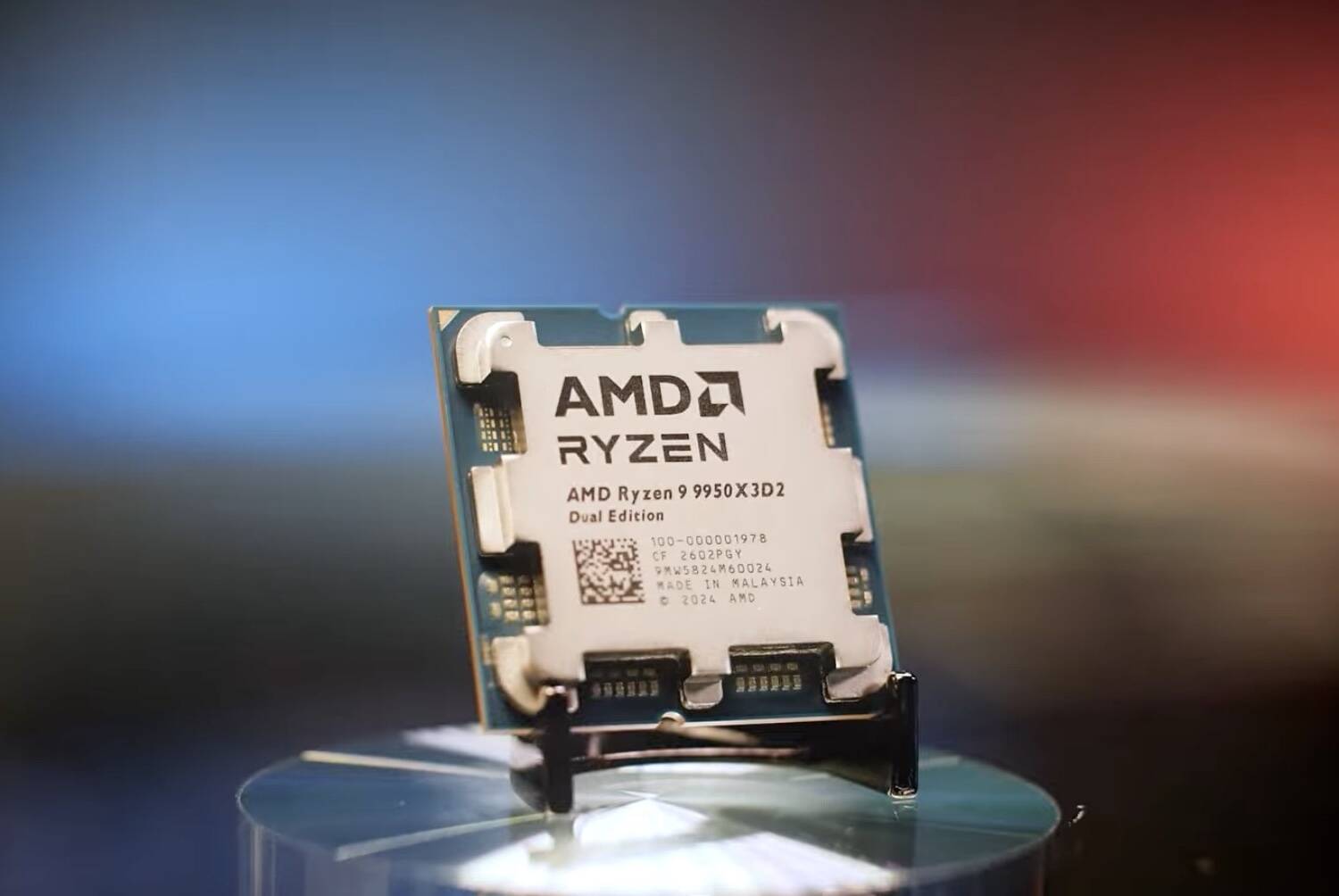
2 months agoAMD's new Ryzen chipset promises faster performance, better gaming, and smarter AI
AMD launched new Ryzen AI mobile and workstation processors plus high-performance gaming CPUs with upgraded NPUs and AI-powered FSR Redstone to boost performance and visuals.
from24/7 Wall St.
1 month agoSanDisk and Western Digital are the Real AI Kings of 2026
As investors turned their back on software (notably, the seat-based software-as-a-service companies), they're turned towards hardware in a big-time way. You wouldn't know it by looking at those flat shares of Nvidia ( NASDAQ:NVDA), but the iShares Semiconductor ETF ( NASDAQ:SOXX) is up around 13% year to date, with few signs of slowing down. The winners within semis have been broad, but the undisputed kings of the 2026 semiconductor surge belongs to the memory and storage stocks.
Business
fromThe Verge
2 months agoSamsung's discounted microSD Express card more than doubles your Switch 2 storage
If you buy digital games for the Nintendo Switch 2, Samsung's P9 microSD Express card offers an easier way to expand your storage without constantly deleting games to make room. It's cheaper than other microSD cards, and it's even better value right now, with the 512GB version priced at $79.99 ($40 off) - just $5 shy of its best price to date. You can alternatively buy the 256GB model for $39.99 ($15 off) at Amazon.
Gadgets
fromZDNET
1 month agoThis thumb-sized accessory gave my old PC an instant speed boost (and twice the storage)
In the not-so-distant past, the solution for boosting the speed of an aging, sluggish PC was to add more RAM or upgrade the processor. Now, the way to sail over that speed bump is to get a new storage drive, and there's no better storage upgrade for performance than fitting your system with an M.2 drive. Also: What is MoCA 2.5? How this low-cost networking option can seriously improve your internet There is no shortage of excellent M.2 drives out there, but if you're looking for high-end performance and stability when the going gets tough, the is well worth a look.
Gadgets

fromComputerworld
2 months agoMemory shortage threat helps trigger PC buying spree
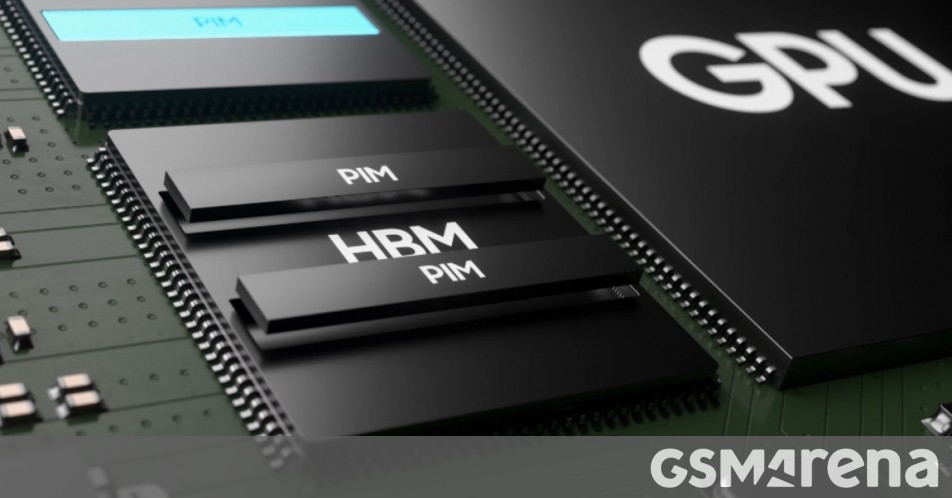
Global PC shipments rose by 9.6% in the fourth quarter of 2025, according to IDC's latest Worldwide Quarterly Personal Computing Device Tracker, however, it is unlikely those increases will continue, due in part to a pending memory shortage that will impact both enterprise and consumer markets. IDC stated in a release that it expects that the PC market will be far different in 12 months, given how quickly the memory situation is evolving.
Tech industry
fromTheregister
2 months agoPC shipments set to hit the buffers as AI guzzles memory
Memory shortages will likely stunt PC shipments in 2026, as available supplies will not be able to meet demand thanks to memory makers chasing the lucrative AI infrastructure market instead. Overall PC market performance in 2025 was healthy, according to research biz Omdia, but it notes that memory and storage supply was already tightening, with associated upward price pressure emerging around the middle of last year.
Tech industry
[ Load more ]