#antique-faire
#antique-faire
[ follow ]
#interior-design #cultural-heritage #art-theft #craftsmanship #art-auction #design #renoir #cezanne #matisse #antiques
fromwww.npr.org
1 week agoHow a jeweler's quest to create the world's largest jeweled egg led to his downfall
Paul Kutchinsky's ambition to create the world's largest jeweled egg was driven by a desire to showcase British craftsmanship on a global stage, competing with the legendary Faberge eggs.
Berlin
Arts
fromThe Art Newspaper - International art news and events
6 hours agoLalanne mirrors owned by Yves Saint Laurent and a classic Diane Arbus photo: our pick of the April auctions
Claude Lalanne's mirrors, once in Yves Saint Laurent's apartment, are set for auction with a high estimate after being previously sold for €1.8m.

:max_bytes(150000):strip_icc()/TAL-wickford-antiques-estate-liquidators-NEANTIQUES0823-381086c4a2e04ccba568fab4b1ec6037.jpg)
fromArchitectural Digest
2 weeks agoHow to Spot a Dupe when Buying Designer Vintage Furniture
"In many ways they've become part of the visual landscape of the vintage market, particularly online, where speed often replaces connoisseurship," says Rodrigo Fernández, director and cofounder of Diez Company.
Web design
fromMedievalists.net
6 days agoMedieval Gold Discovery Goes on Display in Newcastle - Medievalists.net
We are delighted to unite these incredible archaeological finds from across the North for our latest exhibition. From Roman silver discovered along Hadrian's Wall to 9th-century gold found by a Newcastle University student, this is a rare opportunity to see these scattered treasures displayed alongside one another.
History
Education
fromwww.theguardian.com
2 weeks agoHomework till midnight and one breakdown a week': the mysterious art school keeping a forgotten style alive
The Ecole Van der Kelen-Logelain in Brussels teaches specialized painting techniques including trompe l'oeil, an illusionistic art form creating three-dimensional illusions on flat surfaces through textures, shading, and perspective tricks.
fromArchitectural Digest
3 weeks agoHow Alexander Widener Turned His Vintage Obsession Into a Career
In the digital world that we're in, you know, negative videos are what goes viral. People are always knocking people down a peg and it's really easy to fall into that. If something bad happens-which, when you own your business, something bad happens every day- it's easy to circle in despair. But my challenge is to look for the positive and figure out how to pivot, and if something isn't working then figure out a different way to get it done.
Digital life




fromThe Art Newspaper - International art news and events
3 weeks agoGlassblower and porcelain heir Paul Arnhold on the art he loves to collect
Glass demands immediacy. Working at temperatures above 2,000°F leaves little room for overthinking, so the process becomes a kind of live dialogue between material, colour and chance. That same immediacy informs what I'm drawn to as a collector: works that carry a decisive gesture, a tactile presence, and the feeling that they could only exist in one form.
Miscellaneous
Arts
fromThe Art Newspaper - International art news and events
5 days agoKeep it in the family: how Johannes Vermeer's paintings remained out of view for so long
Magdalena Pieters van Ruijven's collection of Vermeer paintings was unique in its preservation and scale, comprising nearly two-thirds of his known works.
Fashion & style
fromGothamist
3 weeks ago4,000 square feet of luxury knickknacks on sale in Brooklyn this weekend
Luxury home stager Jason Saft launches a Collector's Market featuring over 800 curated home decor and accessories items accumulated over a decade, responding to customer demand for collectible pieces beyond furniture.
Parenting
fromBusiness Insider
1 month agoMy mom has been collecting miniatures for 50 years. They have taken over our 1000-square-foot basement.
Celina Myers' mother has collected miniatures since age 14, filling their entire basement with thousands of organized tiny treasures that continue to bring her joy despite physical disability.
fromApartment Therapy
1 month agoI Tried the 3-Step Method That Makes Vintage Lamps Look Fancy (Not Thrifted!)
First, you probably have to rewire the lamp. Unless the seller already did it for you, it's best to rewire any vintage finds so you know they've been safely updated. The process isn't that hard, but you will need to buy the supplies and spend the time to do it correctly.
Design
fromArchDaily
3 weeks agoThe Aubusson Tapestry Museum Extension / Projectiles
The Aubusson Tapestry Museum is situated in an exceptional context shaped by a rich history and a powerful natural environment. The Creuse capital of tapestry has been marked by its history since the royal manufactory of the 14th century.
History
Paris food
fromThe Art Newspaper - International art news and events
3 weeks agoSnuffboxes stolen in Paris daylight robbery to go on display at V&A
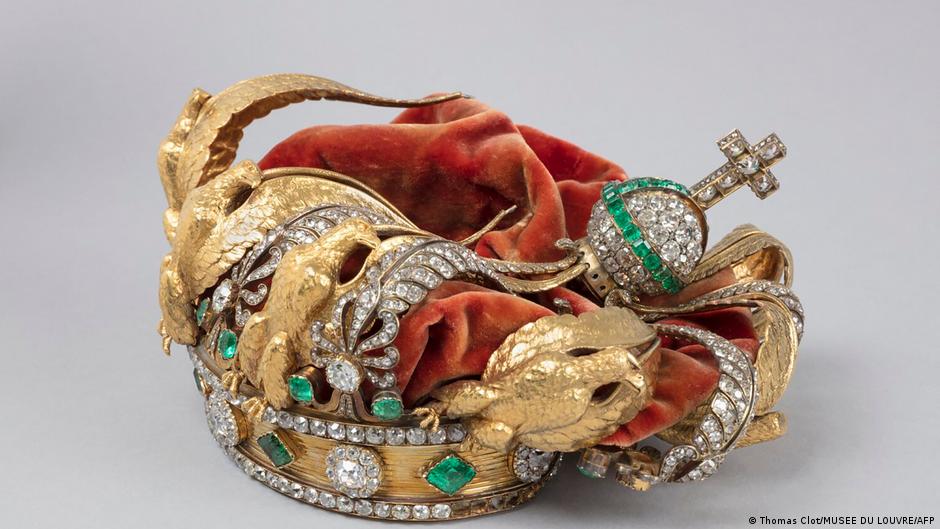
Two recovered 18th-century gold snuffboxes stolen from a Paris exhibition in 2024 will display at the V&A Museum's reopened Gilbert Galleries starting March 14, 2025.
Arts
fromThe Art Newspaper - International art news and events
2 weeks agoFrench government blocks sale of newly-discovered drawing by German renaissance master Hans Balfdung
The French culture ministry blocked the sale of a drawing by Hans Baldung Grien, declaring it a national treasure for 30 months.
fromAnOther
4 weeks agoOlivier Saillard Presents a Poetic History of Everyday Fashion
The question of how fashion is archived - what enters the museum; what is deemed worthy of preservation; whose clothes are considered culturally significant enough to outlast the bodies that wore them - has long sat uneasily at the centre of fashion history itself. Institutions have tended to answer it, or ignore it, in much the same way: couture gowns under glass, luxury garments mounted on conservation-grade mannequins in blockbuster exhibitions - an implicit hierarchy of the designed over the worn, the authored over the anonymous.
Paris food
Renovation
fromLos Angeles Times
36 years agoArchitectural Antiques Used as Home Decorating Elements
Architectural antiques from salvage houses and demolition sites are increasingly used as distinctive building and decorating elements in new home construction, driven by renewed historical interest and their status as art forms.
History
fromMedievalists.net
1 month agoDreaming of Owning a Medieval Artefact? Here's Your Chance - Medievalists.net
TimeLine Auctions' March 3 online sale features hundreds of medieval historical objects including a 13th-century Limoges cross, 1224 Chinese armor, Viking silver mount, and Anglo-Saxon brooch.
fromThe Good Life France
2 months agoRenovating a property in France - heritage status and protected zones - The Good Life France
In the UK and the US, it is often crystal clear when your new home is classified as a heritage home or period property, but in France it can be less obvious. You could be breaking the rules simply by installing new windows. So how can you check that your big plans aren't going to upset anyone - or worse, break the law?
Real estate
fromArtnet News
3 weeks agoJeweled Snuffboxes Stolen in Brazen Paris Heist Go on Display
The exquisite, jewel-encrusted boxes were badly damaged in 2024, after they were among seven treasures stolen from Paris's Musée Cognacq-Jay by a gang of axe-wielding thieves. The perpetrators broke into the temporary exhibition, titled "Luxe de Poche," or "Pocket Luxury," on November 20, making off with goods that were, at the time, reported to be worth more than €1 million.
Arts
Business
fromLondon Business News | Londonlovesbusiness.com
2 months agoThe rising appeal of traditional goods in modern investment portfolios - London Business News | Londonlovesbusiness.com
UK investors increasingly allocate to tangible alternative assets for stability, scarcity-driven appreciation, and clearer ownership, balancing portfolios against market volatility.
fromCurbed
2 months agoSentimental Value Is an Excellent Lamp Movie
Sentimental Value is very much a film about a house - a Victorian " dragestil," or "dragon style," home in Oslo where generations of the same family have lived for more than a 100 years. Director Joachim Trier, who found the house in Oslo's Frogner neighborhood, called its role in the film "a witness of the unspoken ... a witness of the 20th century."
Paris food
fromwww.theguardian.com
1 month agoAn ugly year for the Louvre: where does the world's biggest museum go from here?
Laurence des Cars resigned as Louvre president after a year marked by staff strikes, infrastructure crises, a major heist, and ongoing operational challenges despite a €1 billion renovation plan.
fromFrenchly
2 months agoParis Is Obsessed With Specialty Shops Again-Here Are 8 Worth Visiting - Frenchly
Paris didn't invent shopping (even if it sometimes feels that way), but it arguably invented the specialty shop as we understand it today. Long before concept stores, lifestyle retail, or anything resembling "curation" entered the vocabulary, Paris was already organized around doing one thing extremely well -and it still is. From cheesemongers to winemakers and beyond, specialization remains the point.
Miscellaneous
Arts
fromenglish.elpais.com
4 weeks agoBelgium believes it has discovered an unknown painting by Michelangelo
A painting titled 'Spirituali Pieta' previously attributed to an anonymous sixteenth-seventeenth century artist has been identified as a work by Michelangelo, potentially bringing the total number of his known canvas paintings to five.
fromApartment Therapy
1 month agoThe 150-Year-Old Useful Gem Hiding in Every Thrift Store
As someone who loves vintage things, you can find me at my local thrift store regularly. I enjoy stocking my closet with secondhand finds and finding gifts or unexpected storage gems instead of buying them new. The thrill of the hunt is ultimately what keeps me going back time after time. Whether I have 10 minutes or an hour to peruse, flipping through clothing racks and scouring the shelves always brings me joy,
Fashion & style
fromSilicon Canals
2 months agoTreasures worth thousands: homeowners discover vintage items hidden in walls during renovation - Silicon Canals
Picture this: you're knee-deep in renovation dust, crowbar in hand, when something unexpected tumbles from behind century-old plaster. A yellowed envelope? A strange metal box? That moment when your heart skips because you realize you might have just found something extraordinary. For some lucky homeowners, these discoveries turn out to be worth thousands of dollars, transforming a simple home improvement project into an unexpected treasure hunt.
Renovation
Paris food
fromFortune
1 month agoThe new Louvre director has to restore an institution that was literally robbed in broad daylight | Fortune
Art historian Christophe Leribault becomes Louvre director, tasked with addressing security failures, infrastructure problems, and operational crises following a major crown jewels heist and ticket fraud scandal.
Renovation
fromThe Good Life France
2 months agoRenovating a property in France - heritage status and protected zones - The Good Life France
Renovating property in France often requires permissions; protected zones and proximity to historic monuments can restrict even minor changes like shutters or windows.
fromYanko Design - Modern Industrial Design News
2 months agoThe Case for Heirloom Furniture in an Era Obsessed With Biodegradable Everything - Yanko Design
Furniture made from mycelium or algae can decompose in five years, sure, but a well-made antique armoire outlives empires because no one throws it away. Columns takes that logic seriously. Handcrafted in solid oak, natural leather, and horsehair, the pieces are built to last a thousand years, which sounds like marketing hyperbole until you look at the joinery, the hand stitching, and the material choices. This is furniture designed to be inherited, repaired, and remembered.
Design
fromRemodelista
2 months ago10 Easy Pieces: Remodelista Editors' Favorite French Cleaning Tools - Remodelista
Some of my best discoveries, turns out, were found in the most typical of hardware and sundries stores. When it comes to cleaning, the French aren't wielding harsh chemicals or power tools, but rather, sticking to what's worked for generations. Among us at Remodelista, there's at least one tool or product we've each co-opted into our own American homes. Here are our favorites.
Renovation
fromArtnet News
1 month agoPrado Conservators Get a Loewe Makeover
Designed in close dialogue with the Prado's conservators, the coats meet strict functional requirements essential to restoration work. They are constructed from high-quality, non-reflective materials that prevent any glare from interfering with the surface of a painting-an essential consideration when working millimeters away from a Velázquez or a Bosch.
Arts
Design
fromdesignboom | architecture & design magazine
2 months agoexpanded curatio installation returns to maison&objet 2026 spotlighting collectible craft
Maison&Objet January 2026 spotlights craftsmanship and contemporary design under 'Past Reveals Future,' featuring an expanded CURATIO installation and immersive scenography.
Arts
fromThe Art Newspaper - International art news and events
1 month agoUK exhibition celebrates the artisans throughout history who went to war
Frontline-made objects salvaged from battlefields reveal the skills, identities, and lived experiences of ordinary soldiers across conflicts from the World Wars to modern wars.
Arts
fromdesignboom | architecture & design magazine
1 month agolight sculptures preserve ancestral designs through antique doilies and lace textile
Kinship transforms heirloom doilies and stockings into LED-lit stainless steel sculptures that preserve textiles and project lace-like shadows and layered histories.
[ Load more ]