#art-conservation-and-restoration
#art-conservation-and-restoration
[ follow ]
#cultural-heritage #art-theft #renoir #cezanne #art-history #matisse #art-authentication #italy #louvre



fromArchDaily
1 week agoFirst Aid for Endangered Heritage: An Interview with Ambulance for Monuments
Ambulance for Monuments operates through a collaborative network of organizations and volunteers, redefining the role of the architect in heritage preservation by involving professionals, students, craftsmen, and local communities.
Fundraising

Education
fromwww.theguardian.com
2 weeks agoHomework till midnight and one breakdown a week': the mysterious art school keeping a forgotten style alive
The Ecole Van der Kelen-Logelain in Brussels teaches specialized painting techniques including trompe l'oeil, an illusionistic art form creating three-dimensional illusions on flat surfaces through textures, shading, and perspective tricks.
Music
fromPsychology Today
3 weeks agoArt as a Biological Bedrock of Shared Humanity
Humans are biologically wired for shared artistic experiences, which serve as essential connective tissue for our nervous systems and cultural identity, transcending the perceived obsolescence of performing arts in the digital age.
Information security
fromSecuritymagazine
3 weeks agoObject-Specific Protection: The Non-Negotiable Foundation of Art and Asset Security
Object-specific protection is essential as a primary security layer to prevent art theft, as comprehensive facility-wide systems fail when adversaries physically interact with high-value objects without triggering alarms.
fromThe Art Newspaper - International art news and events
3 weeks agoMummies and other human remains held in UK museums raise serious ethical questions, warn scholars
The significant number of ancestors held in UK museums is extremely distressing and symbolic of the colonial origins of these collections. We hope that the responses gathered by The Guardian will be shared with the relevant communities to support them in bringing their ancestors home.
London
fromArchDaily
1 month agoArchiving the Technosphere: How Museum Architecture Mediates Human-Made Systems
The contemporary technology museum has emerged as a performative participant in the systems it seeks to document. The architecture of these institutions has become increasingly fluid and bold, often mirroring the velocity and complexity of the systems it houses. They operate as mediators between the human, the ecological, and the technological realms, transforming from encyclopedic warehouses into active educational engines.
Science
Miscellaneous
fromThe Art Newspaper - International art news and events
1 month agoSpot the difference: Bridget Riley work enjoys new green cleaning treatment
Bridget Riley's 1964 painting Hesitate underwent its first cleaning using pioneering green hydrogel technology developed through the Greenart research programme, avoiding damage to vulnerable house paint surfaces.

Miscellaneous
fromThe Art Newspaper - International art news and events
1 month agoComment | Art is more than its original context
Understanding art's original context enriches appreciation, yet modern viewing conditions and lost contexts require adapting how we engage with artworks across different settings and time periods.
fromThe Art Newspaper - International art news and events
1 week agoComment | Museums must be the leaders in a moral revolution
Bregman claims, 'Today the whole of Europe risks turning into one big Venice, a beautiful open-air museum. A great destination for Chinese and American tourists. A place to admire what was once the centre of the world.' This statement encapsulates the concern that Europe is losing its cultural significance.
Arts
History
fromMedievalists.net
1 month agoDreaming of Owning a Medieval Artefact? Here's Your Chance - Medievalists.net
TimeLine Auctions' March 3 online sale features hundreds of medieval historical objects including a 13th-century Limoges cross, 1224 Chinese armor, Viking silver mount, and Anglo-Saxon brooch.
Paris food
fromFortune
1 month agoThe new Louvre director has to restore an institution that was literally robbed in broad daylight | Fortune
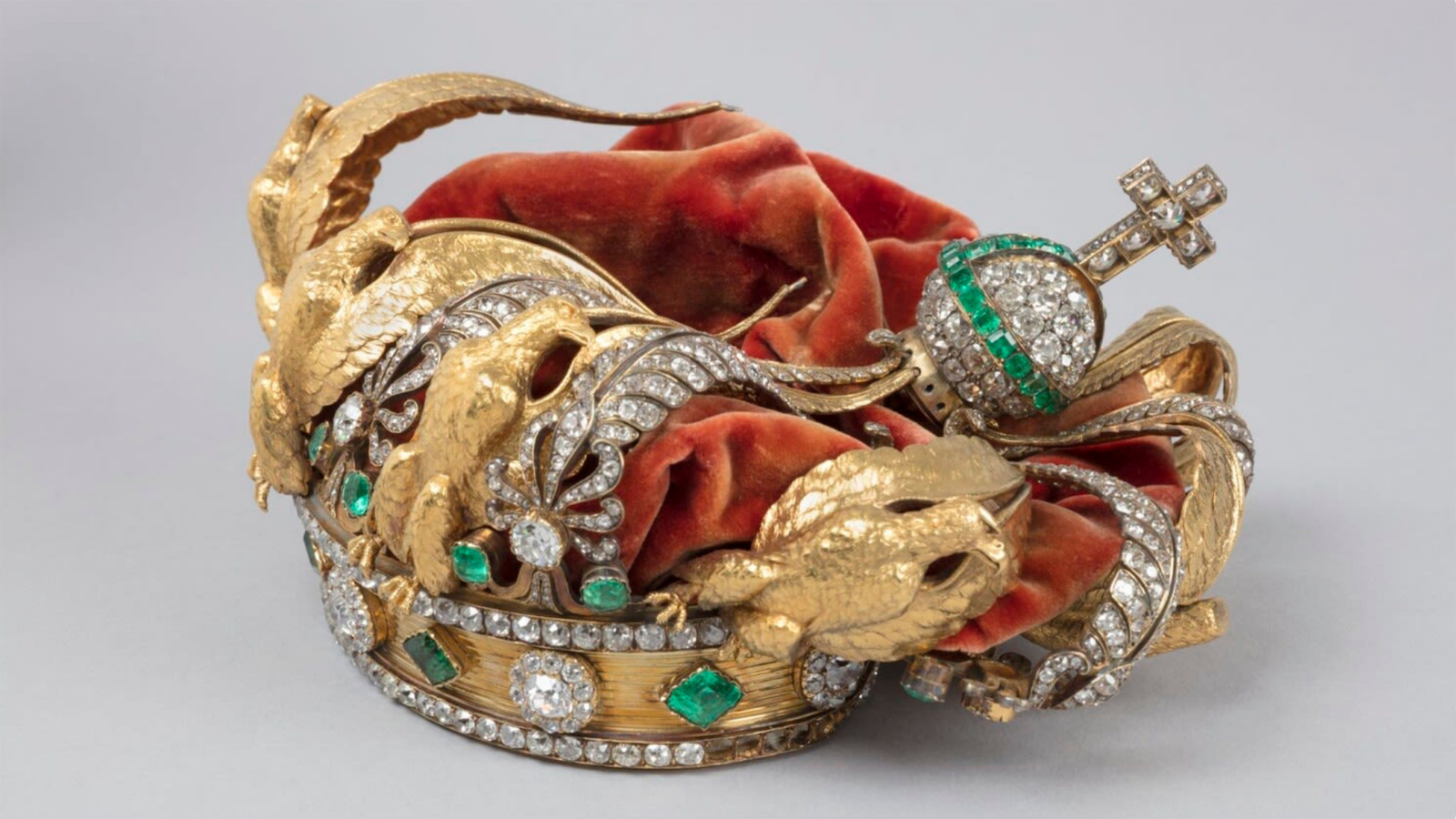
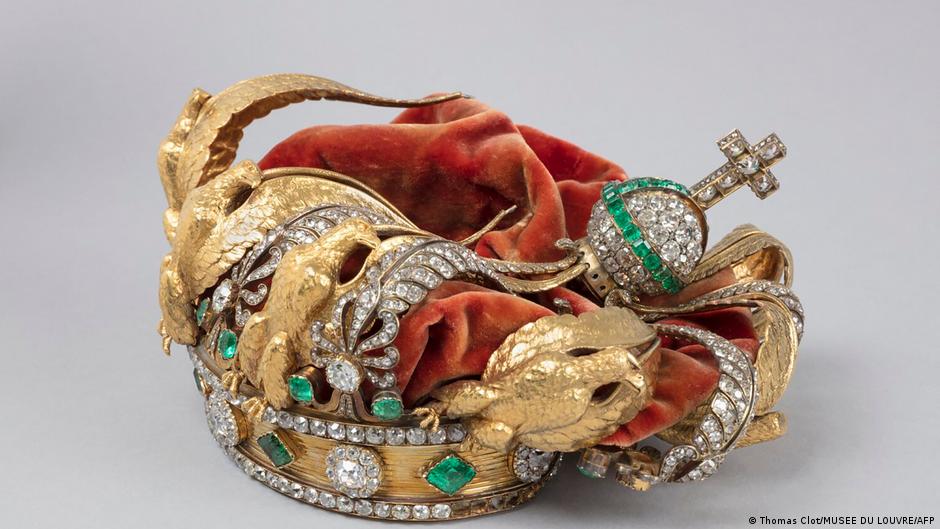
Art historian Christophe Leribault becomes Louvre director, tasked with addressing security failures, infrastructure problems, and operational crises following a major crown jewels heist and ticket fraud scandal.
History
fromwww.thehistoryblog.com
1 month agoEtruscan urn's polychromy restored after 1966 Florence flood
The Bottarone Urn, a 425-380 B.C. Etruscan alabaster cinerary urn depicting a married couple, was restored to its original vivid polychromy after 60 years of mud damage from Florence's 1966 Arno River flood, revealing Egyptian blue pigment for the first time.
fromAeon
2 months agoThere's a gentle artistry to a museum taxidermist's craft | Aeon Videos
This short captures Tim Bovard, the staff taxidermist for the Natural History Museum of Los Angeles County, as he reflects on over five decades spent perfecting his craft. Sparked by a childhood fascination with the museum's dioramas that never faded, Bovard has devoted his career to shaping what he calls the 'illusion of life' - a process that requires both scientific precision and imaginative interpretation.
Philosophy
US politics
fromwww.independent.co.uk
2 months agoInside the hunt for British Museum's missing treasures
The Independent funds on-the-ground, paywall-free investigative reporting while a six-person British Museum team celebrates breakthroughs in tracing missing Greek and Roman treasures with a golden bell.
Relationships
fromSlate Magazine
2 months agoI Walked In On My Colleague Defiling a Precious Piece of Art. Now His Fate Is in My Hands.
An artist masturbated on a communal sculpture, apologized, promised to stop, and trusting him may be reasonable unless a recurring inappropriate sexual pattern appears.
Design
fromThe Art Newspaper - International art news and events
2 months agoHow an artist's sketch was turned into a museum
A museum design translates a blue-house and white-tower sketch into a tiled architectural language reflecting regional materials, cultural markers, and historic South–West Asian trade links.
fromSilicon Canals
1 month agoTreasures worth thousands: homeowners discover vintage items hidden in walls during renovation - Silicon Canals
Picture this: you're knee-deep in renovation dust, crowbar in hand, when something unexpected tumbles from behind century-old plaster. A yellowed envelope? A strange metal box? That moment when your heart skips because you realize you might have just found something extraordinary. For some lucky homeowners, these discoveries turn out to be worth thousands of dollars, transforming a simple home improvement project into an unexpected treasure hunt.
Renovation
Arts
fromHyperallergic
2 weeks agoMeet the Woman Who Made Museums More Accessible
Lorena Bradford, the National Gallery of Art's first head of Accessible Programs, transformed museum accessibility by creating intentional programs for disabled visitors, including ASL tours, memory loss programs, and medical student training initiatives.
Arts
fromThe Art Newspaper - International art news and events
3 weeks agoDresden museum wins Tefaf award for Rubens restoration
Dresden's Gemäldegalerie Alte Meister receives the Tefaf Museum Restoration Fund award to restore Rubens' The Boar Hunt, removing discolored varnish and undoing damaging 19th-century repairs to reveal the painting's original composition and palette.
Arts
fromThe Art Newspaper - International art news and events
3 weeks ago'It has nothing to do with Michelangelo': expert wades in on painting newly attributed to Renaissance master
Belgian art historian Michel Draguet claims to have discovered a Michelangelo painting from the 1540s, but leading Renaissance experts dispute the attribution based on artistic style analysis.
Arts
fromOpen Culture
3 weeks agoThe Met Releases High-Definition 3D Scans of 140 Famous Art Objects: Sarcophagi, Van Gogh Paintings, Marble Sculptures & More
The Metropolitan Museum of Art now offers high-definition 3D scans of its artifacts, enabling unprecedented close examination and interaction with masterpieces through digital zoom, rotation, and augmented reality technology.
Arts
fromenglish.elpais.com
3 weeks agoBelgium believes it has discovered an unknown painting by Michelangelo
A painting titled 'Spirituali Pieta' previously attributed to an anonymous sixteenth-seventeenth century artist has been identified as a work by Michelangelo, potentially bringing the total number of his known canvas paintings to five.
Arts
fromColossal
1 month agoThe Met Introduces High-Definition 3D Scans of Dozens of Art Historical Objects
The Metropolitan Museum of Art and other institutions now offer 3D digital models of artworks, enabling detailed examination of textures, materials, and hidden details impossible to see in person or through standard digital images.
Arts
fromThe Art Newspaper - International art news and events
1 month ago'Lost' painting reattributed to Rembrandt by Rijksmuseum's researchers
The Rijksmuseum rediscovered a lost 1633 Rembrandt painting depicting the biblical story of Zacharias, authenticated through modern scanning techniques after decades of doubt about its authenticity.
fromArtnet News
1 month agoPrado Conservators Get a Loewe Makeover
Designed in close dialogue with the Prado's conservators, the coats meet strict functional requirements essential to restoration work. They are constructed from high-quality, non-reflective materials that prevent any glare from interfering with the surface of a painting-an essential consideration when working millimeters away from a Velázquez or a Bosch.
Arts
fromwww.theguardian.com
1 month agoAI analysis casts doubt on Van Eyck paintings in Italian and US museums
An analysis of two paintings in museums in the US and Italy by the 15th-century Flemish artist Jan van Eyck has raised a profound question: what if neither were by Van Eyck? Saint Francis of Assisi Receiving the Stigmata, the name given to near-identical unsigned paintings hanging in the Philadelphia Museum of Art and the Royal Museums of Turin, represent two of the small number of surviving works by one of western art's greatest masters, revered for his naturalistic portraits and religious subjects.
Arts
fromThe Art Newspaper - International art news and events
1 month agoWhen it comes to restitution, how can museums solve a problem like inalienability?
When Thomas Jefferson wrote about the "inalienable" rights of man in the US Declaration of Independence 250 years ago, it's possible he lifted the term from the French. And long before it was ever used as an adjective to describe human rights, it defined royal property. To this day, "inalienability" remains a cornerstone of public collections in France-and many other countries-impacting museums and their ability to deaccession, including for purposes of restitution.
Arts
Arts
fromThe Art Newspaper - International art news and events
2 months agoMuseum wall texts are an art in their own right-but will they survive the digital age?
Museums should balance providing contextual wall text and inviting wordless, personal interpretation to make art accessible and meaningful to diverse visitors.
fromThe Art Newspaper - International art news and events
2 months agoIn the age of AI, can art expertise be digitised?
Recently, AI decided that a painting long thought to be a copy of Caravaggio's The Lute Player is actually by the master, while another version of the same subject, previously thought to be authentic, is not. Both conclusions were disputed by the former Metropolitan Museum of Art curator Keith Christiansen. A similar debate erupted in March 2025 when AI declared that portions of The Bath of Diana, also long believed to be a copy, could have been painted by Peter Paul Rubens.
Arts
fromArtnet News
1 month agoVan Eyck Attribution Dispute Pits Art Historians Against A.I. Firm | Artnet News
Once again, A.I. and human experts are butting heads over the authenticity of a world-famous painting. A Belgian art historian has refuted claims made by Swiss company Art Recognition that two paintings have been falsely attributed to the Northern Renaissance master Jan van Eyck. The paintings in question are versions of Saint Francis of Assisi Receiving the Stigmata (ca. 1428-32) belonging to the Royal Museums of Turin and the Philadelphia Museum of Art.
Arts
Arts
fromThe Art Newspaper - International art news and events
2 months agoDurer 'copy' at London's National Gallery is the real thing, expert claims
A German scholar asserts the National Gallery's portrait of Albrecht Dürer's father is an authentic 1497 painting by Dürer, despite the museum's rejection.
fromPsychology Today
2 months agoYour Life's Work Preserved: Why Collectors Are Going Virtual
The traditional museum experience, pausing in front of an object, and absorbing its history visually or by reading its description, has long shaped how collectors and others relate to cultural treasures. Yet, over the last few decades, digital technology has quietly rewritten many of those rules, changing not only how collections are exhibited but also how they are documented, preserved, and even inherited.
Arts
[ Load more ]