#arts-funding-and-sustainability
#arts-funding-and-sustainability
[ follow ]
#arts-funding #community-engagement #architecture #philanthropy #public-art #san-francisco #nonprofit #art
Higher education
fromOregon ArtsWatch * Arts & Culture News
1 day agoPortland State University eliminates dance programming, faces uncertain future amid budget cuts * Oregon ArtsWatch
Portland State University is cutting 19 academic departments to address a $35 million budget deficit, impacting courses and faculty positions.




#art

Arts
fromIrish Independent
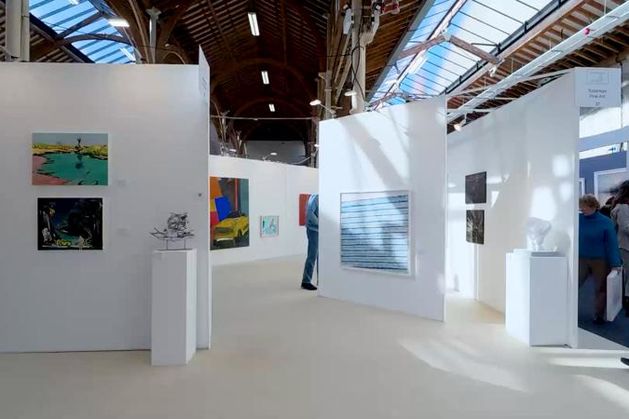
4 days ago'You have to step in and experience it' - artists on the rise of AI-generated art and the 'essential' gallery visit
Miriam Fitzgerald Juskova's exhibit combines paper quilling with mathematics, showcasing intricate art that engages viewers and emphasizes the value of handmade creations.
Media industry
fromNonprofit Quarterly | Civic News. Empowering Nonprofits. Advancing Justice.
5 days agoPolitics in an Attention Economy | Nonprofit Quarterly | Civic News. Empowering Nonprofits. Advancing Justice.
Candidates must be cultural figures to succeed in today's American politics, navigating an attention economy shaped by algorithms.
fromWashingtonian - The website that Washington lives by.
5 days agoTrump's Interference With DC Arts Is a Boon to Baltimore
The Baltimore Museum of Art landed her highly anticipated exhibition, 'Amy Sherald: American Sublime,' after the painter pulled her show from the National Portrait Gallery due to concerns over censorship. The exhibit has been a significant hit at the BMA: It was completely sold out by late February.
Washington DC
Left-wing politics
fromNonprofit Quarterly | Civic News. Empowering Nonprofits. Advancing Justice.
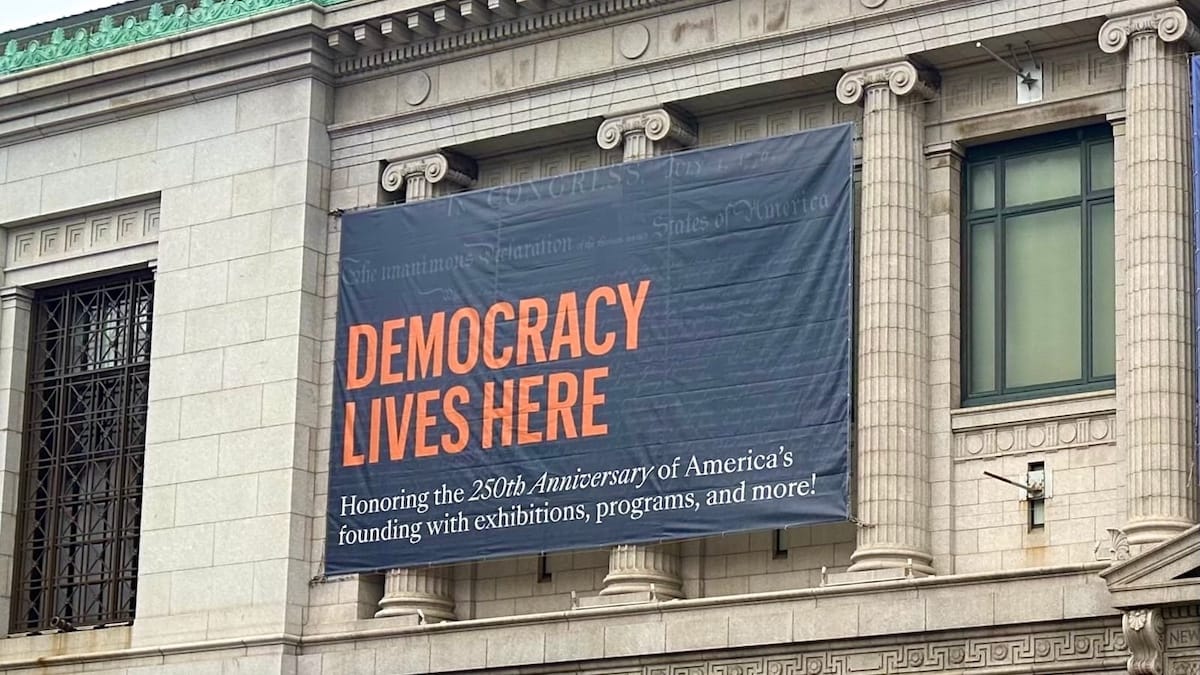
6 days agoHow to Undermine Authoritarian Control: On Empowering Parallel Institutions | Nonprofit Quarterly | Civic News. Empowering Nonprofits. Advancing Justice.
Civil society must demonstrate the necessity of democratic institutions and social services to protect them from dismantling efforts by ultra-elites.
#nonprofit
Fundraising
fromNonprofit Quarterly | Civic News. Empowering Nonprofits. Advancing Justice.
3 days agoUsing AI for Fundraising Still Requires Human Strategy | Nonprofit Quarterly | Civic News. Empowering Nonprofits. Advancing Justice.
AI should support strategy in nonprofit fundraising, not replace the essential human elements of trust and relationship building.
Non-profit organizations
fromNonprofit Quarterly | Civic News. Empowering Nonprofits. Advancing Justice.
3 days agoHow Dissolving Your Nonprofit Can Strengthen the Sector | Nonprofit Quarterly | Civic News. Empowering Nonprofits. Advancing Justice.
Nonprofit leaders must sometimes choose to dissolve organizations intentionally rather than forcing survival in a weakened state.
Design
fromdesignboom | architecture & design magazine
3 days agoreversible cultural pavilion activates public space in frankfurt 2026
Spain's pavilion for World Design Capital 2026 emphasizes reversible cultural infrastructure and sustainable design through innovative materials and construction methods.
Non-profit organizations
fromNonprofit Quarterly | Civic News. Empowering Nonprofits. Advancing Justice.
4 days agoAI in the Nonprofit Sector Is a Question of Governance, Not Just Technology | Nonprofit Quarterly | Civic News. Empowering Nonprofits. Advancing Justice.
Nonprofits face a critical choice in shaping AI governance or risk external control over its implementation and impact.
Design
fromdesignboom | architecture & design magazine
5 days agoartwork uses floating fabric corridor and bodily movement to visualize climate change
Ryo Yamada's Perception Corridor is an immersive installation in Edinburgh that explores perception and environmental awareness through a 40-meter fabric corridor.
Non-profit organizations
fromStreetsblog New York City
5 days ago'Game-Changer': Non-Profit Throws Financial Lifeline to Open Streets Program - Streetsblog New York City
The new funding model for open streets provides upfront financial support to volunteer organizations, improving efficiency and community engagement.
.png?trim=0,0,0,0&width=1200&height=800&crop=1200:800)
fromHarvard Business Review
1 week agoTreat Nonprofits as Strategic Partners, Not Just Philanthropic Recipients
Most for-profit companies still confine nonprofit relationships to corporate philanthropy. Donations flow through foundations, annual reports highlight community contributions, and nonprofit engagement is framed as evidence of corporate responsibility.
Non-profit organizations
fromOregon ArtsWatch * Arts & Culture News
3 weeks agoArts & Business Alliance of Eugene: Advocates for the arts * Oregon ArtsWatch
WolfBrown found that Eugene had an abundance of art; however, the town needed more support from the business sector. The results showed that "we punched above our weight for a community our size," said Kelly Johnson, executive director of the nonprofit Arts & Business Alliance of Eugene, which the city created in 2008 to link the arts and business communities.
Portland
Non-profit organizations
fromNonprofit Quarterly | Civic News. Empowering Nonprofits. Advancing Justice.
2 weeks agoDisability Inclusion Isn't "Special Needs"-It's Smart Philanthropy | Nonprofit Quarterly | Civic News. Empowering Nonprofits. Advancing Justice.
Cuts to special education oversight threaten funding and services for millions of children with disabilities, risking progress in disability inclusion.
fromOregon ArtsWatch * Arts & Culture News
3 weeks agoPortland facing $1 billion-plus in arts, culture and entertainment infrastructure requests * Oregon ArtsWatch
We can find a middle ground. PSU could reduce the size of its planned theater to between 800 and 1,200 seats, clearing the way for the Keller to be remodeled as a mid-size 1,500 to 1,800 seat venue.
Portland
Arts
fromThe Art Newspaper - International art news and events
5 days agoMexico's art community calls for greater transparency in management of treasured collection
The Gelman Collection's future is uncertain, prompting calls for transparency from cultural professionals regarding its management and adherence to heritage laws.
#arts-funding
Portland
fromOregon ArtsWatch * Arts & Culture News
3 weeks ago'Love Letter' No. 2: Oregon Community Foundation gives $7 million for Oregon arts * Oregon ArtsWatch
The Oregon Community Foundation awarded $7,048,300 in grants to 277 arts and cultural organizations across all 36 Oregon counties as part of a $51.8 million three-year funding initiative.
Non-profit organizations
fromOregon ArtsWatch * Arts & Culture News
3 weeks agoPortland art organizations ask for unspent Arts Tax funds, more public support * Oregon ArtsWatch
Over 50 Portland arts organizations request $8.5 million in unspent Art Tax funds to stabilize the sector after a 44% funding reduction and federal cuts.
Portland
fromOregon ArtsWatch * Arts & Culture News
3 weeks ago'Love Letter' No. 2: Oregon Community Foundation gives $7 million for Oregon arts * Oregon ArtsWatch
The Oregon Community Foundation awarded $7,048,300 in grants to 277 arts and cultural organizations across all 36 Oregon counties as part of a $51.8 million three-year funding initiative.
Non-profit organizations
fromOregon ArtsWatch * Arts & Culture News
3 weeks agoPortland art organizations ask for unspent Arts Tax funds, more public support * Oregon ArtsWatch
Over 50 Portland arts organizations request $8.5 million in unspent Art Tax funds to stabilize the sector after a 44% funding reduction and federal cuts.
fromThe Art Newspaper - International art news and events
1 week agoComment | Museums must be the leaders in a moral revolution
Bregman claims, 'Today the whole of Europe risks turning into one big Venice, a beautiful open-air museum. A great destination for Chinese and American tourists. A place to admire what was once the centre of the world.' This statement encapsulates the concern that Europe is losing its cultural significance.
Arts
Portland
fromOregon ArtsWatch * Arts & Culture News
1 month agoDowntown Portland arts centers need $336 million in deferred maintenance * Oregon ArtsWatch
Portland's three downtown performing arts buildings require approximately $336 million in deferred maintenance over the next 10-30 years, with Metro transferring management to the city.
Environment
fromThe Art Newspaper - International art news and events
2 months agoComment | In worrying times for politics and the environment, art can still provide hope
Olafur Eliasson confronts the climate emergency through art and action, urging practical engagement over passive hope while remaining committed to idealism.
Portland
fromOregon ArtsWatch * Arts & Culture News
1 month agoReforms coming for controversial Portland Arts Tax? * Oregon ArtsWatch
Portland City Council President Jamie Dunphy plans to reform the Arts Tax after revelations that the city has accumulated approximately $9 million in unspent reserves while small arts organizations face funding cuts.
Portland
fromOregon ArtsWatch * Arts & Culture News
1 month agoOregon Arts Commission names new leaders * Oregon ArtsWatch
Jason Holland and Jenny Stadler elected to lead Oregon Arts Commission, bringing arts administration and accessibility expertise to state board during period of reduced federal arts funding.
fromOregon ArtsWatch * Arts & Culture News
2 months agoWelcome news: U.S. House approves future NEA, NEH funding * Oregon ArtsWatch
The U.S. House of Representatives passed a Fiscal Year 2026 ominibus appropriations bill by a vote of 397 to 28 on Jan. 8 that included $207 million each for the NEA and NEH. It includes funding for multiple other federal agencies, too, including the Department of Commerce, the Department of Justice, and the Department of the Interior. The bill now moves to the U.S. Senate, which is expected to take up the legislation during the week of Jan. 12-16.
US politics
fromOregon ArtsWatch * Arts & Culture News
3 weeks agoArts advocates praise 2026 Oregon Legislature but face challenges before 2027 session * Oregon ArtsWatch
These cuts threaten shovel-ready projects, major employers, and rural and urban communities across the state. And they come at a time when [Oregon] arts funding is already among the lowest in the nation. Legislators had been considering cutting nearly $900,000 in arts and culture funding when the session started on Feb. 2.
Arts
Fundraising
fromOregon ArtsWatch * Arts & Culture News
2 months agoArtsWatch Insider: We met the end-of-year fund-raising goal! * Oregon ArtsWatch
The community donated $27,827 during the Nov. 1–Dec. 31, 2025 campaign, surpassing the $25,000 goal and demonstrating strong support for local arts journalism.
fromNonprofit Quarterly | Civic News. Empowering Nonprofits. Advancing Justice.
2 months agoNonprofits Devise Creative Solutions to Address Federal Funding Cuts | Nonprofit Quarterly | Civic News. Empowering Nonprofits. Advancing Justice.
Over the years, I've worked as a consultant on numerous federal grant projects from the US Department of Agriculture and elsewhere that focused on local economic development and were granted to nonprofits serving their communities. But since the 2024 elections, the focus of my work-and that of the small New Mexico-based consulting firm, Prospera Partners, that I lead-has shifted to help nonprofits develop strategies to sustain themselves despite federal cuts in funding and to programs that once supported their work.
Non-profit organizations
fromOregon ArtsWatch * Arts & Culture News
1 month agoArts and culture supporters urged to lobby for funding at 2026 Oregon Legislature * Oregon ArtsWatch
The day after Whitelaw testified, the state economist said that Oregon now has about $300 million more to spend than previously expected. The new revenue forecast does not mean the budget is in the black, however. There are new demands for the available dollars, including $600 million in upgrades to the Moda Center to retain the Portland Trail Blazers, a recently announced $50 million shortfall in Portland Public School funding,
Arts
fromSan Jose Spotlight
1 month agoUrbanowski: The arts need more investment from the state - San Jose Spotlight
Artists make California vibrant, innovative and culturally rich, yet our state ranks 35th nationally in per capita arts funding. When the state budget allocates just 53 cents per person to the arts, it's clear how little we're investing in the creative workers who shape the state's identity and economy. California's artists are delivering extraordinary value with minimal investment. Imagine what a stronger commitment to the arts could do for our communities, our economy and our future.
Arts
fromHyperallergic
2 months agoArt for Dignity
As if demolishing the East Wing, gutting arts agencies, and slapping his name and face on several federal buildings weren't enough, the US president now wants to do away with a DC building known as the "Sistine Chapel of New Deal art." This week, we reported on a burgeoning campaign to save the Wilbur J. Cohen Federal Building, which houses murals by Ben Shahn, Philip Guston, Seymour Fogel, and other major American artists. We will continue to follow this story.
Arts

Arts
fromThe Art Newspaper - International art news and events
2 months agoWhy is the French government spending millions on art no one sees?
French government scrutiny of the CNAP reflects a political shift debating public cultural spending, acquisitions policy, and state support for contemporary art.
fromHyperallergic
1 month agoThe Commissioner We Need
It's impossible to imagine New York City without art, or contemporary art without New York City. This is where you come to see the best of the best, or to take part in making it. This country's international standing is down in the gutter, thanks to Trump, but this city is still a living, rolling dream. Right now, we're waiting to see who's going to be Mayor Mamdani's pick for cultural affairs commissioner. It's an important role that determines where the city's budget priorities will lie and who'll get a seat at the table. Gonzalo Casals, who served as culture commissioner under Mayor de Blasio, and Mauricio Delfín, who co-directs the Culture & Arts Policy Institute with Casals, have some urgent thoughts on the matter. It's a must-read not just for Zohran (send him a link if you're on texting terms), but for everyone who cares about art in this city.
Arts
[ Load more ]