#aylin-tezel
#aylin-tezel
[ follow ]
#contemporary-art #art #illustration #political-art #photography #identity #installation-art #sculpture #painting


Music production
fromwww.theguardian.com
3 weeks agoIranians embrace anthem by AI singer created by UK-based, Iran-born artist
An AI-generated singer named Nava created by Iranian-origin artist Farbod Mehr has become the voice of Iranian resistance, with her songs gaining 13 million Instagram views amid protests and military conflict.
fromwww.theguardian.com
3 weeks agoA new wave of defiance: the Turkish film-makers standing up to autocracy
Ilker Catak's Yellow Letters and Emin Alper's Salvation, two politically outspoken films that examine Turkish president Recep Tayyip Erdogan's autocratic regime, shared the top prizes at this year's Berlinale: the Golden Bear for Catak and Silver for Alper. These striking works share a lot more. Both titles are co-produced by Liman, an indie film company from Turkey.
Film
Arts
fromIrish Independent
4 days ago'You have to step in and experience it' - artists on the rise of AI-generated art and the 'essential' gallery visit
Miriam Fitzgerald Juskova's exhibit combines paper quilling with mathematics, showcasing intricate art that engages viewers and emphasizes the value of handmade creations.
Design
fromdesignboom | architecture & design magazine
2 weeks agowith a pavilion crafted through collective embroidery, izaskun chinchilla tests urban utopia
Utopian thinking emerges through small-scale collective craft practices like embroidery rather than ambitious masterplans, creating tangible contributions to better communities.
Writing
fromKqed
1 month agoA Glimpse of Iran Through the Eyes of its Artists and Journalists
Iranian-American artists and writers explore diaspora, identity, and historical trauma through poetry, fiction, and documentary, examining the lasting impact of political upheaval and U.S. intervention on Iranian communities.
Arts
fromThe Art Newspaper - International art news and events
1 week agoWho owns the seas? Shahzia Sikander's new animation on world trade beamed onto M+ museum facade
Shahzia Sikander's work explores territorial sovereignty and authority through animation, linking historical events like the Opium Wars to contemporary issues.
Renovation
fromdesignboom | architecture & design magazine
1 month agoalsar-atelier repurposes raw construction materials as reversible enclosed exhibition booth
Alsar-Atelier's pallet installation demonstrates how temporary exhibition architecture can achieve ornamental quality while remaining fully disassemblable and reusable, reducing waste through reversible design.
Berlin music
fromKALTBLUT Magazine
1 month agoUnveil the Pulse of Memory: Filipp Jenikae's Visual Symphony at Galerie Sara Lily Perez - %
Filipp Jenikäe's exhibition explores how urban spectacle, collective memory, and personal experience merge through dynamic paintings of cities, crowds, and athletic figures.
Arts
from48 hills
2 weeks agoFor Iranian artist Shiva Ahmadi, 'ornamentation becomes a form of resistance' - 48 hills
Shiva Ahmadi's interdisciplinary art practice channels personal experiences of displacement, political upheaval, and immigrant anxiety into visually seductive works that address brutal global issues affecting marginalized communities.
Arts
fromHyperallergic
2 weeks agoZarina Brought the World to New York
Zarina's artistic practice, rooted in South Asian history and shaped by migration and displacement, established her as a foundational figure for South Asian American artists while maintaining independence from nationalist frameworks.
fromHyperallergic
2 weeks agoWhen a Palestinian Artist Asserts Her Own Humanity
There is a scene in "Morgenkreis | Morning Circle" (2025), a 16-mm film by Berlin-based Palestinian artist Basma al-Sharif, that unfolds at the threshold of a daycare center. A young boy clings to his father, his fists locked into the fabric of his coat, his arms wrapped tightly around him. The father gently tries to pry himself free while a daycare worker crouches nearby, attempting to distract the child and coax him inside. It is an ordinary moment, one that anyone who has ever been a child - or cared for one - recognizes instantly, as well as the gut-wrenching feeling it provokes.
Arts
fromThe Art Newspaper - International art news and events
1 month agoTurkey's heritage power grab: new law threatens Istanbul's opposition-run cultural sites
A new law empowering Turkey's central government to seize historic properties from local authorities is raising fears that heritage sites are becoming the latest front in a wider campaign against opposition-led municipalities. Among the sites at stake are cultural venues run by the Istanbul municipality, whose mayor Ekrem İmamoğlu launched an ambitious conservation drive and expanded cultural programming before he was jailed last year after announcing plans to run for president.
Miscellaneous
fromArtnet News
2 weeks agoVeronica Fernandez Builds an Uneasy Monument to Childhood Imagination
There's this push and pull between feeling unease and discomfort, the nature of the spaces, and why they feel uncomfortable. But there is also tenderness and warmth, people adapting to these spaces and finding ways to make them comfortable.
Arts
Arts
fromThe Art Newspaper - International art news and events
3 weeks agoArt communities and heritage in Iran, moderate recovery in the art market, Sydney Biennale-podcast
Cultural communities in Iran and Lebanon respond to Middle East conflict while heritage sites face damage, alongside global art market recovery and contemporary art installations addressing regional tragedies.
fromHyperallergic
3 weeks agoEmbracing Friction in the Art World
On Franklin Street in Brooklyn's Greenpoint neighborhood, one non-commercial gallery fosters 'a small, stubbornly human space for friction.' Friction—the ubiquitous buzzword that captures the simultaneous delight and discomfort of doing things the slow way—is at the heart of artists Pap Souleye Fall and Char Jeré's current show at Subtitled NYC. It also reflects the overall spirit of this little exhibition space and of a burgeoning movement to reject our culture of optimization in favor of a bumpier, more intimate, less alienating experience.
Arts
fromwww.thehistoryblog.com
1 month agoMosaics displayed under floor of new Istanbul museum
An intact mosaic from Late Antiquity discovered during restoration of a historic municipal building in Istanbul is now a floor again, covered in plexiglass and welcoming visitors to the new Zeytinburnu Mosaic Museum. Visitors of Turkey's newest museum move across elevated glass walkways, suspended right above the original floors themselves. The mosaics are not relocated fragments mounted on walls, but surfaces that remain exactly where they were first laid, preserving their context for all to see.
History
fromYanko Design - Modern Industrial Design News
1 month agoColor One Square Each Week and Watch 80 Years Fill with Your Story - Yanko Design
Weeks in a relationship or life blur together. You remember birthdays and trips, but the quiet in‑between time mostly stays invisible. We track deadlines and appointments on digital calendars, but rarely see the whole arc of a shared life at once, the years you've already moved through and the ones still sitting empty ahead. There's something oddly powerful about seeing every week you have, and have had, laid out in one place on a wall.
Gadgets
Arts
fromThe Art Newspaper - International art news and events
3 weeks agoThe rise of the destination art fair, from Aspen to Mallorca
Art dealers are shifting toward smaller, intimate fairs in desirable destinations over traditional flagship events, driven by luxury travel growth and desire for experiential engagement.
Arts
fromKALTBLUT Magazine
3 weeks agoLeaving the System Behind: Ines Trafford's Approach to Artist Advocacy - KALTBLUT Magazine
Inès Trafford developed a practice focused on long-term preservation and stewardship of artists' careers by addressing gaps in traditional gallery systems' ability to maintain artistic legacies.

fromThe Art Newspaper - International art news and events
2 months agoNew London exhibition uses architecture to explore the experiences of Iran's American diaspora
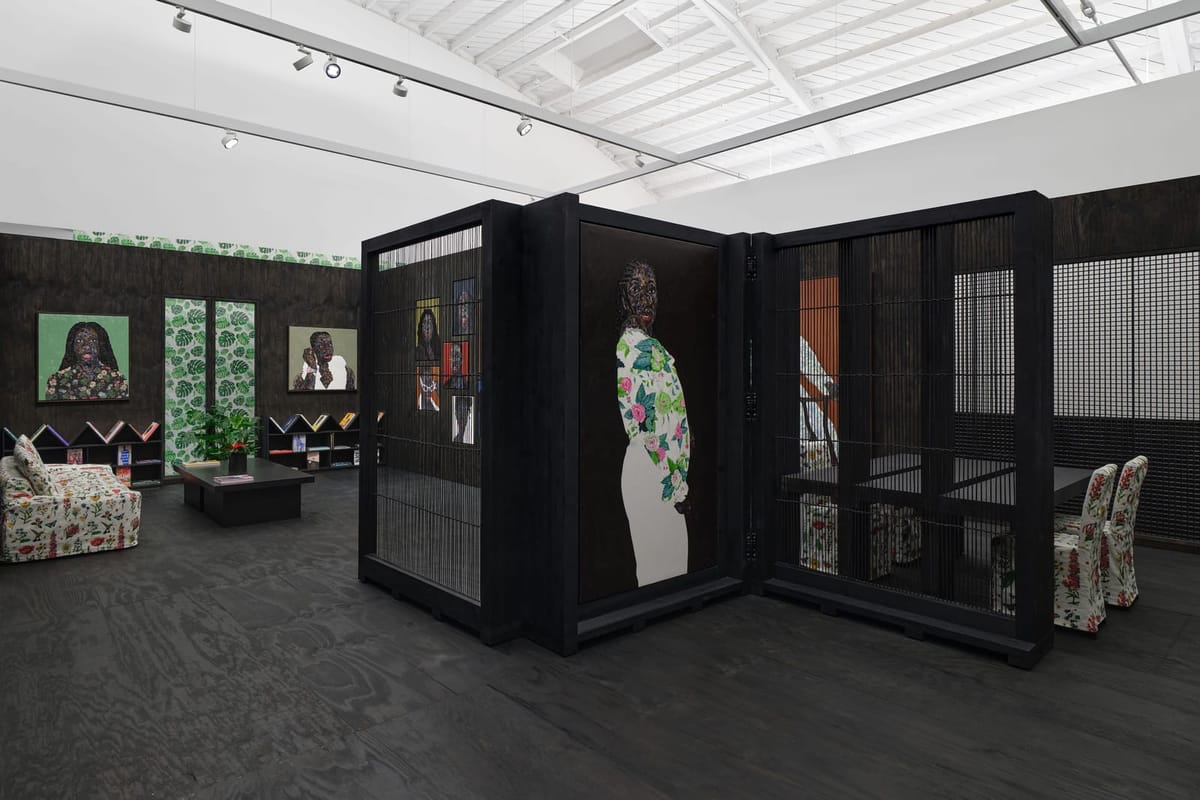
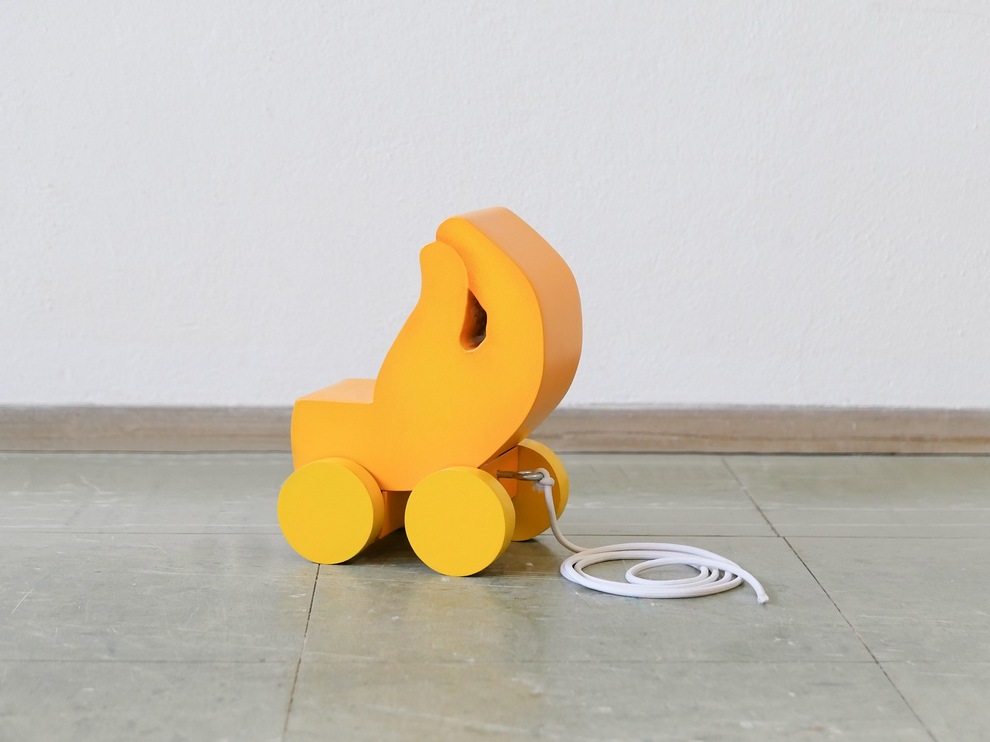
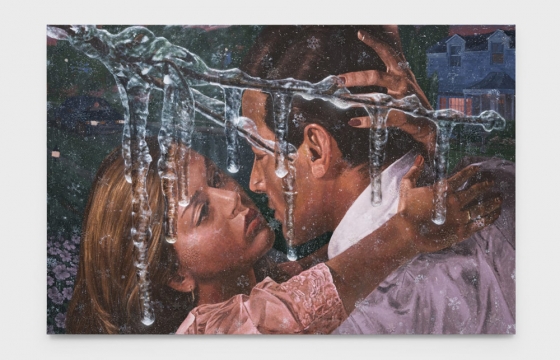
In Arash Nassiri's new moving-image commission, an insect puppet drags itself across an empty marble floor, cast in eerie blue evening light. The scene is diffused through an enormous frosted-glass cubicle, refracting and distorting the images. That sense of distortion pervades the Tehran-born, Berlin-based Nassiri's first institutional solo exhibition, A Bug's Life, which opened last weekend at London's Chisenhale Gallery-and comprises a film set within a sculptural installation.
Film
Photography
fromItsnicethat
2 months ago"Professionalism kills creativity": Thalia Gochez on the importance of having fun as a photographer
Thalía Gochez uses intimate portraiture to uplift BIPOC narratives, stress perseverance, challenge professionalism's limits on creativity, and bridge subject, photographer, and viewer.
Arts
fromHyperallergic
1 month agoInterdimensional Timelines: Hartford Art School Exhibits Liz Nielsen's Photograms
Liz Nielsen creates light paintings by systematically emitting colored light onto light-sensitive film in darkness, blending art and science to produce abstract and representational imagery.
Photography
fromItsnicethat
2 months ago"Professionalism kills creativity": Thalia Gochez on the importance of having fun as a photographer
Intimate portraiture uplifts BIPOC narratives and bridges subject, photographer, and viewer through perseverance, creative risk, and rejecting rigid professionalism.
Design
fromItsnicethat
2 months agoThere is no right way, just the creative way: Alex Tan on Mouthwash Studio's multi-media projects
Creative strategy requires flexible, multidisciplinary approaches that combine visual identity, editorial products, and physical spaces to enable imaginative teams and impactful work.

Arts
fromMiami Herald
1 month agoCarlos Alfonzo and Belkis Ayon Unite in 'Odyssey' at Freedom Tower
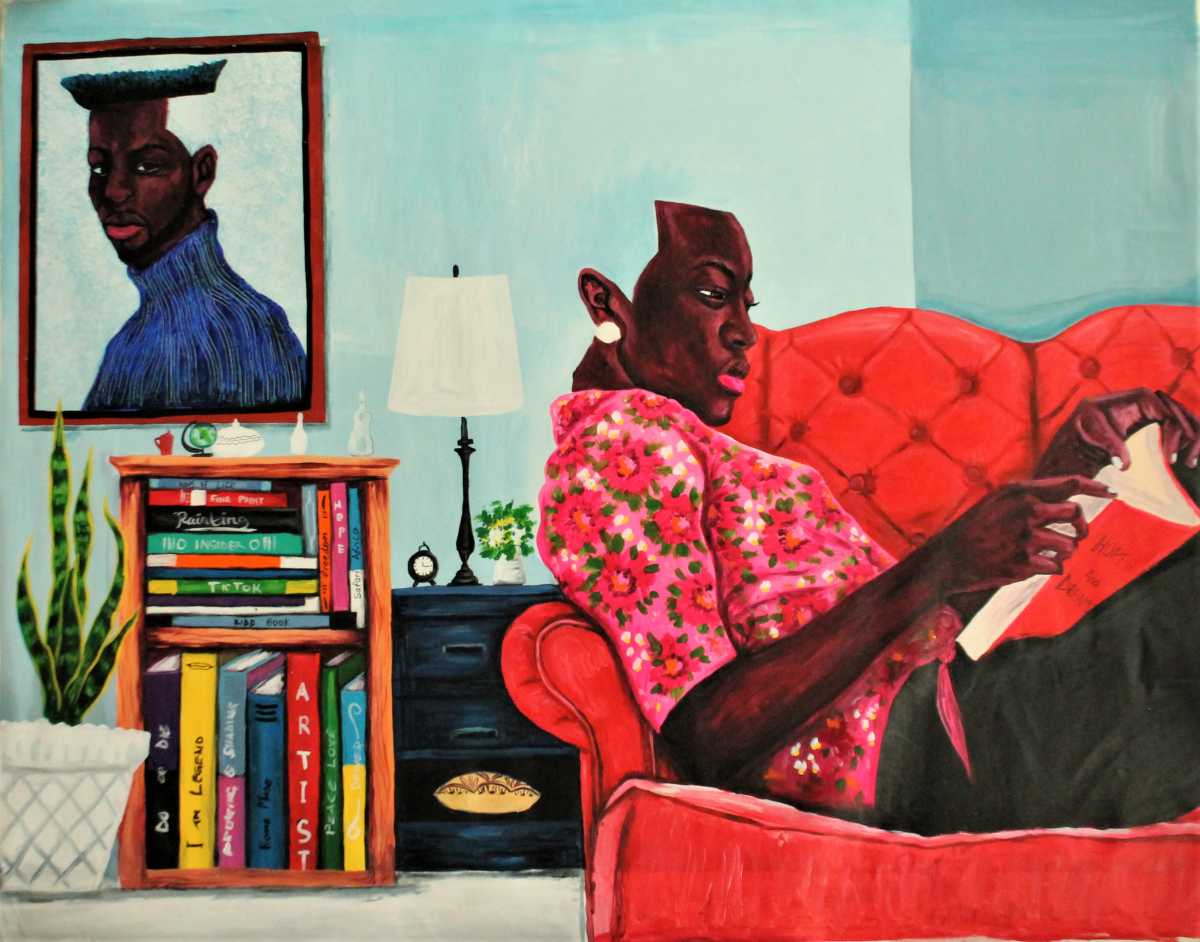
Two significant 20th-century Cuban artists, Carlos Alfonzo and Belkis Ayón, are exhibited together for the first time at Freedom Tower, revealing shared interests in mythology and artistic influences despite their stylistic differences.
fromdesignboom | architecture & design magazine
1 month agomilla novo renders her desert textile installation within a snowy alpine context
The project, titled 'From Desert Sand to Alpine Snow,' centers on twenty hand-knotted fiber panels first commissioned for the Tanweer Festival in 2025. Installed in a 10 by 10 meter steel frame rising six meters high, the work stood directly on desert ground, its saturated colors vibrating against the pale sand and rocky escarpments of Mleiha.
Arts
Arts
fromArtnet News
1 month agoIn Riyadh, Sweeping Survey Traces the Origins of the Saudi Art Movement
A comprehensive exhibition at the National Museum of Saudi Arabia documents the evolution of Saudi art from the 1960s-1980s, showcasing pioneering works and establishing the foundations of the modern Saudi art movement.
Arts
fromArtnet News
1 month agoRiyadh Is Becoming a Public Art Destination. The Leader Behind It Offers Her Insights | Artnet News
Tuwaiq Sculpture Symposium has evolved into an inclusive international platform that permanently integrates over 120 sculptors' works throughout Riyadh's urban landscape as part of Vision 2030's cultural transformation.
fromwww.theguardian.com
1 month agoFabric of memory: the artists turning secondhand clothes into monumental art
These clothes are not secondhand, says Yin Xiuzhen, the Beijing-born artist known for creating large-scale installations out of found garments and keepsakes. I prefer to call them used' or worn', she explains. Clothes that have been worn' carry a lot of information like a second skin, imprinted with social meaning. In some of Yin's works the clothes are her own, telling a personal story. In others, the clothes are collected, stained and stretched across towering steel frames resembling planes, trains or organic forms.
Arts
fromBerlin Art Link
1 month agoAn Interview with Monia Ben Hamouda | Berlin Art Link
Monia Ben Hamouda's work weaves calligraphy, material transformation and ancestral memory into sculptures and installations that oscillate between language and form. In conversation, we traced the conceptual and sensory threads of her practice, unfolding through key works that reflect on heritage, embodiment and translation. Using materials such as iron, stone and pigment, her installations become sites where history is not only referenced but physically felt.
Arts
fromArtnet News
1 month agoThe Dutch Gallery Bringing Eyes to Armenia's Contemporary Art Scene
While Armenia has long been recognized for its rich and storied historical art and culture, the country's contemporary art scene is emerging as one to watch on a global scale. Armenian artists stand out for their ability to synthesize their own cultural heritage with avant-garde approaches to contemporary artmaking, bridging tradition with self-expression. Paralleling broader rising critical and market interest and investment in regions outside of the West, ARAR Gallery of Utrecht, the Netherlands, is at the forefront of Armenian art's mounting international presence.
Arts
fromBerlin Art Link
2 months agoInterview with Rae-Yen Song | Berlin Art Link
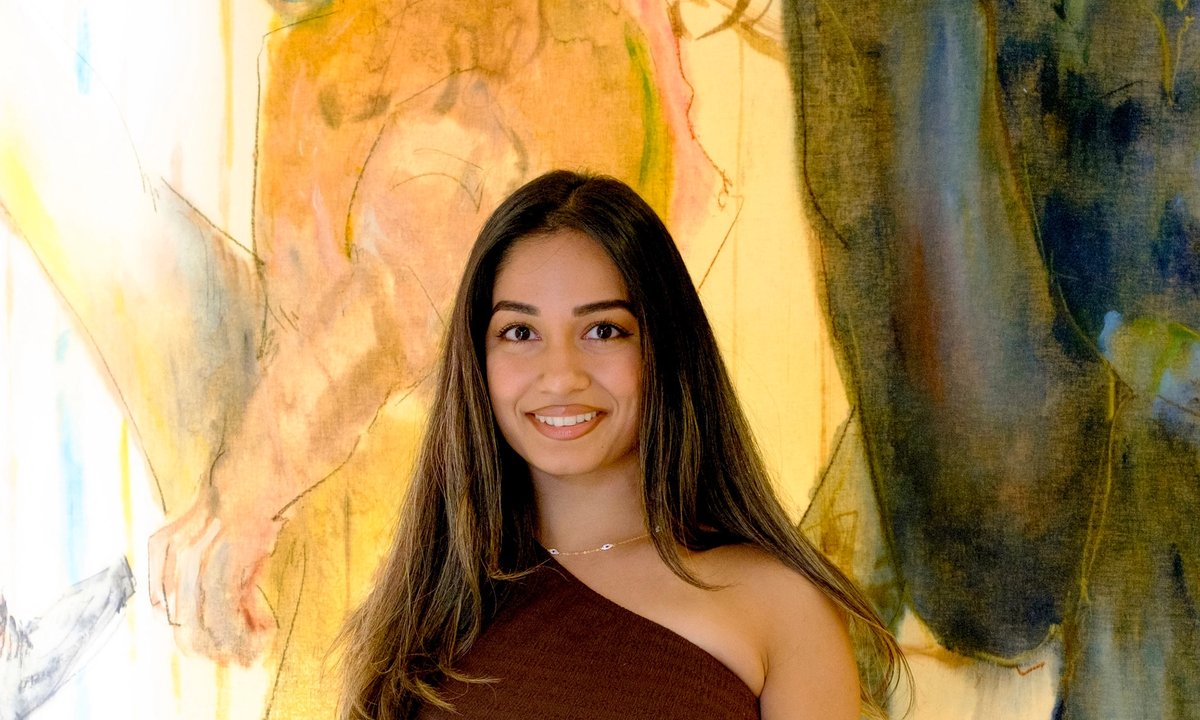
For their most ambitious exhibition to date, Rae-Yen Song 宋瑞渊 transforms Tramway's vast exhibition hall into a submerged cosmology shaped by ancestral mythologies, Daoism, collective ritual and multispecies kinship. In this phantasmagoric aqueous environment-the most recent project in Song's ongoing world-building practice-life is understood as cyclical, relational and continuously in flux. Titled '*~TUA~* 大眼 *~MAK~*', the exhibition comprises newly commissioned works in sculpture, textiles, printmaking, sound, light and moving image,
Arts
Arts
fromThe Art Newspaper - International art news and events
2 months agoTarek Atoui-known for his innovative musical performances-will take over Tate Modern's Turbine Hall this autumn
Tarek Atoui will transform Tate Modern's Turbine Hall with a Hyundai Commission featuring multisensory, research-driven sound environments and experimental electro-instrumental performances.
fromColossal
2 months agoRegina Silveira Pieces Together an Evolving Narrative of Latin America
Regina Silveira has spent the better part of three decades considering the relationship between media and meaning, particularly as it relates to Latin America. First presented in 1997, "To Be Continued..." features 100 black-and-white reproductions of photos, newspaper clippings, propaganda, advertisements, and more. Silveira nests each image into an oversized puzzle piece, which cuts off faces and scenes to leave fragments of pop culture icons, flora and fauna, and even the occasional mugshot spliced next to one another.
Arts
fromHyperallergic
1 month agoQueer Arab Artists on Their Own Terms
"The show is about giving the pen back to the writer, giving the paintbrush back to the artist, during this time of genocide," the Ridikkuluz told Hyperallergic in an interview at the gallery. "And when there's been so much censorship, these are artists that might not have been able to do this anywhere else."
Arts
[ Load more ]