#carless-households
#carless-households
[ follow ]
#new-york-city #urban-planning #sustainability #transportation #transportation-policy #public-transportation
fromIndependent
1 day agoCarpool, slow down and do your laundry at night - Government to warn public on energy use if Iran crisis persists
Officials from the Department of Energy are meeting daily as the Iran war drives up the price of fuel. A public awareness campaign is urging citizens to 'save energy, save your pocket.'
UK politics
fromwww.amny.com
2 days agoAOC urges Hochul to scrap plan that would widen Cross Bronx Expressway | amNewYork
Ocasio-Cortez emphasized the need to protect the community, stating, 'On behalf of my constituents and nearly 64,000 local residents impacted by this project, I am requesting that your administration reject any plans to expand the Cross Bronx Expressway beyond its current footprint.'
NYC politics
fromStreetsblog California
3 days agoBuffy Wicks Pushes Legislation to Cut Red Tape for Transformational Bicycle and Pedestrian Projects - Streetsblog California
"Too often, California makes the best transportation projects fight the hardest for approval. AB 1976 starts to change that by modernizing outdated rules, limiting unreasonable process hurdles, and creating a clearer path to safer, more people-oriented streets," said Marc T. Vukcevich, Director of State Policy, Streets For All.
California
fromBoston.com
4 days agoWhat to know about the MBTA's free and discounted commuter rail plans for summer
"As we prepare for events like the World Cup, MA250, Tall Ships, and for millions of visitors to experience all that Massachusetts has to offer, we want to thank our regular riders that rely on us 365 days a year for your patience and continuing to choose transit during this unprecedented summer."
Boston
fromFast Company
5 days agoHow Paris redesigned itself to be a city of bikes-not cars
"This project is symbolic of what we've done over the last 12 years, reshaping the streets and the city," Christophe Najovski, the city's deputy mayor in charge of green spaces, stated during the opening ceremony.
Paris food
Relationships
fromBusiness Insider
2 weeks agoWe went from being a 2-car household to just sharing one. So far, the benefits have outweighed the inconvenience.
Sharing a car after totaling one vehicle improved communication, reduced expenses, and preserved independence while helping save money for major life goals.
fromArchDaily
4 days agoThe Illusion of Lightness: Designing Civic Voids for Public Life
The original intent of pilotis was to create a sense of lightness that would allow circulation and light to flow beneath a structure, but contemporary requirements render thin columns insufficient for large-scale civic projects.
Renovation
fromStreetsblog New York City
2 days agoFriday's Headlines: Margin For Terror Edition - Streetsblog New York City
The first three months of 2026 were among the three safest first-three-month periods since records started being kept at the dawn of the Automobile Age, with only 42 fatalities from car crashes in New York City.
Alternative transportation

Boston
fromStreetsblog
3 weeks agoCity of Cambridge Reports Better Bike Lanes Led to Surge In Bike Traffic - Streetsblog San Francisco
Cambridge's investment in high-comfort bikeways has driven a 250 percent increase in citywide bicycle traffic since 2004, with even greater growth in areas with upgraded infrastructure.
Alternative transportation
fromSustainable Bus
4 days agoNew certified Ultrafabrics collections target durability and compliance in passenger transport interiors - Sustainable Bus
Ultrafabrics launches new certified collections for passenger transport, combining durability, aesthetics, and sustainability in high-performance upholstery fabrics.
#urban-planning

Brooklyn
fromNew York Post
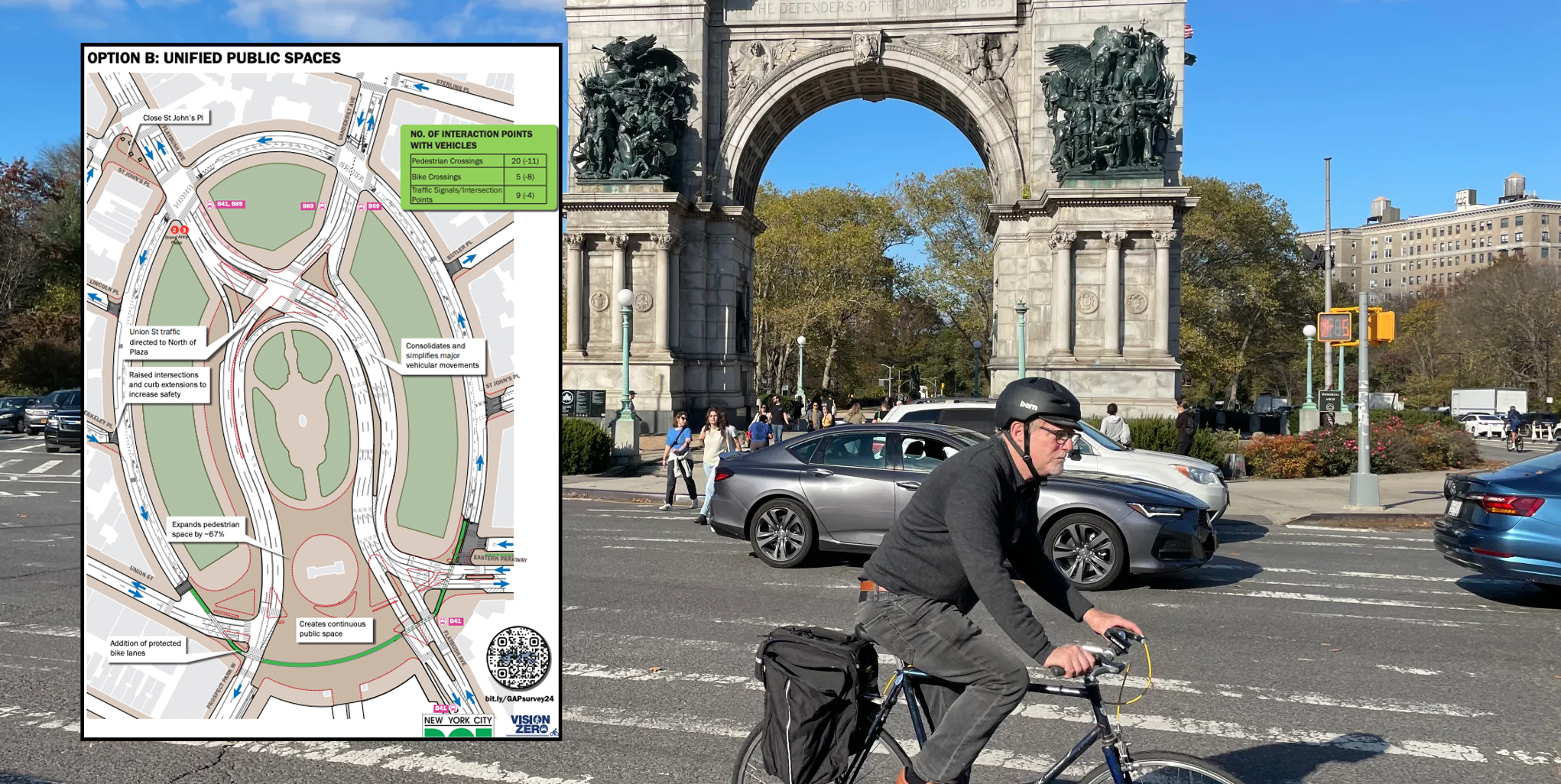
3 weeks agoExclusive | Car-hating NYC pol wants 5 million square feet of new 'pedestrian space' - critics fear 'more gridlock'
A Brooklyn councilman proposes creating 1 million square feet of annual pedestrian space over five years, requiring the city to prioritize car-free zones near transit hubs without estimating parking and lane losses.
Alternative transportation
fromLondon Business News | Londonlovesbusiness.com
5 days agoE-bikes and mental health: Why outdoor riding reduces anxiety fast - London Business News | Londonlovesbusiness.com
Riding e-bikes enhances mental health by providing exercise, fresh air, and a stress-free commuting alternative.
fromForbes
1 month agoTransit-Oriented Housing On Track For Continued Growth
Once a nice-to-have niche urban design concept, TOD has become an essential part of many urban neighborhoods. It has helped address the shortage of housing by enabling the development of higher-density residential communities near transit stations. It has helped revitalize countless once-deteriorating or static urban enclaves near transit hubs by activating sidewalks near the developments. And it has spurred walking and transit use, enabling residents of TODs to reduce or eliminate automobile dependency.
Real estate
Alternative transportation
fromSustainable Bus
6 days agoZero-emission buses move beyond cities: intercity transition in Sustainable Bus' session at BUS2BUS - Sustainable Bus
Electrification of intercity and coach segments in Europe is advancing, requiring new infrastructure and operational strategies for zero-emission mobility.
NYC politics
fromStreetsblog
2 weeks agoThursday's Headlines: Backed into a Corner Edition - Streetsblog New York City
Governor Hochul promotes auto insurance deregulation backed by Uber and major insurers spending millions on lobbying, while facing increased scrutiny from press corps over corporate influence.
fromStreetsblog
1 week agoWhy This State Is Fighting To Get Its First 'Active Transportation Plan' - Streetsblog USA
Missouri is the most populous state without a statewide active transportation plan, despite nearly one-third of its residents lacking a driver's license and alarming fatality rates among vulnerable road users.
Alternative transportation
fromStreetsblog
3 weeks agoThursday's Headlines: Another Outlet Heard From Edition - Streetsblog New York City
Two decades ago, the state created a fund with tens of millions of dollars that was supposed to be in a lockbox to crack down on insurance fraud - but instead was funneled simply to law enforcement agencies' general operating funds. As a result only a tiny portion was spent actually fighting fraud.
NYC politics
Alternative transportation
fromNature
2 weeks agoAffordable mobility for all: why we need smaller, cheaper electric vehicles
Low-speed electric vehicles offer affordable, practical decarbonization for underserved populations but remain overlooked due to bias toward expensive, high-tech solutions and nationalist trade policies.
Alternative transportation
fromStreetsblog
2 weeks agoWhy Some Congresspeople Want to Go Big on Greenways - Streetsblog USA
The Parks to People Act proposes $300 million in federal funding for walking and biking infrastructure as essential transportation tools, despite political opposition dismissing them as distractions.
fromStreetsblog
2 weeks agoWhat If The Rising Costs of Car Dependency Were As Visible As Gas Prices? - Streetsblog USA
Because so many American cities are so heavily car-dependent, most U.S. residents have no choice but to pony up the cash and drive anyway. Indeed, even when gas prices climbed above $5 a gallon in 2022, driving did not plummet; a Time magazine analysis at the time found that 'the only time that fuel consumption really took a hit in the last 23 years was during the pandemic.'
Alternative transportation
fromFast Company
2 months agoWhat is Complete Streets design and why should we all be using it?
In the 1950s, the Air Force designed cockpits for the average pilot by measuring thousands of pilots and calculating the average for ten key physical dimensions-height, arm length, torso size, etc. They assumed most pilots would be close to average in most dimensions. When researchers actually checked, they found that out of 4,063 pilots, exactly zero were average on all ten dimensions.
Cars
fromStreetsblog
2 months agoWhat the 'Abundance' Agenda Could Mean For Equitable Transportation - Streetsblog USA
The new "abundance" agenda can deliver a wealth of equitable transportation options - but only if its proponents recognize how our glut of highways has contributed to the "scarcity" they say they hope to tackle, advocates are saying.Inspired by the Ezra Klein and Derek Thompson's book of the same name, "abundance" became a political buzzword across America in 2025, inspiring a universe of think-pieces and justification for a raft of deregulatory policy proposals.
US politics
fromArchDaily
3 weeks agoMobility Justice: Urban Equity in an Era of Innovation
Every city contains two transportation systems. One is the visible network of roads, rail lines, sidewalks, and bus routes mapped in planning documents. The other is the invisible geography of privilege and exclusion embedded within it: the neighborhoods that received highways instead of parks, the communities whose bus routes were cut, the sidewalks that abruptly end at the edge of a district.
Alternative transportation
fromStreetsblog
2 months agoTalking Headways Podcast: A Week Without Driving - Streetsblog USA
It was a great experience to be able to invite people to join me. I think so much of my experience of riding a bike for my primary transportation around town. My colleagues see me as an outlier, as that would never work for them. That's just something that Nick's decided to do. He's rearranged his life. [I liked] having the opportunity to invite people to try it for a week and not just exclusively biking.
Alternative transportation
[ Load more ]