#early-deliveries
#early-deliveries
[ follow ]
#amazon #e-commerce #logistics #ecommerce #same-day-delivery #retail #automation #e-commerce-logistics #supply-chain
#amazon


European startups
fromSilicon Canals
8 hours agoQuick commerce has a $11.3B funding collapse and 40+ dead startups. Amazon is betting on it anyway. - Silicon Canals
Amazon launched a 30-minute delivery service in select U.S. locations, expanding its quick commerce offerings amid challenges in the retail landscape.
fromFast Company
1 day agoAI has come for Domino's pizza tracker, and we're not mad about it
The new tracker features a simplified progress bar that shows just four stages of pizza creation. The new design was rolled out to all platforms, and there's also new Lock Screen widgets for iOS that bring the pizza chain's most famous tech feature to the Liquid Glass age.
Marketing tech
fromArchitectural Digest
1 day agoI'm Done Sourcing So Much Online. Here's Why
The convenience of sourcing online is fraught with more pitfalls than most of us want to admit. Try finding adequate photos of a vintage piece's condition-close-ups of the fabric, video of damaged areas, any images of a piece's rear or underside!
UX design



fromEngadget
3 days agoDoorDash partners with Rivian spinoff Also for autonomous delivery vehicles
DoorDash's investment in Also aims to develop and accelerate the deployment of autonomous delivery at scale, focusing on areas not yet fully solved for, including intersections of roadways and bike lanes.
Toronto startup
fromAxios
2 weeks agoUSPS warning raises stakes for mail-order prescriptions, higher postage prices
The mail will stop if the agency can't meet its obligations. That includes critical deliveries like prescription drug packages. Postmaster General David Steiner warned lawmakers this week that USPS could run out of cash in less than 12 months without congressional action.
Media industry
fromThe Verge
2 weeks agoAmazon's new 'getitfast' delivery page lists items you can have in 1 hour
1-hour delivery is currently available to customers in hundreds of cities and towns across the U.S., including parts of major metropolitan areas like Los Angeles, Chicago, and Washington, D.C., and smaller cities such as Des Moines, Iowa; Boise, Idaho; and American Fork, Utah.
Chicago
#amazon-usps-contract-dispute
Washington DC
fromEntrepreneur
2 weeks agoAmazon Plans to Slash USPS Shipments by Two-Thirds. Here's What That Means for the Postal Service.
Amazon plans to reduce USPS package shipments by two-thirds by fall, threatening the financially struggling postal service that delivered over one billion Amazon packages last year.
Public health
fromEurasia Review
3 weeks agoDigital Transformation Of Food Retail Is Reshaping Food Access For Consumers
Digital retail transformation reshapes food access through online platforms and AI, creating both health promotion opportunities and risks of targeted unhealthy food marketing to vulnerable populations.
European startups
fromBusiness Matters
2 weeks agoJD.com launches Joybuy in UK with same-day delivery challenge to Amazon
JD.com launches Joybuy in the UK with same-day delivery by 11pm for orders placed before 11am, targeting 17 million consumers across major urban centers with free delivery on orders over £29.
fromThe Mercury News
2 weeks agoDoorDash robots headed for Fremont streets
The little red four-wheeled delivery vehicle is expected to operate near Fremont's Downtown and City Center, an area centrally located near a high density of restaurants, apartments and other businesses in the city. Manufactured by Sonic Manufacturing Technologies in Fremont, DoorDash Dot can travel up to 20 miles per hour. It has built-in cup holders and enough cargo space to fit an extra-large pizza and a case of water.
Toronto startup
Marketing tech
fromwww.emarketer.com
3 weeks agoamazon - Reports, Statistics & Marketing Trends
Fire TV integrates ads across screens using CTV reach and retail data, while AI emerges as a defining force in retail tech, with stablecoins moving into mainstream payments infrastructure and chatbots driving conversion rate increases.
#amazon-delivery

E-Commerce
fromEngadget
2 weeks agoAmazon launches one- and three-hour delivery options in the US
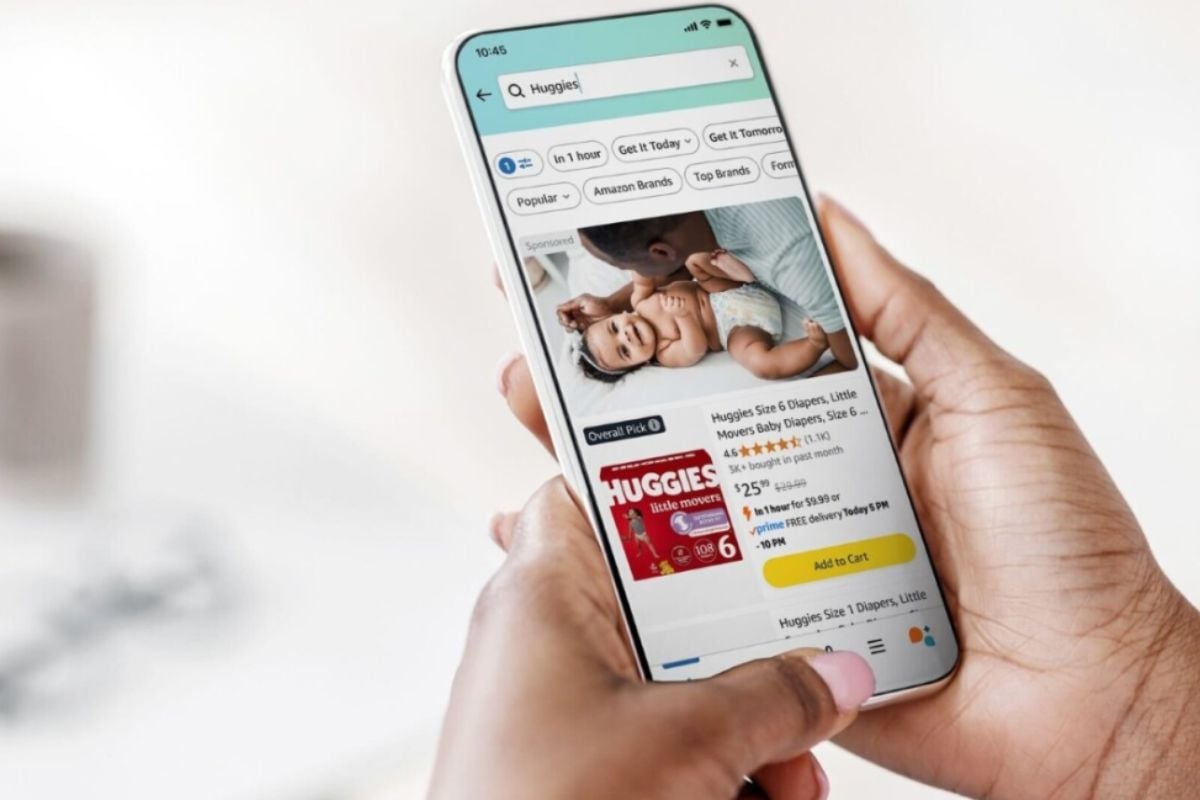
Amazon launched one-hour and three-hour delivery options across 2,000+ locations, covering 90,000 products including essentials and discretionary items, with costs ranging from $5-$20 depending on membership and speed.

Software development
fromInfoQ
1 month agoReducing Onboarding From 48 Hours to 4: Inside Amazon Key's Event-Driven Platform
A centralized, event-driven architecture on Amazon EventBridge replaced a monolithic, tightly coupled platform to enable millions of daily events, millisecond latency, and scalable consumer onboarding.


E-Commerce
fromBusiness Matters
3 weeks agoThe Hidden Costs of DIY Shipping: When to Switch to an Ecommerce Shipping Platform
DIY shipping becomes a business bottleneck as order volume grows, consuming excessive time and increasing errors while established shipping platforms automate processes and enable scalability.
E-Commerce
from24/7 Wall St.
3 weeks agoLook! Up In the Sky! It's Amazon's Flywheel in Action
Amazon's drone delivery service Prime Air exemplifies how the company's e-commerce, AWS cloud, and AI divisions create a self-reinforcing flywheel that generates data, optimizes operations, and drives competitive advantage.
Business
from24/7 Wall St.
2 months agoThe Warehouse Automation Seller Just Turned Profitable While the Retail Giant Builds Its Own
Investors face choosing Symbotic's newly profitable automation-as-a-service with volatile trading and insider selling or Amazon's scale-driven in-house robotics investment.
E-Commerce
fromTechCrunch
3 weeks agoAmazon expands a program that lets customers shop from other retailers' sites | TechCrunch
Amazon expands Shop Direct program to direct customers to third-party merchant websites through search results and AI assistant when products aren't available on Amazon's platform.
fromTechCrunch
1 month agoUber Eats launches AI assistant to help with grocery cart creation | TechCrunch
To use the new chatbot, users search for a grocery store in the Uber Eats app and tap the purple Cart Assistant icon on the store's page to begin shopping. Customers can enter a list or upload an image of one, and Cart Assistant will automatically add the necessary items to their basket. This includes photos of handwritten lists or screenshots of recipes and their ingredients. Users can then customize the basket by swapping items for preferred brands or adding more products from the store.
Artificial intelligence
fromEntrepreneur
4 weeks agoIs Amazon Automation a Profitable Passive Income Model?
Amazon automation isn't a magic button. It's a business model, and like any business model, outcomes vary based on execution. The short answer is yes, it can be profitable. The honest answer is that it depends entirely on how it's done and who is running it.
E-Commerce
fromComputerWeekly.com
1 month agoDelivery comms, intelligent fulfilment, and AI's growing influence | Computer Weekly
Nine in ten retailers globally are planning to raise their spending on artificial intelligence (AI) to optimise their e-commerce operations over the next 12 to 24 months, with online delivery execution a key area of focus. A total of 38% of European retailers identify speed, tracking and proactive communication around the delivery process as areas where AI can deliver the greatest impact.
E-Commerce
fromwww.independent.co.uk
1 month agoDoes free shipping actually exist? Marketing ploys experts want to warn you about
You're scrolling through an online retailer, like Amazon, Shein or eBay, and spot a shirt on sale for $40. You add it to your cart, but at checkout, a $10 shipping fee suddenly appears. Frustrated, you close the tab. But what if that same shirt was priced at $50 with free shipping? The likelihood that you would have bought it without a second thought is much higher.
E-Commerce
fromForbes
1 month agoFrom Click To Doorstep: Why Delivery Experience Is The Last Brand Impression
That's a problem. Without a doubt, a great website and top-level marketing will help generate new sales, but it's the delivery experience that warrants future ones. This is because today's consumer not only has options for where they'll buy but also a high set of expectations. What's more, they remember the way a product arrives at their doorstep more than how it was sold.
E-Commerce
fromThe Conversation
1 month agoDoes 'free' shipping really exist? An expert shares the marketing tricks you need to know
When a transaction involves a cost, we instinctively weigh the downside. But when something is entirely free, we experience a positive emotion and perceive the offer as more valuable than it is mathematically. Retailers no doubt realise that offering free delivery is one of the most effective ways to stop a consumer from abandoning a digital shopping cart.
E-Commerce
E-Commerce
fromBusiness Insider
1 month agoI've been selling on Amazon for a year. After storage fees bled me dry, I'm pivoting my e-comm strategy away from it.
Aged-inventory surcharges on Amazon can rapidly deplete a small business's cash, turning a $10,000 launch into near insolvency without mastering Amazon selling and inventory management.
fromSocial Media Explorer
2 months ago10 Last Mile Technology Trends Transforming Urban Logistics in 2025 - Social Media Explorer
Urban logistics is entering a new era where practical technology drives meaningful results. Today, more than 55% of people live in cities, and urbanization is expected to rise to 68% by 2050, placing intense pressure on delivery networks to keep up with growing demand. U.S. e-commerce is projected to reach $1.1 trillion in sales by 2026, heightening expectations for faster and more reliable last-mile service.
E-Commerce

fromEntrepreneur
1 month agoAmazon Prime Members Avoid 64 Store Trips Per Year
Remember grocery store runs? Amazon says those are going extinct. The company revealed that Prime members saved an average of 64 trips to physical stores last year by ordering basics online instead. That's a major shift. Groceries and household essentials now account for half of all fast deliveries to U.S. Prime members, compared to earlier years when fast delivery skewed toward purchases like electronics and clothing. Amazon has spent the past year integrating perishable groceries and prescription medications into its same-day delivery network.
E-Commerce
from24/7 Wall St.
2 months agoAmazon Quality Champion
The American Customer Satisfaction Survey rates hundreds of companies in dozens of categories. In its latest study, the Retail and Consumer Shipping Study 2026, Amazon.com Inc. ( NASDAQ: AMZN) topped the Online Retailer category. In all the studies, regardless of category, companies receive ratings of zero to 100. This latest study is based on 31,293 completed surveys. Customers were chosen at random and contacted via email between January and December 2025.
E-Commerce
[ Load more ]