#economic-studies
#economic-studies
[ follow ]
#inflation #interest-rates #us-dollar #monetary-policy #economic-growth #federal-reserve #labor-market #economy
UK politics
fromwww.theguardian.com
1 day agoTrussonomics still haunts parties' economic promises in run-up to UK local elections | Phillip Inman
Local and regional elections in the UK reveal extravagant spending promises from various parties, often funded by cuts or borrowing without clear economic consequences.
#ai
Artificial intelligence
fromFortune
3 days ago'Inflationary surge': Fed economists warn AI hype is overheating the economy whether or not the technology ever delivers | Fortune
AI optimism may hinder productivity and contribute to short-term inflation as households and businesses react to perceived future gains.



Retirement
fromLondon Business News | Londonlovesbusiness.com
2 days agoEvery time you borrow from a bank, you're paying more than you think - London Business News | Londonlovesbusiness.com
Opportunity cost in loans includes lost potential earnings from repayment dollars, not just the interest rate paid.
World news
fromLondon Business News | Londonlovesbusiness.com
4 days agoDollar extends pullback amid softer labour signals and easing risks - London Business News | Londonlovesbusiness.com
The dollar weakened due to softening monetary policy expectations and reduced demand as a safe-haven asset amid easing Middle East tensions.

fromFortune
4 days agoA Wall Street vet's Walmart recession indicator just hit its highest point since 2008-and he says the fear 'just keeps multiplying' | Fortune
'Walmart Worries' just keep multiplying. It's currently close to the highest level ever recorded which was during the Great Financial Crisis of 2008-09.
Business
London startup
fromLondon Business News | Londonlovesbusiness.com
5 days agoSME confidence edges up despite cautious economic outlook - London Business News | Londonlovesbusiness.com
SMEs in the UK and Ireland show renewed optimism despite economic uncertainty, with expectations for sales growth and workforce expansion.
World politics
fromLondon Business News | Londonlovesbusiness.com
6 days agoUS dollar stable after successive gains - London Business News | Londonlovesbusiness.com
Escalating Middle East tensions are influencing market sentiment, keeping the dollar stable and impacting US Treasury yields amid inflation concerns.
Europe news
fromLondon Business News | Londonlovesbusiness.com
6 days agoUK government stands aside as others globally cut fuel taxes - London Business News | Londonlovesbusiness.com
The UK government has not reduced fuel duty despite rising oil prices, unlike other countries that have implemented tax cuts to alleviate costs for consumers.
#us-dollar
US Elections
fromLondon Business News | Londonlovesbusiness.com
3 days agoUS dollar rose amid a rebound in geopolitical concerns - London Business News | Londonlovesbusiness.com
The US dollar strengthened due to geopolitical fears and better-than-expected economic data, while uncertainty keeps market volatility high.


US Elections
fromLondon Business News | Londonlovesbusiness.com
3 days agoUS dollar rose amid a rebound in geopolitical concerns - London Business News | Londonlovesbusiness.com
The US dollar strengthened due to geopolitical fears and better-than-expected economic data, while uncertainty keeps market volatility high.
fromLondon Business News | Londonlovesbusiness.com
2 weeks agoEconomist warns 'UK's disinflation story is set for another twist' - London Business News | Londonlovesbusiness.com
Sanjay Raja, the chief UK economist at Deutsche Bank, stated, 'The UK's disinflation story is set for another twist. The good news is that the CPI is expected to fall in the coming months. The bad news? Higher energy prices appear likely to significantly raise the CPI during the summer, creating yet another spike in the inflation trajectory.'
UK news
fromLondon Business News | Londonlovesbusiness.com
6 days agoGlobal markets react to geopolitical tensions and rising energy costs - London Business News | Londonlovesbusiness.com
U.S. financial markets experienced a volatile week, largely influenced by geopolitical developments in the Middle East and fluctuations in energy prices. Investor sentiment was driven primarily by external events rather than domestic fundamentals.
Business
fromLondon Business News | Londonlovesbusiness.com
2 weeks agoThe significant events in the global economy over the past week - London Business News | Londonlovesbusiness.com
Weak performance in several service sectors offset gains in retail and wholesale trade, reinforcing concerns about the pace of economic recovery. Japan relies heavily on oil imports from the Middle East, making it particularly sensitive to disruptions in the region.
UK news
Business
fromLondon Business News | Londonlovesbusiness.com
2 weeks agoWhere is the US Dollar Index heading amid rising bond yields? - London Business News | Londonlovesbusiness.com
The US Dollar Index strengthens due to Federal Reserve's hawkish stance, elevated Treasury yields, and geopolitical tensions, with limited rate cuts expected through 2027.
US Elections
fromenglish.elpais.com
3 weeks agoUS economy grew at half the expected rate in the final quarter of 2025 due to tariffs and government shutdown
U.S. GDP growth slowed to 2.1% annually in 2025, down from 2.8% in 2024, due to tariffs, government shutdown, and reduced exports and consumer spending.
UK politics
fromLondon Business News | Londonlovesbusiness.com
1 month agoThere is 'little sign that the government's economic plan is working' - London Business News | Londonlovesbusiness.com
The government's economic plan shows deteriorating growth forecasts and rising unemployment, with energy price surges threatening interest rates and fiscal targets despite marginal improvements in fiscal headroom.
Business
fromLondon Business News | Londonlovesbusiness.com
3 weeks agoGold prices between oil pressures and Fed expectations - London Business News | Londonlovesbusiness.com
Gold prices fell below $5,100 per ounce due to rising oil prices triggering inflation concerns that shifted expectations for higher U.S. interest rates, reducing gold's appeal relative to yield-bearing assets.
fromwww.aljazeera.com
1 month agoWhen money is scarce, every choice counts: Bank, cash, or credit?
I have not touched a paper note for months. I don't even have money to pay for a taxi. Now we walk a lot, for long distances. Palestinians in Gaza use the Israeli currency, the shekel, in their daily transactions, and depend on Israel to supply banks with new banknotes and coins.
World news
US news
fromLondon Business News | Londonlovesbusiness.com
1 month agoThe Significant Events in the Global Economy Explained - London Business News | Londonlovesbusiness.com
Supreme Court tariff reversal lifted investor sentiment and stocks, while Fed division on rates, rising inflation, and slowing GDP kept markets cautious.
UK politics
fromwww.theguardian.com
1 month agoTell us: how are your finances looking ahead of the Spring Forecast?
Chancellor Rachel Reeves will deliver the Spring Forecast to parliament next Tuesday, providing economic forecasts and the UK's financial position without major tax or spending announcements.
fromThe Drum
2 months agoWhat happens when our common currency becomes uncommon?
This is not new news, of course, but many in the industry seem to be finally waking up to the hard truth that data-driven media buying, as we know it today, is severely under threat and has to change. Cookies power everything we do, from humble frequency capping through to complex multi-touch attribution models, ad personalisation and audience segmentation. They underpin most of the gains we've made in performance advertising, as well as brand advertising, over the past decade.
Business
fromLondon Business News | Londonlovesbusiness.com
1 month agoThe significant events in the global economy over the past week - London Business News | Londonlovesbusiness.com
U.S. equity markets declined amid AI disruption concerns and trade uncertainty, while European markets gained strength with solid earnings and diversification appeal.
Education
fromLondon Business News | Londonlovesbusiness.com
1 month agoThe right way to learn investing: Practice before theory, systems before tactics - London Business News | Londonlovesbusiness.com
Practice investing through real decision-making before deep theory to build systems and muscle memory that perform under market stress.
fromFaithandfearinflushing
2 months agoTransactions in a Lifetime
The agate type that used to fill newspapers' TRANSACTIONS boxes and for all I know still do can change everything - about your team, about the players within, about the course of your expectations and satisfaction as fan. While the Hot Stove barely simmers, Kyle Tucker rumors notwithstanding, I'd like to take this opportunity revisit a few picas worth of Mets transactions through time.
Major League Baseball
fromFortune
1 month agoAI is everywhere except in the data, suggesting it will enhance labor in some sectors rather than replace workers in all sectors, top economist says | Fortune
In a note on Saturday, he recalled economist Robert Solow's quip from the 1980s as PCs were transforming the economy: "You can see the computer age everywhere but in the productivity statistics." The same thing can be said today about AI, Slok wrote, noting that data on employment, productivity and inflation are still not showing signs of the new technology.
Artificial intelligence
fromLondon Business News | Londonlovesbusiness.com
2 months agoA look at the significant events in the global economy over the past week - London Business News | Londonlovesbusiness.com
Markets were closed on Monday for Martin Luther King Jr. Day, compressing the week's activity into four sessions. Early in the week, stocks fell sharply after renewed concerns about a potential global trade conflict. Investor sentiment weakened following comments from President Donald Trump about imposing tariffs on certain European nations in connection with negotiations over Greenland. However, midweek optimism returned when the president signalled a softer stance and postponed the planned tariffs.
US news
World news
fromFortune
1 month agoWe studied 70 countries' economic data for the last 60 years and something big about market crashes changed 25 years ago | Fortune
Global business cycles have become less tied to geographic distance since 2000, showing increased synchronization across distant economies due to communications and interdependent supply chains.
fromAxios
1 month agoThe Goldilocks economy, if you don't look too close
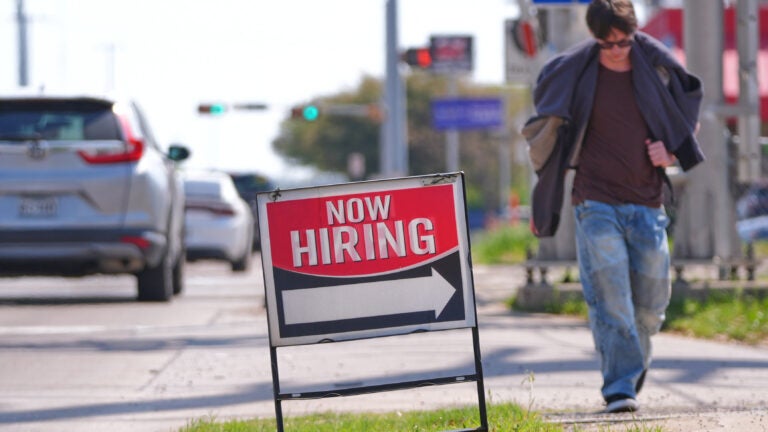
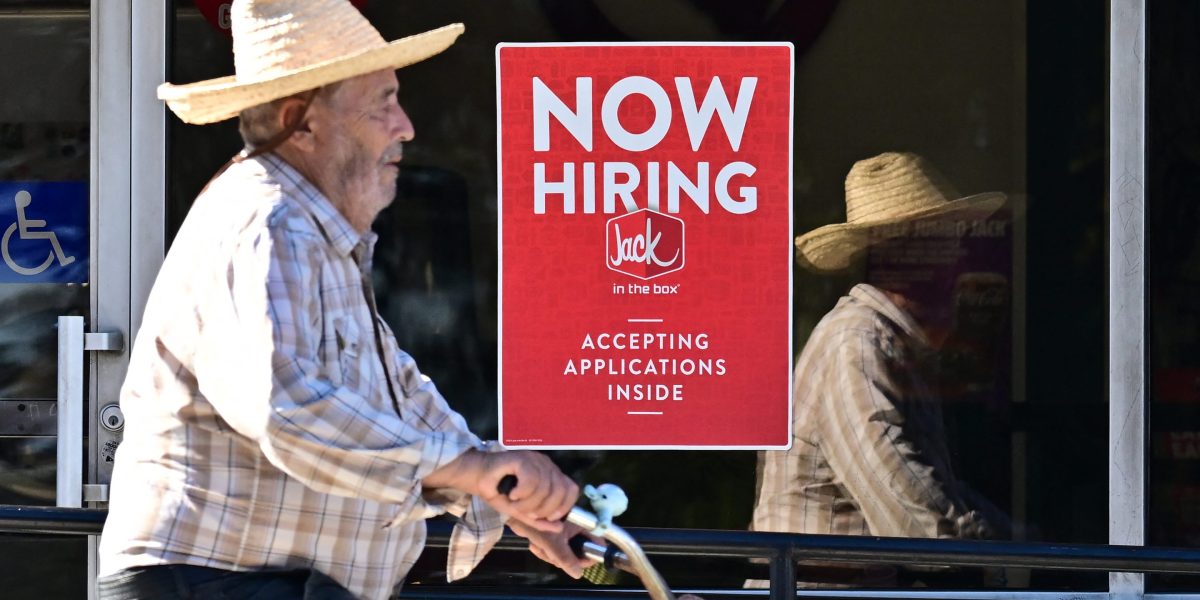
Employers added a healthy 130,000 jobs in January, the Labor Department said this week, as the unemployment rate edged down to 4.3%. The caveat? That announcement came with revisions that showed job creation flatlined over the last year, with only 15,000 jobs being added per month on average. Service sectors like finance and professional services that normally power the creation of high-paying office positions have instead been shedding jobs, perhaps reflecting employers' anticipation of AI-related cost savings.
US news
Business
fromLondon Business News | Londonlovesbusiness.com
1 month agoA look at the significant events in the global economy over the past week - London Business News | Londonlovesbusiness.com
U.S. markets rotated away from large-cap technology toward smaller and value stocks amid cooling labor-market signals, mixed economic activity, and falling bond yields.
fromLondon Business News | Londonlovesbusiness.com
2 months agoDollar struggle and monetary policy shape the next phase - London Business News | Londonlovesbusiness.com
The resilience of gold above $4,800 per ounce at this stage reflects a delicate and complex balance between traditional supporting factors and emerging pressures-one that cannot be superficially interpreted or reduced to the movement of the dollar alone. It is true that the U.S. dollar's retreat from its recent peaks, after failing to sustain its recovery momentum from a four-year low, provided gold with a short-term breather and attracted some buyers.
Business
[ Load more ]