Mindfulness
fromPsychology Today
1 day agoHow to Embrace Being "More" Spiritual
Awareness of the transcendent reveals depth and meaning in life, fostering spiritual growth and a sense of oneness with the world.
Rumi argues that to love is to enter the unknown: to love is to empty the self of all self-knowledge entirely. He believes that emptiness is a paradoxical state of infinite fullness, allowing for the purest form of love and union with the divine.
But we are all as an unclean thing, and all our righteousness are as filthy rags; and we all do fade as a leaf; and our iniquities, like the wind, have taken us away. It was bracing language for an 8-year-old. Not only was I unclean, but even my best attempt at goodness was filthy.
Beauty, it turns out, is capable of launching not just an armada of ships, but a cascade of the same feel-good chemicals you get from being in love, eating chocolate, exercising, and having orgasms- dopamine, endorphins, serotonin, oxytocin. It also lowers stress, blood pressure, and heart rate.
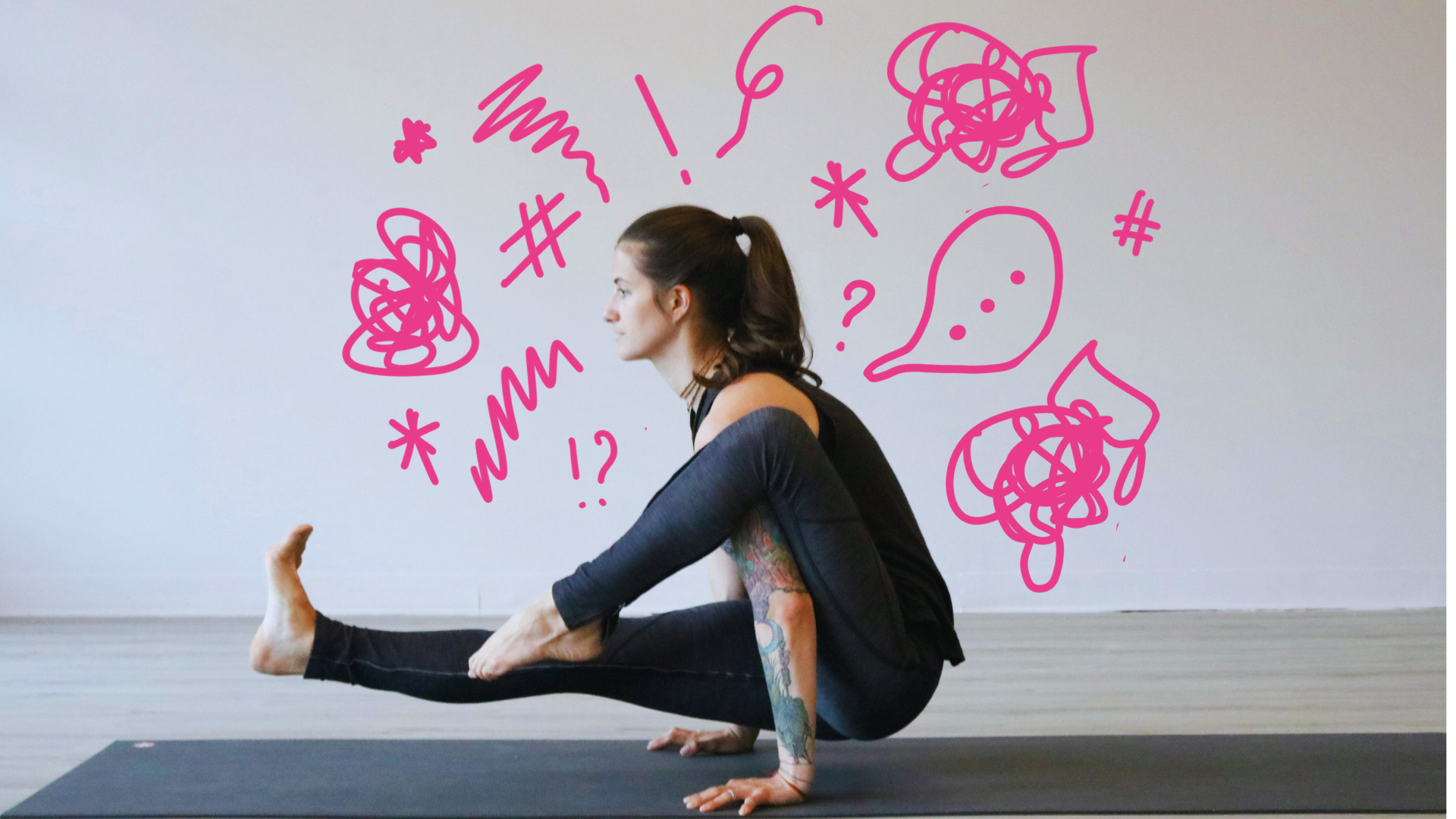
At the heart of yoga philosophy is the belief that stillness is not simply the absence of movement, but a profound engagement with our inner landscape. Practices such as asana (postures), pranayama (breath control), and meditation serve as gateways to this stillness, allowing us to cultivate awareness amidst chaos. Through these disciplines, we learn to quiet the mind's incessant chatter and tune into our true essence.
I didn't have words for it back then, but the feeling was clear: if I stood out, something was wrong with me. And if something was wrong with me, I wasn't good enough. I remember standing there, already tense, afraid that the other kids would think I looked stupid. Afraid they wouldn't want to play with me. Afraid that being different, even in something small, would mean I didn't belong.
Come join us for the clash (more like a love-fest) of two beloved San Jose staple nights! Satori and Atomic have been putting on memorable dance parties in San Jose full of new and classic Goth, Darkwave, New Wave, Electro, Indie and Industrial for decades. For one night only, we unite to play all the bangers until you just can't dance anymore!
If there was only one interior design style setting the tone in 2026, it would be Japandi. Apartment Therapy's State of Home Design survey identified Japandi style as one of the year's top design aesthetics, according to insights from 140 designers - and it's easy to see why. As more people strive to create spaces that feel calming, intentional, and grounded in nature, Japandi's blend of Japanese restraint and Scandinavian warmth feels especially timely.
Kintsugi 金継ぎ is known as the Japanese art of putting broken things back together, like broken pottery, using materials mixed with powdered gold and other elements. Instead of hiding damage, this technique celebrates the restoration of an object once viewed as broken, flawed, or imperfect. This same process can be seen as a metaphor for addiction recovery. Even for people with addiction who willingly choose recovery, there's an element of being remade that can't be ignored. Addicts often go through a period of denial.
Moving house is one of the rare occasions in life when we are brought face to face with the reality of all our belongings - right down to the contents of the bottom kitchen drawer. My partner and I talked about making a sea change for years. We wanted to leave life in Sydney behind for a simpler, lighter existence a little further up the coast. Now it was finally time to leap.
We live in an era saturated with information. In a matter of minutes, we can find answers to both simple questions ("What's a good birthday gift for a 9-year-old boy?") and complex ones ("What's the optimal diet for a 40-year-old woman trying to build muscle?"). While some decisions are in fact deeply nuanced, most of the struggles that undermine our well-being are not caused by a lack of knowledge.
Popular definitions of yoga often include terms such as balance, harmony, health, and peace. While these qualities are certainly desirable, and must be created before one can enter the state of fixity, or yoga, they are not included in the definition Patanjali offers us in his Yoga Sutras, the classic second-century B.C. exposition generally accepted as the bible of yoga.
One of Japan's most recognizable cultural practices - the Japanese tea ceremony, known as chanoyu, or chadō - is being reshaped by tourism, wellness culture and social media. Matcha, the Japanese powdered green tea that is used during the ceremony, has entered the global marketplace. Influencers post highly curated tearoom photos, wellness brands market matcha as a "superfood," and cafés worldwide present whisked green tea as a symbol of mindful living.
The word umwelt comes from biology, coined by ethologists studying animals in their natural habitats. It refers to the world as an organism can perceive it, based entirely on its sensory equipment. A bat's umwelt is built from echo. A dog's from scent. A tick's world is dominated by a single chemical cue that tells it when to drop from a branch onto a passing mammal.
Cicero, the Roman Stoic, once wrote to his friend Varro, pending a visit to his home: "If you have a garden in your library, we shall have all we want." This same desire for good books and natural beauty is at the heart of Byung-Chul Han's In Praise of the Earth, in which he reflects on gardening as a form of philosophical meditation.
In Rinrigaku, Watsuji argues that ethics is the study of what it means for us to be human. How we think about the nature of human existence, he says, dictates the ways in which we understand our ethical values. Hence, he criticises Western philosophical conceptions of the modern subject, arguing that the Western rendering of subjectivity is both problematic and foreign
The Bud­dhis­ti­cal­ly inflect­ed " ichi-go ichi‑e" is just one in the vast library of yoji­juku­go, high­ly con­densed apho­ris­tic expres­sions writ­ten with just four char­ac­ters. (Oth­er coun­tries with Chi­nese-influ­enced lan­guages have their ver­sions, includ­ing sajaseon­geo in Korea and chéngyǔ in Chi­na itself.) It descends, as the sto­ry goes, from a slight­ly longer say­ing favored by the six­teenth-cen­tu­ry tea mas­ter Sen no Rikyū, " ichi-go ni ichi-do " (一期に一度).
When Michael Pollan traveled to a cave in New Mexico to try to understand consciousness, he learned what good meditation is really made of. "The recipe was simpler (and much less appetizing) than I would have imagined," he writes: " To transcend the self, force yourself to be alone with it long enough to get so bored and exhausted that you are happy to let it go. "
"When I let go of what I am, I become what I might be." ~Lao Tzu For many years, I was deeply involved in spiritual communities-satsangs, meditation centers, ashrams, and groups focused on positivity, service, and personal growth. These places gave me comfort, community, and a sense of purpose. But they also shaped something inside me that I didn't fully recognize until much later: I had built my self-worth around being a "good person."