Mindfulness
fromPsychology Today
18 hours agoHow to Embrace Being "More" Spiritual
Awareness of the transcendent reveals depth and meaning in life, fostering spiritual growth and a sense of oneness with the world.
Rumi argues that to love is to enter the unknown: to love is to empty the self of all self-knowledge entirely. He believes that emptiness is a paradoxical state of infinite fullness, allowing for the purest form of love and union with the divine.
But we are all as an unclean thing, and all our righteousness are as filthy rags; and we all do fade as a leaf; and our iniquities, like the wind, have taken us away. It was bracing language for an 8-year-old. Not only was I unclean, but even my best attempt at goodness was filthy.
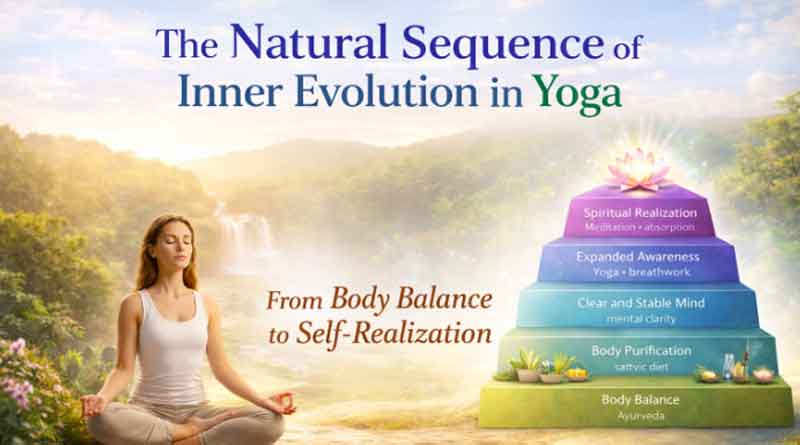
At the heart of yoga philosophy is the belief that stillness is not simply the absence of movement, but a profound engagement with our inner landscape. Practices such as asana (postures), pranayama (breath control), and meditation serve as gateways to this stillness, allowing us to cultivate awareness amidst chaos. Through these disciplines, we learn to quiet the mind's incessant chatter and tune into our true essence.
Happiness today is narrowly defined by some positive psychologists as a joyous state of mind or well-being. The happiness sciences see it as something you can calculate and quantify. They developed a Happiness Index and the World Happiness Report. These basically measure happiness as satisfaction, with criteria like gross domestic product per capita (money) and life expectancy (health) as some of the factors considered.
Come join us for the clash (more like a love-fest) of two beloved San Jose staple nights! Satori and Atomic have been putting on memorable dance parties in San Jose full of new and classic Goth, Darkwave, New Wave, Electro, Indie and Industrial for decades. For one night only, we unite to play all the bangers until you just can't dance anymore!
We live in an era saturated with information. In a matter of minutes, we can find answers to both simple questions ("What's a good birthday gift for a 9-year-old boy?") and complex ones ("What's the optimal diet for a 40-year-old woman trying to build muscle?"). While some decisions are in fact deeply nuanced, most of the struggles that undermine our well-being are not caused by a lack of knowledge.
Moving house is one of the rare occasions in life when we are brought face to face with the reality of all our belongings - right down to the contents of the bottom kitchen drawer. My partner and I talked about making a sea change for years. We wanted to leave life in Sydney behind for a simpler, lighter existence a little further up the coast. Now it was finally time to leap.
Popular definitions of yoga often include terms such as balance, harmony, health, and peace. While these qualities are certainly desirable, and must be created before one can enter the state of fixity, or yoga, they are not included in the definition Patanjali offers us in his Yoga Sutras, the classic second-century B.C. exposition generally accepted as the bible of yoga.
Some years ago, I was working at my desk and realized that I had misplaced a bill that was due. While I anxiously searched for it, my then 4-year-old daughter came into the room and asked for my attention. I said that I was busy looking for something important and to come back later. In a few minutes she returned and asked quietly, "Have you found yourself yet, Mommy?" I was humbled by her question.
One of Japan's most recognizable cultural practices - the Japanese tea ceremony, known as chanoyu, or chadō - is being reshaped by tourism, wellness culture and social media. Matcha, the Japanese powdered green tea that is used during the ceremony, has entered the global marketplace. Influencers post highly curated tearoom photos, wellness brands market matcha as a "superfood," and cafés worldwide present whisked green tea as a symbol of mindful living.
In Rinrigaku, Watsuji argues that ethics is the study of what it means for us to be human. How we think about the nature of human existence, he says, dictates the ways in which we understand our ethical values. Hence, he criticises Western philosophical conceptions of the modern subject, arguing that the Western rendering of subjectivity is both problematic and foreign
The Bud­dhis­ti­cal­ly inflect­ed " ichi-go ichi‑e" is just one in the vast library of yoji­juku­go, high­ly con­densed apho­ris­tic expres­sions writ­ten with just four char­ac­ters. (Oth­er coun­tries with Chi­nese-influ­enced lan­guages have their ver­sions, includ­ing sajaseon­geo in Korea and chéngyǔ in Chi­na itself.) It descends, as the sto­ry goes, from a slight­ly longer say­ing favored by the six­teenth-cen­tu­ry tea mas­ter Sen no Rikyū, " ichi-go ni ichi-do " (一期に一度).
The word umwelt comes from biology, coined by ethologists studying animals in their natural habitats. It refers to the world as an organism can perceive it, based entirely on its sensory equipment. A bat's umwelt is built from echo. A dog's from scent. A tick's world is dominated by a single chemical cue that tells it when to drop from a branch onto a passing mammal.
As our attention spans and cognitive abilities are increasingly damaged by digital overuse and AI-mediated shortcuts, the ability to focus deeply and learn something in depth is quickly becoming a critical skill. Never have we had such broad access to information. And never have so many people felt unable to concentrate long enough to truly master anything. Learning is everywhere, yet depth feels elusive.
Host Michael Taft is interviewed by Pranab Sachidanandan about Michael's Stack Model for deconstructing sensory experience, his "adapter kit" for accessing nondual Vajrayana methods without years of preliminaries, why mantra and visualization are legitimate samadhi tools, how depth of practice maps across the sense gates, a chronic pain patient on a morphine pump who found relief through meditation, the humanities as qualia training, why the "Buddha industrial complex" leaves out people who don't fit a single tradition, and the power of building sangha outside it.
Let's be honest: people place a little too much pressure on mornings. You've heard the advice. "Develop a morning routine!" "Set intentions!" "The quality of your entire day hinges upon what you do immediately after waking up!" It's not that this is bad advice. It's just a little perfectionist-y. And chances are, your real life mornings don't feel as picturesque as Cinderella waking up and having a family of bluebirds bathe and dress her.