#essay-collections
#essay-collections
[ follow ]
#literature #poetry #art #literary-influence #reading-habits #book-recommendations #cultural-history #aging


fromwww.theguardian.com
1 week agoDaunting, inspiring, comforting, terrifying: the writers who can make silence as eloquent as words
A vision lay before him: Fleet Street blanketed with snow, silent, empty, pure white, and, at the end of it, the huge and majestic form of Saint Paul's Cathedral. It was a spellbinding moment: the great thoroughfare temporarily devoid of carts and carriages, the cathedral looming blurrily out of the still-falling snowflakes a real-life snow globe.
London
fromwww.theguardian.com
1 day agoSarah Hall: Everyone wangs on about Anna Karenina I've never been able to finish it'
My earliest independent reading memory is The Story of Ferdinand by Leaf and Lawson. I loved that bull! My favourite book growing up Big books gave me the whirlies so it took a while for them to start landing.
Books
History
fromMedievalists.net
3 weeks agoNew Medieval Books: Widow City - Medievalists.net
Late medieval Italian widows mourned their spouses and navigated their lives through religious or secular paths, evolving from allegorical subjects to prominent authors who reshaped public discourse on widowed identity.
Books
fromenglish.elpais.com
4 days agoFrankenstein, Jane Eyre and Snow White with a gender-based perspective: The Madwoman in the Attic' and the beginning of feminist literary criticism
The new edition of 'La loca del desvan' revives feminist literary criticism, highlighting the relevance of women's voices in literature today.
Arts
fromwww.npr.org
1 month agoMundane, magic, maybe both a new book explores 'The Writer's Room'
Writer's rooms and homes serve as cultural spaces that inspire visitors seeking connection to literary legacies, though the experience varies between magical and disappointing depending on accessibility and personal connection.
Music
fromwww.npr.org
1 month agoWhy music has become such a big part of the romance novel reading experience
Romance novel readers increasingly use pop music playlists to enhance their reading experiences, creating a community that bridges book fandom and music fandom, exemplified by Charli XCX's Wuthering Heights album.
Books
fromThe New Yorker
2 weeks agoBriefly Noted Book Reviews
Two literary works explore complex themes through innovative narrative techniques: Morrison's essays examine challenging craft elements in Toni Morrison's writing, while Nganang's memoir uses the scale as a metaphor connecting personal experience to colonial history.
fromPoynter
3 weeks agoWhat are your favorite nonfiction books by journalists? - Poynter
"Race Against Time: A Reporter Reopens the Unsolved Murder Cases of the Civil Rights Era" quickly became one of my favorite nonfiction books written by a journalist. I appreciated how he showed the grueling, day-to-day work local journalism requires, and how many layers of people fought him in revealing the despicable work of the Ku Klux Klan.
Books
fromThe Atlantic
2 months agoA Romance That Actually Takes Sex Seriously
When I first heard of Heated Rivalry, I didn't think much about it. The words Canadian ice-hockey TV series slid into my brain and slipped right back out. But a week later, approximately everyone I'd ever met wanted to talk about it. People kept telling me that it was fun, sweet, and addicting. Most of all, they emphasized that it was really smutty. Every recommendation seemed to come with a warning to not watch with my parents.
Television
fromblog.apaonline.org
2 months agoHow to Handle the Death of the Essay
If you don't know it, Ecclesiastes is a collection of Old Testament verses in which the eponymous title character discourses on the apparent meaninglessness of pleasure, accomplishment, wealth, politics, and life itself in the face of the infinitude of the universe and the absolute perfection of God. It is the source of many of our most cliched phrases, such as there is a time for everything and there is nothing new under the sun.
Philosophy
fromAeon
2 months agoHow a playful literary hoax illuminates Classical queerness | Aeon Essays
Carved on the walls surrounding her sarcophagus were more than 150 ancient Greek poems in which Bilitis recounted her life, from her childhood in Pamphylia in present-day Turkey to her adventures on the islands of Lesbos and Cyprus, where she would eventually come to rest. Heim diligently copied down this treasure trove of poems, which had not seen the light of day for more than two millennia.
Philosophy
fromThe New Yorker
1 month agoBriefly Noted Book Reviews
Dilara, the protagonist of this début novel, is consumed by the absence of a stable home in her life. She and her family flee Turkey, where she is from, after a failed coup in 2016. When they end up in Italy, something inexplicable happens: Dilara's bathroom transforms into a cell in an infamous prison on the outskirts of Istanbul.
Books

Books
fromThe Atlantic
1 month agoWhen Did Literature Get Less Dirty?
Philip Roth's Zuckerman Unbound functioned as a response to the controversial reception of Portnoy's Complaint, with Roth's protagonist expressing regret over writing sexually explicit material that drew accusations of anti-Semitism and misogyny.
fromwww.theguardian.com
2 months agoA Long Game by Elizabeth McCracken review here's how to really write your novel
Trope, POV, backstory, character arc. In the 30 years since I was a student of that benign, pipe-smoking, elbow-patched man of letters Malcolm Bradbury, the private language of creative writing workshops has taken over the world. What writers used to say to small circles of students in an attempt to help them improve their storytelling technique has become a familiar way, often parodic and self-knowing, of interpreting the grand and not-sogrand narratives of our time.
Writing
Books
fromwww.theguardian.com
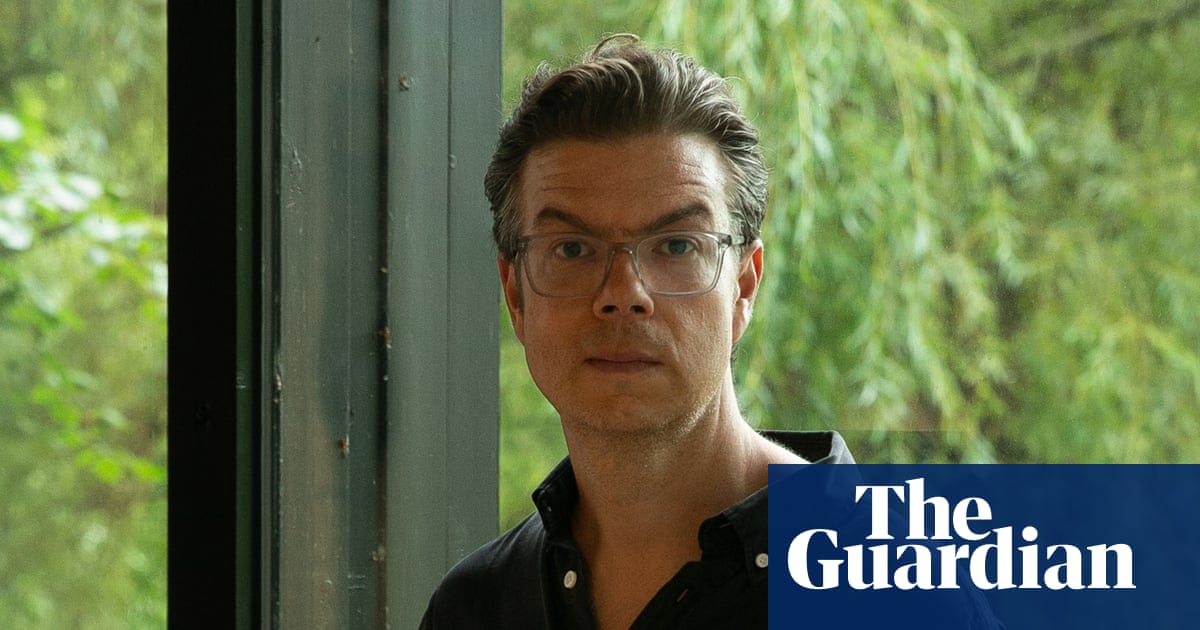
1 month agoBen Markovits: I used to think any book concerned with people falling in love can't be very good'
Reading shaped formative years through detective stories, fantasy epics, and memoirs that provided companionship and escape during frequent moves and family transitions.

fromThe Atlantic
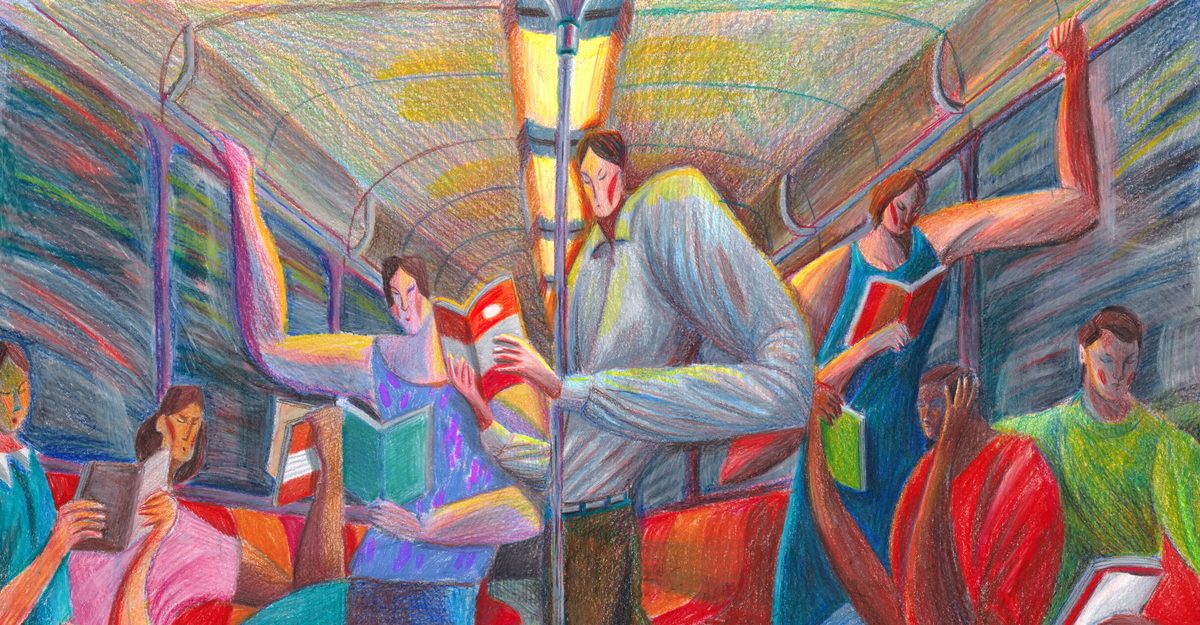
2 months agoThe Writer's Magic Trick
A writer is a kind of magician. Their job is to create living, three-dimensional people out of the ordinary stuff of ink and paper. This is no easy task, because readers can't literally hear, touch, or observe a character. Everything that defines a human being in real life-the physical space they occupy, or how they smell, feel, and sound-is stripped away, replaced by description. But authors have one major, mystical advantage: They can show you what's happening inside of someone's brain.
Books
fromThe New Yorker
2 months agoReading for the New Year: Part Two
Years ago, I wrote a series of articles for my college newspaper about competing in contests for which I was comically unprepared: arm wrestling, archery, Scrabble. The compulsion to fail dramatically continued into my freelance writing career, when I finagled my way into the front corral at the Los Angeles Marathon. (I stuck with the élites for all of two hundred meters.) My inclination was Plimptonian.
Books
fromwww.theguardian.com
2 months agoSusan Choi: For so long I associated Dickens with unbearable Christmas TV specials'
The book that changed me as a teenager Donald Barthelme's Sixty Stories, because he was having such a good time and seemed so so smart, but was also mischievous and irreverent. It may sound corny but these stories made me grasp the existence of a world of art and literature. And Barthelme lived in Houston, where I was growing up, yet he was a major world writer.
Books
fromwww.theguardian.com
1 month agoThe best recent science fiction, fantasy and horror review roundup
Subsequently, runaway children turned the valley into a fortress, surviving on food they could catch or grow, with occasional forays into the towns below. Riley has heard the rumours, but it is only when she sees a green-clad boy or is it a girl? hovering outside her bedroom window offering directions on how to find Nowhere that she realises this might be her chance to escape and save her little brother from their sadistic guardian.
Books
fromThe New Yorker
2 months agoReading for the New Year: Part Four
We meet him as a Gumby-like figure, asleep on a dirt floor, with only a jug of water and a toy horse. He has no idea how he got there. When he's around seventeen years old, Kaspar meets his captor, rendered in the book as a shadowy, hatch-marked father: "The Man in Black." The man teaches him to write his name; he teaches him to take a few fumbling goose steps outside.
Books
fromThe Atlantic
2 months agoSix Books for the Chronic Daydreamer
What is available is the daydream-a limitless realm of freedom. In this other world, one might be famous or rich, finally catch the attention of their beloved, or simply sit on a beach as a waiter brings them cocktails. They might fly or speak to animals, heroically save a child, tell off their boss with no consequences, win the Super Bowl at the whistle, or travel to another continent, planet, or time period. No one can stop them; no one can even object.
Books
fromwww.npr.org
2 months agoA wintry mix: 12 reading recommendations to get you through the storm
If you're hunkering down ahead of the big winter storm this weekend, we want to make sure you're well prepared. Yes, with batteries, flashlights, toilet paper, and food but perhaps most importantly with good reading material. We looked back through some recent interviews and Books We Love, our annual year-end reading guide, to find snowy suggestions to get you through the storm.
Books
fromThe New Yorker
2 months ago"This Is How It Happens," by Molly Aitken
You are leaving work, your suit still damp from the morning's downpour, the skin on your palms peeling. You are clutching two supermarket bags, tins of cream soup and tuna knocking against one another. The rain is hard and your anorak is cheap. You are on your way to Stockbridge, to your parents' house, which only your father inhabits now that your mother is gone.
Books
[ Load more ]