#guest-disruptions
#guest-disruptions
[ follow ]
#airbnb #customer-service #guest-experience #loyalty-programs #hospitality #consumer-behavior #automation




#house-swapping
Relationships
fromwww.theguardian.com
1 week agoIt's like having a friend everywhere you travel': after 12 home exchanges, I'll never book a hotel again
House swapping allows affordable accommodation worldwide, fostering genuine relationships and unique experiences while significantly reducing travel costs.
fromMail Online
4 days agoGrim reason you should NEVER use shampoo and conditioner from hotels
'Never ever use these three things in a hotel room,' she warned in a video. Her first tip was to avoid using the 'wall-mounted refillable containers with soap and shampoo' now commonly found in hotel bathrooms.
Berlin
fromwww.cnn.com
2 weeks agoThe restaurant reservation wars show no signs of slowing down
Restaurant owners like Panjwani are caught in the middle of a growing battle of new and established reservation platforms vying for their business. The two dominant players for more than a decade, OpenTable and Resy, are now facing a wave of fresh competition from high-end services and even delivery apps all trying to win lucrative bookings at exclusive establishments.
Dining
Online Community Development
fromThedrum
3 weeks agoLearn how this restaurant is using Messenger orders to keep in touch with local customers
A Breton crêperie owner adapted to pandemic closures by launching a Facebook-based delivery service using quality local ingredients, maintaining customer relationships and supporting local producers.
Artificial intelligence
fromFortune
3 weeks agoHow AI has transformed customer service at Airbnb | Fortune
Airbnb's CFO Ellie Mertz is integrating AI into operations and decision-making to enhance efficiency, improve customer service, and democratize data access across the organization while elevating employee roles rather than replacing them.
Boston food
fromBusiness Insider
4 weeks agoAirbnb's war policy leaves some stranded travelers paying for rooms they can't use
Airbnb refused to refund Maria Wainer's Boston reservation despite Israeli airspace closure from geopolitical conflict, citing that the policy applies only to listings in impacted areas, not travelers' origin locations.
Psychology
fromSilicon Canals
4 weeks agoPeople who always clean up their space before they leave-a hotel room, a restaurant table, a friend's house-almost always display these 7 traits - Silicon Canals
People who habitually leave spaces better than they found them demonstrate deep respect for others and personal responsibility, revealing seven remarkable character traits that distinguish grounded, successful individuals.
UK politics
fromwww.bbc.com
1 month ago'I've given up on working in hospitality. The 15,000 pay isn't worth the stress'
Young adults in their 20s and 30s face financial instability from unpredictable work hours, rising housing costs, and limited savings, while economic growth could improve job opportunities and wages.
EU data protection
fromBusiness Matters
1 month agoCMA investigates Hilton, IHG and Marriott over alleged hotel data sharing via STR
The UK's CMA launched a formal investigation into Hilton, InterContinental Hotels Group, and Marriott International for potentially sharing competitively sensitive information through STR data analytics platform.
fromeLearning Industry
1 month agoTop Customer Service Skills Every Employee Needs To Deliver Exceptional Experiences
Customer service skills define how effectively employees represent a brand and resolve customer needs. In every industry, these skills determine whether a business builds loyalty or loses trust. Customers today expect responsiveness, empathy, and accuracy across every touchpoint-from phone calls and chats to social media interactions.
Business intelligence
#luxury-hospitality
Berlin
fromTravel + Leisure
1 month agoLisa Vanderpump on Her New Las Vegas Hotel, Joining the Mile-high Club, and the Most Annoying Airline Mishaps
Lisa Vanderpump opens her first hotel in Las Vegas, drawing from decades of hospitality experience across multiple locations and a refined understanding of luxury service standards.
Psychology
fromSilicon Canals
1 month agoThe way someone tips at a restaurant tells you one of 4 things about their childhood - and the two most generous tipping patterns come from completely opposite economic backgrounds for entirely different psychological reasons - Silicon Canals
Tipping behavior reveals childhood money experiences, with four distinct patterns reflecting different economic backgrounds and psychological relationships with money.
fromInsideHook
1 month agoDoes the Future of Booking Hotels Involve AI Agents?
It isn't a universal truth, but a vast number of goods and services have their own full-circle moments. While there are still plenty of travel agencies in the U.S., the overall number is still down considerably from a peak in the 1980s. For some industry forecasters, though, the future looks a lot like the recent past, except that instead of travelers trusting human agents with making their travel plans a reality, they'll use AI agents for the same purpose.
E-Commerce
Real estate
fromwww.housingwire.com
1 month agoThe hidden cost of move-in friction: Why the first 30 days can make or break resident loyalty
Treat move-in as a strategic, technology-enabled process to improve resident satisfaction, reduce support costs, increase renewals, and drive operational efficiency.
fromBusiness Insider
4 weeks agoAn American, stuck in Doha after a 'flight to nowhere,' was put up in 5-star hotel, all expenses paid
I was very concerned, very terrified. I still don't believe it's real. Singh, who had a layover in Doha while traveling home from a wedding in India, expressed her anxiety about the situation. Though she's been put up in a luxury hotel, she said it doesn't feel like a vacation because she is constantly updating family and wondering when she'll make it home to Texas.
Travel


fromLondon Business News | Londonlovesbusiness.com
2 months agoNearly half of UK customers say they've suffered poor customer service: Here's how to change that - London Business News | Londonlovesbusiness.com
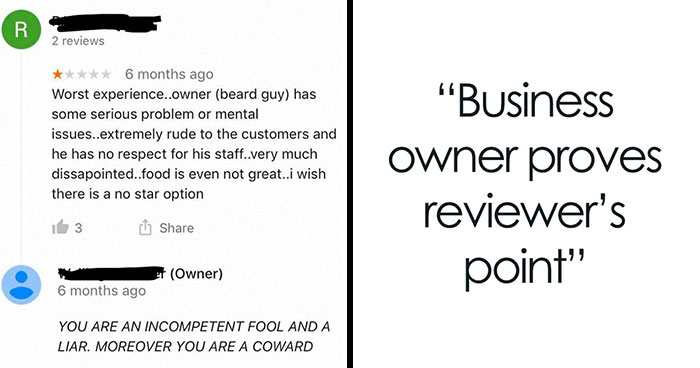
Customer service in the UK has a problem. According to recent survey data, almost half of UK customers have experienced poor customer service over the past year. That's not a minor data point, but rather a warning sign. Long wait times, unhelpful responses, and automated loops that dead-end are just the beginning, and they erode customer trust quickly. While many businesses have invested heavily in digital tools and AI to help address these problems, that comes with its own drawbacks.
UK news
fromFast Company
2 months agoI'm a tech CEO. Here's why my employees are required to work a restaurant shift
When I tell fellow tech executives that every employee at sunday, from our engineers to our finance team, must complete a restaurant shift before they can fully onboard, I usually get confused looks. "You mean like, shadow someone?" they ask. No. I mean they tie on an apron, take orders, run food, and yes, deal with the 15-minute wait for the check that our product was literally built to eliminate.
Tech industry


Careers
fromFortune
2 months agoDespite Airbnb CEO Brian Chesky and Steve Jobs praising micromanagers, a new survey ranks them among the most annoying coworkers | Fortune
Micromanagers and coworkers who steal credit are among the most hated coworkers, undermining confidence, productivity, morale, and team innovation.
fromBusiness Matters
1 month agoAn Interview with Benjamin Nasberg on Modern Hospitality Leadership
Benjamin Nasberg is a Canadian entrepreneur and the CEO of Carbone Restaurant Group. He is known for building scalable hospitality businesses while staying closely connected to the people and communities behind them. His career reflects a steady focus on growth, culture, and practical leadership. Nasberg began working in restaurants at the age of 16. Those early roles gave him a ground-level understanding of operations, teamwork, and customer experience.
Startup companies
fromInsideHook
2 months agoWhile Other Airport Lounges Cut Access, JetBlue Expands to More Travelers
As we look ahead, one of the air-travel trends worth watching has to do with airport lounges - and, more specifically, who can and can't access them. Later this year, American Express is updating its policies to make it a little harder for some travelers to access its Centurion Lounges. That's in keeping with broader trends in the industry, which makes it all the more interesting to see an airline going in the opposite direction.
US news
fromTechCrunch
1 month agoAirbnb says a third of its customer support is now handled by AI in the U.S. and Canada | TechCrunch
Airbnb says its custom-built AI agent is now handling roughly a third of its customer support issues in North America, and it's preparing to roll out the feature globally. If successful, the company believes that in a year's time, more than 30% of its total customer support tickets will be handled by AI voice and chat in all the languages where it also employs a human customer service agent.
Artificial intelligence
E-Commerce
fromwww.restaurantdive.com
1 month agoWhat's blocking your direct orders? 5 guest experience gaps to fix
Eliminating friction is critical for restaurants to shift customers from third-party marketplaces to direct ordering, increasing margins, owning guest data, and delivering curated experiences.
Travel
fromTravel + Leisure
1 month agoIs It Better to Book Directly With Hotels and Airlines? We Asked the Experts
Booking direct versus through third-party platforms depends on your specific trip needs and payment method, with direct bookings offering better control and customer support while prices remain largely equivalent across platforms.
Psychology
fromwww.theguardian.com
1 month agoMiddle seats on planes are unpopular so what can we learn from those who pick them? | Emma Beddington
Some travelers intentionally choose airplane middle seats to embrace inconvenience, prompt conversations with strangers, practice humility, and access both armrests ethically.
Business
fromIndependent
1 month ago'Dealing directly with hotels can be more cost-effective than third-party booking sites' - money experts reveal how they pay less for their holidays
Avoid credit cards and spread holiday costs across the year to reduce post-holiday debt and enable annual travel through planned saving.
fromFood & Beverage Magazine
2 months agoTen Predictions for the Hospitality Industry in 2026 and Beyond: Insights from Cayuga Hospitality Consultants' Annual Conference 2025 - Food & Beverage Magazine
Artificial intelligence is no longer futuristic-it's functional. Hotels are already utilizing AI to integrate siloed systems, such as PMS, accounting, CRM, and forecasting platforms, to drive faster and smarter decisions. Tools like Placer.ai and PredictHQ help identify ideal customers through demographic, behavioral, and geolocation data. As automation expands, the next opportunity lies in strategic human oversight: consultants and managers will interpret AI outputs, guiding capital investments and operational priorities rather than being replaced by algorithms.
Artificial intelligence
fromSilicon Canals
1 month agoServers can tell who's going to tip well within 30 seconds of sitting down - Silicon Canals
Picture this: a couple walks into a restaurant on a Friday night. They glance around, choose their table, and settle into their seats. Before they've even opened their menus, their server already has a pretty good idea whether they'll leave 10% or 25%. It sounds like mind reading, but after talking with dozens of servers over the years, I've learned it's more like pattern recognition honed by thousands of interactions.
Psychology
fromInsideHook
2 months agoWhere Have All the Hotel Bathroom Doors Gone?
On a recent two-week trip to Japan with my fiancé - six cities, six hotels - every stay was gorgeous and perfectly appointed. We wanted for nothing. Except, in most cases, a proper bathroom door. Instead, we spent the better part of two weeks making accidental eye contact through frosted glass and translucent panels while one of us was otherwise occupied. A design choice, apparently. A test of intimacy, definitely.
Travel
fromSilicon Canals
1 month ago8 things lower-middle-class people do at hotels that reveal exactly how they grew up - Silicon Canals
Years later, after countless nights in hotels from budget chains to five-star establishments, I've noticed something interesting. Those of us who grew up in lower-middle-class households carry certain behaviors with us into these spaces. They're not necessarily bad habits, but they're telling. They reveal a childhood where every pound mattered and waste was practically a sin. I've seen these patterns in myself, in friends from similar backgrounds, and in countless fellow travelers over the years.
Travel
[ Load more ]