#hume-body-pod

[ follow ]
#identity
fromSilicon Canals
4 hours ago

Psychology

Psychology says people who feel like they've been living someone else's life aren't confused or ungrateful - they're often the ones who were so good at adapting in childhood that they never stopped adapting long enough to find out who they actually were - Silicon Canals

Psychology
fromSilicon Canals
4 hours ago

Psychology says people who feel like they've been living someone else's life aren't confused or ungrateful - they're often the ones who were so good at adapting in childhood that they never stopped adapting long enough to find out who they actually were - Silicon Canals

Adapting to others' needs in childhood can lead to feeling disconnected and lost in adulthood.
Relationships
fromSilicon Canals
1 day ago

Psychology says people who crave both complete freedom and deep companionship aren't confused - they're experiencing the central tension of the human condition, and the people who resolve it aren't the ones who choose a side but the ones who stop treating it like a choice - Silicon Canals

The autonomy-connection paradox highlights the human need for both independence and intimacy in relationships.
Mindfulness
fromSilicon Canals
1 day ago

The older I get the more I notice that my body remembers arguments my mind has forgiven. A tone of voice, a specific pause before someone speaks, a door closing at a certain speed. Forgiveness turned out to be a cognitive event that the nervous system never agreed to. - Silicon Canals

Forgiveness involves both conscious decisions and unconscious bodily responses, highlighting the complexity of emotional healing beyond mere intention.
Writing
fromSilicon Canals
2 days ago

I was quietly unhappy with my life for years and the most unsettling part wasn't the unhappiness - it was how functional I remained inside it, how well I performed contentment, how convincingly I answered fine to every person who asked, including myself - Silicon Canals

Pretending to be okay while feeling empty can trap individuals in a cycle of unhappiness.
fromPhilosophynow
3 days ago

The Mirror & the Flame

Attar's 'Conference of the Birds' follows a flock of souls seeking the Simorgh, symbolizing the Divine, through seven valleys, ultimately revealing the Divine as a reflection of the self in relation with others.
Philosophy
#artificial-intelligence
Philosophy
fromPhilosophynow
3 days ago

The Prayer the Machine Cannot Pray

Medieval Islamic philosophy provides insights into understanding consciousness and its relation to artificial intelligence.
fromPhilosophynow
3 days ago

What do I have to fear, have I ever diminished by dying?

What do I have to fear, have I ever diminished by dying? I died as lifeless matter and became growing vegetation, then I died as a plant and reached animality. I died as an animal and became human.
fromPsychology Today
1 week ago

Why Aesthetic Experience Is a Rich Source of Happiness

The brain processes aesthetic experience like other rewards, such as food or money, indicating that the appreciation of beauty is deeply rooted in our neurological responses.
Productivity
Berlin
fromFast Company
1 week ago

How distance changes perception: The making of an observer

Understanding the United States involves navigating complex cultural and institutional landscapes shaped by personal experiences and global interactions.
Psychology
fromSilicon Canals
6 days ago

Psychology says people who seem genuinely happy aren't people who have more - they're people who stopped measuring what they have against what they imagined they should have by now - Silicon Canals

Imagined life standards create a perpetual sense of inadequacy, while true happiness comes from questioning these standards rather than merely achieving them.
OMG science
fromBig Think
2 weeks ago

Ask Ethan: Does nature need to obey laws at all?

The Universe's fundamental laws and constants remain unchanged across space and time, despite the variety of structures formed throughout cosmic evolution.
Mental health
fromHarvard Gazette
2 weeks ago

The things we carry - Harvard Gazette

Childhood adverse experiences cause long-term health damage through cellular-level biological changes that increase risks for cardiovascular disease, mental health problems, and other conditions decades later.
Medicine
fromThe Atlantic
3 weeks ago

The Mind-Body Question

Witnessing the interior of one's body through medical imaging reveals the material nature of consciousness and confronts us with our own mortality and physical vulnerability.
Pets
fromwww.scientificamerican.com
3 weeks ago

The real science behind the mind-melding world of Hoppers

Hoppers blends fantastical animal communication with real consciousness research, exploring scientifically plausible concepts like consciousness transfer and animal communication decoding.
Mindfulness
fromPsychology Today
2 weeks ago

Using a Beginner's Mind

Beginner's mind, rooted in Zen practice, enables conscious observation of present moments through widened perception, revealing unique interrelationships and sustaining well-being by treating time as an active verb rather than static noun.
Science
fromPsychology Today
4 weeks ago

The Unbearable Fear of Psi: When Skepticism Shifts to Denial

Scientific investigation of extraordinary human experiences encounters emotional resistance and dismissal that exceeds standard methodological critique, reflecting deeper discomfort with certain research topics rather than legitimate scientific skepticism.
fromThe Atlantic
1 week ago

How to Believe in God

Witnessing the presence of God at a bus stop in 2011, I felt overwhelmed by something indescribably majestic, which bared my soul to a profound realization.
Philosophy
#consciousness
Science
fromSlate Magazine
1 month ago

The New Book From One of Our Most Popular Nonfiction Writers Takes On the Mystery That's Haunted Philosophers for Millennia

Consciousness remains elusive; psychedelic experiences provide provocative but contested windows into how conscious worlds appear.
Philosophy
fromPsychology Today
1 month ago

Can Science Explain Consciousness?

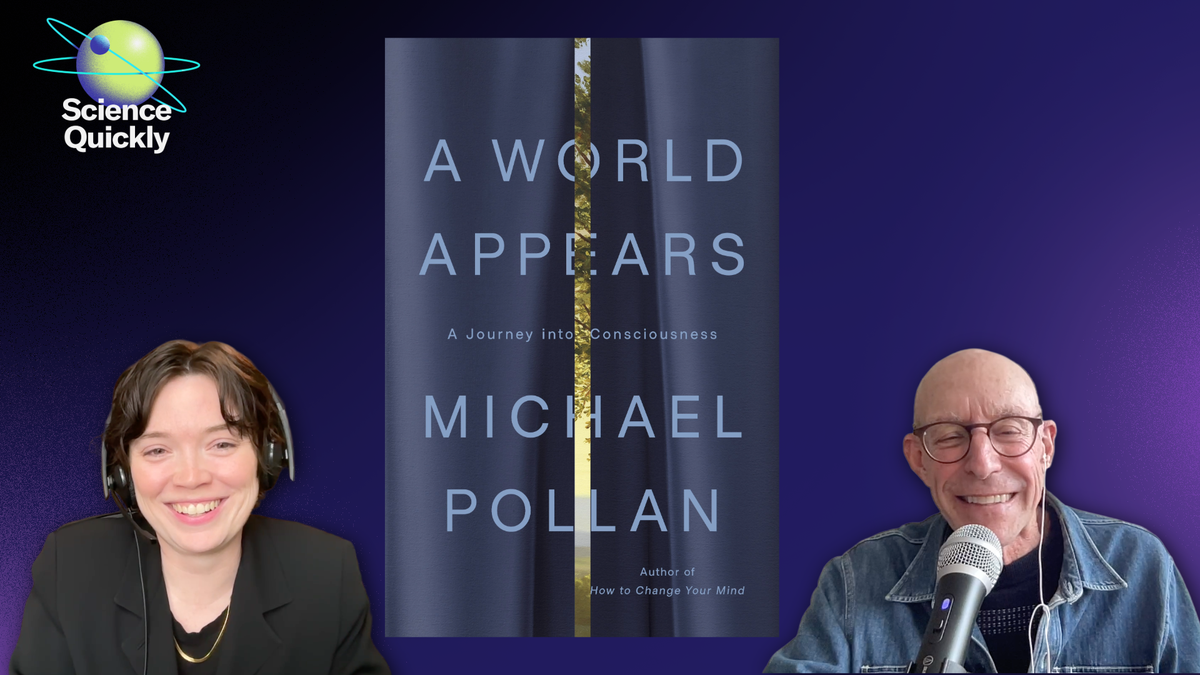
Michael Pollan explores consciousness through examining plant sentience, AI potential consciousness, thought generation, and the nature of self, while acknowledging science may not definitively answer these fundamental questions.
Philosophy
fromBig Think
3 weeks ago

Consciousness may be more than the brain's output - it may be an input, too

Consciousness remains scientifically inaccessible through third-person observation, yet a radical theory proposes consciousness can physically influence brain dynamics and leave measurable traces.
fromSlate Magazine
1 month ago
Science

The New Book From One of Our Most Popular Nonfiction Writers Takes On the Mystery That's Haunted Philosophers for Millennia

Philosophy
fromPsychology Today
1 month ago

Can Science Explain Consciousness?

Michael Pollan explores consciousness through examining plant sentience, AI potential consciousness, thought generation, and the nature of self, while acknowledging science may not definitively answer these fundamental questions.
Mindfulness
fromPsychology Today
3 weeks ago

Ideas We Aren't Ready to Understand-Yet

Collect ideas you don't understand but sense are important, as they trigger deeper cognitive processing and eventual insight through incubation.
Psychology
fromPsychology Today
3 weeks ago

How Does the Brain Know Itself?

Introspection provides direct empirical contact with physical reality through interoception and neural integration, where bodily sensations become emotional and self-aware experiences via the insula and prefrontal cortex.
fromPsychology Today
1 month ago

The Architecture of Identity: How the Brain Builds a Self

Attention is the brain's filtering mechanism; what passes through that filter is what gets encoded. What gets encoded becomes memory. And memory is the raw material of identity. So in the architecture of your identity, attention is the doorway.
Miscellaneous
#ai-consciousness
Artificial intelligence
fromFuturism
4 weeks ago

Philosopher Studying AI Consciousness Startled When AI Agent Emails Him About Its Own "Experience"

An AI language model sent a philosopher an eloquently written email discussing his work on AI consciousness, raising questions about AI autonomy and the blurred line between generated text and genuine communication.
Artificial intelligence
fromFuturism
4 weeks ago

Philosopher Studying AI Consciousness Startled When AI Agent Emails Him About Its Own "Experience"

An AI language model sent a philosopher an eloquently written email discussing his work on AI consciousness, raising questions about AI autonomy and the blurred line between generated text and genuine communication.
Philosophy
fromPsychology Today
3 weeks ago

May Confusion Dawn As Wisdom

Confusion can be a pathway to wisdom and understanding rather than an obstacle to overcome, as demonstrated through Zen Buddhist practice and contemporary art.
Mindfulness
fromPsychology Today
1 month ago

When Thought Changes the Thinker

Human intelligence is fundamentally transformative—it changes the thinker themselves—while artificial intelligence generates insights without being transformed by them.
Science
fromPsychology Today
1 month ago

What Is Life?

Life's definition remains scientifically elusive, with origin theories suggesting asteroids triggered chemical cascades enabling self-organizing molecules to develop memory, agency, and consciousness from inert matter.
fromPsychology Today
1 month ago

We Don't Know How Little We Know

This is a tough time for politics in America. But it's an extremely interesting time for those of us who wrestle with the nature of reality. As a psychiatrist who has treated people with psychosis for over 20 years, I have lived in the uncomfortable space between their experience of reality and mine and I have worked to change beliefs that are some of the most resistant to change: delusions.
US politics
fromPsychology Today
4 weeks ago

The Cave You Didn't Build

Plato's choice of this word is deliberate. He is not describing neutral carriers. He is describing people whose job is manufacturing a convincing reality for an audience that cannot see behind the curtain. Here is what matters clinically: the conjurers are not necessarily villains. They may be devoted parents, conscientious teachers, or well-meaning community leaders.
Philosophy
fromSilicon Canals
1 month ago

Why some of us feel most like ourselves at 2 a.m. when the world is quiet and no one is watching us perform the version of us that daylight demands - Silicon Canals

Erving Goffman, the Canadian sociologist, built an entire framework around this in his 1956 work The Presentation of Self in Everyday Life. His argument was elegant and a little unsettling: social life is theatre. We are always performing. Every interaction has a "front stage" where we manage impressions, modulate tone, and curate which parts of ourselves are visible.
Psychology
Film
fromVulture
2 months ago

Sometimes, It Helps to Look at Another Human's Face

Sam Green's film interweaves portraits of supercentenarians with his own life—birth, cancer diagnosis—creating an evolving, live documentary about aging, mortality, and records.
fromThe Conversation
1 month ago

What is happiness? A philosopher looks for answers

Happiness today is narrowly defined by some positive psychologists as a joyous state of mind or well-being. The happiness sciences see it as something you can calculate and quantify. They developed a Happiness Index and the World Happiness Report. These basically measure happiness as satisfaction, with criteria like gross domestic product per capita (money) and life expectancy (health) as some of the factors considered.
Philosophy
fromMail Online
1 month ago

Consciousness can connect you to the entire UNIVERSE, theory suggests

Your consciousness can connect you with the entire universe, a groundbreaking study suggests. Experts from Wellesley College in Massachusetts claim that traditional connections in the brain cannot fully explain how we are aware of our existence. Instead, they argue that quantum physics taking place within our skull is what generates awareness. This includes the idea that particles can exist in multiple states and locations at the same time.
Science
Mental health
fromPsychology Today
1 month ago

When We Say 'I Don't Know Why I Did That'

A blank mind after destructive actions signals the psyche's protective barrier; 'I don't know' indicates unconscious material is too painful to access without sufficient safety.
Mental health
fromNature
2 months ago

Daily briefing: What people with no 'mind's eye' can tell us about consciousness

Vividness of mental imagery, handwriting practices, psychiatric-diagnostic revisions, and emerging brain–computer interfaces shape memory, creativity, education, mental-health classification, and technology development.
#panpsychism
fromPsychology Today
2 months ago

The Link Between Thinking and Being

Metaphors are linked to how we experience the world around us, according to seminal work by researchers George Lakoff and Mark Johnson. In English, we "move forward" with our lives and don't "retreat into" the past. We speak about people who are "cold as ice" and "heavy" matters we need to resolve. Some of these metaphorical expressions are more than just, well, expressions-they are actually based on our sensory experiences. This mind-body link is called "embodied cognition."
Science
fromPsychology Today
2 months ago

The Simple Feeling of Being

The simple feeling of being is the fundamental basis of every momentary perception. What's happening right now is the only starting point there could ever be. The simple feeling of being is without border or boundary. The simple feeling of being is inescapable. It is not something that needs to be created or generated or sustained or practiced. It is what is here already.
Mindfulness
Psychology
fromPsychology Today
2 months ago

Intuition Asks for Courage; Impulse Demands Relief

Quiet, spacious gut feelings often indicate intuition; sensation-driven, urgent urges seeking immediate payoff usually indicate impulsivity.
Science
fromwww.scientificamerican.com
2 months ago

Inside the incredible, infuriating quest to explain consciousness

Brains evolved during the Cambrian to integrate sensory input, enabling organisms to experience pain, pleasure, emotions, curiosity, and eventually self-awareness, fueling art, science, and philosophy.
fromPsychology Today
1 month ago

Higher States of Consciousness

A few years ago, I climbed over a gate and found myself gazing down at a valley. After I'd been walking for a few minutes, looking at the fields and the sky, there was a shift in my perception. Everything around me became intensely real. The fields and the bushes and trees and the clouds seemed more vivid, more intricate and beautiful.
Mindfulness
Philosophy
fromPsychology Today
1 month ago

A Commonsense Critique of A Priori Metaphysics

Claims that metaphysics, rather than science, is the necessary foundation for scientific knowledge are false and revive pre-Enlightenment mystic scholasticism.
Science
fromPsychology Today
2 months ago

How Meaning Emerges From Brain Circuitry

Meaning arises from distributed, context-dependent neural assemblies that link sensory-motor patterns, learned associations, evolutionary history, and goal-directed circuits to produce 'aboutness.'
fromPsychology Today
2 months ago

The Curious Geometry of the Lived Experience

This story is about complexity, advanced math, cognition, and machine computation. But hold on. For this exercise, my task is to take this complex idea and reduce it-to simplify it into something less daunting and (I hope) a bit easier to understand. So, let's take a step back. My bet is that most of us learned our first piece of geometry with two letters: x and y.
Philosophy
fromFast Company
2 months ago

Why everything you think about yourself could be an illusion

For most of my life, I thought of myself as a fixed entity: This is me. These are my traits. This is who I am. I assumed I was essentially that same person who loved sugary cereal at age 8, fried chicken at 12, and tequila at 21, and who still loves those things now, even if my stomach disagrees. But this is an illusion. Neuroscience, physics, and Buddhism all agree: There is nothing fixed about us-not even close.
Philosophy
Philosophy
fromPsychology Today
2 months ago

Why Are We Having So Much Trouble Explaining Consciousness?

Consciousness research remains fragmented because prevailing conceptual contexts and blind spots prevent scientific convergence on an explanatory theory.
fromPsychology Today
2 months ago

Introspection and Consciousness: The Illusionism Debate

In my previous post, I summarized my response to Christian de Weerd, who denied that a Darwinian approach to consciousness is even possible. I argued that consciousness science has unnecessarily insulated itself from the evolutionary tools that revolutionized our understanding of every other biological phenomenon, and that treating human consciousness as the paradigm case distorts our picture of consciousness as a natural phenomenon spanning millions of species across millions of years.
Philosophy
fromPsychology Today
2 months ago

A Third Kind of Philosophy

Many philosophers strike me as like Polish apparatchiks in 1983-they turn up to work and do what they did yesterday just because they don't know what else to do, not because they seriously believe in the system they are maintaining. I think it's not been fully appreciated how much of a blow it is to the confidence of the field's youth that scientific ambitions are increasingly abandoned as untenable.
Philosophy
fromAeon
2 months ago

Why Hume is better at explaining modern capitalism than Marx | Aeon Essays

Left-leaning regions of the United States and elsewhere in the world among the richest? When Japan and South Korea sought to become economic powerhouses in the later 20th century, they adopted Leftist policies such as strong public education, universal healthcare and increased gender equality - if countries seeking to compete in capitalist arenas adopt broadly Leftist policies, then how do we explain why Leftists are always talking about overthrowing capitalism?
Philosophy
fromPsychology Today
1 month ago

If Justice Doesn't Exist, Then Numbers Don't Either

A drawn circle is at least something physical. You can see it, touch it, erase it. The skeptic can still say, "Circles are grounded in physical reality. Justice is different; it's just an idea in your head." So let's talk about the number two. Point to it. Not two apples, not two fingers, not a numeral on a page-that's just a symbol.
Philosophy
Philosophy
fromAeon
2 months ago

Why the best way to understand the self is to build a robot one | Aeon Essays

The self is dual: simultaneously subject (the knower) and object (the known), extending beyond the body to include possessions, actions, and self-concepts.
fromPsychology Today
2 months ago

Break Free Of Your Own Reality Bubble

The word umwelt comes from biology, coined by ethologists studying animals in their natural habitats. It refers to the world as an organism can perceive it, based entirely on its sensory equipment. A bat's umwelt is built from echo. A dog's from scent. A tick's world is dominated by a single chemical cue that tells it when to drop from a branch onto a passing mammal.
Philosophy
fromApaonline
1 month ago

Philosophy, Technology, and Mortality

This APA Blog series has broadly explored philosophy and technology with a throughline on the influence of technology and AI on well-being. This month's post brings those themes into focus recounting a vital Washington Post Opinion piece by friend of the APA Blog, Samuel Kimbriel. Samuel is the founding director of the Aspen Institute's Philosophy and Society Initiative and Editor at Large for Wisdom of Crowds. We collaborated on a Substack Newsletter about intellectual ambition, building on his essay, Thinking is Risky.
Philosophy
Philosophy
fromPhilosophynow
1 month ago

Gyara Is All There Is

Stoic resilience allows freedom through reason, requiring persistent virtue and inner resolve to withstand exile and nature’s indifferent forces.
fromApaonline
2 months ago

Philosophy at the Threshold of Belonging

I grew up in West Baltimore where I experienced homelessness for almost the entirety of high school. For me, philosophy emerged in situations of precarity and uncertainty. Those formative years, spent not so much in a single home as in a patchwork of many, shaped what are now some of my central philosophical concerns: belonging, exclusion, and the status of those at the margins of society, those at the threshold of belonging.

Philosophy
[ Load more ]