#hypnagogia
#hypnagogia
[ follow ]
#neuroscience #consciousness #sleep #philosophy-of-mind #mental-imagery #psychedelics #sleep-quality #dreams #memory
Mindfulness
fromSilicon Canals
1 day agoThe older I get the more I notice that my body remembers arguments my mind has forgiven. A tone of voice, a specific pause before someone speaks, a door closing at a certain speed. Forgiveness turned out to be a cognitive event that the nervous system never agreed to. - Silicon Canals
Forgiveness involves both conscious decisions and unconscious bodily responses, highlighting the complexity of emotional healing beyond mere intention.






Podcast
fromDiscover the Best Podcasts | Discover Pods
2 weeks agoFind Your Podcasts to Fall Asleep to in 2026
Podcasts offer an effective alternative to commercial sleep products, with indie creators providing genuinely engaging content that helps people fall asleep without relying on expensive industry solutions.
Philosophy
fromThe Conversation
2 weeks agoHuman vision: what we actually see - and don't see - tells us a lot about consciousness
Significant visual processing occurs unconsciously in the brain, as demonstrated by blindsight and inattentional blindness phenomena where people perceive visual information without conscious awareness.
fromInverse
2 weeks agoWhat Scientists Are Learning About Sleep and Memory Formation
Sleep plays a central role in memory consolidation - the process by which newly acquired information is stabilized and integrated into long-term memory stores. Research from institutions including Harvard Medical School and the Max Planck Institute for Human Cognitive and Brain Sciences has shown that different stages of sleep contribute to different types of memory. Slow-wave sleep, or deep sleep, appears to be particularly important for declarative memory - the kind that stores facts and events.
Mindfulness
fromSilicon Canals
1 week agoNeuroscience reveals that the reason some people can't relax on vacation isn't stress addiction - it's that their childhood taught their brain to treat safety as temporary, so calm feels like the moment before something goes wrong - Silicon Canals
Many people may not have a default state of calm, but rather a learned response to treat quiet as a warning.
fromwww.scientificamerican.com
3 weeks agoMusic even makes you blink to the beat
Our eyes—which we usually think of as purely visual organs—spontaneously dance to the rhythm of what we hear, says study co-author Du Yi, a cognitive neuroscientist at the Chinese Academy of Sciences in Beijing. Using a high-speed eye-tracking system, Du and her team were stunned to discover nonmusicians instinctively blinking in sync with the beat structure of Bach chorales.
Berlin music
#consciousness

Philosophy
fromPsychology Today
1 month agoCan Science Explain Consciousness?
Michael Pollan explores consciousness through examining plant sentience, AI potential consciousness, thought generation, and the nature of self, while acknowledging science may not definitively answer these fundamental questions.
Philosophy
fromBig Think
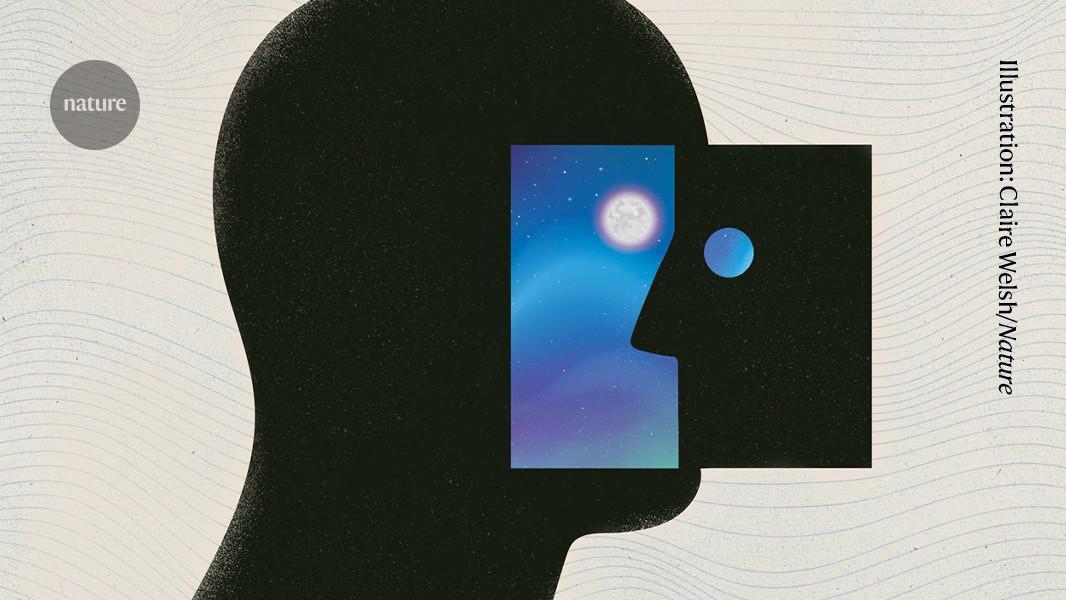
3 weeks agoConsciousness may be more than the brain's output - it may be an input, too
Consciousness remains scientifically inaccessible through third-person observation, yet a radical theory proposes consciousness can physically influence brain dynamics and leave measurable traces.
Philosophy
fromPsychology Today
1 month agoCan Science Explain Consciousness?
Michael Pollan explores consciousness through examining plant sentience, AI potential consciousness, thought generation, and the nature of self, while acknowledging science may not definitively answer these fundamental questions.


#neuroscience
Psychology
fromSilicon Canals
2 weeks agoBehavioral scientists found that the human brain doesn't actually crave constant novelty. It craves pattern recognition and mastery, which means the person who finds genuine pleasure in their morning walk along the same route is neurologically closer to fulfillment than the person who needs every weekend to feel like an event - Silicon Canals
The brain's reward circuits respond more strongly to mastery and pattern recognition within familiar structures than to constant novelty-seeking.
Science
fromPsychology Today
4 weeks agoThe Unbearable Fear of Psi: When Skepticism Shifts to Denial
Scientific investigation of extraordinary human experiences encounters emotional resistance and dismissal that exceeds standard methodological critique, reflecting deeper discomfort with certain research topics rather than legitimate scientific skepticism.
Mental health
fromSilicon Canals
1 month agoNeuroscience reveals that people who overthink at night often have brains that refuse to file away unresolved emotional experiences during the day - Silicon Canals
Unprocessed emotional experiences from daytime accumulate and resurface at night when the brain attempts consolidation, particularly in people with insufficient cognitive bandwidth during waking hours.
fromPsychology Today
1 month agoThe Architecture of Identity: How the Brain Builds a Self
Attention is the brain's filtering mechanism; what passes through that filter is what gets encoded. What gets encoded becomes memory. And memory is the raw material of identity. So in the architecture of your identity, attention is the doorway.
Miscellaneous
fromPsychology Today
1 month agoWhen Sleep Banking May Be A Viable Strategy
Sleep banking is essentially extending your normal sleep hours in the nights leading up to a known period of sleep deprivation. On the face of it, it appears unlikely banking sleep could counter the decreased alertness and other cognitive decrements that we experience when deprived of sleep, or stop that strong sensation we get when our body wants sleep.
Health
fromPsychology Today
1 month agoAccomplishment Hallucination: When the Tool Uses You
Accomplishment Hallucination is a cognitive state in which speed feels like competence, output feels like accomplishment, and work feels done when the actual work-the thinking-through, the failure-mode analysis, the sitting with uncertainty until the problem reveals its structure-hasn't happened at all. Physics need not apply. AI can create a similar state in waking life—literally, as your very words assume form before your eyes like a conjuring sorcerer. But, like real life, the code may be buggier than we realize.
Artificial intelligence




fromHyperallergic
2 months agoThe Nightmares Beneath the Surface of "Dreamworlds"
The timing could not be better: We have much to learn in this moment from a movement that was both explicitly antifascist and radically hopeful - and from how the not-so-antifascist Dalí broke from it. But Dreamworlds presents precious little of the historical and political context - for example, the birth of the movement out of the grotesque terrors of World War I - that would help viewers grasp the relevance of what's in front of them.
Arts
fromSilicon Canals
1 month agoWhat neuroscience reveals about people who lie awake replaying conversations from six hours ago - Silicon Canals
Rumination activates the default mode network (DMN) - the brain's self-referential processing system. This is the neural circuitry that fires when you're thinking about yourself in relation to others: your identity, your social standing, your mistakes. It's the brain asking, over and over, What does this say about me?
Psychology
fromScary Mommy
2 months agoSomething Has Shifted In The Air. We All Feel It.
Again. It was happening again. Not even three weeks ago, federal agents murdered a mother of three named Renee Good. A few days before that, another federal immigration officer shot and killed Keith Porter, Jr. in Los Angeles. Daily, our city network of concerned citizens is documenting the injustices happening against our neighbors. Pittsburgh - like America itself - would not exist without immigrants, yet we watch them be dehumanized and terrorized hourly in what has long been known as Mister Rogers' Neighborhood.
US politics


fromThe Washington Post
1 month agoWhy your most creative ideas may come after a night of sleep
Neuroscientist Karen Konkoly is a lucid dreamer. When she's asleep and immersed in a dream, she knows that she is, in fact, dreaming. One of her favorite things to do during these sleep sojourns is pose personal, even existential questions - probing the mysterious terrain of her own subconscious mind. Asa researcher who studies the human mind, Konkoly has read many scientific papers positing different explanations for why humans dream - and she's made it her mission to rigorously test them.
Science
fromSilicon Canals
1 month agoWhy some of us feel most like ourselves at 2 a.m. when the world is quiet and no one is watching us perform the version of us that daylight demands - Silicon Canals
Erving Goffman, the Canadian sociologist, built an entire framework around this in his 1956 work The Presentation of Self in Everyday Life. His argument was elegant and a little unsettling: social life is theatre. We are always performing. Every interaction has a "front stage" where we manage impressions, modulate tone, and curate which parts of ourselves are visible.
Psychology
fromPsychology Today
2 months agoPublishing Untold Stories From the Worlds of the Subconscious
Unfortunately, hypnosis has a negative reputation among the general public, in large part because of how it's been portrayed by the movie and entertainment industry. Also, I was aware that in the late 19th century there were many false positive and negative claims about hypnosis that soured the public on the possibility that hypnosis could be helpful. I did not want to create or add to a 21st-century perception that hypnosis was quackery, and therefore chose to withhold telling about some of the most amazing events that I had encountered with my patients when I first wrote about hypnosis, because these stories might have been too hard to believe.
Mental health
fromSilicon Canals
1 month agoWhat neuroscience reveals about people who replay conversations in their head for hours after they happen - Silicon Canals
Neuroscientists have a name for the brain network that fires up when you're not focused on an external task: the default mode network, or DMN. It's the constellation of regions - the medial prefrontal cortex, posterior cingulate cortex, and angular gyrus among them - that hums to life when you daydream, reflect on yourself, or think about other people's mental states.
Psychology
Artificial intelligence
fromPsychology Today
2 months agoMental Murmuration: A Metaphor for the Workings of the Brain
Neural processing consists of fluid, distributed patterns of activation across interconnected networks that function collectively like a murmuration, not as a container of discrete informational bits.
Wellness
fromSilicon Canals
1 month agoIf you wake up exhausted even after 8 hours of sleep, your body might be trying to tell you something important - Silicon Canals
Eight hours of sleep does not guarantee restoration; sleep quality, stress-related hormone activity, environmental factors, and undiagnosed sleep disorders determine true rest.
fromPsychology Today
1 month agoMusic and the Brain: Love in the Key of Everyday Life
Wooden spoons as microphones, siblings spinning in socks across the floor, a mother laughing as Whitney Houston's "I Wanna Dance With Somebody" fills the room for the third time in a row-this is love. Long before children understand romance, they learn connection this way, through synchronized movement, shared joy, and the safety of familiar songs. Research on rhythm and social bonding suggests that moving in time together can regulate the nervous system and strengthen feelings of connection.
Music
Mental health
fromNature
1 month agoDaily briefing: What people with no 'mind's eye' can tell us about consciousness
Vividness of mental imagery, handwriting practices, psychiatric-diagnostic revisions, and emerging brain–computer interfaces shape memory, creativity, education, mental-health classification, and technology development.
fromNature
2 months agoStill conscious? Brain marker signals when anaesthesia takes hold
They then used emerging mathematical methods to isolate signals originating from nine brain regions previously implicated in mediating consciousness and examined connections between pairs of these regions. Among them were the parietal cortex, which is at the top of the brain about halfway between the forehead and the back of the skull; the occipital cortex, at the back of the head; and several small, deeper structures, such as one called the thalamus.
Medicine
fromPsychology Today
1 month agoChildhood Origins of Altered States in Adults
Systematic developmental and neuro-phenomenological research is needed to understand childhood consciousness. Anyone who has spent time with young children knows they have a way of saying things that make you pause and reconsider what you thought you understood. Many report non-ordinary experiences-moments of "just knowing," feeling outside their bodies, or sensing a deep unity with the world around them. These accounts suggest a form of consciousness that is relational, pre-linguistic, and not yet organized around a solid, separate self.
Psychology
fromPsychology Today
1 month agoHigher States of Consciousness
A few years ago, I climbed over a gate and found myself gazing down at a valley. After I'd been walking for a few minutes, looking at the fields and the sky, there was a shift in my perception. Everything around me became intensely real. The fields and the bushes and trees and the clouds seemed more vivid, more intricate and beautiful.
Mindfulness
fromMail Online
2 months agoWhat daydreaming REALLY means... and why it can be harmful
Maladaptive daydreaming is when you're listening to music, watching a movie, or just staring into space while imagining different scenarios in your head,' she explained in a recent TikTok video. 'It is a form of dissociation where your brain is imagining alternate realities to cope with how scary your actual reality is,' she added. LePera explained that often in these scenarios, people will replay situations where you have the 'perfect response' to a past uncomfortable interaction.
Mental health
fromPsychology Today
2 months agoIntrospection and Consciousness: The Illusionism Debate
In my previous post, I summarized my response to Christian de Weerd, who denied that a Darwinian approach to consciousness is even possible. I argued that consciousness science has unnecessarily insulated itself from the evolutionary tools that revolutionized our understanding of every other biological phenomenon, and that treating human consciousness as the paradigm case distorts our picture of consciousness as a natural phenomenon spanning millions of species across millions of years.
Philosophy
fromInverse
2 months agoHollywood Loves An Insomniac - But Does It Get Sleep Deprivation Right?
"It's important to be consistent, intentional, and mindful about sleep," Buenaver, the head of Johns Hopkins' Behavioral Sleep Medicine Program, tells Inverse. "People get frustrated by insomnia, and then it's easy to slip into bad habits, and then you're exhausted and chasing sleep."
Mental health
fromPsychology Today
2 months agoThe Curious Geometry of the Lived Experience
This story is about complexity, advanced math, cognition, and machine computation. But hold on. For this exercise, my task is to take this complex idea and reduce it-to simplify it into something less daunting and (I hope) a bit easier to understand. So, let's take a step back. My bet is that most of us learned our first piece of geometry with two letters: x and y.
Philosophy
fromPsychology Today
2 months agoThe Moment You're In Matters More Than the One You Remember
One of my earliest cognitive therapy patients asked if we'd spend time exploring his past. He thought we might find patterns that would explain his depression. I was taken aback. I had just discovered a set of powerful, active techniques that helped people change how they felt in the here-and-now. As a psychiatric resident, I had seen that endless venting without specific techniques for change led to little or no relief.
Mental health
fromMail Online
2 months agoFuturistic chair puts you in an 'altered state of mind' within minutes
Each of the individual parts - the headrest, arms, backrest, and seat - move along individual horizontal paths so that they aren't accelerated by gravity like a swinging rocking chair. At the same time, very smooth bearings cut resistance and friction to a minimum, allowing the chair to follow your body's natural movements. Dr David Wickett, the designer of the chair and co-founder of DavidHugh Ltd, says this system is so sensitive that 'even breathing can lift the entire body'.
Mindfulness
Science
fromwww.scientificamerican.com
2 months agoInside the incredible, infuriating quest to explain consciousness
Brains evolved during the Cambrian to integrate sensory input, enabling organisms to experience pain, pleasure, emotions, curiosity, and eventually self-awareness, fueling art, science, and philosophy.
fromwww.theguardian.com
2 months agoI see time as a grid in my mind. I remember the birthdays of friends I haven't seen for 65 years
Did someone with spatial-sequence synaesthesia design the calendar app on mobile phones? Because that's how time and dates look in my brain. If you say a date to me, that day appears in a grid diagram in my head, and it shows if that box is already imprinted with a holiday, event or someone's birthday. Public holidays and special events like Christmas and Easter are already imprinted for the year, and the diagram goes backwards to about 100,000BC
Psychology
Psychology
fromwww.theguardian.com
2 months agoHaving synaesthesia is a lot like being a twin we don't know any different
Twin sisters experience visual synaesthesia where sounds, tastes, smells, words and personalities appear as distinct colours and textures, with individual differences despite shared genetics.
[ Load more ]