#inflation-and-purchasing-power
#inflation-and-purchasing-power
[ follow ]
#inflation #federal-reserve #labor-market #gas-prices #us-economy #economic-impact #unemployment-rate



Psychology
fromSilicon Canals
8 hours agoThe hardest part of growing up lower middle class wasn't the lack of money. It was learning to want things quietly, because visible desire in a household running on tight margins felt like an accusation against the people who were already giving everything they had. - Silicon Canals
Emotional training around scarcity shapes behavior in lower middle class childhoods, teaching children to suppress desires to avoid adding stress to their families.
#iran
World politics
fromFortune
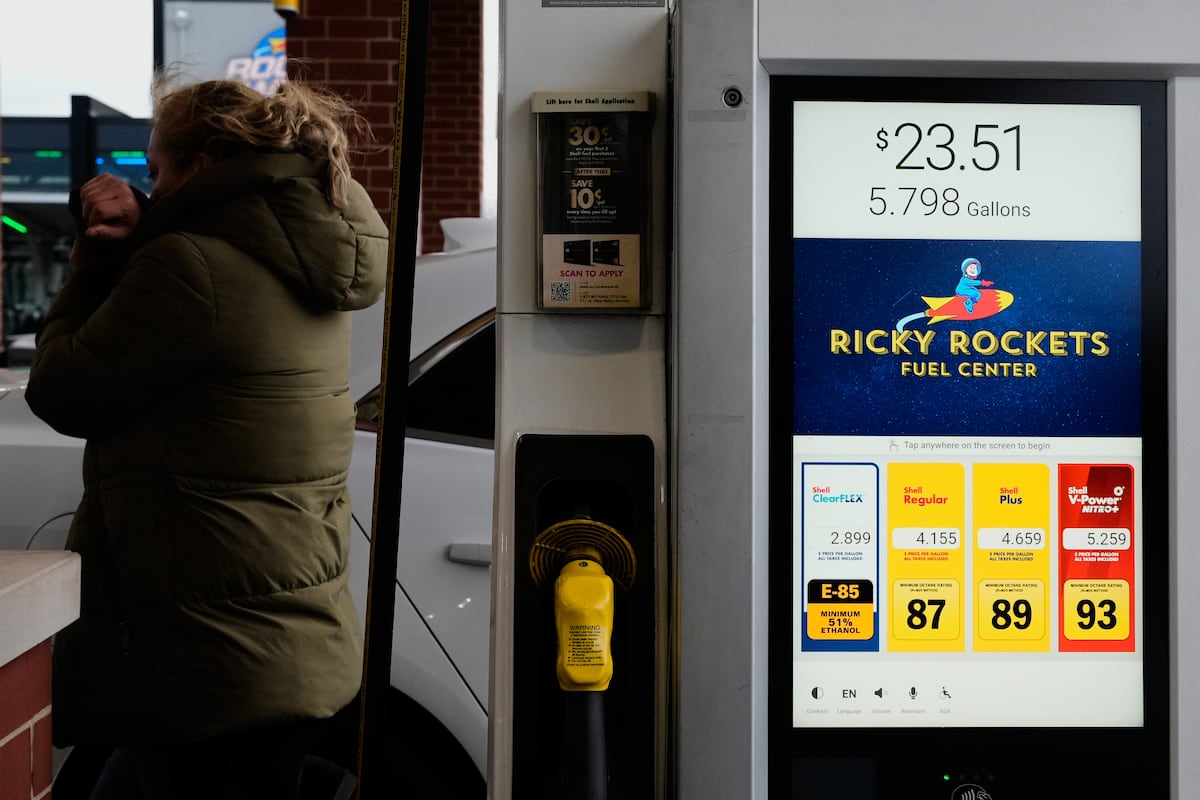
2 days agoPaul Krugman smacks down Trump speech with argument that $4 gas is 'less than half' of the Hormuz hit. Here's what he's talking about | Fortune
President Trump emphasizes U.S. strength in Iran while downplaying reliance on the Strait of Hormuz, despite its critical role in global trade.



fromwww.businessinsider.com
1 day agoYour produce bill is about to get pricey as the Iran war jacks up US food costs
"Fresh food and perishables are almost like the canary in the coal mine," when energy prices go up, according to Vidya Mani, an associate professor at the University of Virginia's Darden School of Business.
Agriculture




Artificial intelligence
fromFortune
3 days ago'Inflationary surge': Fed economists warn AI hype is overheating the economy whether or not the technology ever delivers | Fortune
AI optimism may hinder productivity and contribute to short-term inflation as households and businesses react to perceived future gains.
fromwww.mediaite.com
5 days agoBad News All Around!' Fox Business Host Stunned By Highly Inflationary' Prices in Total Bummer of an Economic Analysis
High energy prices are kryptonite for the housing market. Affordability, especially for those first-time home buyers, is now an elusive dream until oil prices come down and interest rates come down.
SF real estate
World news
fromLondon Business News | Londonlovesbusiness.com
3 days agoDollar extends pullback amid softer labour signals and easing risks - London Business News | Londonlovesbusiness.com
The dollar weakened due to softening monetary policy expectations and reduced demand as a safe-haven asset amid easing Middle East tensions.
fromFortune
4 days agoA Wall Street vet's Walmart recession indicator just hit its highest point since 2008-and he says the fear 'just keeps multiplying' | Fortune
'Walmart Worries' just keep multiplying. It's currently close to the highest level ever recorded which was during the Great Financial Crisis of 2008-09.
Business
#us-economy
US politics
fromFortune
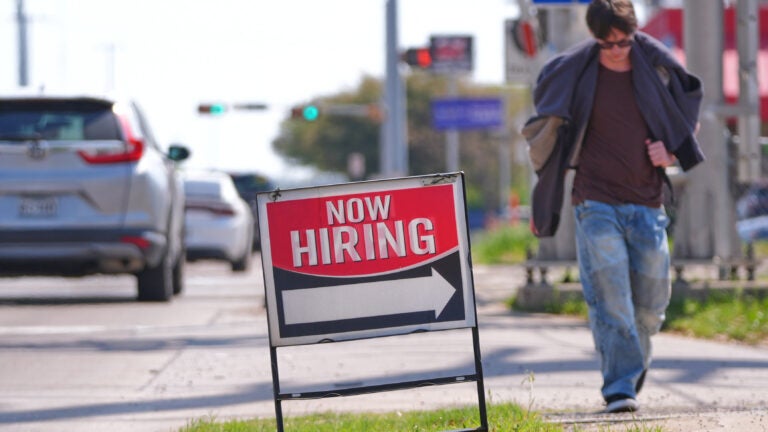
16 hours agoThe economy can shed jobs and still keep the labor market balanced, as Trump's immigration crackdown turns breakeven hiring negative | Fortune
The U.S. labor market shows a negative breakeven rate of employment growth due to immigration restrictions, indicating potential job losses without rising unemployment.
US Elections
fromFortune
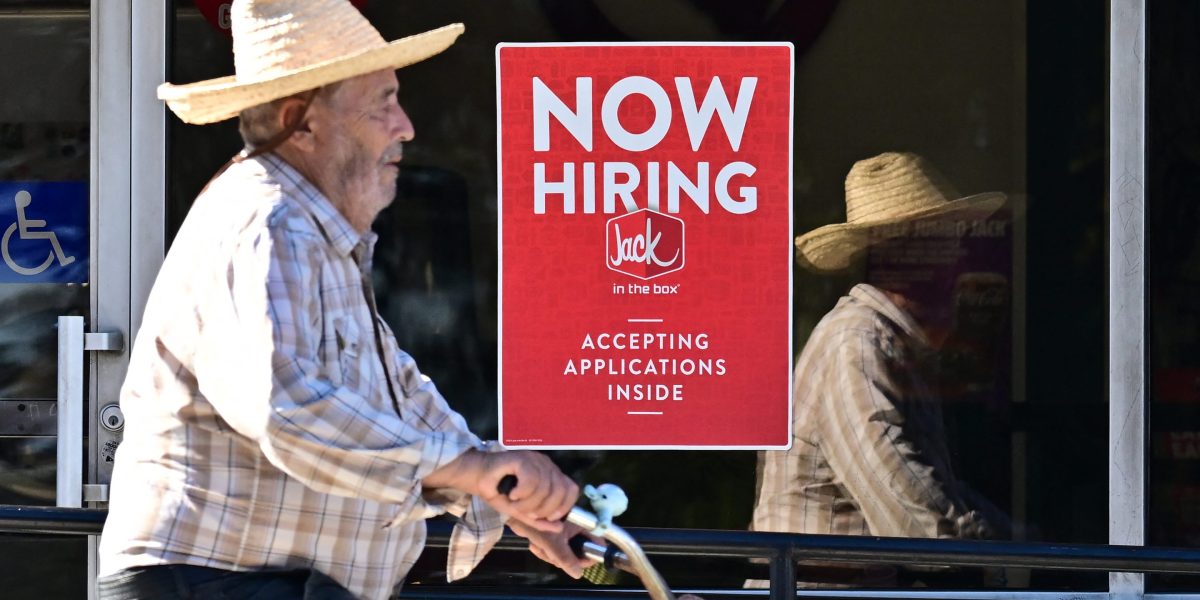
1 day agoThe jobs report looks good 'for the wrong reasons,' top economist warns: It's hiding how many Americans are giving up | Fortune
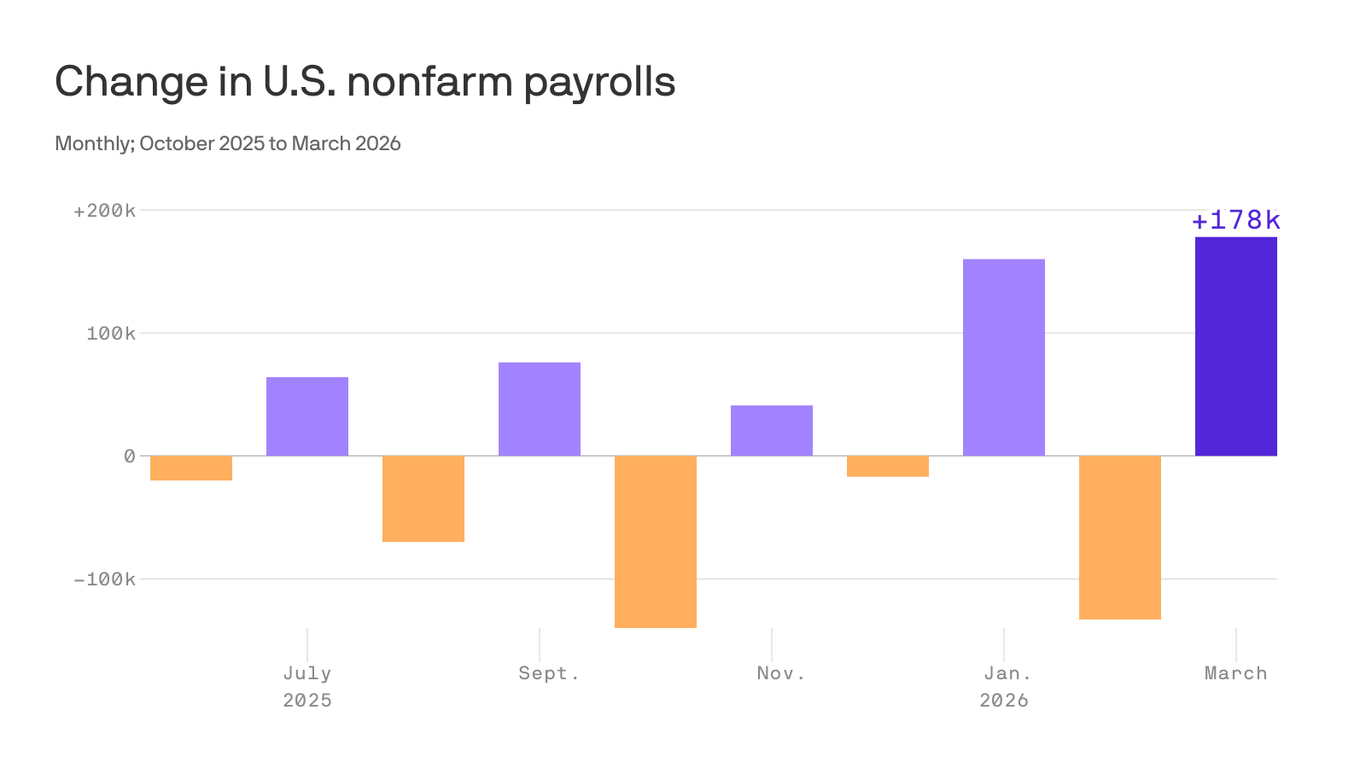
The U.S. economy added 178,000 jobs in March, with the unemployment rate decreasing to 4.3%, but concerns about labor force participation persist.
US politics
fromFortune
16 hours agoThe economy can shed jobs and still keep the labor market balanced, as Trump's immigration crackdown turns breakeven hiring negative | Fortune
The U.S. labor market shows a negative breakeven rate of employment growth due to immigration restrictions, indicating potential job losses without rising unemployment.
US Elections
fromFortune
1 day agoThe jobs report looks good 'for the wrong reasons,' top economist warns: It's hiding how many Americans are giving up | Fortune
The U.S. economy added 178,000 jobs in March, with the unemployment rate decreasing to 4.3%, but concerns about labor force participation persist.

fromAxios
3 days agoThe American consumer stands firm
"Jobs may be a bit modest when we look out over the last couple of years, but pay is telling a different story - that there is still a little bit of tightness in this labor market," ADP chief economist Nela Richardson told reporters Wednesday morning.
Business
fromFortune
5 days agoBond yields are falling even as oil tops $102, showing that Wall Street fears recession more than inflation | Fortune
"Oil prices are higher again this morning, but Treasury yields are lower as the risks to economic growth begin to take precedence over the risks to inflation," Oxford Economics said in a note on Monday.
World news
World politics
fromwww.theguardian.com
3 days agoA third inflationary shock in less than a decade is coming: who will pay the price this time around? | Aditya Chakrabortty
Daniel Yergin highlights the vulnerability of global oil supplies through the Strait of Hormuz and the consequences of military actions against Iran.
#us-dollar
US Elections
fromLondon Business News | Londonlovesbusiness.com
3 days agoUS dollar rose amid a rebound in geopolitical concerns - London Business News | Londonlovesbusiness.com
The US dollar strengthened due to geopolitical fears and better-than-expected economic data, while uncertainty keeps market volatility high.

US Elections
fromLondon Business News | Londonlovesbusiness.com
3 days agoUS dollar rose amid a rebound in geopolitical concerns - London Business News | Londonlovesbusiness.com
The US dollar strengthened due to geopolitical fears and better-than-expected economic data, while uncertainty keeps market volatility high.
fromLondon Business News | Londonlovesbusiness.com
5 days agoUS dollar stable near recent highs - London Business News | Londonlovesbusiness.com
Escalating geopolitical risk continued to dominate global markets' concerns, with safe-haven demand keeping the dollar index anchored near a multi-week high.
World politics
Business
fromwww.housingwire.com
2 weeks agoFed holds rates, officials signal wait and see on inflation risks
Oil price resolution timing in the Strait of Hormuz will determine whether inflation stays elevated, delaying Fed rate cuts, or eases, allowing Treasury yields and mortgage rates to decline toward early-year levels.
World politics
fromLondon Business News | Londonlovesbusiness.com
6 days agoUS dollar stable after successive gains - London Business News | Londonlovesbusiness.com
Escalating Middle East tensions are influencing market sentiment, keeping the dollar stable and impacting US Treasury yields amid inflation concerns.
fromwww.aljazeera.com
2 weeks agoUS Fed keeps interest rates steady amid economic, geopolitical uncertainty
The Committee seeks to achieve maximum employment and inflation at the rate of 2 percent over the longer run. Uncertainty about the economic outlook remains elevated. The implications of developments in the Middle East for the US economy are uncertain, the central bank said in a statement announcing its policy decision and referring to its Federal Open Market Committee.
US politics
Real estate
fromwww.housingwire.com
3 weeks agoAnnual inflation steady at 2.4% in February
February CPI shows shelter inflation returning to pre-COVID levels with steady momentum, but geopolitical tensions and energy market volatility create uncertainty for future inflation trends and Federal Reserve policy decisions.
US Elections
fromwww.theguardian.com
3 weeks agoEverything is going up': Americans struggle with affordability despite Trump's claims
US workers continue facing affordability struggles despite Trump's campaign promises, with rising costs outpacing wages and tariffs increasing prices for most Americans.
US Elections
fromwww.aljazeera.com
4 weeks agoUS job market stalls, unemployment rate rises before Fed decision
The US economy lost 92,000 jobs in February with unemployment rising to 4.4%, driven by healthcare sector losses and tariff-exposed industry weakness despite economist forecasts of job gains.
fromFortune
2 months agoForget the K-Shape: We have a barbell economy-and the middle class is buckling under the weight | Fortune
The prosperity of this top cohort is not driven by wage growth. While their wages have risen, they have stagnated relative to the explosive returns on capital. Instead, their consumption is driven by the "Wealth Effect." New analysis shows that 70% of recent economic growth is now driven by just 20% of earners. These consumers aren't spending wages; they are spending paper gains tethered to a market bubble.
Business
US politics
fromFast Company
2 months agoInflation fears in the U.S. are running high, especially for this demographic, a survey shows
Asian Americans, Pacific Islanders and Native Hawaiians show greater anxiety about costs and prioritize government action on inflation and living expenses than U.S. adults overall.
fromAxios
2 months agoTrump's heavy hand tightens grip on U.S. economy
Trump is trying to reverse his sagging approval ratings by brute force, leaning on populist instincts to deliver visible cost relief before November. The result: institutional stability and capitalist norms - like so much else in the Trump era - are increasingly subordinate to raw presidential power. Zoom in: Trump has denied knowledge of the Justice Department's criminal inquiry into Fed chair Jerome Powell, which is nominally focused on cost overruns from the central bank's renovation of its D.C. headquarters.
US politics
fromAxios
1 month agoThe Goldilocks economy, if you don't look too close
Employers added a healthy 130,000 jobs in January, the Labor Department said this week, as the unemployment rate edged down to 4.3%. The caveat? That announcement came with revisions that showed job creation flatlined over the last year, with only 15,000 jobs being added per month on average. Service sectors like finance and professional services that normally power the creation of high-paying office positions have instead been shedding jobs, perhaps reflecting employers' anticipation of AI-related cost savings.
US news
[ Load more ]