#interest-rate-differentials
#interest-rate-differentials
[ follow ]
#inflation #federal-reserve #interest-rates #treasury-yields #monetary-policy #us-dollar #energy-prices


fromIndependent
2 days ago'If you are using credit cards to take out cash, you need to cut up your card' - money experts share their credit card dos and don'ts
Credit cards can be very dangerous from a financial well-being perspective, if used irresponsibly. The temptation to use one to fund a big holiday or a new sofa that you can't afford can be seriously tempting.
Relationships
#geopolitical-risk
UK news
fromLondon Business News | Londonlovesbusiness.com
3 weeks agoExpectations for UK interest rate cuts shift dramatically - London Business News | Londonlovesbusiness.com
Geopolitical tensions are pushing markets toward higher interest rates and oil prices, benefiting energy and defence sectors while shifting investment away from growth stocks.
Retirement
fromLondon Business News | Londonlovesbusiness.com
1 day agoEvery time you borrow from a bank, you're paying more than you think - London Business News | Londonlovesbusiness.com
Opportunity cost in loans includes lost potential earnings from repayment dollars, not just the interest rate paid.
from24/7 Wall St.
1 day agoThis ETF Pays Dividends Monthly and Yields 7.3%
The fund blends high yield corporate bonds, senior loans, and debt tranches of U.S. collateralized loan obligations (CLOs) into a single actively managed portfolio, aiming to deliver income that beats the broad bond market while keeping volatility lower than any single segment on its own.
Business
Artificial intelligence
fromFortune
3 days ago'Inflationary surge': Fed economists warn AI hype is overheating the economy whether or not the technology ever delivers | Fortune
AI optimism may hinder productivity and contribute to short-term inflation as households and businesses react to perceived future gains.
World politics
fromLondon Business News | Londonlovesbusiness.com
6 days agoUS dollar stable after successive gains - London Business News | Londonlovesbusiness.com
Escalating Middle East tensions are influencing market sentiment, keeping the dollar stable and impacting US Treasury yields amid inflation concerns.
fromFortune
5 days agoBond yields are falling even as oil tops $102, showing that Wall Street fears recession more than inflation | Fortune
"Oil prices are higher again this morning, but Treasury yields are lower as the risks to economic growth begin to take precedence over the risks to inflation," Oxford Economics said in a note on Monday.
World news
fromwww.mediaite.com
5 days agoBad News All Around!' Fox Business Host Stunned By Highly Inflationary' Prices in Total Bummer of an Economic Analysis
High energy prices are kryptonite for the housing market. Affordability, especially for those first-time home buyers, is now an elusive dream until oil prices come down and interest rates come down.
SF real estate
#us-dollar
US Elections
fromLondon Business News | Londonlovesbusiness.com
3 days agoUS dollar rose amid a rebound in geopolitical concerns - London Business News | Londonlovesbusiness.com
The US dollar strengthened due to geopolitical fears and better-than-expected economic data, while uncertainty keeps market volatility high.

US Elections
fromLondon Business News | Londonlovesbusiness.com
3 days agoUS dollar rose amid a rebound in geopolitical concerns - London Business News | Londonlovesbusiness.com
The US dollar strengthened due to geopolitical fears and better-than-expected economic data, while uncertainty keeps market volatility high.
from24/7 Wall St.
1 day agoHow Income Investors Are Using HYBL to Dodge Interest Rate Risk in 2026
HYBL attempts to solve the income problem by combining senior loans, high-yield corporate bonds, and debt tranches from U.S. collateralized loan obligations (CLOs). The result is a portfolio with lower duration and lower volatility compared to traditional high-yield funds, while still targeting high current income with monthly distributions.
Business
#eurusd
Europe news
fromLondon Business News | Londonlovesbusiness.com
1 week agoEuro rally falters as dollar regains strength on 'higher for longer' rates - London Business News | Londonlovesbusiness.com
EURUSD recovery shows fading momentum, reflecting a corrective rally rather than a trend reversal amid complex macroeconomic conditions.
Europe news
fromLondon Business News | Londonlovesbusiness.com
1 week agoEuro rally falters as dollar regains strength on 'higher for longer' rates - London Business News | Londonlovesbusiness.com
EURUSD recovery shows fading momentum, reflecting a corrective rally rather than a trend reversal amid complex macroeconomic conditions.
from24/7 Wall St.
2 days agoUSHY Yields 6.58% While VIX Sits at the 96.5th Percentile, A Risky Tradeoff
USHY seeks to track the investment results of the ICE BofA US High Yield Constrained Index, composed of U.S. dollar-denominated, high yield corporate bonds, providing broad exposure in a low-cost wrapper.
Business
Business intelligence
from24/7 Wall St.
4 weeks agoThe 4 ETFs To Buy Before The Fed Lowers Rates And Shoots Them Higher
The Federal Reserve paused rate cuts in January 2026 after three cuts, creating market uncertainty that underprices assets benefiting from future cuts, with four ETFs positioned to capitalize on eventual rate reductions.
#uk-interest-rates

UK news
fromLondon Business News | Londonlovesbusiness.com
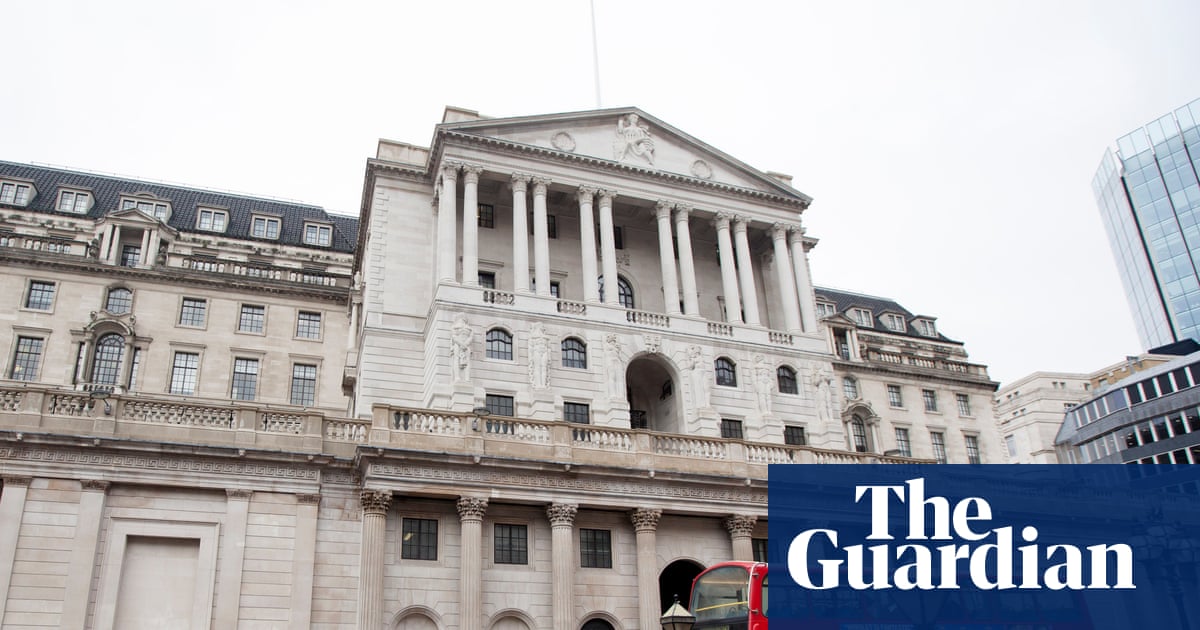
2 weeks agoUK rates: Savers, investors should act now in higher-for-longer era - London Business News | Londonlovesbusiness.com
UK interest rates will likely remain elevated longer than expected due to renewed inflation threats from energy prices and geopolitical tensions, requiring savers and investors to adjust their financial strategies accordingly.
UK news
fromLondon Business News | Londonlovesbusiness.com
2 weeks agoBank of England holds base rate amid Middle East war - London Business News | Londonlovesbusiness.com
The Bank of England held the base interest rate at 3.75% due to Middle East conflict uncertainty and rising energy prices threatening inflation expectations.
Business intelligence
from24/7 Wall St.
4 weeks agoThe Last Time the Fed Chair Was This Hawkish, the Market Did Something Surprising
Institutional investors show cautious restraint as elevated market uncertainty persists alongside a hawkish Federal Reserve maintaining high interest rates and persistent inflation trends.
fromLondon Business News | Londonlovesbusiness.com
3 weeks agoDollar under pressure as geopolitical concerns ease - London Business News | Londonlovesbusiness.com
The expectations of a decrease in tensions triggered a pullback in oil prices, which in turn softened immediate concerns about inflation pressures. However, the broader geopolitical backdrop remains fragile, and any renewed escalation could quickly push oil prices, the dollar, and Treasury yields higher again.
World politics
fromLondon Business News | Londonlovesbusiness.com
2 weeks agoDollar retreats ahead of federal reserve interest rate decision - London Business News | Londonlovesbusiness.com
The dominant force in play remains the Middle East conflict, which has kept oil prices elevated and inflation expectations firm. Reports that Washington is assembling a coalition to escort vessels through the Strait of Hormuz could offer some relief for the oil market and could weigh on the dollar.
World news
US news
fromLondon Business News | Londonlovesbusiness.com
1 month agoDollar Relatively Stable Amid Economic Uncertainty - London Business News | Londonlovesbusiness.com
The dollar remains stable within a consolidation range, with its direction dependent on monetary policy expectations, labor market data, and inflation trends.
fromLondon Business News | Londonlovesbusiness.com
6 days agoGlobal markets react to geopolitical tensions and rising energy costs - London Business News | Londonlovesbusiness.com
U.S. financial markets experienced a volatile week, largely influenced by geopolitical developments in the Middle East and fluctuations in energy prices. Investor sentiment was driven primarily by external events rather than domestic fundamentals.
Business
World politics
fromLondon Business News | Londonlovesbusiness.com
4 weeks agoDollar set for weekly gain as geopolitics and resilient data lift yields - London Business News | Londonlovesbusiness.com
The dollar gains over 1% this week due to strong US economic data and Middle East tensions, with markets now pricing in only one Fed rate cut for the year instead of two.
from24/7 Wall St.
4 weeks agoInterest Rates Are Heading Down - These 3 Stocks Win Big When They Do
In my view, interest rates are more likely than not going to head lower over the course of 2026 and into 2027. I'm not saying we're due for a pandemic-like selloff, but I do think that weakness in the labor market is likely more protracted than the government data suggest. As such, I do think the makeup of the Federal Reserve, and which way many of its presidents and voting members lean (toward providing support for the labor market over battling inflation) could lead to much faster rate cuts than many think.
Retirement
Business
fromSilicon Canals
1 week agoGold crossed $5,300 the same week three central banks quietly dumped $47B in US Treasuries. That's not coincidence - it's coordination - Silicon Canals
Gold's price surge is driven by strategic positioning of central banks, not just fear, as they reduce US Treasury holdings amid geopolitical tensions.
fromLondon Business News | Londonlovesbusiness.com
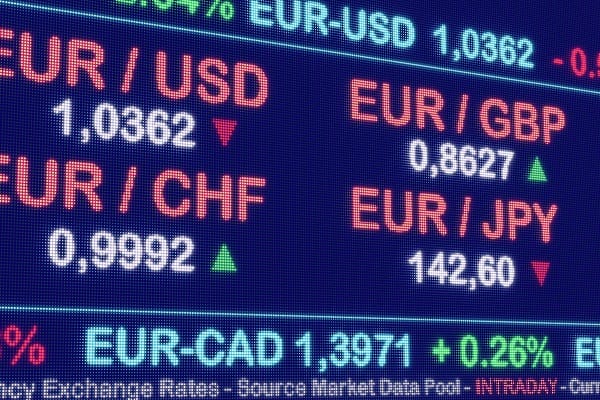
1 month agoUSDJPY approaches 158 as interest rate differentials favour the USD - London Business News | Londonlovesbusiness.com
USDJPY is no longer a one-sided story of USD strength. It has become a tug-of-war between two safe-haven currencies amid escalating geopolitical tensions and shifting monetary policies. This dynamic has widened volatility ranges and made the overall trend less stable.
World politics
Business
fromLondon Business News | Londonlovesbusiness.com
2 weeks agoWhere is the US Dollar Index heading amid rising bond yields? - London Business News | Londonlovesbusiness.com
The US Dollar Index strengthens due to Federal Reserve's hawkish stance, elevated Treasury yields, and geopolitical tensions, with limited rate cuts expected through 2027.
Business
fromwww.housingwire.com
2 weeks agoFed holds rates, officials signal wait and see on inflation risks
Oil price resolution timing in the Strait of Hormuz will determine whether inflation stays elevated, delaying Fed rate cuts, or eases, allowing Treasury yields and mortgage rates to decline toward early-year levels.
fromThe Drum
2 months agoWhat happens when our common currency becomes uncommon?
This is not new news, of course, but many in the industry seem to be finally waking up to the hard truth that data-driven media buying, as we know it today, is severely under threat and has to change. Cookies power everything we do, from humble frequency capping through to complex multi-touch attribution models, ad personalisation and audience segmentation. They underpin most of the gains we've made in performance advertising, as well as brand advertising, over the past decade.
Business
fromLondon Business News | Londonlovesbusiness.com
3 weeks agoGold prices between oil pressures and Fed expectations - London Business News | Londonlovesbusiness.com
Gold prices fell below $5,100 per ounce due to rising oil prices triggering inflation concerns that shifted expectations for higher U.S. interest rates, reducing gold's appeal relative to yield-bearing assets.
fromLondon Business News | Londonlovesbusiness.com
2 months agoEuropean markets lower as traders weigh up Fed and Mag7 earnings risk - London Business News | Londonlovesbusiness.com
European markets have kicked off on a negative fitting in a day that looks jampacked full of potential obstacles that will leave many be believing they are best served sitting it out for now. In a week that has seen a new front runner for the fed chair position, today's FOMC interest rate decision provides the basis for market rate expectations in the months ahead.
Miscellaneous
fromwww.sandiegouniontribune.com
1 month agoIs a weaker U.S. dollar a good thing?
The U.S. dollar's value has fallen 8% over the past year, as the price of gold has skyrocketed, said the WSJ Dollar Index. Some think it is a good thing. President Donald Trump said recently a weaker dollar is great. The idea is a weaker currency boosts exports and employment while a strong currency can throttle an economy. While the idea of a weaker dollar has had supporters over the decades, economists often argue gains can be eaten up by domestic inflation and deflation.
US news
fromLondon Business News | Londonlovesbusiness.com
2 months agoDollar struggle and monetary policy shape the next phase - London Business News | Londonlovesbusiness.com
The resilience of gold above $4,800 per ounce at this stage reflects a delicate and complex balance between traditional supporting factors and emerging pressures-one that cannot be superficially interpreted or reduced to the movement of the dollar alone. It is true that the U.S. dollar's retreat from its recent peaks, after failing to sustain its recovery momentum from a four-year low, provided gold with a short-term breather and attracted some buyers.
Business
[ Load more ]