Online marketing
fromEntrepreneur
6 hours agoDon't Let Your Online Presence Suck - It's Your First Impression
A strong online reputation across multiple platforms is essential for building trust and attracting opportunities.
Short-term rentals offer a variety of options beyond traditional home rentals. Platforms like Swimply allow individuals to rent out pools, while Neighbor and Spacer enable the monetization of unused parking spots.
The convenience of sourcing online is fraught with more pitfalls than most of us want to admit. Try finding adequate photos of a vintage piece's condition-close-ups of the fabric, video of damaged areas, any images of a piece's rear or underside!
"Everything in today's e-commerce environment is being driven by increased intensity of the research phase and true generational divides during the current macroeconomic environment," said Jaysen Gillespie, VP of product marketing and analytics at RTB House.
Sourced directly from a manufacturer, private-label brands remove one or more layers of intermediaries from the supply chain, usually distributors or other brands. A nearly identical private brand can earn more margin, even at a low price.
Spend half an hour exploring #StrategyTwitter or #MarketingTwitter and you'll quickly discover huge swathes of talented folks arguing passionately about the correct way to market brands. On one end of the spectrum you'll find the staunch strategists quoting lines from Sharp's How Brands Grow (which is well worth a read), while on the other end you'll find people posting fairly nauseating Gary Vaynerchuk quotes in serif fonts about how the number one rule in marketing is 'love'.
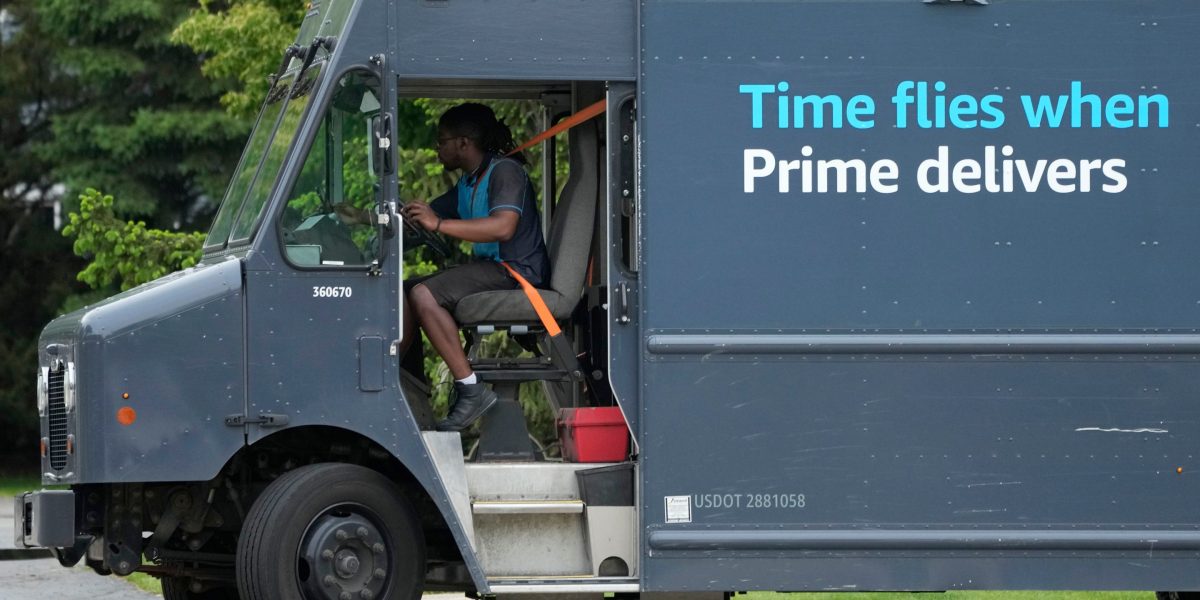
Amazon automation isn't a magic button. It's a business model, and like any business model, outcomes vary based on execution. The short answer is yes, it can be profitable. The honest answer is that it depends entirely on how it's done and who is running it.
Traffic is not the problem. The buying path is the problem. Fixing conversion first often unlocks growth with the same budget. This topic matters more now. Ad costs rise. Competition is tighter. Buyers also have less patience. A store can attract the right visitors and still lose them.
A 2025 LinkedIn study found that 80% of C-suite executives believe AI adoption is important and will foster a more innovative workplace culture. Gartner reported in December 2025 that 65% of employees said they are excited to use AI at work. The trend suggests a convergence of three priorities: Management fears their companies will fall behind if they don't adopt AI and automation; Employees use AI because it makes their jobs easier, and the knowledge gained is an important career skill; The cost of off-the-shelf software and development makes AI an attractive alternative.
You're scrolling through an online retailer, like Amazon, Shein or eBay, and spot a shirt on sale for $40. You add it to your cart, but at checkout, a $10 shipping fee suddenly appears. Frustrated, you close the tab. But what if that same shirt was priced at $50 with free shipping? The likelihood that you would have bought it without a second thought is much higher.
When a transaction involves a cost, we instinctively weigh the downside. But when something is entirely free, we experience a positive emotion and perceive the offer as more valuable than it is mathematically. Retailers no doubt realise that offering free delivery is one of the most effective ways to stop a consumer from abandoning a digital shopping cart.
Given that ParkerBrand had allocated greater resources to paid media, higher performance objectives were set for 2019. Overall, the goal was to grow revenue rapidly over a short period of time whilst maintaining the return on ad spend (ROAS) to remain profitable. This translated into the following objectives: Achieve a minimum of 10:1 ROAS "Grow revenue as much as possible" from a year-on-year perspective
At a time when digital channels increasingly define commercial success, online marketplaces have become essential tools for small and medium-sized enterprises to reach customers and drive revenue. For many SMEs, marketplaces offer a ready-made audience without the significant acquisition costs of standalone ecommerce sites, but the simple act of listing product ranges isn't enough to guarantee results. To succeed, businesses must approach their marketplace presence strategically, optimising every element of their listings for discovery, relevance and conversion.
A digital product is any non-physical item sold online and delivered electronically. This category encompasses a wide range of offerings: ebooks that teach specific skills, online courses that provide comprehensive training, design templates that save creators hours of work, stock media libraries offering photography and video, printables like planners and checklists, software tools that automate tasks, and audio files ranging from music to guided meditations.
Markup is how much you add to your cost to get your selling price. If something costs $10 and you sell it for $15 , you added $5. That's a 50 percent markup on your cost. Where people get confused is that markup isn't the same as margin, even though the terms get used interchangeably all the time. Margin measures profit as a percentage of the selling price, and markup measures it based on your costs. Same dollar, different percentages.
Americans are likely to have spent a record $1 trillion-plus this holiday shopping season alone, and about $5.5 trillion in retail sales in all of 2025, according to estimates by the National Retail Federation. That includes many unhappy returns for retailers: And when it comes back to them, a lot of the $850 billion in returned merchandise is often cheaper to discard than to inspect, sort, and resell-adding millions of tons to landfills every year.
You can use multi-channel products to manage your inventory for both online and in-store sales within a single, unified product listing. Google explained that "this approach simplifies how you manage your products and helps you reach more customers." With multi-channel products, you can oversee your online and in-store inventory together. Previously, you might have maintained separate listings for the same product if you sold it both online and in physical stores.