fromSilicon Canals
1 day ago
Retirement
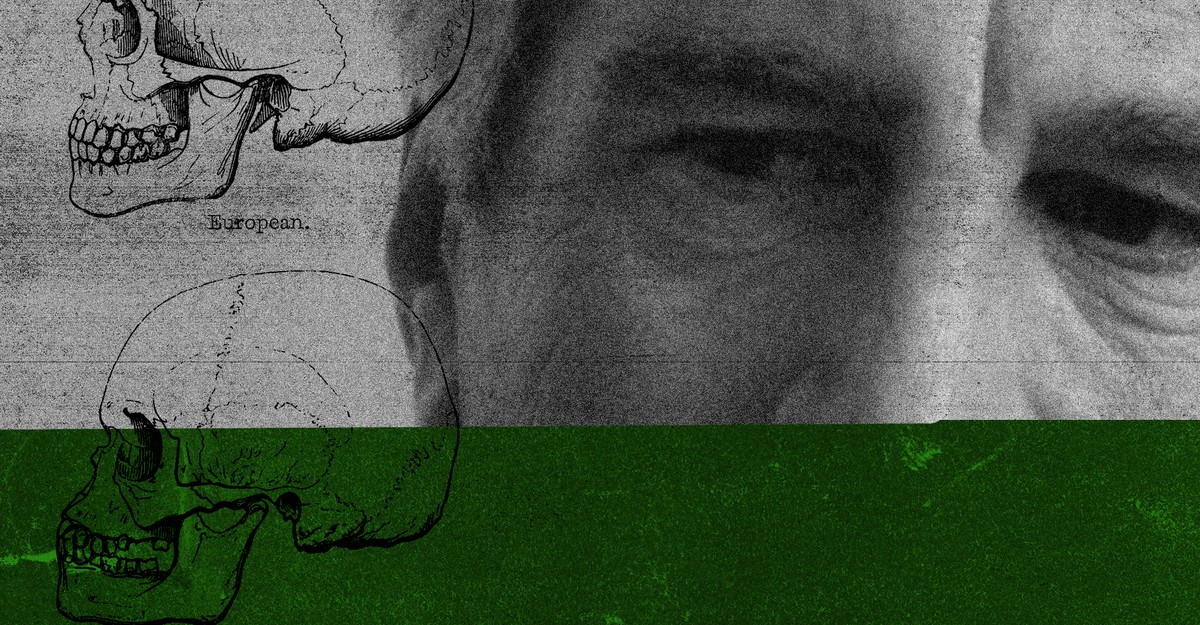
Looksmaxxing influencers promise isolated young incels that they can improve their lives and sexual market value through rigorous diets, steroids, and even plastic surgery. The trend promotes painful procedures under the guise of male beautification.
At a certain point in time, when enough circumstantial evidence that's f*cking weird like the cameras being down and the guards being asleep, Rogan said as Shellenberger stepped in. The professor noted the cameras had issues prior, and prison guards falling asleep is not uncommon.
Theroux, 55, might be north London dad in appearance—specs, grey T-shirt, black jeans, sneakers—but he's the grandmaster of both the immersive documentary and interview form. The son of American writer Paul Theroux (a nepo baby before they existed), he has built a 30year career in television, much of it at the BBC, making a virtue of being a socially awkward verbivore, hypercurious, super-funny.
Social anxiety, more often than not, is about inexperience. Most of us only go out for dinner or have an event once a week, and that becomes our entire social outlet. So when we do interact with someone new, it feels high-stakes. You feel pressured to say the perfect thing.
Rogan frames the presence of ICE as a direct response to mass fraud in Minnesota, justifies ICE's need for total anonymity to carry out their work, warns one of the real problems is that ICE might wrongly be seen as villains, and expresses sympathy for ICE agents. While lamenting Good's shooting as unfortunate, Rogan says she seemed crazy and out of her fucking mind, speculating she was a deliberate agitator.
Piers Morgan, who has sort of made a mockery of the entire industry by putting on screen whatever dregs are still willing to go on [his show]... He had on Dave Smith, who has, you know, apparently, his job is to never tell jokes but to instead, give poorly-informed foreign policy takes... And to also hate America.
This is a tough time for politics in America. But it's an extremely interesting time for those of us who wrestle with the nature of reality. As a psychiatrist who has treated people with psychosis for over 20 years, I have lived in the uncomfortable space between their experience of reality and mine and I have worked to change beliefs that are some of the most resistant to change: delusions.
Born in Lancashire, Matthew Kelly, 75, studied drama at Manchester Polytechnic and acted at the Liverpool Everyman. He moved into TV, presenting Game for a Laugh in the 80s, You Bet! in the 90s and Stars in their Eyes from 1993 to 2004. Having returned to the stage, he received an Olivier award in 2004 for his role in Of Mice and Men in London's West End.
L ast September, nearly 6,500 people-including start-up founders, investors, and researchers-gathered at the Palais des congrès in Montreal for All In, Canada's largest artificial intelligence event. After passing through a security checkpoint, they lounged on plush furniture and posed in front of a luminous "ALL IN" sign. Everyone wore a lanyard with a QR code that could be scanned to connect through an app, a sort of modern-day business card. Kiosks showcased AI companies; smooth jazz flowed and so did coffee.
I am sitting in my office shed, cut off from the house by a driving rain. The misery and boredom of the English winter is, I have to admit, beginning to get to me. I spent January talking about the days getting longer, and used up all my optimism. For the last 10 minutes I've been scrolling through the website of my American home town newspaper, which is full of pictures of the recent snowfall over a foot, with more predicted in the coming days. Extreme weather has a tendency to make me homesick I hate to miss a hurricane.
Peterson believes that avoiding difficult conversations is one of the fastest ways to weaken your mind. And honestly, he's right. I used to be the king of avoidance. If something felt uncomfortable, I'd find every excuse to dodge it. "It's not the right time," I'd tell myself. Or my personal favorite: "Maybe the problem will just go away." Spoiler alert: It never did.
Metaphors are linked to how we experience the world around us, according to seminal work by researchers George Lakoff and Mark Johnson. In English, we "move forward" with our lives and don't "retreat into" the past. We speak about people who are "cold as ice" and "heavy" matters we need to resolve. Some of these metaphorical expressions are more than just, well, expressions-they are actually based on our sensory experiences. This mind-body link is called "embodied cognition."
"My general view here," the CBS News editor-in-chief wrote in a memo before shelving the now-infamous 60 Minutes report on El Salvador's CECOT concentration camp, "is that we do our viewers the best service by presenting them with the full context they need to assess the story. In other words, I believe we need to do more reporting here." Expediency, personal prerogative, servility to power, all smuggled under the cover of journalistic scruple:
H ave you heard Solomon Ray's new album Faithful Soul? It's number one on the gospel charts-and entirely AI generated, just like the musical artist behind it. The idea that a hit Spotify artist might not be human is a satire of the attention economy itself: an ecosystem once based on authenticity and connection now topped by a synthetic voice engineered for maximum uplift. What does "soul" even mean when it's made by software trained on real music?
Ever wonder why some people seem to crush it in every area of life while others stay stuck in the same patterns year after year? According to Jordan Peterson, clinical psychologist and author of "12 Rules for Life," the difference comes down to one brutal practice: Telling yourself the truth about your weaknesses. Not the comfortable half-truths we usually feed ourselves. The real, uncomfortable, sometimes painful truth.
Developmental psychology has long studied what researchers call 'social clocks,' a term coined by psychologist Bernice Neugarten in the 1960s. Neugarten's research found that societies create implicit timetables for major life events: when you should finish school, when you should be established in a career, when you should have children, when you should own property. People who hit these milestones 'on time' reported less stress.
Knowing grants a sense of safety and certainty. It provides us with knowledge and a degree of control-the direction we believe we need to go and the way to get there. Yet, considering the chaos, anxiety, distress, loneliness, and existential challenges that most of us live with, we continue clinging to what we were taught to believe is "the truth." And while safety and certainty are illusory, we cling to them in powerful ways.
By the time people reach their seventh decade, they have learned many lessons. From a psychological standpoint, they understand what really matters. They have learned what to let go of. They know what they need to be happy. They also acknowledge the importance of being kinder to themselves and how relationships and experiences are more important than possessions. They tend to reflect on lessons learned and often recover more easily from adversity. They also focus on wanting the best for their loved ones.
Back in the day, a simple fact rang true: understanding required construction. If you wanted clarity, you had to build it from the inside out. You struggled with ambiguity and lived with uncertainty longer than was comfortable. But after all, you were building something. Importantly, this "cognitive building" didn't appear fully formed but emerged brick by brick and thought by thought. That work wasn't a barrier to thought; it was the architecture of thought itself.
A professional philosopher outside the academy walls can act as a popularizer (the goal here is to make philosophy more accessible to the general public), an applied ethicist (the major task is to offer an analysis of various specific moral issues that arise within a society), and a public intellectual (I limit this role to questions that have political connotation). Of course, there are overlaps between these roles and they certainly do not exhaust all possible forms of public engagement of a professional philosopher.
I've interviewed over 200 people for articles, from startup founders to burned-out middle managers, and I've discovered something fascinating: intellectual depth isn't about fancy degrees or knowing obscure facts. It shows up in how we communicate. When certain habits dominate someone's style, it reveals a concerning lack of curiosity and critical thinking that goes beyond just being annoying-it fundamentally limits their ability to engage with the world meaningfully.
They escaped persecution in the form of violent antisemitism and came to Canada with next to nothing. They built their lives from the ground up and understood, through lived experience, what the normalization of cruelty did to the human spirit, how quickly people can be swayed by the opinions of the day, and how easily one could forfeit the human capacity to stop and truly think about what one is doing.
For most of my life, I thought of myself as a fixed entity: This is me. These are my traits. This is who I am. I assumed I was essentially that same person who loved sugary cereal at age 8, fried chicken at 12, and tequila at 21, and who still loves those things now, even if my stomach disagrees. But this is an illusion. Neuroscience, physics, and Buddhism all agree: There is nothing fixed about us-not even close.