Podcast
fromArtforum
1 day agoSchlock Jock: Joshua Citarella at the Whitney Biennial
Doomscroll podcast's live tapings at the Whitney reflect changing museum priorities and the evolving relationship between art and digital discourse.
"It's an amalgamation of the Chicago neighborhood aesthetic with a Bulls fan, quite literally. It's kind of on the nose, but that's how I juxtapose the elements of my work, with the structure of a home and then a figure who is around or in the home."
Officer Scott was sort of born by accident. He was a character in a sketch I wrote, written for a male actor, but I always would direct to give more Chris Farley energy to the character. Unfortunately, the actor that was supposed to play Officer Scott became sick the day before the show, but as showrunner and writer of the sketch, I figured I'd buy a costume and perform Scott myself.
"This festival, 'Embrace Winter,' is now in its 14th year. We've hosted several events throughout the season, and this is our final one. Today we're here celebrating art, culture and community all coming together."
Kamrooz Aram is everywhere this year, from Mumbai Art Week to the Whitney Biennial, and critic Aruna D'Souza is grateful. She pens a beautiful meditation on his work, reading his abstract paintings as not simply a denunciation of Western modernism nor a reassertion of Islamic visual motifs, but something else entirely - something gestural, exuberant, riotous, and incomparably his own.
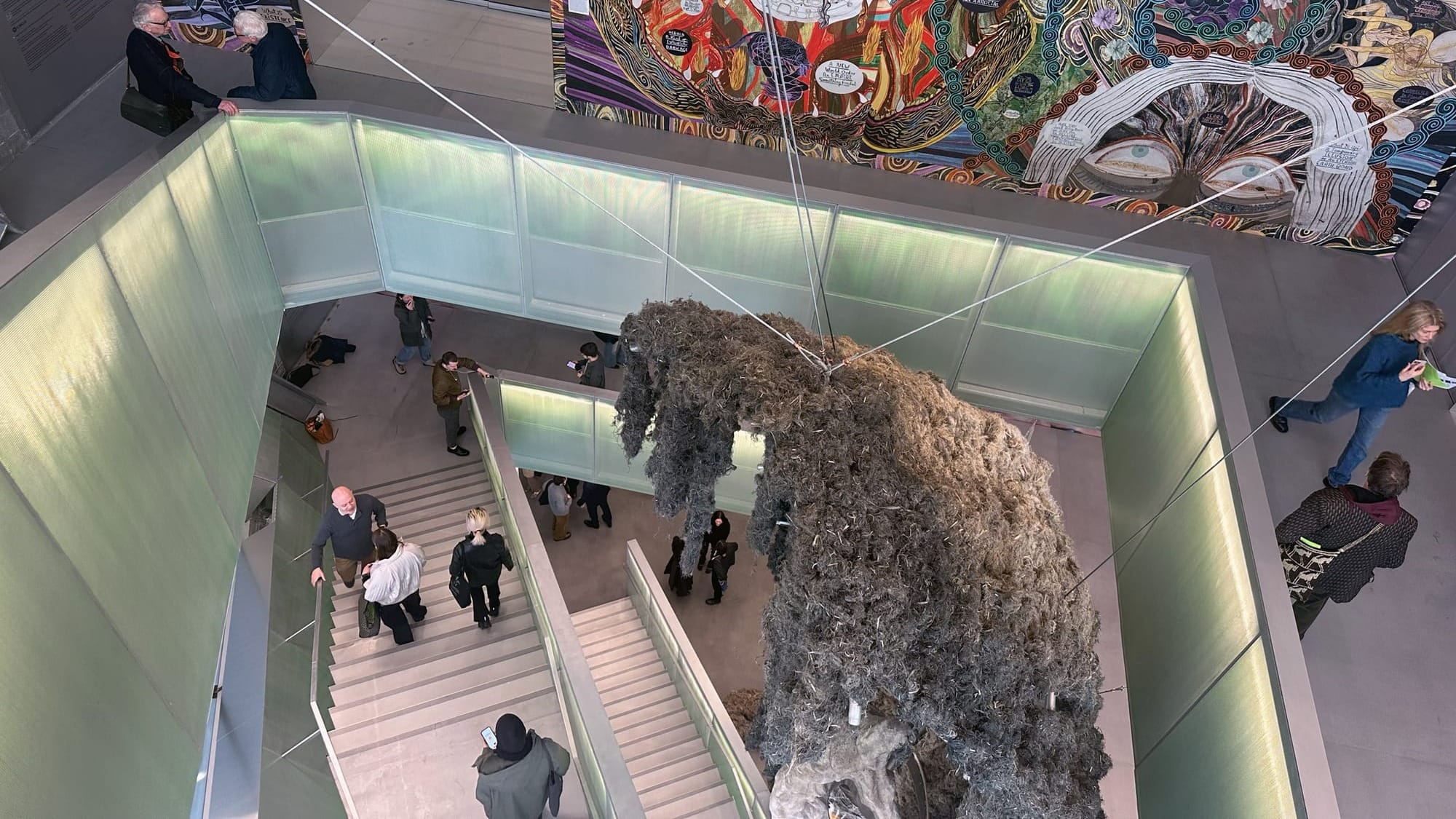
The new New Museum is many things: contemporary, perhaps, but also a science, history, anthropology, and many other museums in one. It echoes the desire of its patron class to own the world and its affiliated courtier class to deliver it to them on a silver platter, or encased in perforated metal, in this case.
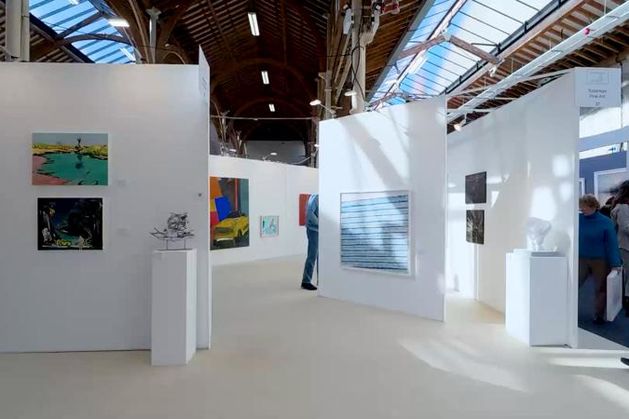
Dealers like artists with established sales records because it lowers their already considerable financial exposure. Renting a gallery space in Tribeca costs anywhere between $8,000-30,000 a month on top of staff, marketing, and daily operations. With that kind of overhead, very few business owners can afford to take on the financial risk of untested artists.
In 2024, I made a vow to never base my art criticism on wall labels. My decision came after reading reactions to that year's Whitney Biennial. "If every label in 'Even Better Than the Real Thing,' the 81st installment of the Whitney Biennial, were peeled off the walls and tossed into the Hudson, what would happen?" asked Jackson Arn in the New Yorker. (He went on to suggest that the overall show would have been much better.)
Mornings are best for concentrated work. In the winter, I turn on the heat at 8am and get started around 10am. Summer, I start around 9am. I have two areas in the studio for projects. The large, heavy wood sculptures are carved in the front section of the studio, closest to the roll-up wide door. Smaller sculptures are placed on a hydraulic workbench. Before I start, I focus, connect with the Source, and ask for guidance.
I work outside, carving and shaping the stone. Outside my house, I have a table, an extension cord, and tools. It's very cold and I have to wear all my winter clothes. When it's too cold, I do the filing and finishing work inside after I shape it outside. I listen to all kinds of music. I listen to Eminem all the time; his albums are all my favorites. For drawings, I work at Kinngait Studios or at home on my kitchen table.