#jedixson-paez
#jedixson-paez
[ follow ]
#contemporary-art #public-art #street-art #photography #illustration #mexico-city #murals #identity #sculpture


Social justice
fromdesignboom | architecture & design magazine
1 week ago'we have to respect history': freddy mamani on constructing utopia through radical repair
Freddy Mamani's architecture integrates indigenous heritage and modernity, reshaping El Alto's skyline into a vibrant expression of cultural identity.

Madrid food
fromBOOOOOOOM!
2 weeks ago"When the Desert Breathes Again" by Photographer Gonzalo Palaveccino
Photographer Gonzalo Palavecino documents La Tirana, Chile's largest religious festival, focusing on behind-the-scenes elements like food stands, abandoned objects, and improvised structures that reveal the sacred blending with everyday chaos and commerce.
Renovation
fromdesignboom | architecture & design magazine
2 weeks agotwo intersecting volumes of black concrete carve mavra house into the mexican landscape
Casa Mavra in Valle de Bravo features two angular black concrete volumes designed by TAC Taller Alberto Calleja, organized as intersecting forms that connect interior spaces with the surrounding landscape through continuous walls and controlled openings.
Design
fromdesignboom | architecture & design magazine
2 weeks agowith a pavilion crafted through collective embroidery, izaskun chinchilla tests urban utopia
Utopian thinking emerges through small-scale collective craft practices like embroidery rather than ambitious masterplans, creating tangible contributions to better communities.
fromThe Art Newspaper - International art news and events
3 weeks agoTomas Saraceno and Indigenous communities build art complex in Argentine salt flats
We don't eat batteries. They take away the water; they take away life. This pronouncement, in Spanish, appears in a photograph that the artist Tomás Saraceno sent via WhatsApp last month from Salinas Grandes, a high-altitude salt flat in northern Argentina. There, in one of the world's largest lithium reserves, the artist is working alongside 11 Indigenous communities to build El Santuario del Agua (The Water Sanctuary), a monumental work about the global energy transition.
SOMA, SF
Renovation
fromwww.archdaily.com
1 month agoMuimenta Social Center / Eduardo Dipre Mazza + Daniel Gomez Magide + Miguel Angel Diaz Gonzalez
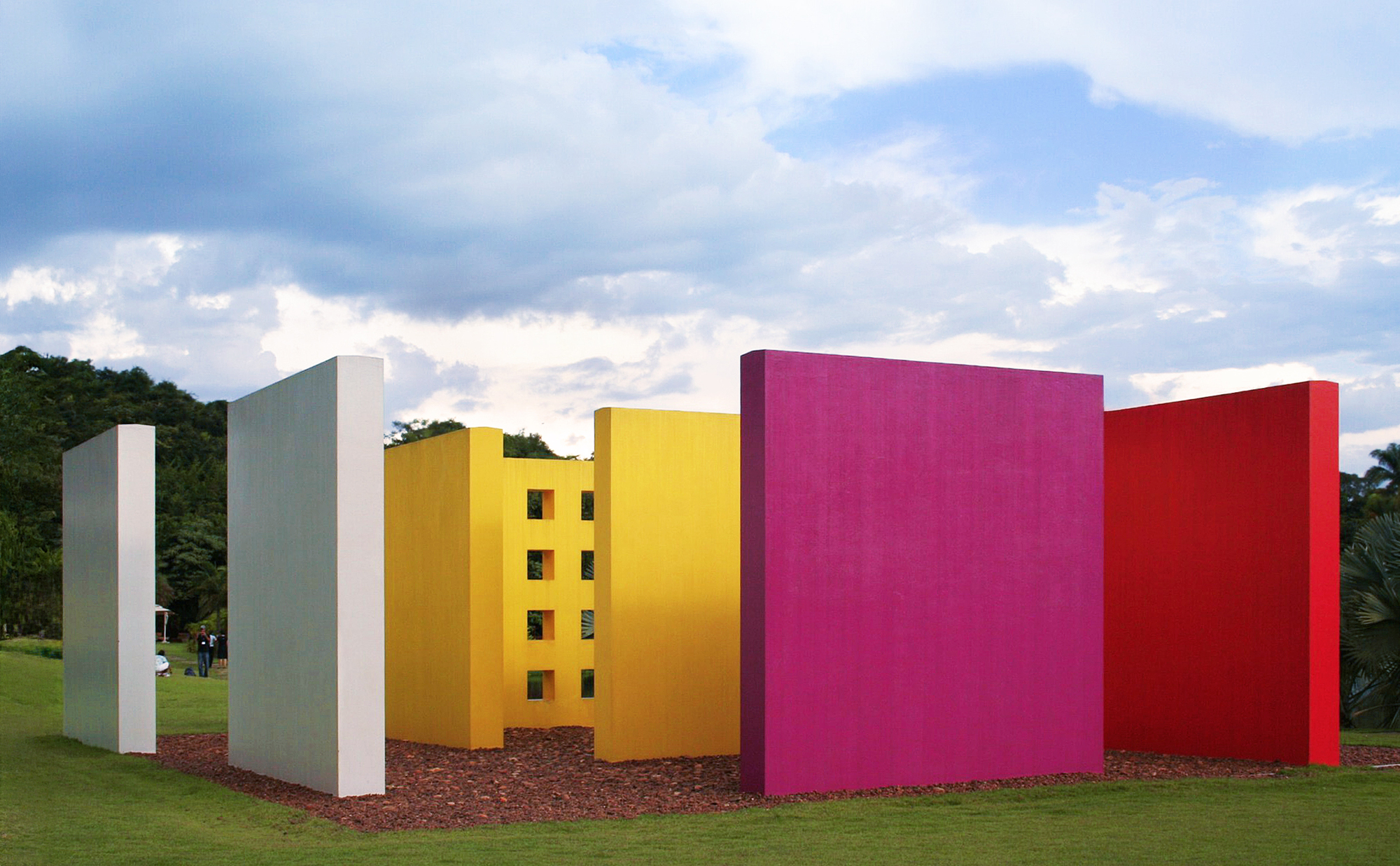
A multi-purpose social center in rural Galicia revitalizes an abandoned village through infrastructure rehabilitation, economic activity generation, and improved quality of life for residents.

World news
fromenglish.elpais.com
2 months agoThe discovery of Camilo Torres' body revives one of the most sensitive issues in Colombia's internal conflict
Forensic experts confirmed identification of Camilo Torres's remains, resolving a decades-long mystery about his 1966 death and closing a chapter in Latin American armed struggle.
fromThe Art Newspaper - International art news and events
1 month ago'We're the Tijuana of the tent': non-profit Ambos's stand at Frieze Los Angeles is relocated
We were supposed to be Frieze's special guests. And we feel like we're being censored, racially profiled and discriminated against. Having worked with the fair for five years, she says she will not continue beyond this weekend.
Arts
fromHyperallergic
1 month agoThe Uncertain Future of Colombia's Museum of Memory
In 2011, the Colombian government ordered the creation of a national museum "to achieve the strengthening of the collective memory" around the decades-long armed conflict. That same year, it passed the Victims and Land Restitution Law aimed at providing victims with reparations and justice. More than just a curated collection of objects or artworks, the museum, scheduled to be inaugurated in 2018, was conceived as an archive of the violent civil war.
Arts
fromDesign Milk
1 month agoInside Lee Broom's Latin American Exhibition at Diez Company
Now, he celebrates his first major presentation in Latin America, in congruence with Mexico City Art Week 2026 and ZSONAMACO, showcasing on an ideal stage inside one of the city's most architecturally layered interiors. Titled The Resident, the site-responsive installation, created during a residency at the Diez Company house, transforms the historic showroom into an immersive tableau where more than 50 works negotiate the boundaries between collectible design, contemporary art, and spatial theater.
Design
Design
fromdesignboom | architecture & design magazine
2 months agoblue fabric fragments dance with the wind on modular cultural pavilion in colombia
A reversible modular mobile pavilion for Bogotá draws on river systems to provide temporary, decentralized cultural spaces adaptable to diverse urban contexts.
Arts
fromJuxtapoz
1 month agoJuxtapoz Magazine - Judith F. Baca: Great Wall of Los Angeles: The 1970s- A Decade of Defiance and Dreams @ Jeffrey Deitch, Los Angeles
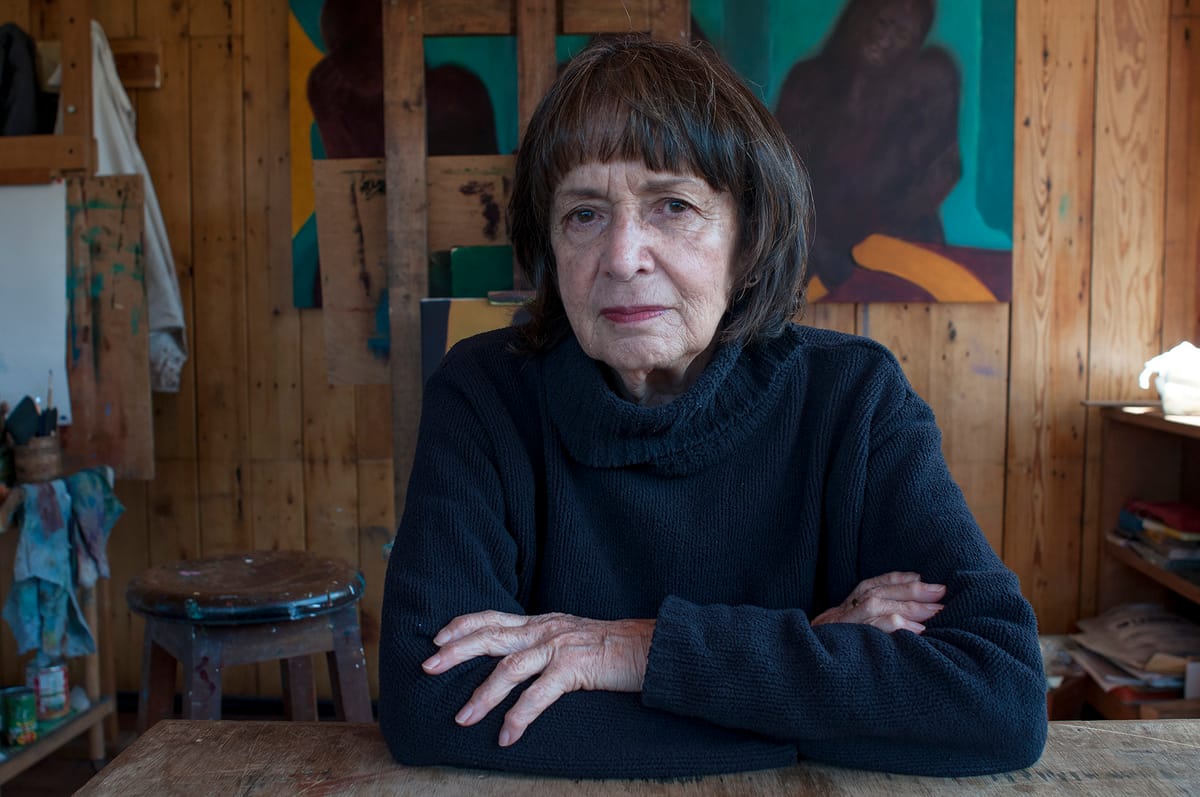
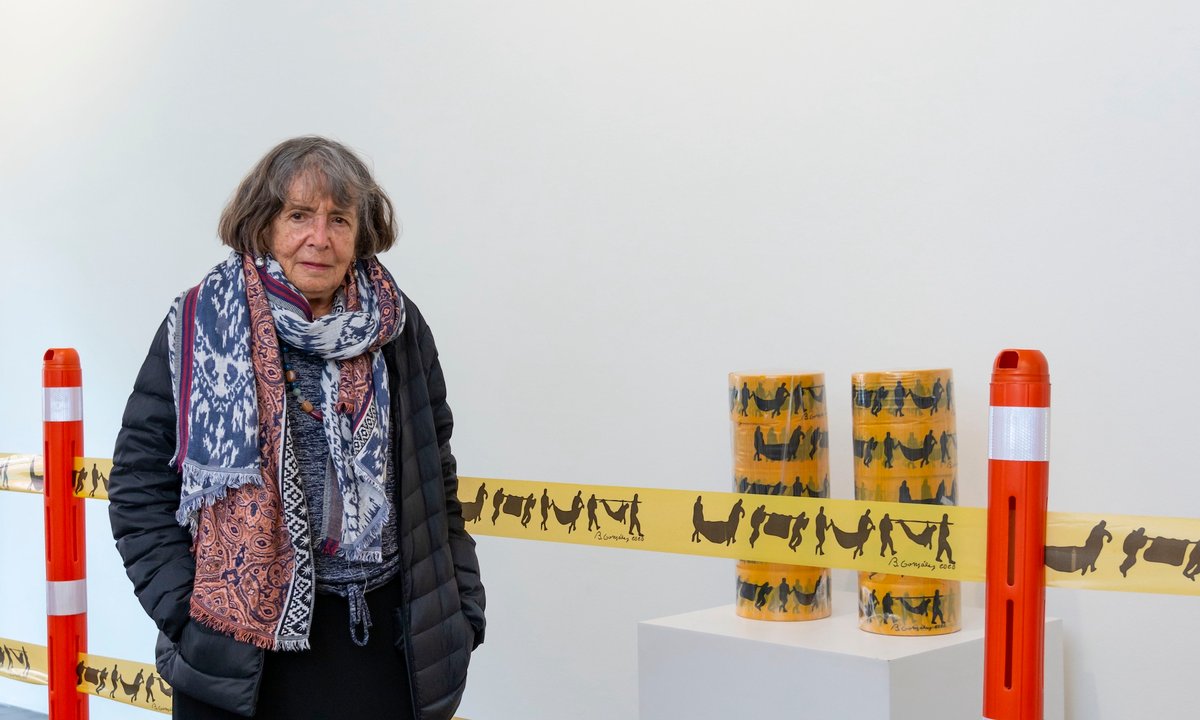
The Great Wall of Los Angeles expands to depict 1970s Indigenous reclamation, prison and campus uprisings, Chicano antiwar protests, and art's role in testimony.
fromJuxtapoz
1 month agoJuxtapoz Magazine - Oscar Murillo: "el pozo de agua" @ kurimanzutto, Mexico City
OSCAR MURILLO (b. 1986, La Paila, Colombia) has developed a multifaceted and challenging practice that spans painting, collaborative projects, video, sound and installation. Through each body of work, the artist probes ideas of collectivity and shared culture, demonstrating a commitment to the power of material presence alongside complex meditations on contemporary society. A focus on the social dimension that sits on the border between performance and events is also central to Murillo's practice.
Arts
fromThe Mercury News
1 month agoSan Jose artist brings wind, light to bear in her paintings
Artist Ayelet Gal-On does not just paint; she builds, layering oil, acrylic and plaster on canvas. Gal-On's signature subjects for "Taken by the Wind, Swept by the Light," her upcoming solo exhibition at Gallery 9 in Los Altos, are white dresses that appear to hang on a line, defying the stillness of the canvas. "I love the process of playing with color," says the artist.
Arts
Arts
fromThe Art Newspaper - International art news and events
1 month agoMexico City's art scene gravitates to Santa Maria la Ribera neighbourhood
Santa María la Ribera has become a growing hub for contemporary Mexican artists, offering affordable studios, large Porfirian-era spaces, and new exhibition venues.
fromHi-Fructose Magazine - The New Contemporary Art Magazine
2 months agoPedro Pedro transforms The Everyday into Vibrant Inanimate Portraits - Hi-Fructose Magazine
One of the great things about making art is discovering something that sprang from seemingly nowhere. In retrospect it looks logical but in the moment it's an epiphany and suddenly it's exciting to explore it. My studio is across the street from Creative Woodworking and they have a box where they put scrap wood for anyone who wants it and it's irresistible to me.
Arts
fromColossal
2 months agoAbsurd Scenarios Stretch Across Paco Pomet's Uncanny Canvases
From figures with multiple legs and noodles for arms to frolicking trees, Paco Pomet summons the absurd. Known for his uncanny oil paintings rendered mostly in monochrome and enlivened by colorful details of overly stretchy limbs or celestial objects, a sense of nostalgia greets surreal scenarios. The artist often derives his imagery from vintage black-and-white photographs, adding an absurd dimension to history.
Arts
fromColossal
2 months agoThrough Tender Paintings and Carvings, Hilda Palafox Revels in Care and Communion
In her manifesto, Borderlands/La Frontera, Anzaldúa presents what she calls a new mestiza consciousness, which advocates for ambiguity and moves "toward a more whole perspective, one that includes rather than excludes." Groundbreaking when it was published in 1987, this theory pushed queer, feminist, and cultural scholars to consider how identity is both fluid and informed by several overlapping factors. It also helped to lay the groundwork for branches of study like ecofeminism,
Arts
fromColossal
2 months agoRegina Silveira Pieces Together an Evolving Narrative of Latin America
Regina Silveira has spent the better part of three decades considering the relationship between media and meaning, particularly as it relates to Latin America. First presented in 1997, "To Be Continued..." features 100 black-and-white reproductions of photos, newspaper clippings, propaganda, advertisements, and more. Silveira nests each image into an oversized puzzle piece, which cuts off faces and scenes to leave fragments of pop culture icons, flora and fauna, and even the occasional mugshot spliced next to one another.
Arts
Arts
fromHi-Fructose Magazine - The New Contemporary Art Magazine
1 month agoIn Plain Site: Isaac Cordal Creates Tiny Worlds Which Mirror Our own - Hi-Fructose Magazine
Small sculpted businessmen embody social complacency and systemic contradictions, showing technological obsession, environmental neglect, and coerced conformity amid crisis.
fromThe Art Newspaper - International art news and events
1 month agoAt Mexico City's Material and Salon Acme fairs, artists find hope in nature
"The new venue has allowed us to develop the experience of the fair-it lends itself to being more of a destination," Brett W. Schultz, the co-founder and director of Material, tells The Art Newspaper. The fair features over 70 exhibitors this year, with an especially strong contingent of Mexico City galleries that, like Material, have been around for a little over a decade.
Arts
fromJuxtapoz
2 months agoJuxtapoz Magazine - Israel Campos "Echoes" @ Charlie James Gallery, Los Angeles
These paintings reveal the layers of history that undergird modern Los Angeles. Yaanga Lies Under the 101 imagines the city's earliest Tongva inhabitants as they made their home on the land that, in the modern day, runs beneath the Hollywood Freeway. Campos's process mimics this archaeological layering: each canvas begins with a screenprinted underlayer that is then painted over in acrylic, and then once again layered with screenprinted details.
Arts
Arts
fromThe Art Newspaper - International art news and events
1 month agoCelebrations at Mexico's Museo Experimental El Eco
Museo Experimental El Eco, designed by Mathias Goeritz, reopened twenty years ago and is now gaining national heritage recognition while showcasing new commissions and performances.
Arts
fromJuxtapoz
2 months agoJuxtapoz Magazine - Preview: Imon Boy's "Un poco distraido" @ Yusto / Giner Gallery, Madrid
Imon Boy's solo exhibition transforms diary-like, graffiti-rooted imagery into playful visual narratives blending street energy with gaming, internet culture, cinema, travel, humor and identity.
Arts
fromColossal
2 months ago'Birds of Mexico City' Celebrates a New Generation Defining Queerness
Birds of Mexico City presents black-and-white portraits celebrating Mexico City's queer communities, juxtaposing Catholic tradition with modern self-expression through textures, costumes, and local symbols.
fromThe Mercury News
2 months agoPublic art powerhouse: Inside Monterey County's scrappy arts movement
Sand City sits just two miles from the Monterey Bay Aquarium, yet until this month, visitors couldn't spend the night in town. For decades, this half-square-mile town wedged between Costco and Highway 1 has been hiding in plain sight - a warehouse district turned open-air art gallery, where murals climb concrete walls and sculptors work in spaces that once stored industrial equipment.
Arts
Arts
fromThe Art Newspaper - International art news and events
1 month agoMuseo de Arte Moderno de Bogota dismisses longtime artistic director
Museo de Arte Moderno de Bogotá has terminated artistic director Eugenio Viola amid a board 'comprehensive review' after Viola raised concerns about deteriorating working conditions.
fromCurbed
2 months agoThe Cuban House of Spirits
The artists José Parlá and Claudia Hilda, his wife, live in a former fire station in Fort Greene surrounded by memories of Cuba, which Parlá's ­family fled in 1970 and where ­Hilda lived until recently. "There's a lot of magical realism here, a big mix of Cuban traditions and religion," says Parlá, pointing to an icon of la Caridad del Cobre, the island's patron saint, in the kitchen. "We cannot move her!"
Arts
[ Load more ]