#john-donahoe
#john-donahoe
[ follow ]
#leadership #innovation #apple #technology #entrepreneurship #ai #paypal #tim-cook #steve-jobs #business-strategy #nike

#leadership
US Elections
fromFast Company
5 days agoI interviewed the CEOs of Reddit, Colgate-Palmolive, and 6 other top companies about leading for the long run. Here's what they said
Leaders must demonstrate conviction through tenacity and long-term commitment, especially in uncertain and challenging circumstances.
Careers
fromEntrepreneur
5 days agoNetflix Cofounder Reed Hastings Learned An Unconventional Leadership Lesson From His First Boss, Who Washed Office Coffee Cups At 4:30 A.M.
Reed Hastings learned a leadership lesson from CEO Barry Plotkin, who washed his coffee cups to demonstrate humility and support for his team.
fromwww.businessinsider.com
3 days agoJack Dorsey says he wants 6,000 Block employees reporting straight to him
Dorsey outlined a new AI-forward vision for his payments processing company, stating that large language models will switch up the company's org chart. He expressed a desire for a structure where everyone reports to him, aiming for a maximum distance of two to three layers between himself and employees.
Tech industry
Business
fromFortune
3 days ago12 Fortune 500 CEOs worked for Pepsi. Delta's Ed Bastian explains why it's a leadership factory | Fortune
PepsiCo has significantly influenced the development of business leaders, including Delta's Ed Bastian, through its talent-focused culture and leadership grooming practices.
fromFortune
6 days agoMeet the ex-Google CMO who quit with a seven-figure package by 28-he says getting promoted was easy because he just 'disregarded all the rules' | Fortune
Climbing up was fairly natural and easy, simply because I just disregarded all the status quo and the rules and realized what's the right thing to do, and went all the way with it.
Startup companies
fromEsquire
4 days agoTim Cook (Still) Believes in Crazy Ideas
The man's voice is menacing, and British, as he says, 'Today we celebrate the first glorious anniversary of the Information Purification Directives' in a 'garden of pure ideology, where each worker may bloom secure from the pests obeying contradictory thoughts.'
Apple
#entrepreneurship
Careers
fromFortune
5 days agoI was rejected 33 times and built a $390 million company - at 48 years old. Age bias in tech is costing us all | Fortune
Reinvention after 40 is often dismissed as a midlife crisis, but it can be a calculated and economically beneficial choice.
fromFortune
2 months agoApple
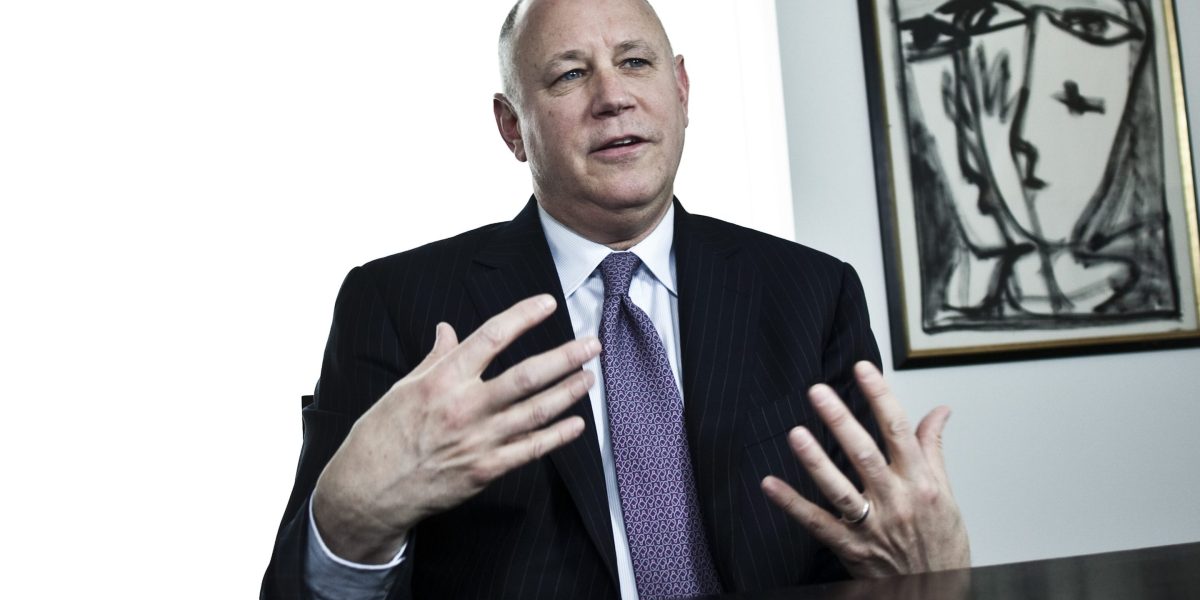
Inspired by Steve Jobs, New York Stock Exchange's owner says successful leaders surround themselves with smart people-and 'get rid of the stupid ones' | Fortune
Curating talented people and buying existing innovations can scale businesses faster than inventing from scratch, exemplified by Jeffrey Sprecher's growth of Intercontinental Exchange.
Bootstrapping
fromFast Company
2 weeks agoSteve Jobs said 5 timeless principles create lifelong success (and happiness)
Steve Jobs's enduring wisdom on innovation, entrepreneurship, design, and leadership continues to influence thinking fifteen years after his death, with particular emphasis on owning business ventures, perseverance, and three-dimensional learning through direct experience.
Social media marketing
fromFortune
2 weeks agoJack Schlossberg has a warning for America's CEOs: you're living in my world now | Fortune
Social media, AI, and cultural forces now fundamentally shape corporate and political environments, requiring CEOs to actively engage in public discourse rather than treating these as peripheral communications issues.
Running
fromHarvard Business Review
3 weeks agoLooking Back on Nike's Evolution from Startup to Global Enterprise
Nike's founding combined entrepreneurial inspiration, a strong partnership between Phil Knight and his track coach Bill Bowerman, and innovative shoe design experimentation to create a recognizable consumer brand.
Marketing tech
fromThe Motley Fool
3 weeks agoWhy The Trade Desk CEO Thinks the Open Internet Just Got Stronger | The Motley Fool
The open internet strengthens as advertising supply grows faster than demand, giving advertisers leverage and making neutral optimization platforms like The Trade Desk more valuable.
fromBusiness Insider
1 month agoSalesforce president says company is 'appropriately adjusting' after Marc Benioff's ICE jokes
We've got different ways of thinking, different opinions, different ways that we approach things. What unites us is our values and how we take care of our employees. It doesn't mean we get it right all the time, but what it does mean is when we don't get it right we appropriately engage and we've got various ways in which we do that.
Washington DC
#ai-agents

Artificial intelligence
fromBusiness Insider
3 weeks agoBox CEO Aaron Levie's advice to developers? Build software that cash-holding AI agents - not humans - want to use
AI agents are becoming the internet's largest users, requiring fundamental restructuring of software and online infrastructure to optimize for machine interaction rather than human user experience.
Artificial intelligence
fromBusiness Insider
3 weeks agoBox CEO Aaron Levie's advice to developers? Build software that cash-holding AI agents - not humans - want to use
AI agents are becoming the internet's largest users, requiring fundamental restructuring of software and online infrastructure to optimize for machine interaction rather than human user experience.
fromTheregister
3 weeks agoAdobe CEO Shantanu Narayen to step down after 18 years
As a company that has prided itself on creating categories, our AI transformation begins with a focus on customer-centric product strategy to anticipate and fulfill the diverse needs of a large and growing customer base.
Tech industry
Silicon Valley
fromFortune
3 weeks agoApple CEO Tim Cook says his late predecessor Steve Jobs gave him this unusual advice when he handed over the reins: 'Never ask what I would do' | Fortune
Steve Jobs advised Tim Cook to forge his own leadership path at Apple rather than emulate Jobs' approach, freeing Cook from the burden of replicating his predecessor's style.
Business
fromFortune
2 weeks agoThe AI era is turning Corporate America into a CEO churn machine | Fortune
CEO turnover has reached 15-year highs as investors demand concrete AI results, with Adobe's Shantanu Narayen's departure exemplifying pressure on executives to deliver on AI promises or face removal.
Business
fromFast Company
2 weeks agoAlibaba stock is falling as it spends heavily on AI. CEO Eddie Wu insists the tech will be its main growth driver
Alibaba's Q4 2025 net income fell 66% year-over-year to 15.6 billion yuan despite heavy AI investments, while revenue growth of 2% missed Wall Street expectations.
fromAdvocate.com
2 weeks agoDonald Trump's buddy Tim Cook swears he is 'not a political person'
I interact on policy, not politics. I'm not a political person on either side. I'm kind of straight down the middle. Cook appeared on the show to discuss the approaching 50th anniversary of Apple, plus his views on philanthropy, artificial intelligence, data privacy, and global affairs.
Apple
Business
fromFortune
3 weeks agoHow Walmart CEO John Furner is using his father's lessons-and AI-to steer a $1 trillion giant | Fortune
John Furner became Walmart CEO in February, tasked with transforming the $1 trillion retailer into a tech-driven competitor against Amazon while maintaining its position as a Fortune 500 leader.
Apple
fromEntrepreneur
3 weeks agoWhen Steve Jobs Stepped Down From Apple, He Advised Tim Cook to Never Ask Himself This One Question
Apple maintains a culture of vigorous debate and argumentation in meetings that generates better, bigger ideas and remains central to the company's identity approaching its 50th anniversary.


fromFortune
1 month agoTime on his side: Michael Dell the real business icon as Icahn the activist recedes from view | Fortune
On one side stood Dell, fighting to take his eponymous company private and rebuild it away from the merciless glare of quarterly earnings calls. On the other stood famed activist raider Carl Icahn, who aggressively peddled a proposal amounting to purely destructive financial engineering at the cost of the company - a scheme involving stock buybacks, warrants for future shares, and ruthless plans to carve up Dell's creation for quick, extractive cash.
Business
fromThe Drum
2 months agoAppNexus CEO: 'Let's change how the supply chain works'
It is arguably this dynamic that has denoted 2017 in the evolution of adtech, or the 'transparency debate.' Besides the brand safety question raised to much opprobrium earlier in the year, 2017's transparency debate has largely centered on 'take rates', aka the 'adtech tax', which refers to the money charged by each player in the programmatic supply chain throughout the course of a campaign.
Marketing tech
Startup companies
fromFortune
1 month agoAmazon's humble history: Jeff Bezos used a rented garage as an office and held team meetings at a local Barnes & Noble | Fortune
Jeff Bezos founded Amazon in 1994 from a Bellevue garage, embedding a 'Day 1' mindset, customer obsession, long-term strategy, and network-effect focus.
Silicon Valley
fromFortune
2 months agoAirbnb CEO Brian Chesky warns Gen Z's fear of micromanagement is holding them back: It's a lesson he learned from Steve Jobs | Fortune
Micromanagement practiced as partnership and detailed investment that raises standards and expands employee thinking can accelerate careers rather than disempower them.

Business
fromFortune
1 month agoBillionaire bosses like Jeff Bezos and Reid Hoffman denounce work-life balance-and some think working nonstop is key to success | Fortune
Several CEOs reject 'work-life balance' as a tradeoff, preferring 'harmony' or 'fluidity', while others enforce strict boundaries or blur work and personal life.
Business
fromFortune
2 months agoMoving from artificial intelligence to genuine intelligent leadership: top CEOs to watch in 2026 | Fortune
Many large non‑tech public companies delivered strong operational performance in 2025 through growth, turnarounds, and strategic execution despite markets’ AI focus.
[ Load more ]