Mental health
fromPsychology Today
1 day agoCognitive Impairment After Psychosis
Recovery from cognitive impairment is possible, and new opportunities can arise despite challenges.
'In this paper a novel optical illusion is described in which purple structures (dots) are perceived as purple at the point of fixation, while the surrounding structures (dots) of the same purple colour are perceived toward a blue hue.'
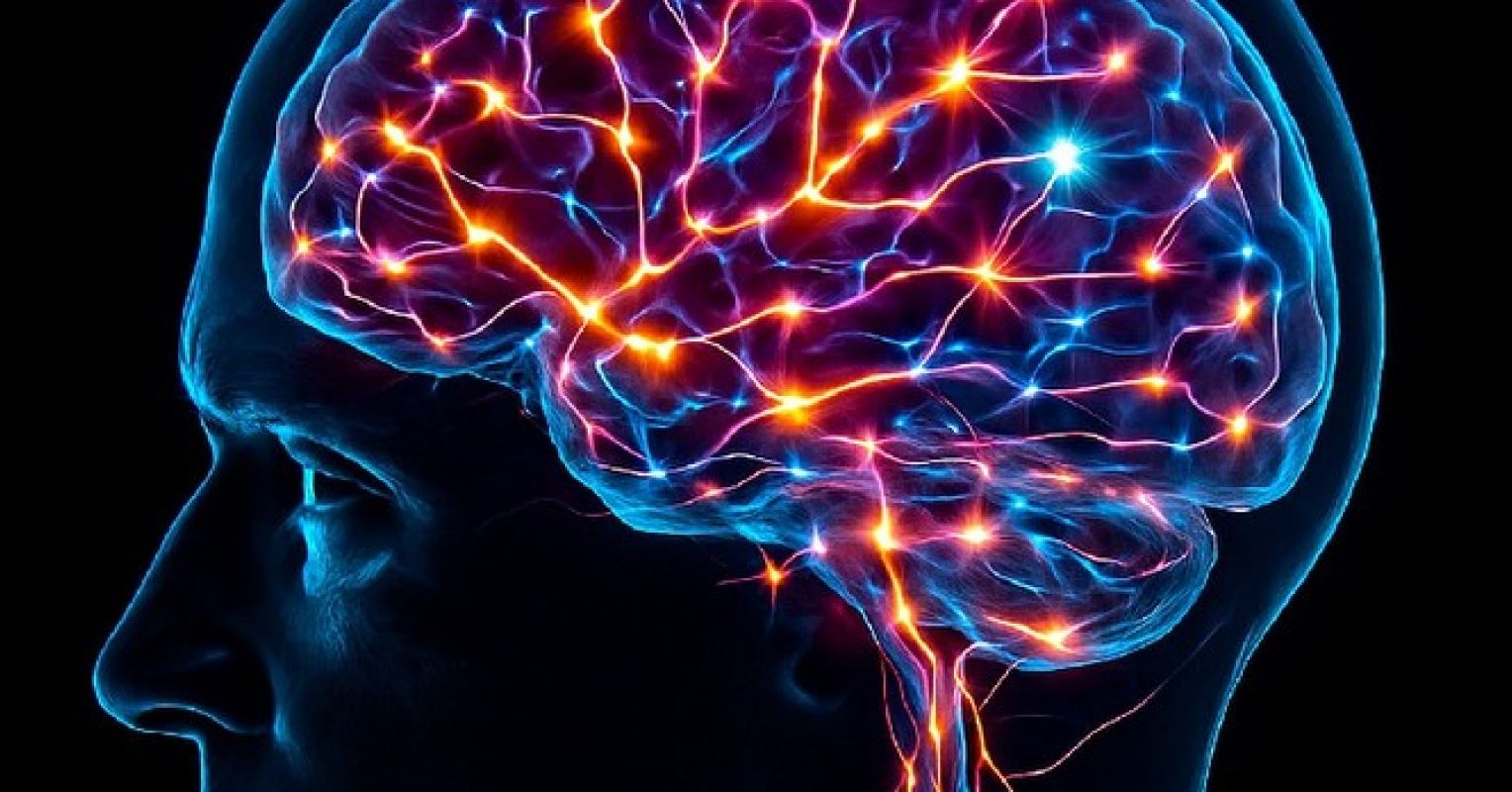
Galen Buckwalter, a 69-year-old research psychologist and quadriplegic, participated in a brain implant study to contribute to science that aids those with paralysis. The six chips in his brain decode movement intention, allowing him to operate a computer and feel sensations in his fingers again.
Dr. Conor Boland explained that red-light timing can erase small speed advantages, allowing a slower car to catch up again and again. He noted, 'You pass a car, and then a few minutes later, it ends up beside you again.' This phenomenon is partly psychological, as we remember surprising moments when the same car shows up again, but it is also built into how traffic works.
Accomplishment Hallucination is a cognitive state in which speed feels like competence, output feels like accomplishment, and work feels done when the actual work-the thinking-through, the failure-mode analysis, the sitting with uncertainty until the problem reveals its structure-hasn't happened at all. Physics need not apply. AI can create a similar state in waking life—literally, as your very words assume form before your eyes like a conjuring sorcerer. But, like real life, the code may be buggier than we realize.
People with obsessive-compulsive tendencies tend to struggle immensely with decision-making. Outsiders looking in wonder why common choices, like where to work or whom to marry, are so challenging for them. Worsening the problem is the proclivity toward maladaptive daydreaming, spending hours on end fantasizing about ideal scenarios. Often, these imagined scenarios don't even entail the full scope of what would be expected were they to exist.
How do you know anything is real? Some things you can see directly, like your fingers. Other things, like your chin, you need a mirror or a camera to see. Other things can't be seen, but you believe in them because a parent or a teacher told you, or you read it in a book. As a physicist, I use sensitive scientific instruments and complicated math to try to figure out what's real and what's not.
A few years ago, I climbed over a gate and found myself gazing down at a valley. After I'd been walking for a few minutes, looking at the fields and the sky, there was a shift in my perception. Everything around me became intensely real. The fields and the bushes and trees and the clouds seemed more vivid, more intricate and beautiful.
In my previous post, I summarized my response to Christian de Weerd, who denied that a Darwinian approach to consciousness is even possible. I argued that consciousness science has unnecessarily insulated itself from the evolutionary tools that revolutionized our understanding of every other biological phenomenon, and that treating human consciousness as the paradigm case distorts our picture of consciousness as a natural phenomenon spanning millions of species across millions of years.
Artificial intelligence (AI) machine learning is making a difference in assistive technology to help restore movement for the paralyzed. A new study in the American Institute of Physics journal APL Bioengineering shows how AI has the potential to restore lower-limb functions in those with severe spinal cord injuries (SCIs) by identifying patterns in brain signals captured noninvasively via electroencephalography (EEG).
Real estate with ocean views, stunning mountain vistas, and wide-open green spaces sell at premium prices because humans find those settings pleasing [1-5]. Certain color combinations in fashion-such as brown and forest green-blend harmoniously, while others, such as hot pink and orange, clash. And our eyes like certain proportions in visual objects (like buildings and human faces) but not others.
Neuroscientists have a name for the brain network that fires up when you're not focused on an external task: the default mode network, or DMN. It's the constellation of regions - the medial prefrontal cortex, posterior cingulate cortex, and angular gyrus among them - that hums to life when you daydream, reflect on yourself, or think about other people's mental states.
In 2011, researchers Jason Tangen, Sean Murphy, and Matthew Thompson at the University of Queensland discovered a striking visual illusion while preparing a set of face images for a study. As they were going quickly through the faces to check their spatial alignment, they started noticing that the faces appeared highly distorted, almost cartoonish. They then realized that these distortions were most pronounced when the faces were flashed about 4-5 times per second in peripheral vision.
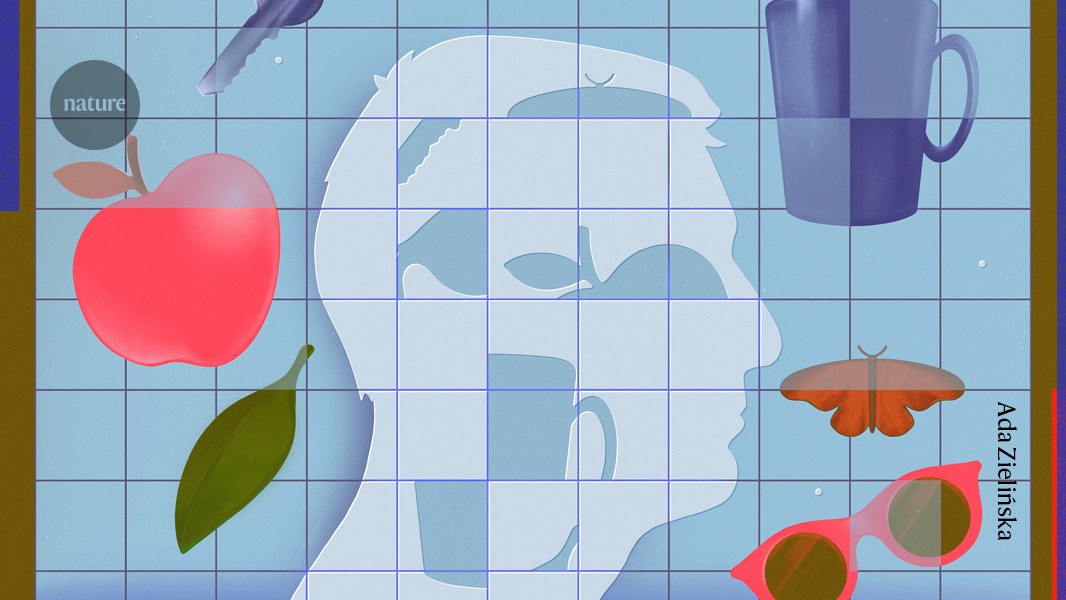
Did someone with spatial-sequence synaesthesia design the calendar app on mobile phones? Because that's how time and dates look in my brain. If you say a date to me, that day appears in a grid diagram in my head, and it shows if that box is already imprinted with a holiday, event or someone's birthday. Public holidays and special events like Christmas and Easter are already imprinted for the year, and the diagram goes backwards to about 100,000BC
I am a worrier, and have been for most of my life. At some point, someone dear and smart teased me that I worry about the wrong things. The things that hit me, she noted, were never the things I worried about. For a while that left me feeling like an incompetent worrier-until my research caught up. I realized that the things I worry about often don't end up hurting me precisely because worrying helps me diffuse them ahead of time.