#lina-soh
#lina-soh
[ follow ]
#contemporary-art #performance-art #art-exhibition #sculpture #art #architecture #art-basel-hong-kong
fromAnOther
4 hours agoYoung-jun Tak's Eyes Are Always on the Audience
"It's bizarre to watch people in this way - even in gay cruising areas you wouldn't stare at other bodies this intensely. Now, whenever I go to a concert, especially at the Berliner Philharmonie with its encircling seating, my gaze hovers over the audience as well as the stage."
Berlin
#michelangelo-pistoletto
Arts
fromThe Art Newspaper - International art news and events
2 days agoArtist Michelangelo Pistoletto sends message of 'preventive peace' on digital billboards around the world
Michelangelo Pistoletto's public art project 'Three Mirrors' promotes 'preventive peace' through reflective works displayed globally.

fromdesignboom | architecture & design magazine
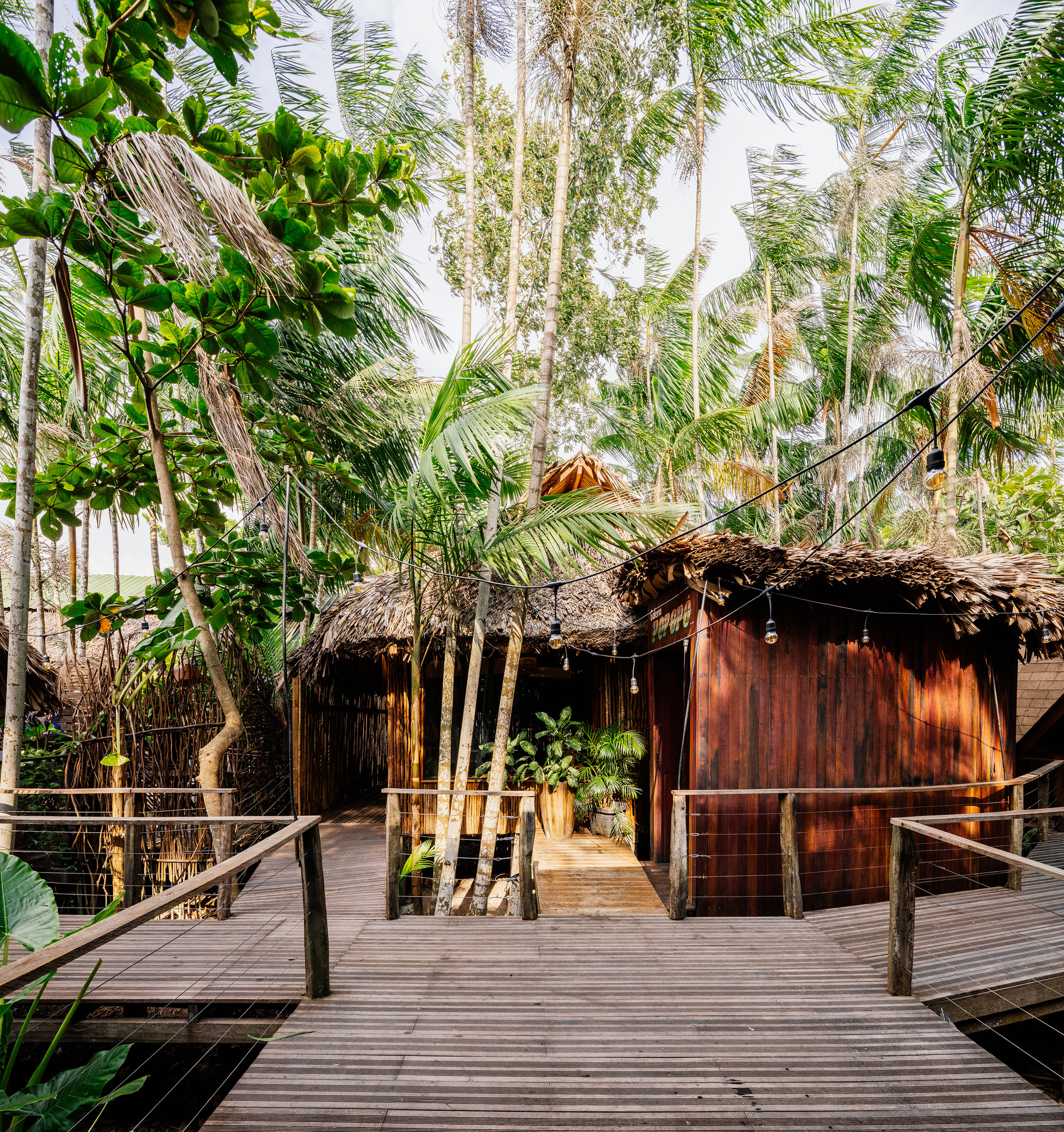
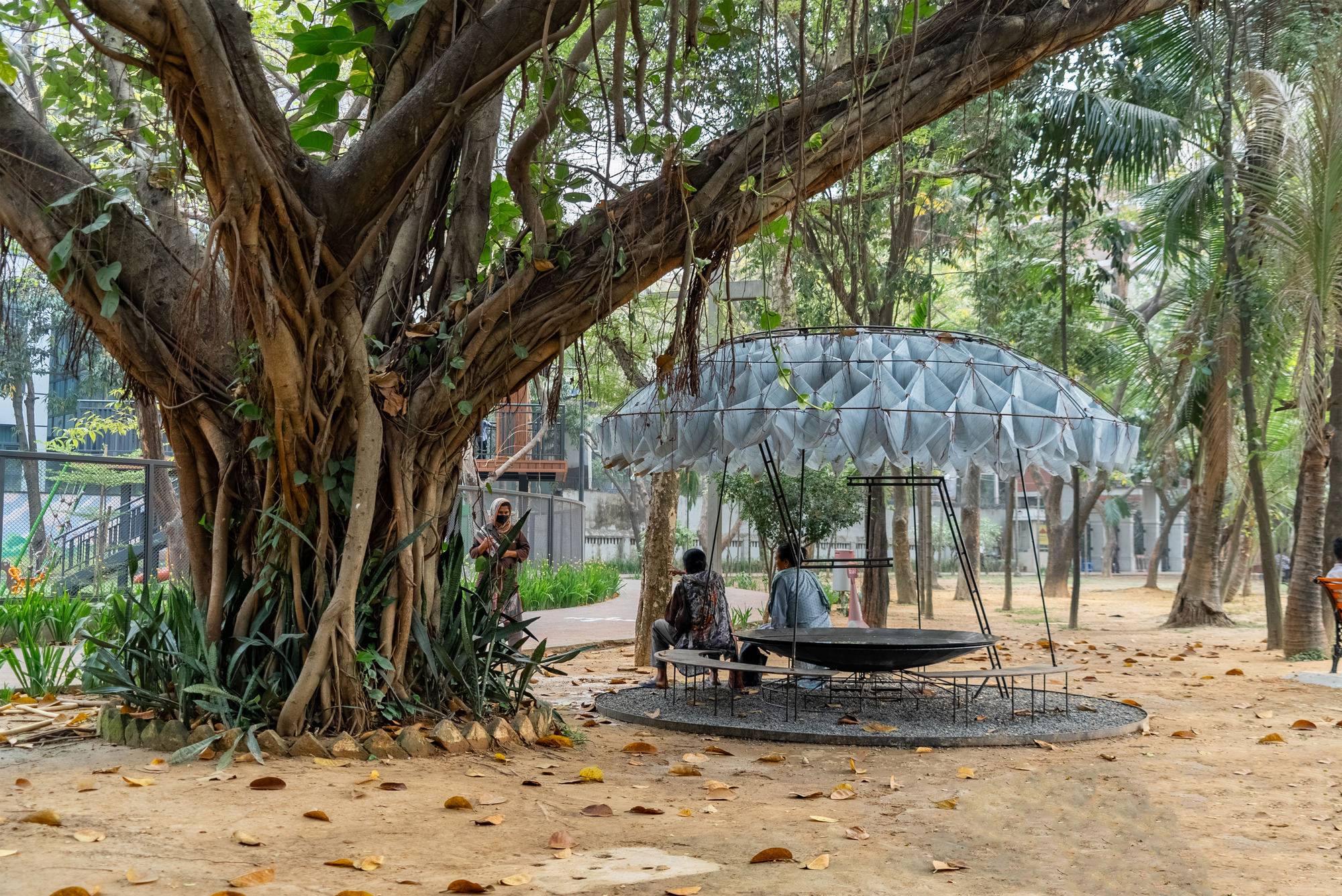
6 days agoblooming graphics and floral installations take over shinsegae department store for spring
The campaign explores the relationship between graphic identity and natural motifs, with the S-check pattern reinterpreted through cherry blossom imagery, establishing a contrast between graphic order and natural variation.
Graphic design

fromThe Art Newspaper - International art news and events
1 week agoMatisse's explosive finale and a new chapter for Hong Kong? Plus, Schiaparelli and Dali-podcast
The Grand Palais in Paris unveiled an enormous exhibition focusing on the final 13 years of Henri Matisse's life and work, featuring abundant examples of his celebrated gouache cut-outs.
Paris food
fromdesignboom | architecture & design magazine
1 week agohow lachlan turczan reshapes matter by bending light and water in atmospheric installations
Lachlan Turczan's practice sits in the space between physics, optics, and environmental art, as he works with lasers, water, mist, and custom-built lenses to produce sculptures made entirely from light.
Berlin music
Graphic design
fromThe Art Newspaper - International art news and events
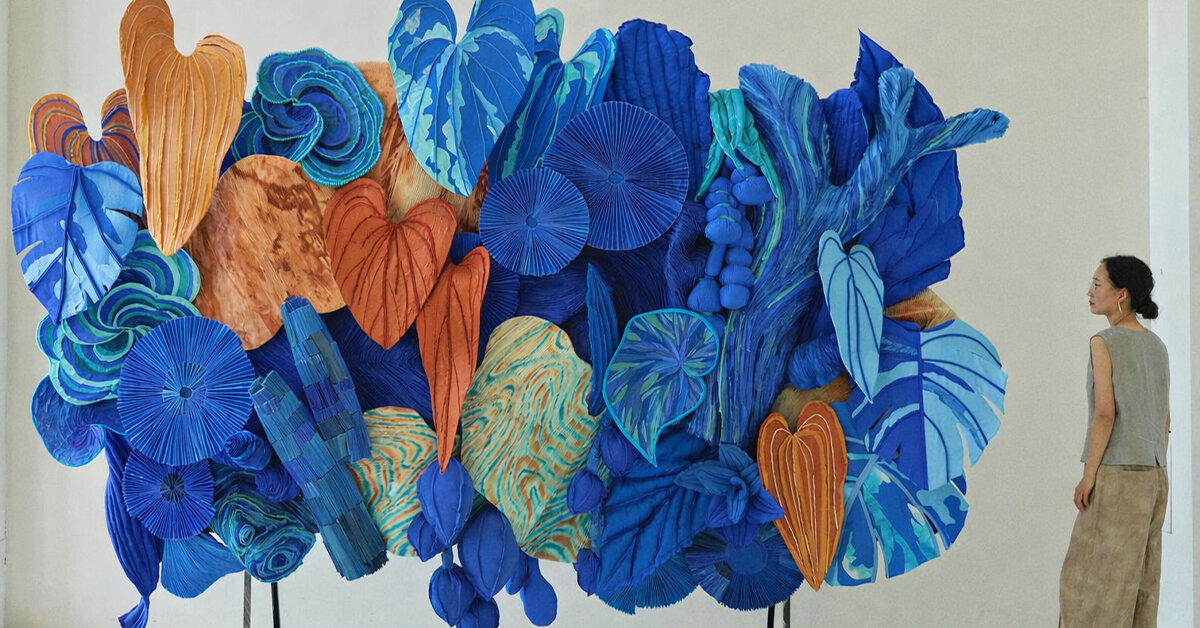
2 weeks agoSwimming pools and school rules: artist Chan Wai Lap on the unusual themes behind his installations
Chan Wai Lap explores the structured environment of public swimming pools through art, focusing on their visual order and social dynamics.

NYC music
fromTime Out New York
1 month agoA sweeping, 140-foot multimedia installation is turning Lincoln Center into a portrait of NYC
Josh S. Rose's Lincoln Center Arrival Tableau is a 140-foot multimedia installation capturing performers, students, and audiences across Lincoln Center's westside campus, celebrating New York's performing arts community.
Renovation
fromdesignboom | architecture & design magazine
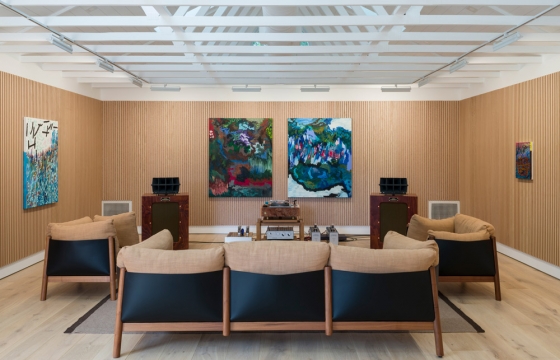
1 month agostudio RE+N turns abandoned planter into floating yellow stage in shanghai neighborhood
Studio RE+N transformed a neglected circular planter in Shanghai into a bright yellow floating steel platform that activates the courtyard for diverse community activities and age groups.

fromThe Art Newspaper - International art news and events
2 weeks ago'The human-machine creative entanglement': artist Sougwen Chung on her technology-based practice
"I've been thinking lately about how art reveals the writing on the wall. When I began developing the concept of human-machine collaboration it was 2015, years before the current wave of generative AI entered public consciousness."
Arts
Arts
fromThe Art Newspaper - International art news and events
2 weeks agoWho owns the seas? Shahzia Sikander's new animation on world trade beamed onto M+ museum facade
Shahzia Sikander's work explores territorial sovereignty and authority through animation, linking historical events like the Opium Wars to contemporary issues.
#contemporary-art

fromdesignyoutrust.com
2 months agoArts
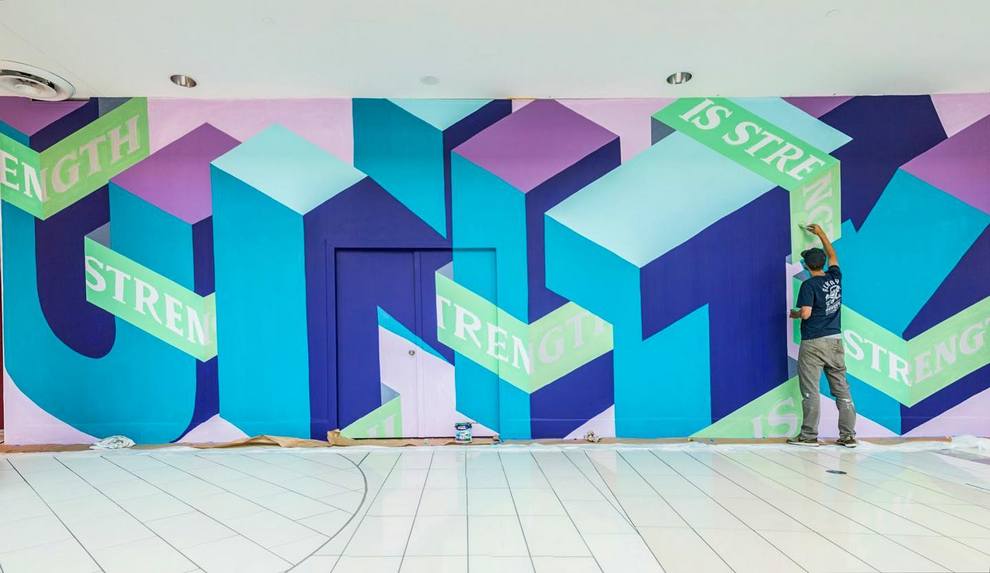
Artist Reshapes Walls And Spaces With Explosive Typographic Murals That Turn Buildings Into Giant, 3D Messages
A diverse collection of contemporary visual artworks and projects showcases imaginative sculptures, illustrations, modified objects, and installations spanning surreal, tribal, reclaimed-material, and whimsical themes.

Design
fromItsnicethat
1 month agoHow Lily Kong's series Sweet Escape reignited her intuitive approach to illustration
Illustrator Lily Kong deliberately slowed her practice to create Sweet Escape, a series of intuitive landscape drawings that prioritize personal expression and joy over efficient client work.
fromBoard Game Quest
2 months agoSand Art Review
Sand Art is a game by Kory Jordan and published by 25th Century Games for two to four players ages 10 and up. It takes about an hour to play, and has you collecting resources and then coloring in a bottle, making art in a bottle out of sand, in case the name didn't give away the plot. Gameplay Overview: Sand Art has you gathering and mixing sand, which is used to fill your bottle.
Board games

Arts
fromThe Art Newspaper - International art news and events
2 weeks agoGoldfish on cars and ceramic flowers: artists take over the Peninsula Hotel in Hong Kong
Art in Resonance features site-specific installations at The Peninsula Hong Kong, showcasing works by Angel Hui, Albert Yonathan Setyawan, and William Lim.
fromdesignboom | architecture & design magazine
1 month agoplayful interactive cone installation reflects viewers' sand art back to them
A circular concrete ring forms a defined boundary, incorporating a landing and three steps that lead into a contained field of refined sand. At the center of this ring rises a tall cone clad in polished mirrored steel. The composition establishes a clear geometric contrast between the horizontal plane of sand and the vertical reflective surface.
Design
fromAeon
2 months agoFrom Michigan to Singapore, a meditation on dreams built on sand | Aeon Videos
A sprawling tale of two Singapores, the short documentary Sandcastles draws connections between Singapore, Michigan - a 19th-century ghost town swallowed by sand following widespread deforestation - and the island country of Singapore, where rapid development and land reclamation has, for decades, been enabled by the importation of sand. More poetic exploration than call to action, the work surveys waterways, cycles of development and the transient nature of sand - deceptively sturdy over short timescales but, over decades, quite volatile.
Philosophy
fromItsnicethat
2 months agoFeng Yitong illustrates the surreality of living between cities
Feng Yitong is a Berlin-based illustrator from Xi'an, China whose comic and hand-drawn imagery addresses migration, cultural shifts and embodied experiences in heavy, tactile forms of oil pastels. Using skills learned from her bachelors and masters degrees in illustration at the Berlin University of the Arts, she sketches her emotive scenes, then scans before using a light table to transfer them onto A4 and A3 paper. Coloured with oil pastels, she achieves her sharp visual effects by using kitchen cloths to remove or mix thick marks to create defined edges and distinct segments of her dense images.
Berlin
#asian-american-art
Arts
fromThe Art Newspaper - International art news and events
1 month agoA new home for Asian contemporary art opens in landmarked building in Manhattan's Chinatown
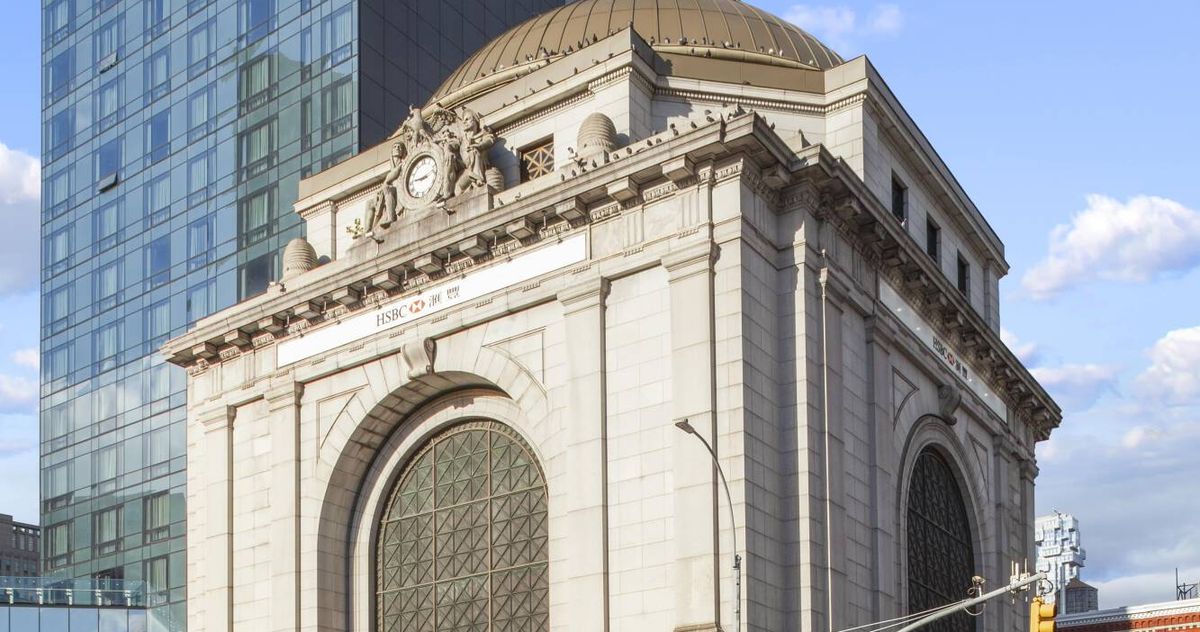
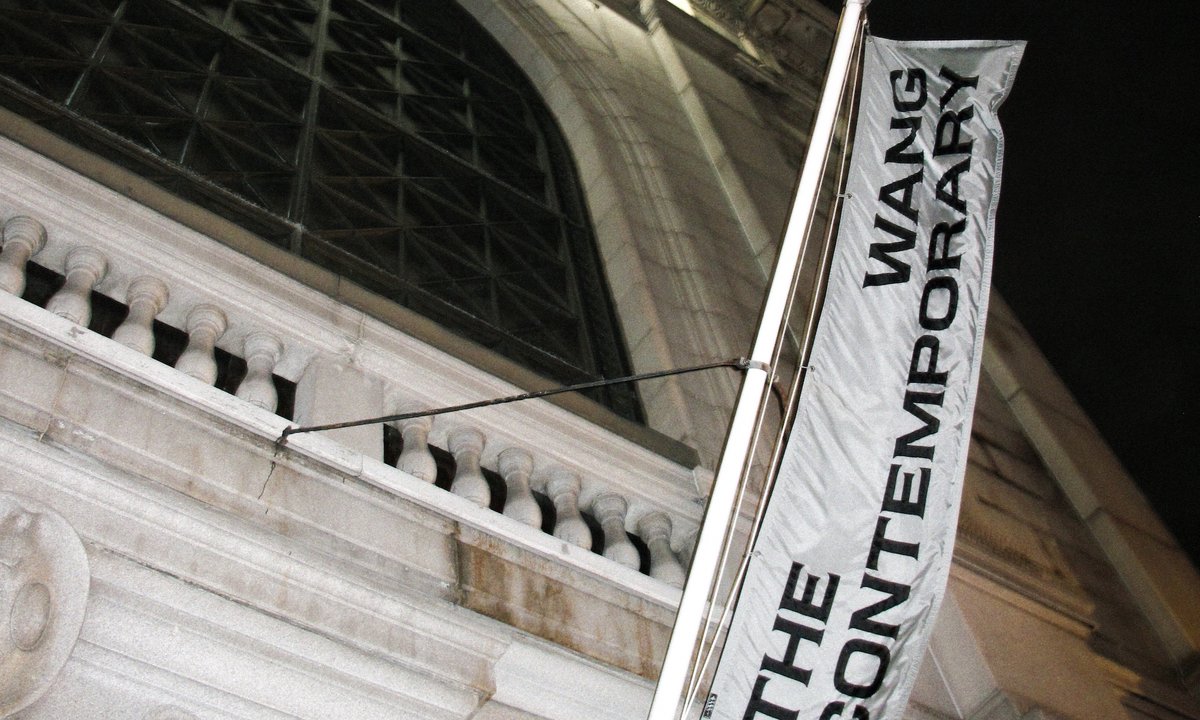
Wang Contemporary opens at 58 Bowery as a global platform for Asian and Asian American creativity, inaugurating with MSCHF's paper plane installation during Lunar New Year.
Design
fromArchDaily
2 months agoSerpentine Pavilion 2026 and Lina Ghotmeh's House of Performing Arts: This Week's Review
Architecture increasingly functions as public platform and civic infrastructure, addressing cultural, environmental, and social challenges through material, programmatic, and institutional design.
Arts
fromThe Art Newspaper - International art news and events
1 month ago'It doesn't put walls around everything': behind the plans for Manila's new contemporary art centre
The Ayala Foundation is developing Kontempo Center for Contemporary Art in Manila, led by artistic director Reuben Keehan, emphasizing exhibitions and public programming over permanent collections.
Arts
fromJuxtapoz
1 month agoJuxtapoz Magazine - "Always Never": a Solo Exhibition by Linda Geary @ pt.2 Gallery, Oakland
Linda Geary's paintings layer acrylic and oil through wiping, washing, and translucent applications to create ghosting effects where shapes hover between emergence and disappearance while maintaining structural tension.

fromThe Art Newspaper - International art news and events
2 months agoFrom shopping malls to housing estates, Singapore Biennale integrates art into the city's urban fabric
"The idea is that intention is not the whole story," says Selene Yap, a co-curator of the Biennale. "Systems can generate a certain kind of afterlife, and there are side effects." While the waterfall impresses, it also has consequences, she adds. The work uncovers how Singapore imports hydropower through transnational infrastructure, including the Vajiralongkorn Dam, whose construction has displaced Thailand's indigenous Karen hill tribe, forcing many to live in floating homes on the reservoir.
Arts
fromThe Art Newspaper - International art news and events
2 months agoFrom monumental scroll paintings to metaphorical breasts: five works to see at Art SG
The Thai artist Pinaree Sanpitak began exploring female breasts in her work shortly after the birth of her son in 1994, when she began breastfeeding. Reflecting on her experience as a mother, the breast became a metaphor for herself as well as a broader celebration of womanhood. In 2001 Sanpitak began to draw parallels between the breast and Buddhist stupas-dome-shaped sites of veneration, and began her Breast Stupa series, combining the sacred with the sensuous.
Arts
fromColossal
2 months agoRegina Silveira Pieces Together an Evolving Narrative of Latin America
Regina Silveira has spent the better part of three decades considering the relationship between media and meaning, particularly as it relates to Latin America. First presented in 1997, "To Be Continued..." features 100 black-and-white reproductions of photos, newspaper clippings, propaganda, advertisements, and more. Silveira nests each image into an oversized puzzle piece, which cuts off faces and scenes to leave fragments of pop culture icons, flora and fauna, and even the occasional mugshot spliced next to one another.
Arts
Arts
fromArtnet News
1 month agoMajor Contemporary Art Center Planned in Manila-and a Rundown of the Latest in Asia's Art World | Artnet News
Major Asian art fairs broaden regional visibility, showcase MENASA artists, and generate modest sales while building important institutional and dealer relationships.
fromArtnet News
2 months agoSingapore to Doha to Delhi: The New Cultural Corridor Shaping Asia's Art Market | Artnet News
This year's Art SG, which closed last month, featured an intriguing debut: South Asian Insights, a modest pavilion dedicated to contemporary art from the region. Part of the TVS Initiative for Indian and South Asian Contemporary Art, it was backed by India's TVS Motor Company, one of the world's largest two-wheel manufacturers, which has its global headquarters in Singapore. Eight galleries-five from India-were each given a wall to showcase art.
Arts
fromThe Mercury News
1 month agoSan Jose artist brings wind, light to bear in her paintings
Artist Ayelet Gal-On does not just paint; she builds, layering oil, acrylic and plaster on canvas. Gal-On's signature subjects for "Taken by the Wind, Swept by the Light," her upcoming solo exhibition at Gallery 9 in Los Altos, are white dresses that appear to hang on a line, defying the stillness of the canvas. "I love the process of playing with color," says the artist.
Arts
fromAnOther
1 month agoChiharu Shiota, the Artist Making Human Connection Tangible
Known most for her large-scale artworks created from vast, intricate networks of thread, she developed her unique practice to make tangible the endless speculative configurations of human connections - something to be experienced rather than defined. But by asking her to describe her new exhibition, Threads of Life at the Hayward Gallery, I'm dragging her back into a reductive world of language. "If I wanted to express myself in words, if I could explain in words, I'd rather write," she says. "So I want to build visually, and I want to create visually. What I want to describe is beyond words."
Arts
fromArtnet News
2 months agoArt SG Attendance Climbs, JD Museum Announced, and more
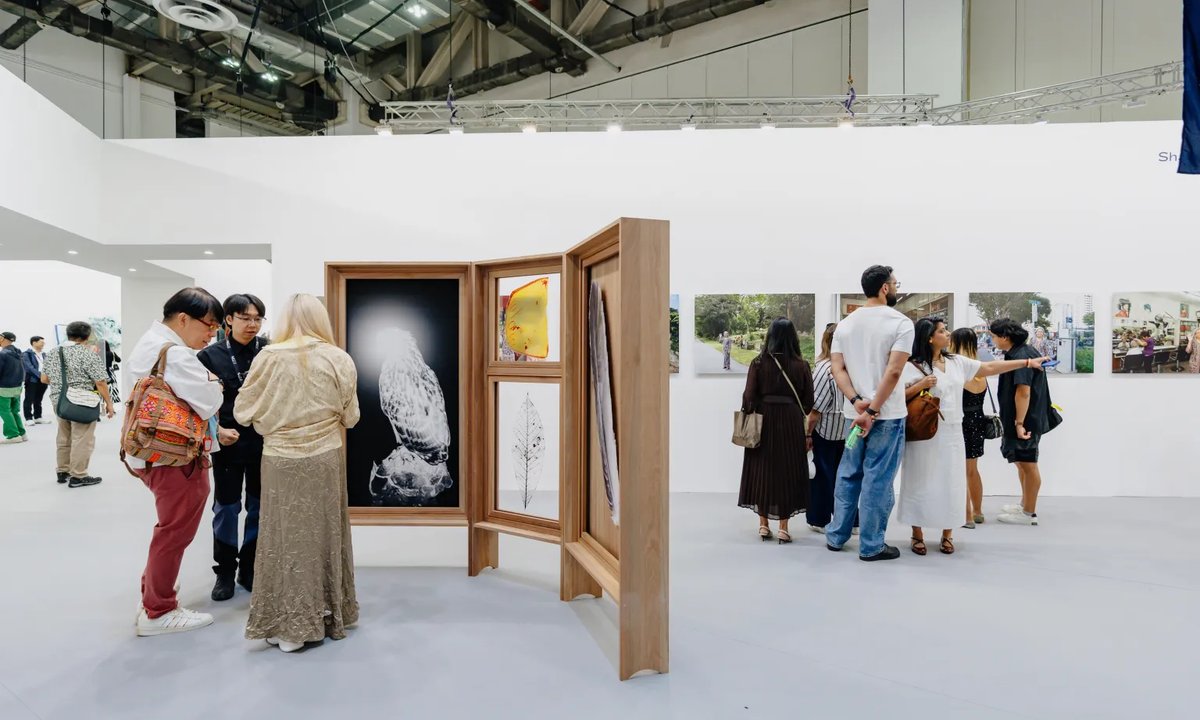
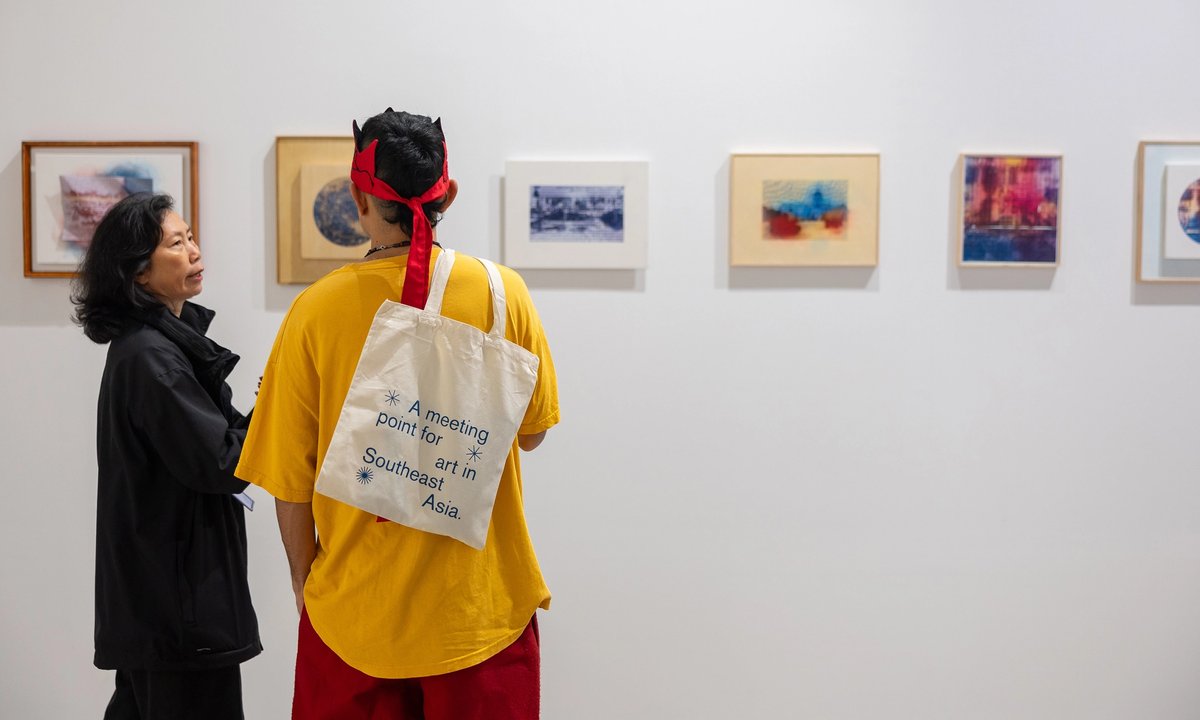
Art SG wrapped its fourth edition on Sunday, reporting 43,000 visitors during its four-day run, up from last year's 41,000. The S$250,000 ($197,000) SAM Art SG Fund, backed by patrons Carmen Yixuan Li, Pure Yichun Chen, and Pierre Lorinet, acquired works by Mona Hatoum (from White Cube) and Lotus L. Kang (from Commonwealth and Council) for Singapore Art Museum 's permanent collection. Some dealers said they made satisfactory sales, mostly for five or six digits.
Arts
Arts
fromwww.theguardian.com
2 months agoArtist Sarah Sze: A work of art is finished when everything teeters'
Sarah Sze’s Gagosian Beverly Hills exhibition uses 13 works—large, intricate paintings and video installations—to create immersive, disorienting landscapes reflecting an image‑saturated, unstable contemporary world.
[ Load more ]