Writing
fromThe Atlantic
1 hour agoThe Feeling of Becoming Less and Less of a Person
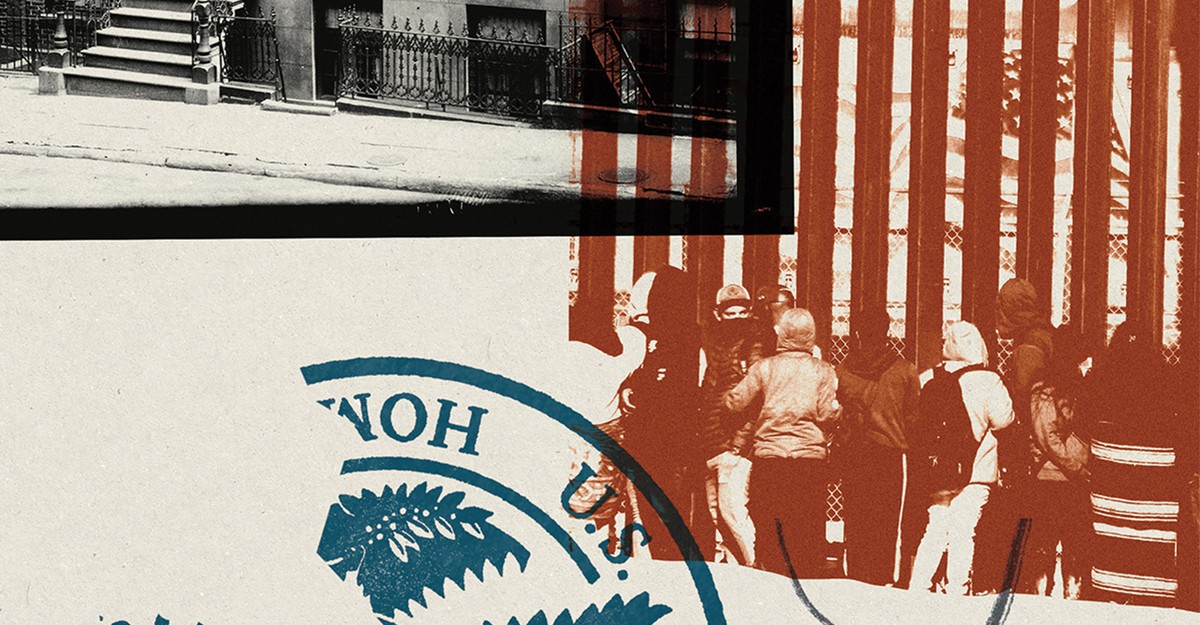
The advent of the smartphone marked a significant shift in human perception and relationships, altering the human sensorium since June 2007.
"I turned to the landscape as a way of holding on to moments, to light, and to the often overlooked persistence of life. Photographing has always been, for me, an act of remembrance: a way to slow time and preserve what is still growing and still breathing, even as loss reshapes our experience of the world."
Lorena Bradford started monthly tours in American Sign Language, established a program for individuals with memory loss, and brought in medical students to learn soft skills to apply in their caregiving. 'I was a sub-department of one,' she joked to writer Emma Cieslik, who spoke with Bradford over Zoom and at the NGA about her own circuitous path into the profession, and the future of the field of museum accessibility.
Tracy Kidder's gifts for storytelling and tireless reporting are an enduring reflection of the empathy, integrity, and endless curiosity he brought to everything he did.
Thatcher rose to power on the back of a campaign to Make Britain Great Again-a promise to reverse the previous two decades of austerity, imperial contraction, and stagnating modernization. By 1979, the country was undeniably in decline-not just materially but on a more ineffable level, too. Divested of the unifying effect of global superpower status, the increasingly dis-United Kingdom's common identity was now an open, and anxious, question.
There has been progress in the diversity of texts on offer in the GCSE English literature curriculum, but uptake in schools is still low with just 1.9% of GCSE pupils in England studying books by authors of colour, up from 0.7% five years ago, according to a report. Compiled by the campaign group Lit in Colour, the report says progress is too slow and that
Admittedly, this one came with a fair few red flags, from the casting of Margot Robbie (simply too old, Cathy is a teenager) and Jacob Elordi (simply too white, Heathcliff, while his origins are uncertain, is described as darker skinned) to the unhinged marketing and crass brand tie-ins. Nevertheless, I was still excited to see it. So why did I leave the cinema not only bored, but feeling a little bit sad?
From the outset, in the novel's prologue, Anna tells us she is determined to account for herself and her life. But we are to expect no ordinary narrative, concerned only with actual events, evidence-based or relying on historical data. No, Anna is interested in the climate of the psyche and the vibrations of the soul. Can it be that the very things we cannot quantify or rationalise are what make life meaningful?
Trope, POV, backstory, character arc. In the 30 years since I was a student of that benign, pipe-smoking, elbow-patched man of letters Malcolm Bradbury, the private language of creative writing workshops has taken over the world. What writers used to say to small circles of students in an attempt to help them improve their storytelling technique has become a familiar way, often parodic and self-knowing, of interpreting the grand and not-sogrand narratives of our time.
We are initiated into a world in which historically accurate foodstuffs can be ordered online a half oyster shell, the exposed flesh shining as if with the freshest brine, is 31.25 for a single piece and begin to understand one of the most striking things about this novel: its insistence upon detail, its utter specificity, set against a deliberate lack of specificity regarding the larger details that the reader's mind naturally itches to fill in.
It is the summer of 2019, and Sophie Evans, the reckless protagonist of Rhiannon Lucy Cosslett's unsettling second novel, has arrived on an idyllic island in the Cyclades with her university friends Helena, Iris and Alessia to celebrate Helena's forthcoming marriage. Helena doesn't want it called her hen Like we're dumpy little featherbrains going cluck, cluck, cluck, but all the same, the men including Sophie's curator boyfriend of six years, Greg will not arrive for another five days.
You are leaving work, your suit still damp from the morning's downpour, the skin on your palms peeling. You are clutching two supermarket bags, tins of cream soup and tuna knocking against one another. The rain is hard and your anorak is cheap. You are on your way to Stockbridge, to your parents' house, which only your father inhabits now that your mother is gone.
After finding this seam of gold, miner Michael dreams that his son will be able to go to school, rather than join the other children who work in the mine, like blind, bald rodents unearthing themselves in search of scraps of candlelight. In the novel, which won the 2023 Betty Trask prize, everything closes in on Michael: lungs clog, tunnels collapse, horse-drawn narrowboats are attacked by robbers in the sooty dusk. It's a vivid reminder of the cost, in bodily suffering, of resource extraction.
Out today, Woman Down centers on writer Petra Rose, an author who has writer's block and checks into a remote cabin to finish her next book. Petra, who took a hiatus after fans blamed her for a producer's decision to cut a fan-favorite character out of the film adaptation of her book A Terrible Thing, has "learned the hard way what happens when the internet turns on you," a synopsis states.