#micro-rgb-leds
#micro-rgb-leds
[ follow ]
#smart-glasses #oled #display-technology #meta #sqd-mini-led #micro-rgb #mini-led #samsung #tvs #ray-ban #qd-oled

fromYanko Design - Modern Industrial Design News
1 week agoThis Raspberry Pi Camera Looks Like It Was Made in the 80s for 2050 - Yanko Design
The Saturnix camera is designed to evoke the industrial aesthetic of 1980s science fiction, featuring a chunky body that feels more at home on a spaceship than in a pocket. The design is intentional, aiming to create a functional tool that stands apart from the sleek, uniform consumer electronics of today.
Photography

fromGSMArena.com
2 weeks agovivo details new color science coming to the X300 Ultra and X300s
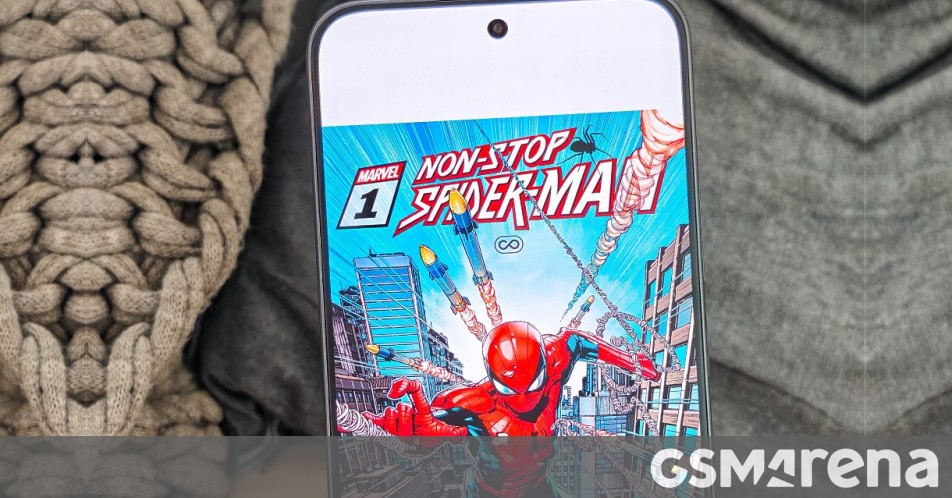
This is an all-new color science system, built from the ground up with the task of delivering natural color reproduction for images. Vivo says the updated Blueprint Native system is built on years of accumulated imaging experience and marks a "complete reconstruction" in its approach to color rendering.
Mobile UX
fromWIRED
3 weeks agoThis Digital Picture Frame Wants to Bring People Closer to a Holographic Future
Upload any picture or video, and Musubi uses artificial intelligence to extract the most important part and hover it in space as a 3D image within the frame. That could be a video of a child's first steps or a snapshot of a birthday party. The image will be displayed in 3D form, viewable in all its holographic glory across nearly 170 degrees.
Gadgets
fromEngadget
1 month agoApple reveals its new 5K mini-LED Studio Display XDR
The latter is a higher-end model aimed at content creators with a 27-inch 5K Retina XDR display that features a mini-LED display with 2,000-plus dimming zones, up to 2,000 nits of peak HDR brightness and a wider color gamut for improved accuracy. It also has a 120Hz refresh rate, addressing complaints about the relatively anemic 60Hz refresh rate of previous models.
Apple
Wearables
fromYanko Design - Modern Industrial Design News
3 weeks agoRokid's Smart Glasses Let You Pick Your AI: Gemini or ChatGPT - Yanko Design
Rokid's AI Glasses Style enables users to choose between multiple AI assistants including Gemini, ChatGPT, DeepSeek, and Qwen through a unified interface rather than being locked into a single model.
Mobile UX
fromYanko Design - Modern Industrial Design News
1 month agoTCL's new NXTPAPER 3200-Nit AMOLED Display Feels Like Paper and Won't Hurt Your Eyes - Yanko Design
TCL unveiled a new NXTPAPER display technology based on AMOLED panels at MWC 2026, combining eye comfort with high-performance capabilities for smartphones launching by end of 2026.
Mobile UX
fromZDNET
1 month agoI saw the Nothing Phone 4a in every color at MWC - and these two are my favorite
Nothing's Phone 4a series launches March 5 with two models featuring vibrant color options, a redesigned Glyph Interface with customizable LED squares, and a transparent window showcasing internal design elements.
fromYanko Design - Modern Industrial Design News
2 months agoI saw Samsung's 130inch Micro RGB easel TV at CES 2026 and now regular screens feel tiny - Yanko Design
A television spanning 130 inches diagonally creates immediate questions about physics, aesthetics, and whether something this massive can exist as anything other than spectacle. Samsung's answer at CES 2026 involves treating the R95H Micro RGB model as architecture rather than appliances, borrowing design language from gallery easels and luxury retail interiors to create what the company describes as an "extra-large window" that transforms room perception.
Gadgets
Gadgets
fromYanko Design - Modern Industrial Design News
1 month ago200-Inch Dolby Vision Gaming With 1ms Latency: Inside The Aetherion 4K RGB Laser UST Projector - Yanko Design
Aetherion is an ultra-short-throw projector offering true VRR (0.1–240Hz), Auto Low Latency, 1ms-class response, and monitor-level gaming features.
fromThe Verge
2 months agoRGB is the next big thing in OLED gaming monitors
New OLED gaming monitors from top companies coming out this year should look clearer and crisper. LG Display and Samsung Display, which typically provide the actual panels used in gaming monitors, are finally lining up the colors of their subpixels in vertical RGB stripes - remember when we used to worry about Pentile OLED displays? - which means, among other improvements, the panels should have easier-to-read text.
Gadgets
Gadgets
fromYanko Design - Modern Industrial Design News
2 months agoGovee's Gaming Pixel Light now lets you generate 8-bit animated GIFs using AI Prompts: Hands-on at CES 2026 - Yanko Design
Generative AI lighting like Govee's Gaming Pixel Light transforms smart lights into creative devices that generate custom GIF animations for ambient personalization.





fromZDNET
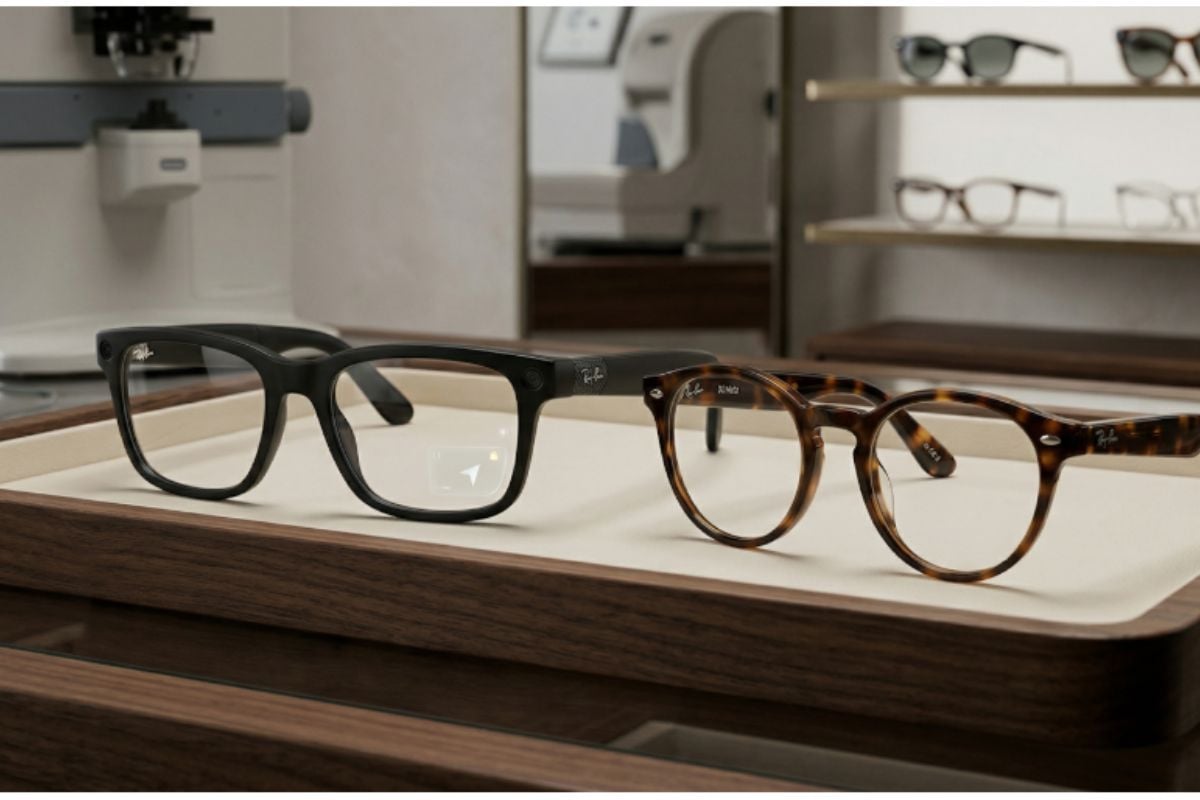
2 months agoThe makers of Meta Ray-Ban Display glasses showed me what's next for AR, and it's wild
The company is building directly on its major success supplying its waveguide technology to glasses, and proving that geometric waveguides work at consumer scale with standard glass. At CES, Lumus showcased a ZOE prototype with a field of view of more than 70 degrees, an optimized Z-30 with 40% more brightness, and a Z-30 2.0 preview that's 40% thinner. David Goldman, VP of marketing, walked me through each demo with clear enthusiasm about the progress Lumus is making.
Wearables


fromEngadget
2 months agoXGIMI, best known for projectors, launches its own smart glasses
Projector maker XGIMI has turned up at CES to launch its own range of AR glasses, but don't get the champagne out too soon. MemoMind is a new brand under which its AI-infused eyewear will be sold, with two distinct units arriving at some point in the near future. The company says it has leveraged its know-how in optics and engineering to produce glasses which are unobtrusively light, all the better for blending into your daily life.
Wearables
fromEngadget
2 months agoLG TVs at CES 2026: A stunning Wallpaper set, glorious Micro RGB colors and a better Gallery TV
If money were no object, I'd want a 100-inch LG Wallpaper TV in my family room immediately. It looks shockingly thin in person - almost as if it's some sort of sci-fi prop - and it delivers the rich colors and dark levels we expect from OLED. Cable management is also a cinch, since it requires just a single power cable. The A/V inputs are handled by LG's One Connect box, which you can position wirelessly up to 10 meters away from the TV.
Television
fromGSMArena.com
2 months agoRedMagic 11 Air design, color options, and display specs revealed
nubia's upcoming slim yet powerful RedMagic 11 Air will feature a 6.85-inch AMOLED display with 1.5K resolution and a 144Hz refresh rate. It will also offer a 95.1% screen-to-body ratio, an under-display selfie camera, 2,592Hz PWM dimming, and 1.25mm thin bezels. The handset features a curved rear transparent panel with an RGB logo and a triple camera setup. The phone will be offered in Aurora Silver, Stardust White, and Quantum Black.
Mobile UX
fromZDNET
2 months agoThis hidden Pixel camera feature makes your photos more vibrant - how to enable it
One reason why the Pixel phones are so popular is the camera. There's a depth, a level of clarity, and brilliant/accurate colors that most phone cameras cannot match. Also: How to clear your Android phone cache (and why you shouldn't wait to do it) Google is always trying to one-up itself by improving the Pixel camera with every iteration. Back with the Pixel 8, Google introduced the P3 wide gamut capture feature that came along with the Ultra HDR format of Android 14. The Display P3 wide-gamut capture makes photos come seriously alive with color.
Gadgets


Gadgets
fromYanko Design - Modern Industrial Design News
2 months agoForget Brightness Wars, XGIMI's Titan Noir Max at CES 2026 is starting the 'Projector Contrast War' - Yanko Design
The Xgimi Titan Noir Max is a 4K laser projector engineered to deliver deep black levels using a dual iris and 10,000:1 native contrast.
fromGSMArena.com
2 months agoFuture iPhone models could get a multispectral sensor for improved imaging
Multispectral imaging works by capturing light in several distinct wavelength bands, including those not visible to the human eye. This enables more detailed information capture when compared to traditional RGB sensors, which only detect red, green, and blue wavelengths. Using multispectral sensors could help future iPhones achieve better material separation and improved depth perception, with the latter resulting in more accurate portrait photos.
Mobile UX
fromZDNET
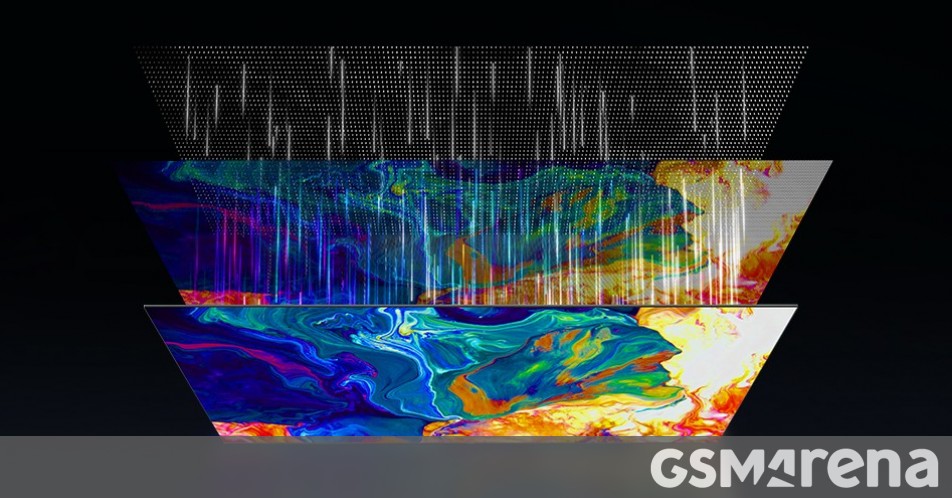
2 months agoSamsung reveals 2026 TVs, including a 130-inch Micro RGB model
Available in 55-inch, 65-inch, 77-inch, and 83-inch options, this year's model is over 30% brighter, according to Samsung. Also: The best Samsung TVs: Expert tested OLEDs, big-screens, and more This is a model gamers will want to pay attention to, as it features 165Hz refresh rate support, VRR, and a "category-first glare-free technology" to eliminate distracting reflections. Samsung claims the 48-inch version is the "brightest 48-inch OLED ever."
Television
fromAndroid Police
1 month agoPixel 10's Indigo colorway could be making its way to the Pixel 10a
The Pixel 7a came out in May 2023, followed by the Pixel 8a in the subsequent year, which was released in the month of May as well. Last year's Pixel 9a launched in the month of April, marking an earlier than usual launch, and the Pixel 10a could very well follow suit. According to a recent leak, Google will open pre-orders for the Pixel 10a starting February 18, followed by availability on March 6.
Gadgets
fromwww.nature.com
2 months agoExciplex-enabled high-efficiency, fully stretchable OLEDs
Here we addressed this challenge by incorporating an intrinsically stretchable exciplex-assisted phosphorescent (ExciPh) layer. The elastomer-tolerant triplet-recycling mechanism mitigates exciton energy transfer limitations arising from the insulating elastomer matrix, yielding a light-emitting layer with more than 200% stretchability and an external quantum efficiency (EQE) of 21.7%. To translate this performance to fully stretchable devices, we integrated MXene-contact stretchable electrodes (MCSEs), which feature high mechanical robustness and tunable work function (W
Wearables

fromEngadget
2 months agoInkPoster launches a premium, 41-inch e-paper display for your home
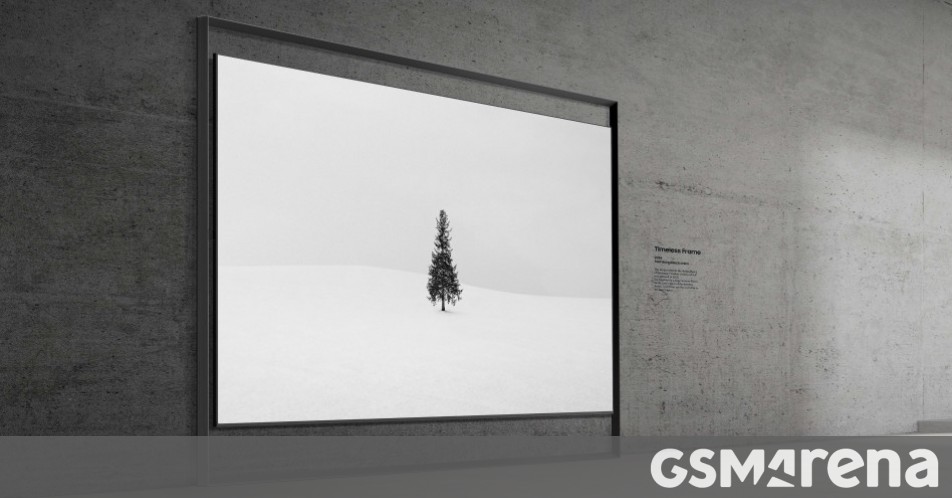
Last year, PocketBook rocked up at CES with a series of large e-paper displays to display art on the walls of your home. This year, the company has turned up with a far larger, A1-sized model called the Duna, which it says mimics the "texture, depth and tonal richness of printed paper." It's intended to act as an upmarket alternative to those big screen TVs which display art when they're not being used for their intended purpose.
Gadgets
Gadgets
fromYanko Design - Modern Industrial Design News
2 months ago5 Best Transparent Tech Of January 2026 That Just Beat Nothing at Its Own Game - Yanko Design
Transparent consumer electronics combine visible mechanics with functional benefits to create a desirable, intentional design movement across categories.
[ Load more ]