Women in technology
fromFast Company
1 day agoIt's not just the pay gap. This disparity also holds working women back
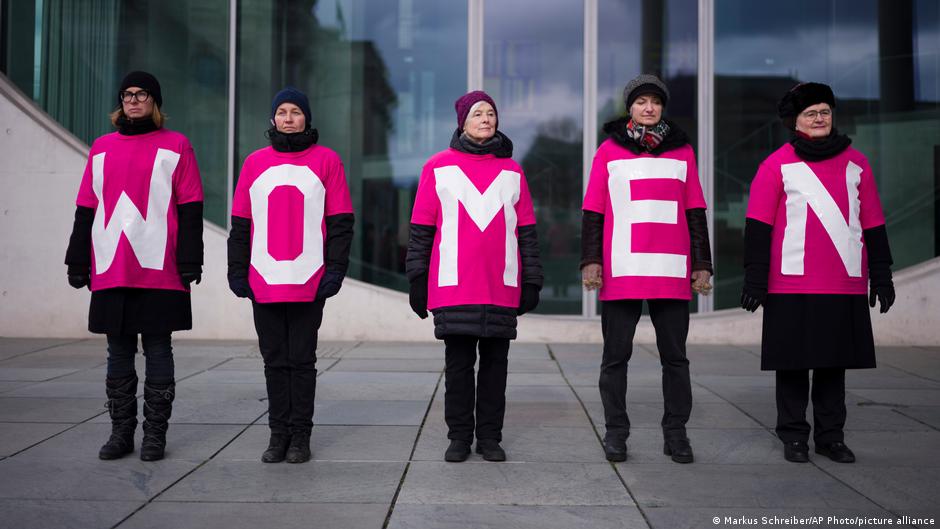
Women face a hidden time gap due to unpaid labor at home, impacting their career advancement opportunities.
"Men's time doing housework is about the same as it was in the 1970s, and that's true whether or not the woman earns more money or the man earns more money."
The Vermont Labor Relations Board has ordered that Gov. Phil Scott's administration 'rescind' a controversial requirement that state employees return to their physical offices three days per week. The board stated that the state has 'refused to bargain in good faith and interfered with employees' exercise of rights' in requiring in-person work.
"The specific barrier is capital," says Lisa George, global head of the Macquarie Group Foundation. "Without access to capital, it's very hard to get social mobility and educational mobility in life."
In 1960, 72% of adults were married, and over 90% would go on to marry. HR policies and management practices back then catered to nuclear families with a lone, male breadwinner. Today, dual-career couples and working mothers are common, largely due to the growth of women in the workforce in the second half of the 20th century.
The latest study published in March by the Centre for Economic Performance indicates that although the career trajectories of men and women are similar before becoming parents, their paths diverge starkly after the birth of their first child.
Companies with a higher number of women in senior roles are significantly more likely to dismiss male perpetrators of abuse against female colleagues, according to recent analysis.
In the UK, Statutory Maternity Pay is paid for up to 39 of those 52 weeks. For the first six weeks, you get 90% of your average weekly earnings (before tax) and then £187.18 or 90% of your average weekly earnings (whichever is lower) for the next 33 weeks. The final 13 of those 52 weeks are unpaid.
Business development has never truly been about proximity to a bar cart. It is about trust, relevance, and consistency-all factors of relationship building which take time and patience. Working mothers who understand that distinction are often better positioned to build sustainable books of business than their peers who equate visibility with value.
The Pregnancy Discrimination Act protects pregnant employees from workplace discrimination based on your pregnancy. Additionally, the Pregnant Workers Fairness Act requires your employer to provide reasonable accommodations for pregnancy-related conditions. For maternity leave, the Family and Medical Leave Act (federal law) entitles eligible employees with up to 12 weeks of unpaid leave following childbirth if you've worked at your company for at least a year.
For all the talk from employers who claim to understand the needs of working parents, childcare benefits remain elusive in many workplaces. Surveys have repeatedly shown that employees strongly value these benefits, which can run the gamut from childcare subsidies to backup care options. As working parents have demanded more from their employers, these perks have grown in popularity in certain workplaces, alongside more generous parental leave policies. But the companies that offer childcare benefits are still in the minority.
Data from the U.S. Bureau of Labor Statistics shows that women are more likely than men to work fully remotely, with about 16.4 % of women working entirely from home compared with 10.5 % of men in late 2024. Surveys and workforce reports also consistently find that women, especially mothers and caregivers, are more likely to choose or remain in remote roles because of caregiving responsibilities and the unaffordability of childcare.
Academia can be incredibly, overwhelmingly, demanding. Many feel that they have to dedicate all their time and energy to establishing and sustaining a successful career. But many don't want an all-encompassing career. And there are profound parts of life that can get pushed to the sidelines by these demands. And of course, for many, this includes parenthood. Today, we're going to speak with several researchers about the strain academia places on parents and those hoping to become parents.
I have been there. Waking up early, even hiring an early babysitter to help me get my son ready on time so we could both go to school and work. My husband is the primary breadwinner in our home. He often had to travel for work, so the burden was on me. I recall the stress of it all - arranging someone to pick up my son when I could not, managing logistics, and making payments. It was hard earned money lost.