Relationships
fromFast Company
1 day agoWhy your next PTO day should be a 'skip day'
Skip day is a tradition where friends take a mental health day off work to enjoy time together, promoting well-being and connection.
Costa's then-manager told him that ServiceNow would not pay this commission because the Sales Compensation Department had concluded that Costa had 'overachieved to a degree that was outside normal' in relation to his sales quota. In other words, ServiceNow believed Costa had made too much money, notwithstanding that his commission was only a small percentage of the revenue recognized and received by ServiceNow.
Most company policies are written for a hypothetical, 'best-case' employee: rational, attentive, well-rested, and operating in a low-pressure environment. They assume employees will read the rules carefully, remember them, and apply them consistently at the point of purchase. As appealing as this assumption may be, it bears little resemblance to how real workplaces operate.
Workplace wellness programs have exploded over the past decade or so, with companies rolling out a suite of subsidized perks, such as gym discounts, mental health apps, and other benefits aimed at attracting and retaining workers. The pandemic upped the ante even more - in the face of a tight labor market and a hyper-stressed workforce, plenty of business leaders looked around and thought, "Well, a Zoom meditation session can't hurt, right?"
Q I manage an engineering company in the north-west, with a staff of about 50. Recruitment and retention are key issues, because staff are constantly being poached, and are then difficult to replace.
While some workers are being mandated to return to the office, a growing majority of workers now say they want to "microshift" their workday. Unlike hybrid or remote schedules, in which you work remotely some or all of the time, microshifting is about making small adjustments to your start times, breaks and hours rather than adhering to a rigid nine-to-five schedule.
In today's job market, amid persistent inflation, job seekers want more compensation. In many cases, though, employers simply can't give more. In fact, nearly three-quarters of employers are concerned about meeting candidates' salary expectations, according to Robert Half's 2026 Salary Guide. To fill the gap, many are coming to the negotiation table with a focus on everything else in the compensation package.
Resume Builder reported last October that 30% of companies will eliminate remote work in 2026. According to a survey of business leaders by Vena Solutions , a private financial software company, 83% of CEOs globally anticipate a return to full-time office work in 2027. But what if there's a better way to frame this conversation? What if the focus shifts away from where employees are working to when employees are working?
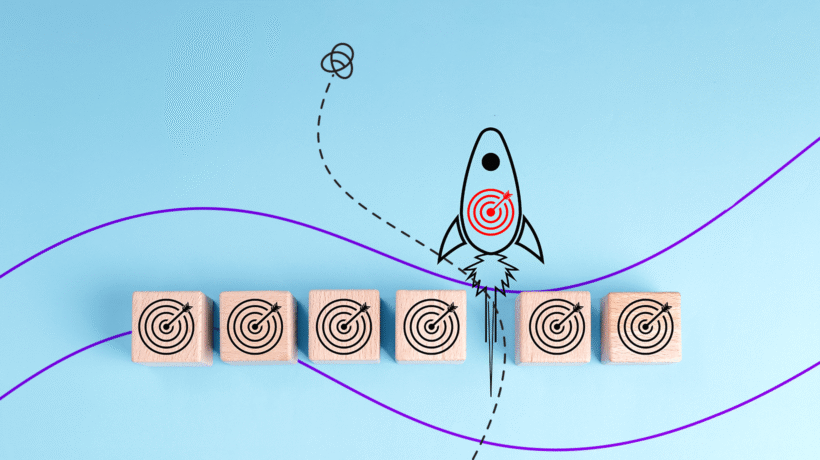
We've long misunderstood hope in the workplace. We've treated it as wishful thinking-a nice-to-have feeling that emerges when things are going well. But research from psychologist C.R. Snyder reveals something far more powerful: Hope is a cognitive process with three essential components: goals (what we want to achieve), pathways (our ability to identify routes to those goals), and agency (our belief that we can pursue those paths). This isn't passive optimism; it's an active strategy for navigating uncertainty and driving meaningful change.
Loneliness and burnout-deeply interwined in the workplace-are hitting American workers (and companies) hard. In 2025, global healthcare firm Cigna found that over half of all employees surveyed felt lonely. Around 57% admitted to feeling unmotivated and stagnant, while two-thirds of full-time workers say they experience burnout on the job, according to a 2025 Gallup study. The financial toll is jaw-dropping. Harvard Business Review reports that loneliness costs U.S. companies up to $154 billion annually through lost productivity, increased burnout, and employees resigning.
Being a leader today requires a new level of performance. One that overrides fatigue, can suppress internal signals, and absorbs constant urgency, all while rapidly context-switching. Simply said, modern leadership demands have increased, and not everyone is-or wants to stay-on board. Today's leaders face growing expectations, dynamic responsibilities, and constant pressure to perform amid deep uncertainty and an ever-accelerating business ecosystem.
If you run a business, there's a familiar email you probably opened this fall: the one from your benefits broker with your 2026 health insurance renewal. You scroll. You see a double-digit increase, and your stomach drops. You want to do right by your team. You also have a P&L to protect. And the three standard options you're handed - pay the increase, raise deductibles or push more cost onto employees - all feel bad in different ways.
We have this combination of what we want to achieve, but also how we achieve it," Daniela Seabrook, Adecco Group's CHRO, told Business Insider. "The behavioral aspect is really important for us." She said that driving the change is the company's intent to have "a continuous exchange between an employee and a leader" - not just a formal review once or twice a year. More frequent feedback is necessary, Seabrook, to keep up with the pace of change in business. "It's very important that the people know, 'Where am I? How am I doing? How am I developing?'" she said.